

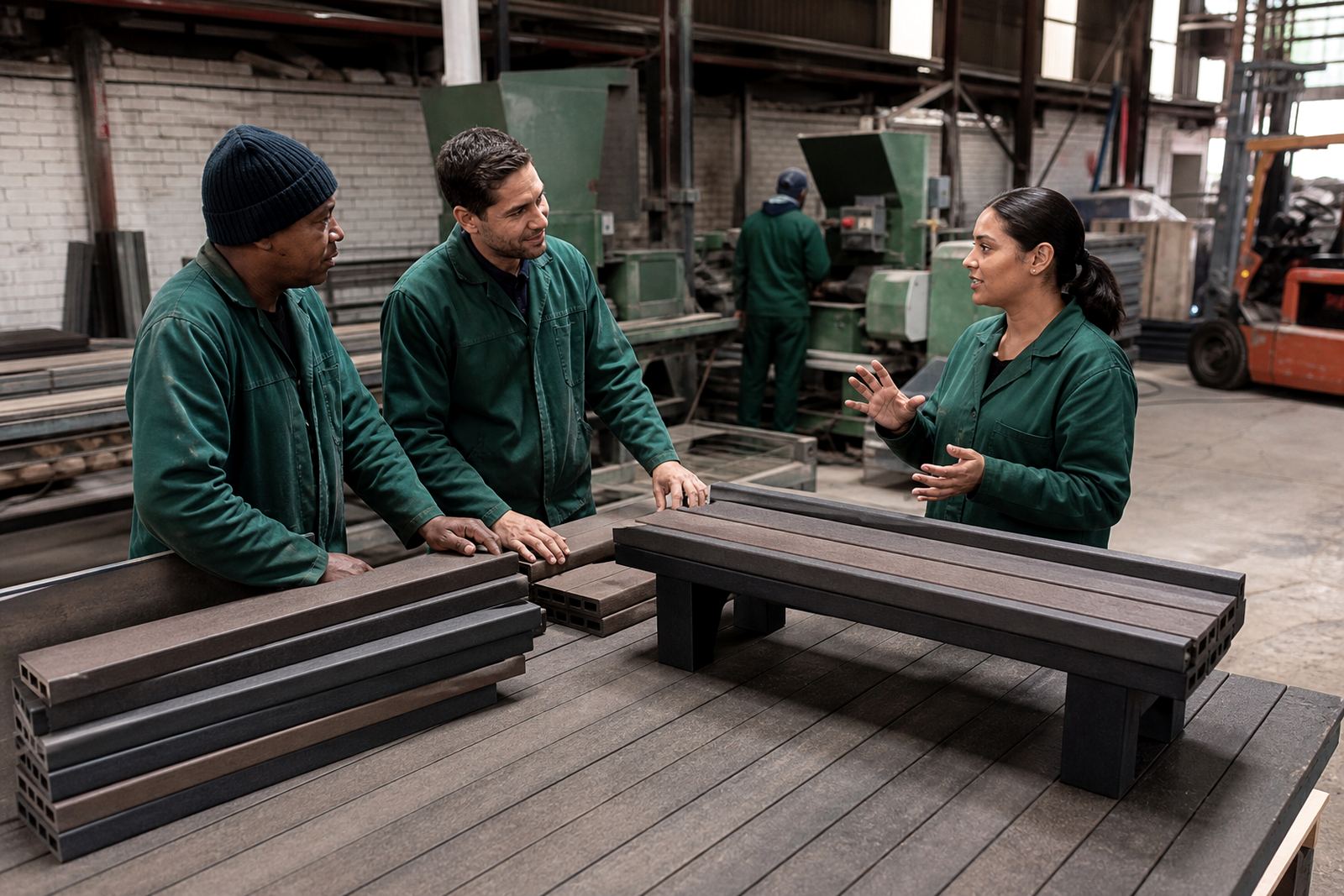
A Cape Town business built on practical outdoor materials
Plastimber was founded in 2009 in Paarden Eiland, where salty air, strong sun and busy working yards make material choice matter. From that base, the business supplies recycled plastic lumber decking and benches to homes, estates, schools, hospitality venues, parks and trade projects in Cape Town, Stellenbosch, George, Johannesburg, Durban, Paarl, Somerset West and Bellville. The work is grounded in what clients need in the real world: durable finishes, straightforward maintenance and neat results that fit the site.
Morne van Zyl leads the business with a hands-on approach, supported by a team that knows how to manage both small orders and larger project timelines. That means clear communication from the first enquiry, practical advice on layout and fitting, and enough coordination to keep materials moving without confusion. In a city like Cape Town, where coastal humidity and sun can wear down untreated surfaces, it helps to work with products that are made for regular exposure.
Why recycled plastic lumber suits South African conditions
Recycled plastic lumber is commonly chosen for outdoor applications because it does not behave like natural timber in the same way. It is used where moisture, splashing, cleaning, and repeated use can be hard on traditional materials. For decking and benches, that can mean fewer issues with rot, splitting, and insect damage, as well as less routine sealing or painting. It is also useful in areas where access for upkeep is limited, or where load-shedding and water restrictions make maintenance planning less predictable.
Plastimber works with this material in a way that suits local projects, from private patios to commercial walkways and seating areas. The aim is not just to supply product, but to match the right components to the setting. A shaded courtyard in George, a public seating area in Durban or a rooftop deck in Johannesburg can all call for different details in layout, fixing and finishing.
- Suitable for wet, humid and sun-exposed environments
- Useful where low maintenance is a priority
- Can be specified for both residential and commercial sites
- Helps reduce reliance on conventional timber for outdoor use
How we manage each project from first measure to final fit
Most projects start with site measures and layout planning. That step matters because neat decking and seating do not come from material alone, they come from correct setting out, sensible spacing and a clear view of how people will move through the space. Whether the job is a simple bench replacement or a larger deck installation, the team works through the details before materials are ordered and delivered.
Material quoting and delivery coordination are handled with the same practical focus. Clients can expect straight answers on what is required, what can be supplied and how the work will be staged. For trade customers, that support is especially useful when timelines are tight and different contractors need to stay aligned. Installations are then carried out with attention to edge finishing, alignment and the final appearance of the surface, so the result feels complete rather than pieced together.
- Site measures and layout planning
- Material quoting and delivery coordination
- Deck installation and bench installation
- Edge finishing and component replacement
- Care advice and trade support
What clients value in our decking and benches
People usually come to Plastimber for a solution that looks tidy, lasts well and does not ask for constant attention. Recycled plastic lumber works well in settings where furniture and decking have to stay presentable through busy seasons, heavy foot traffic and changing weather. For schools, lodges, body corporates, retail forecourts and municipal-type spaces, the attraction is often the same: less time spent on repairs and more time spent using the space.
Benches are supplied for practical seating areas, waiting spots and pause points along walkways or gardens. Decking is used to create finished outdoor surfaces that support movement, seating and everyday use. In both cases, the aim is to give clients a material choice that is sensible, easy to live with and suited to South African conditions. The work is not about overpromising, it is about matching the material to the job and doing the fitting properly.
- Residential courtyards, patios and braai areas
- Commercial entrances, outdoor seating and walkways
- Public open spaces and shared facilities
- Refurbishment of older decks and benches
A team that keeps the work moving
Behind the products is a team that handles the daily work needed to keep projects on track. Anele Mkhize manages sales conversations, Bianca Fourie coordinates projects, Thabo Molefe oversees production and Jason Petersen manages installation work on site. Leanne Naidoo handles customer support, while Sibusiso Dlamini plans logistics so deliveries and collections line up properly. That structure helps the business serve clients across the Western Cape and further afield without losing sight of the details.
For customers, that means there is a clear contact point through the enquiry form on the contact page, and the right person can then step in depending on the job. Trade clients often need fast feedback on measurements, quantities or access conditions, and residential clients may need guidance on care or refurbishment. The system is set up to handle both without unnecessary delay.
What sits at the centre of the business
Plastimber is guided by straightforward values: practical service, responsible material use and work that holds up in real conditions. Sustainability matters, but so does function. A product only earns its place if it performs well on the ground, stays useful over time and makes sense for the client who is paying for it. That is why the focus remains on recycled plastic lumber, careful installation and support that does not stop once the delivery has been made.
The business also understands local requirements. In coastal towns like Cape Town, Paarl and Somerset West, materials need to cope with moisture and salt in the air. In inland cities like Johannesburg, they need to stand up to heat, dust and heavy use. Across all of those places, the same approach applies: measure properly, plan clearly, communicate well, and finish the job in a way that feels solid and orderly. That is how Plastimber works, and why many clients return when they need more decking, more benches, or a refurbishment on what is already there.