









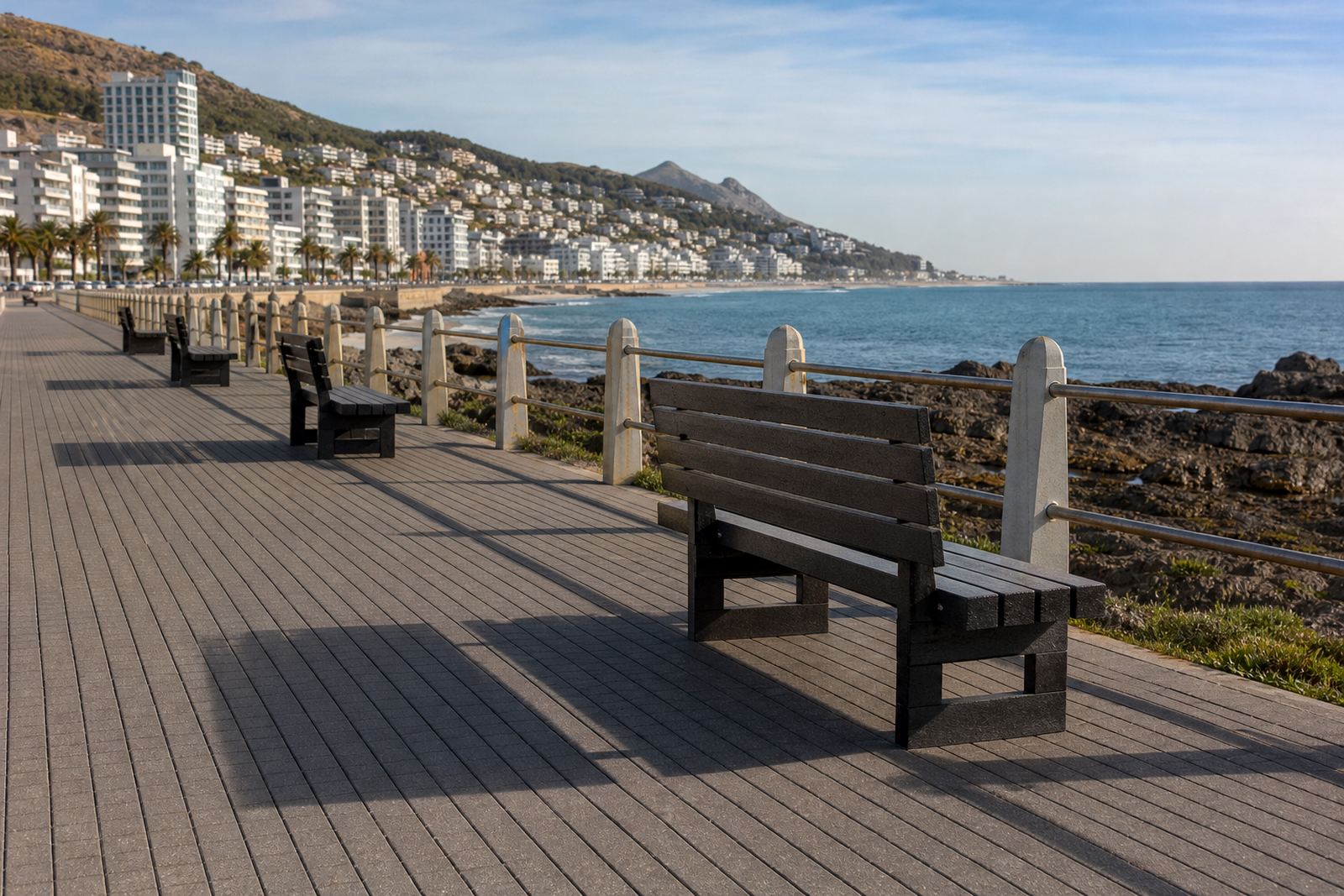
How to choose recycled plastic lumber for outdoor areas
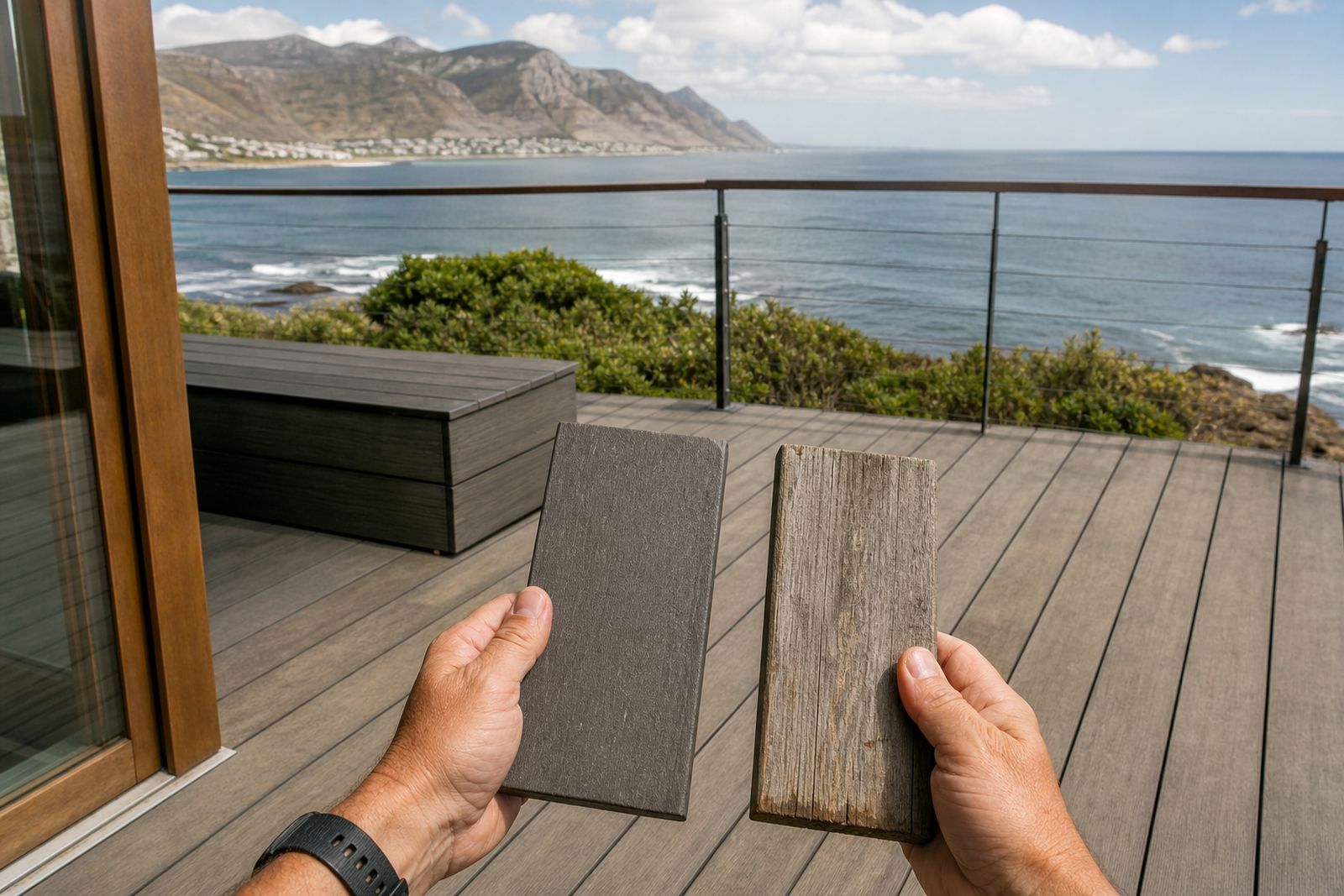
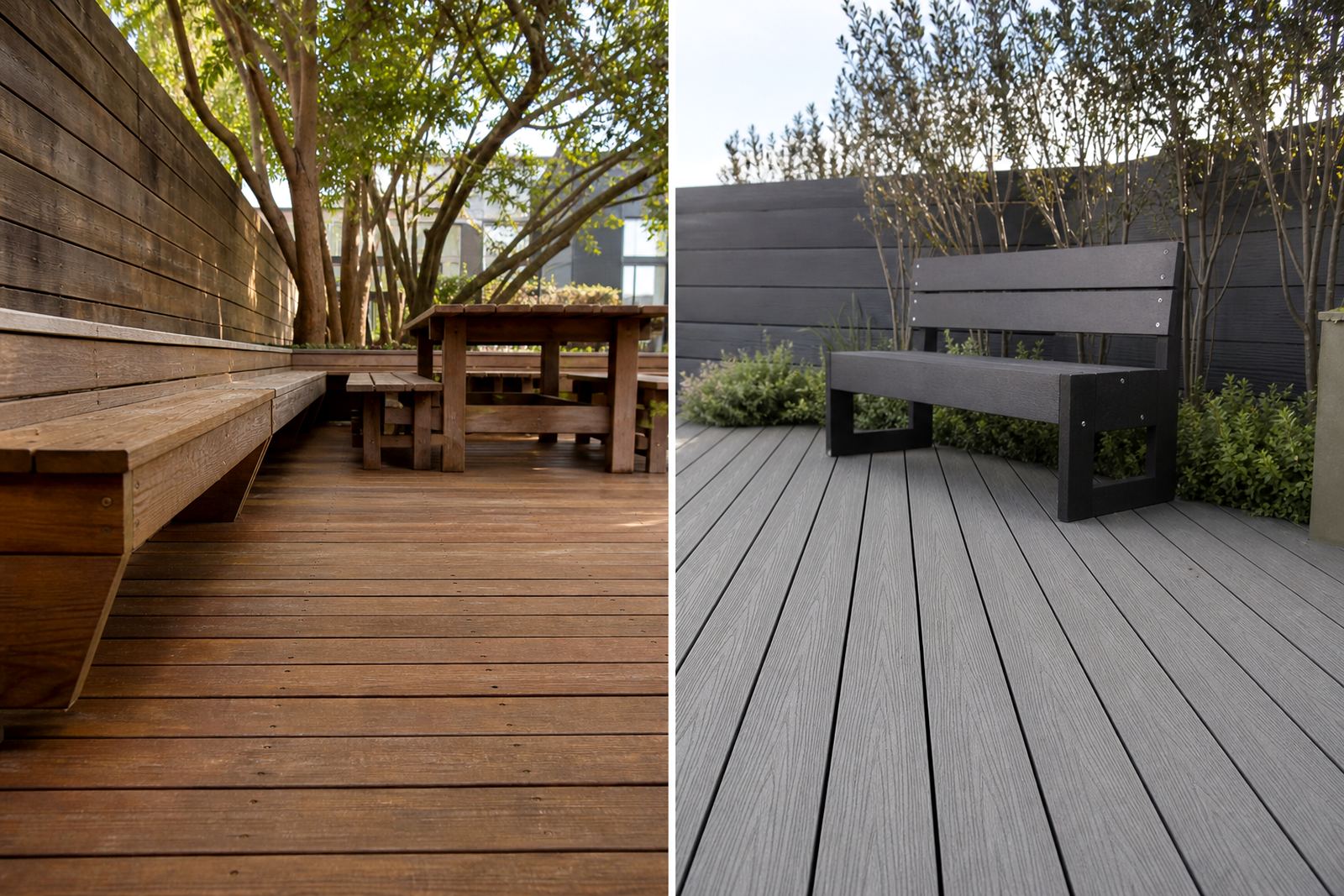
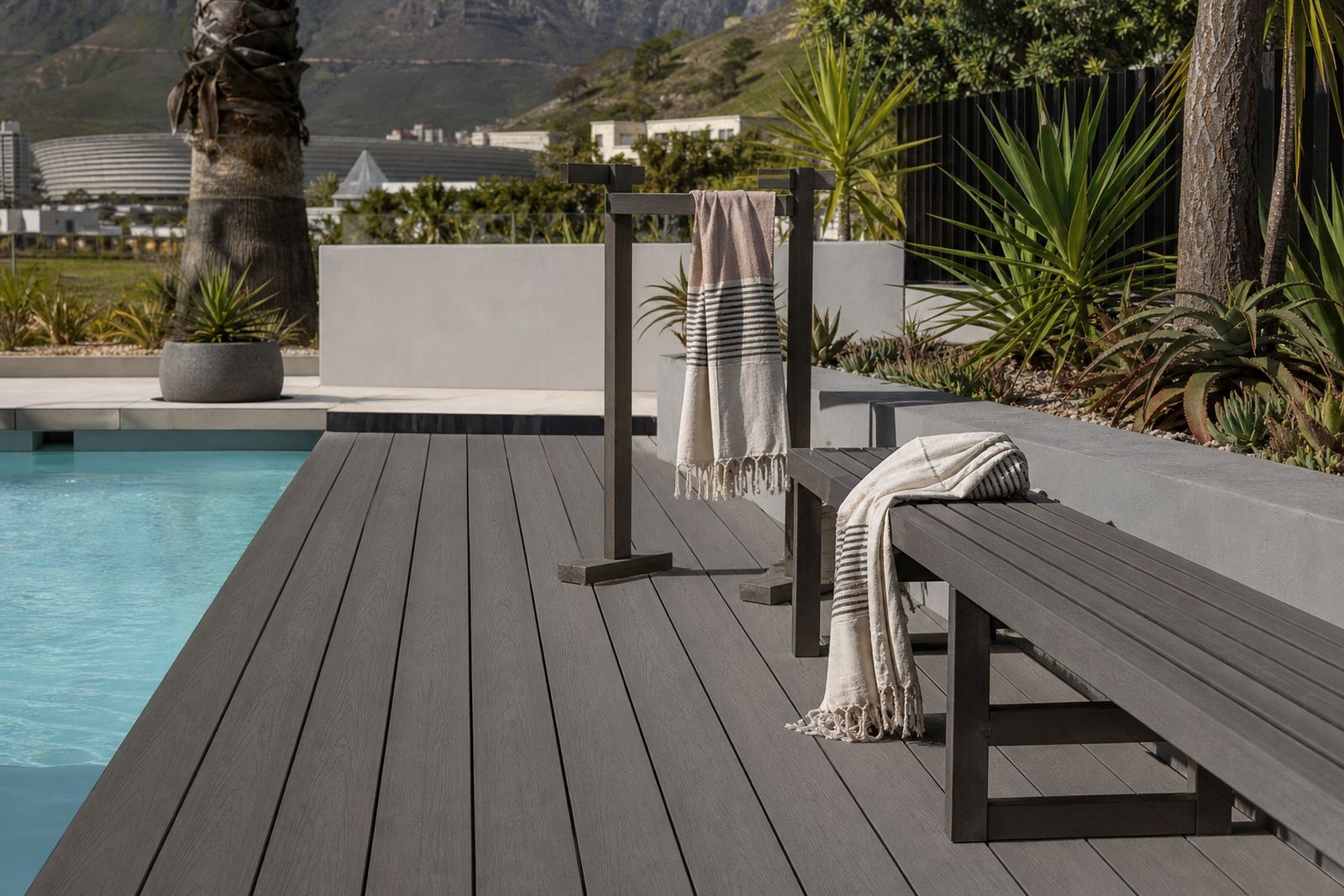
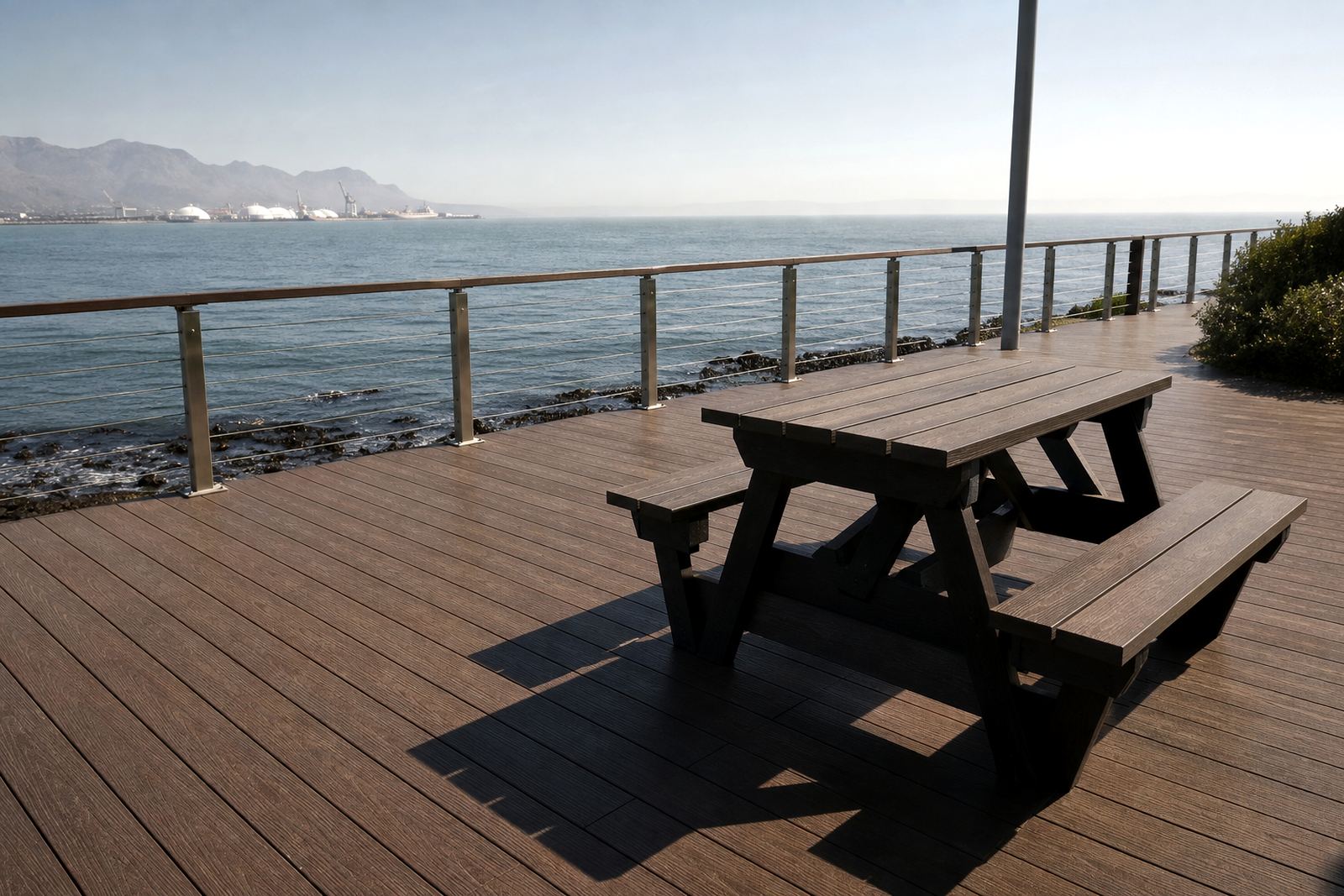
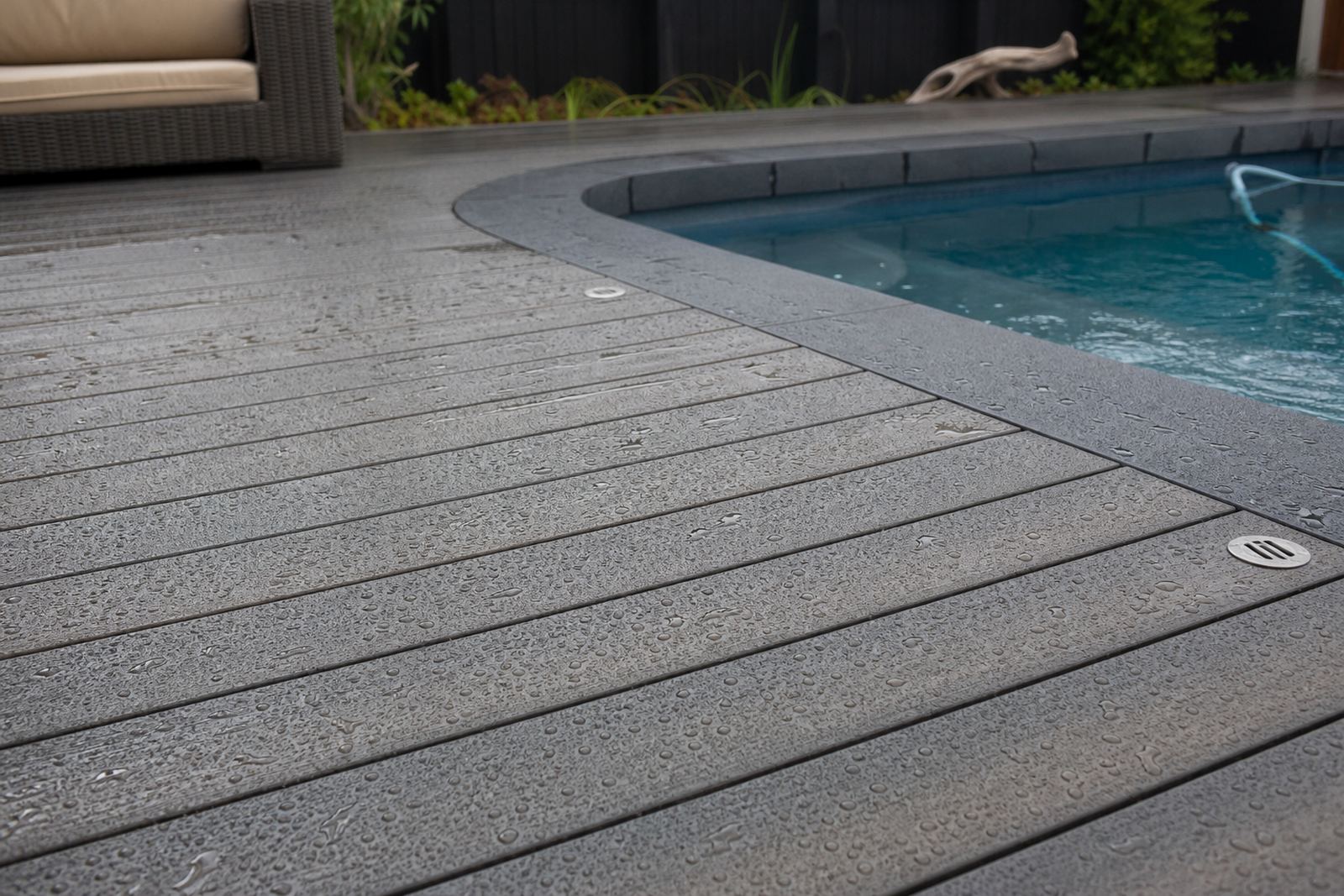
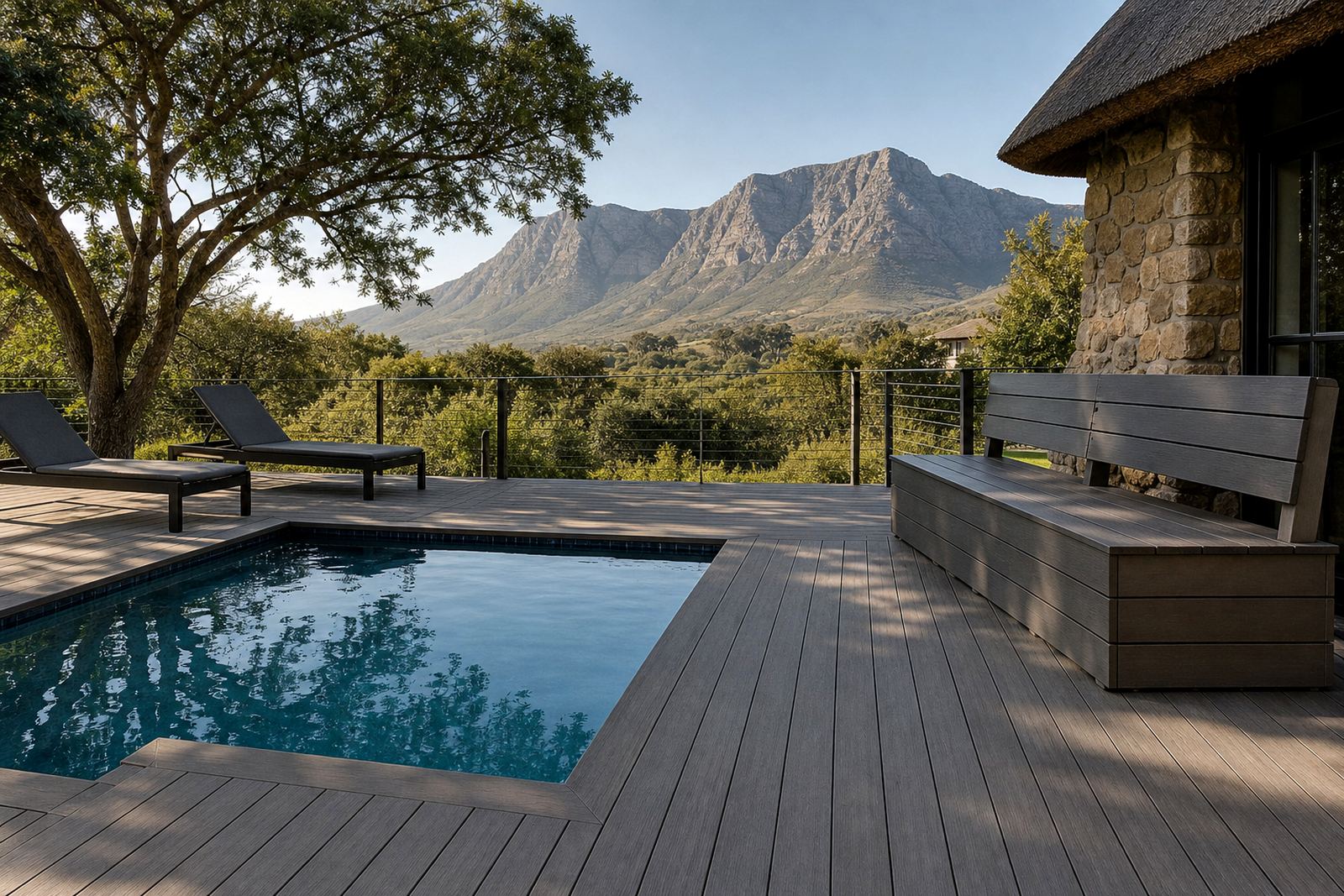
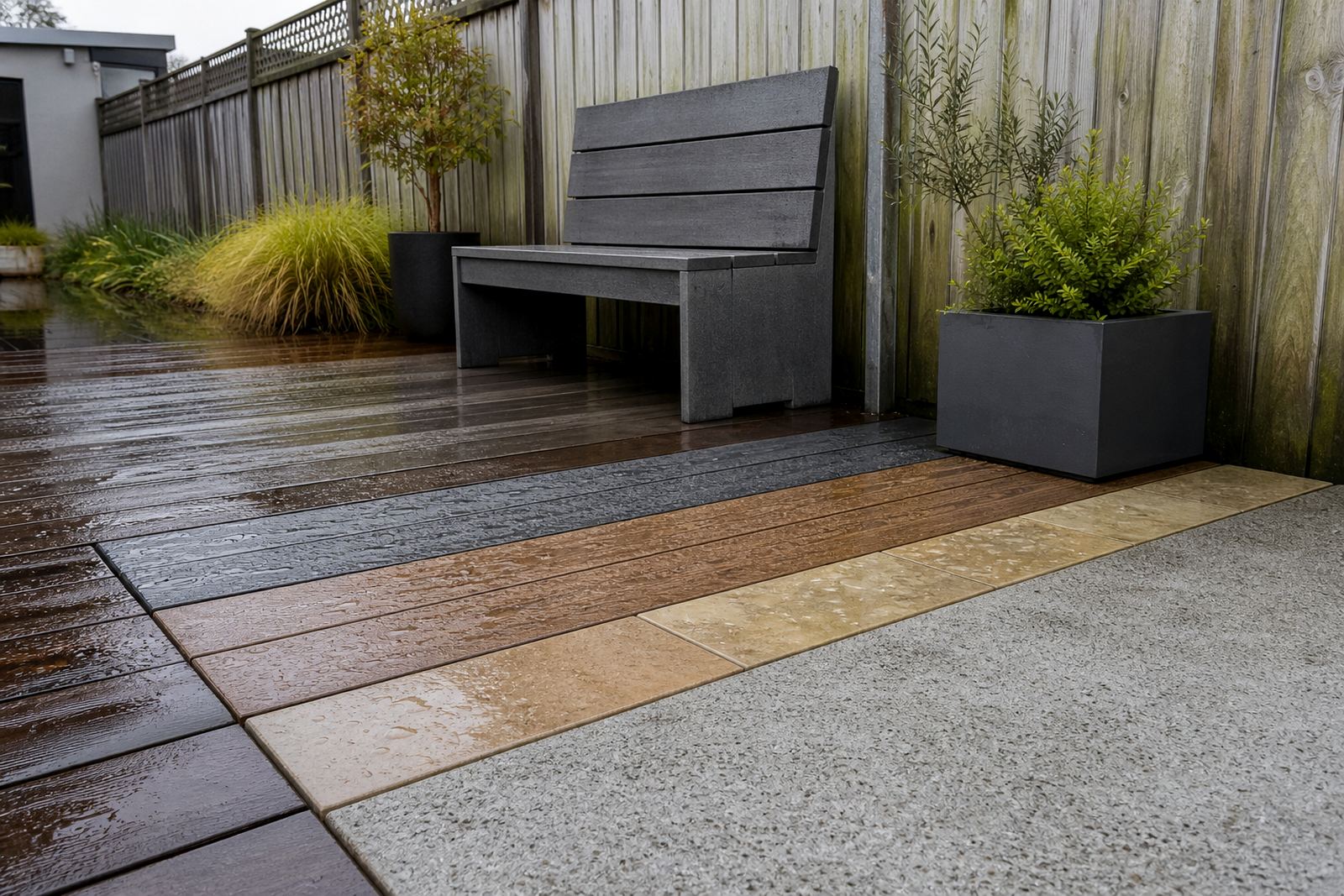
Recycled plastic lumber is used where timber faces heavy wear, wet weather and regular cleaning. It suits pool surrounds, walkways, courtyards, hospitality spaces and public seating because it does not absorb moisture like natural wood and it is less prone to splitting, rotting or insect attack. In coastal places such as Cape Town and Durban, that matters when salt air and humidity put extra pressure on outdoor finishes.
When choosing a product, think about the space first. A family deck in Somerset West has different needs from a busy commercial terrace in Johannesburg or a municipal seating area in Bellville. The best choice depends on foot traffic, drainage, sun exposure and how much upkeep the site team can manage through the year.
- Check the intended use: residential, commercial or public access.
- Allow for water runoff so boards do not sit in standing water.
- Consider surface finish and colour in full sun.
- Plan access for future cleaning, inspection and component replacement.
Decking articles for planning, layout and edge details
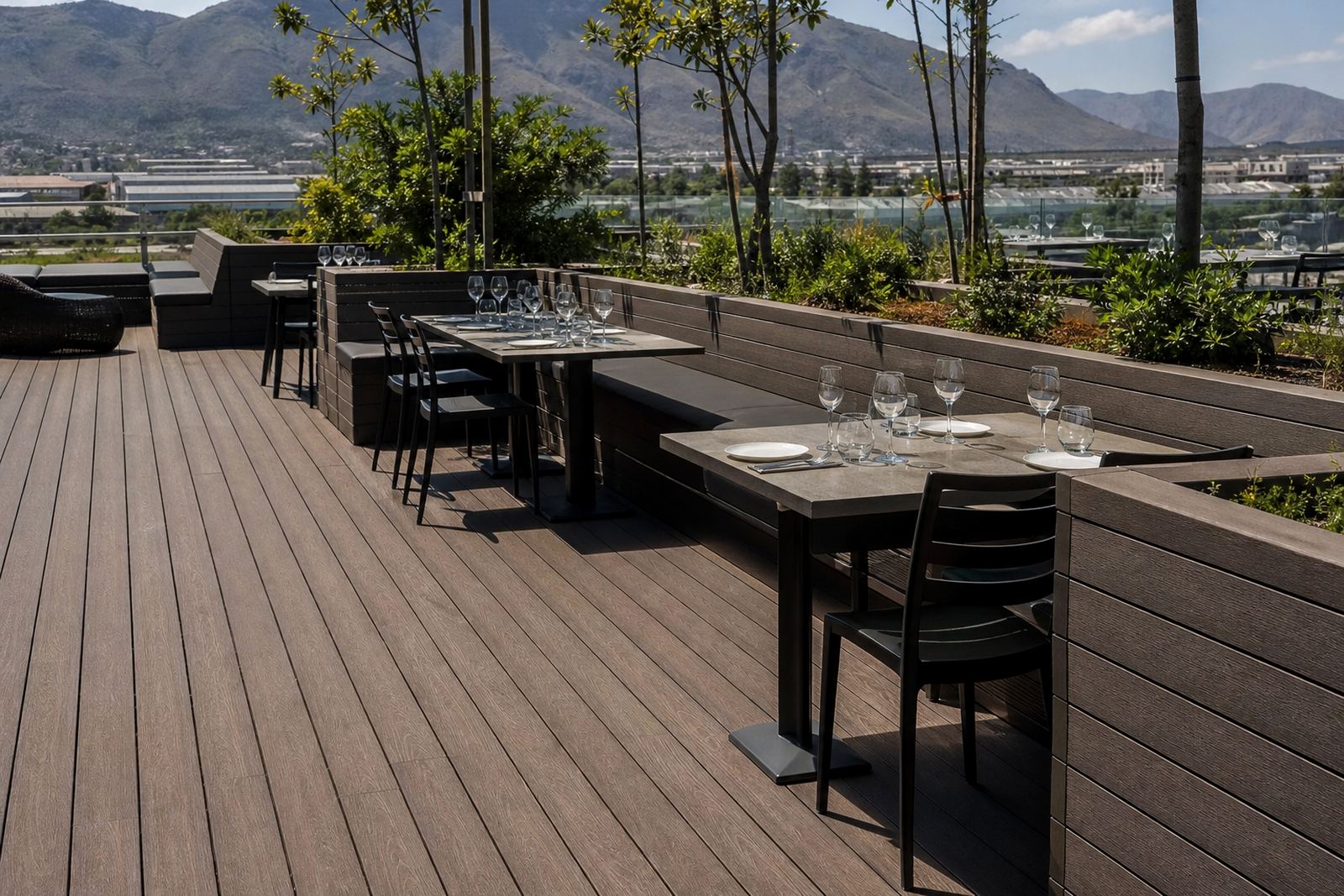
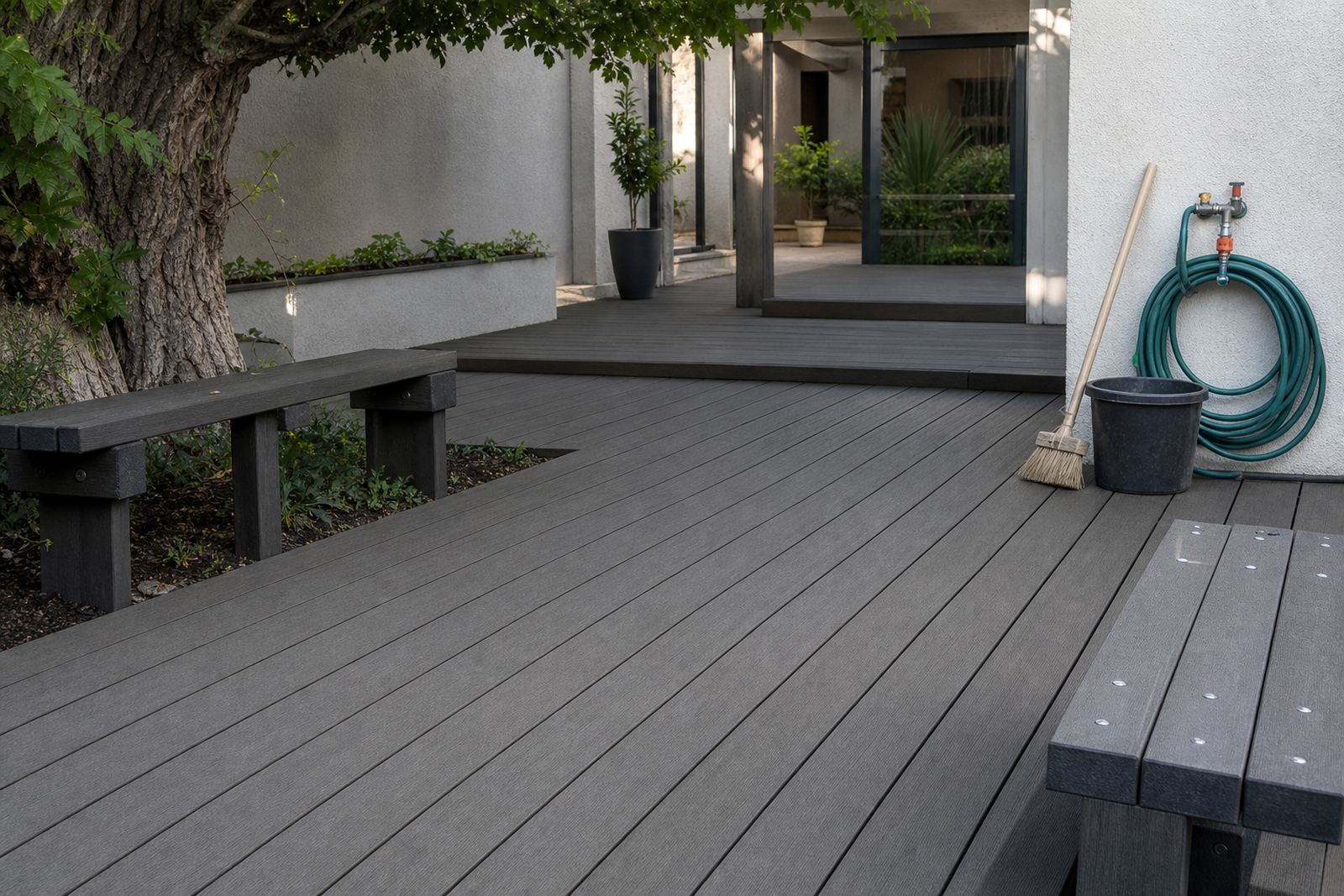
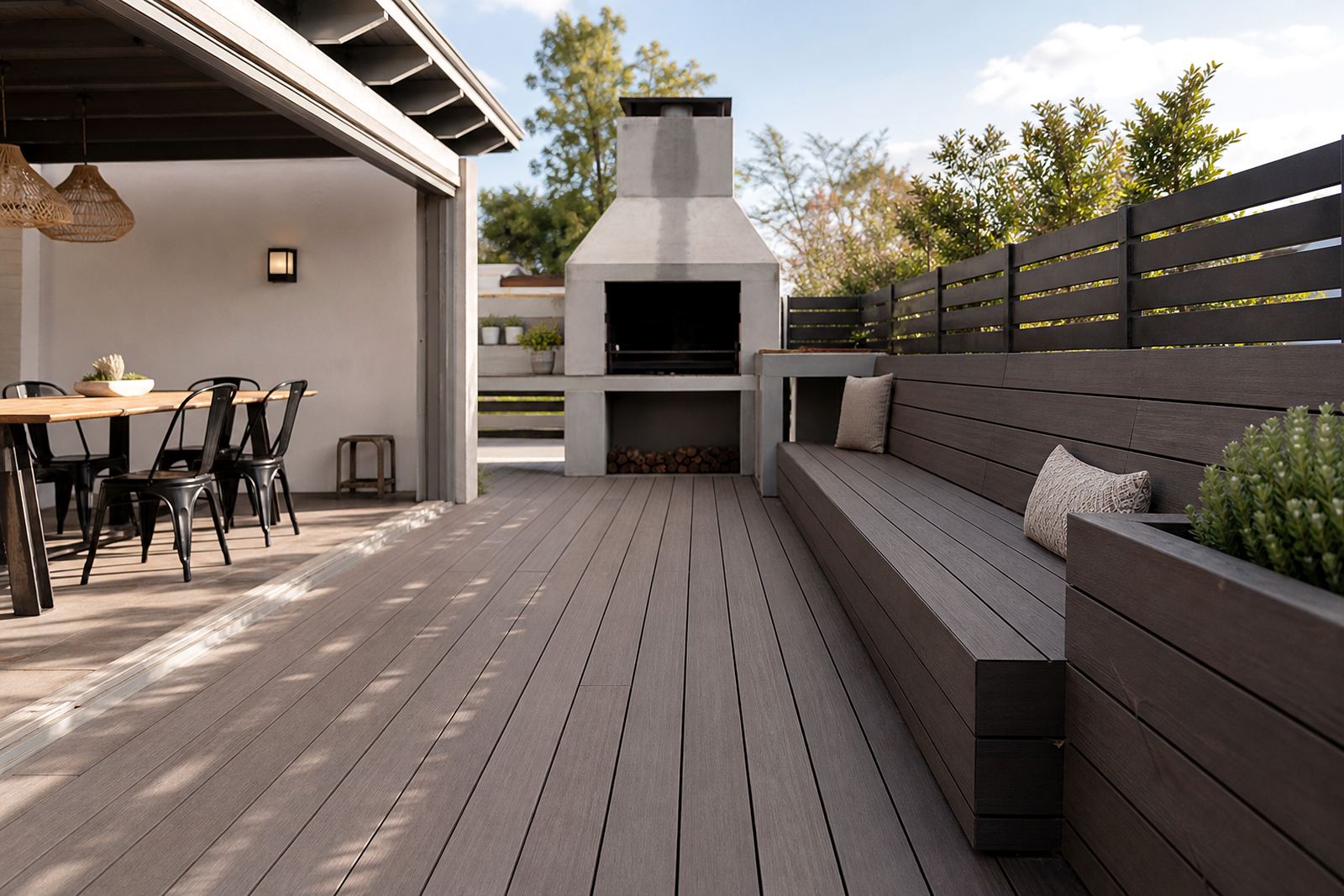
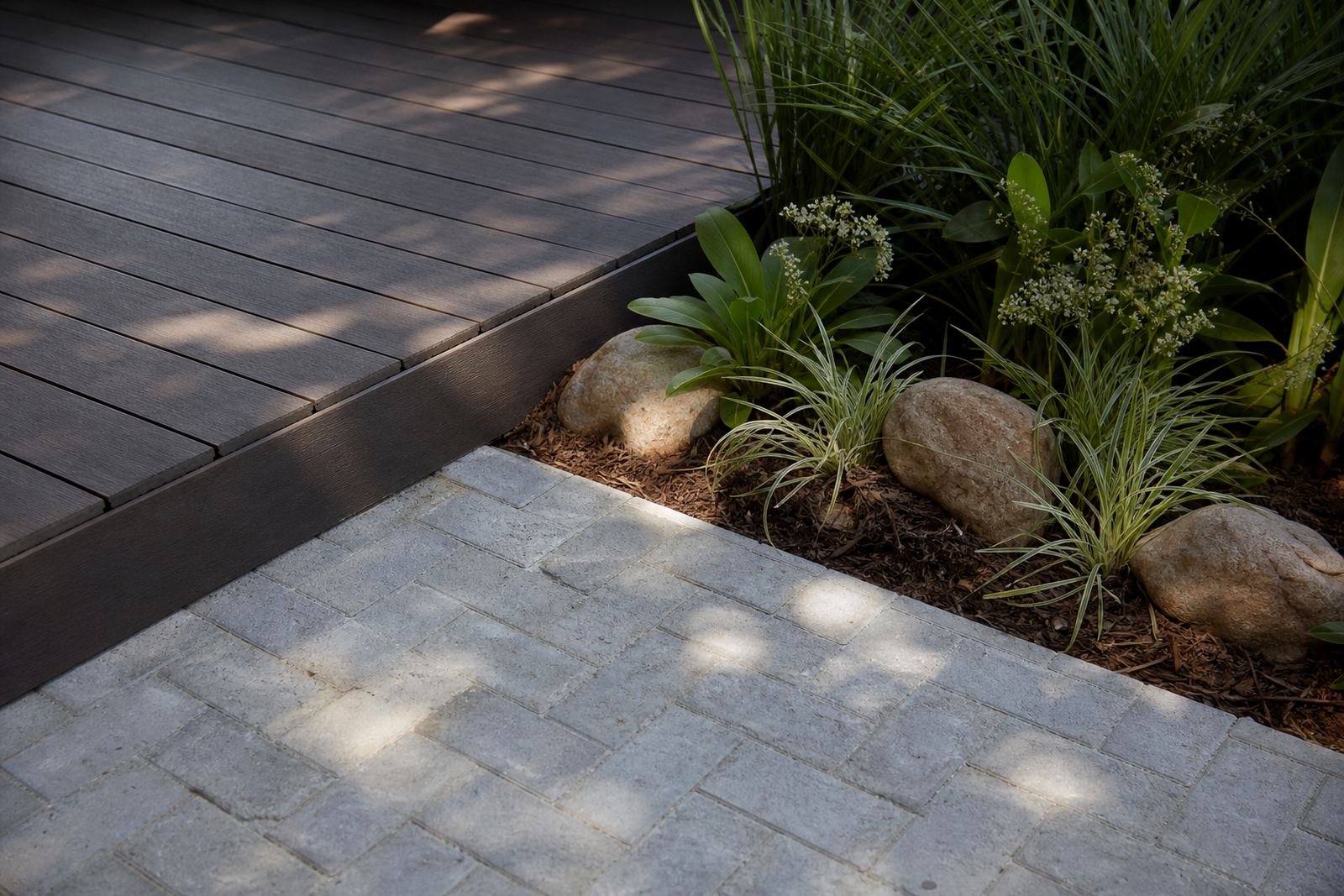
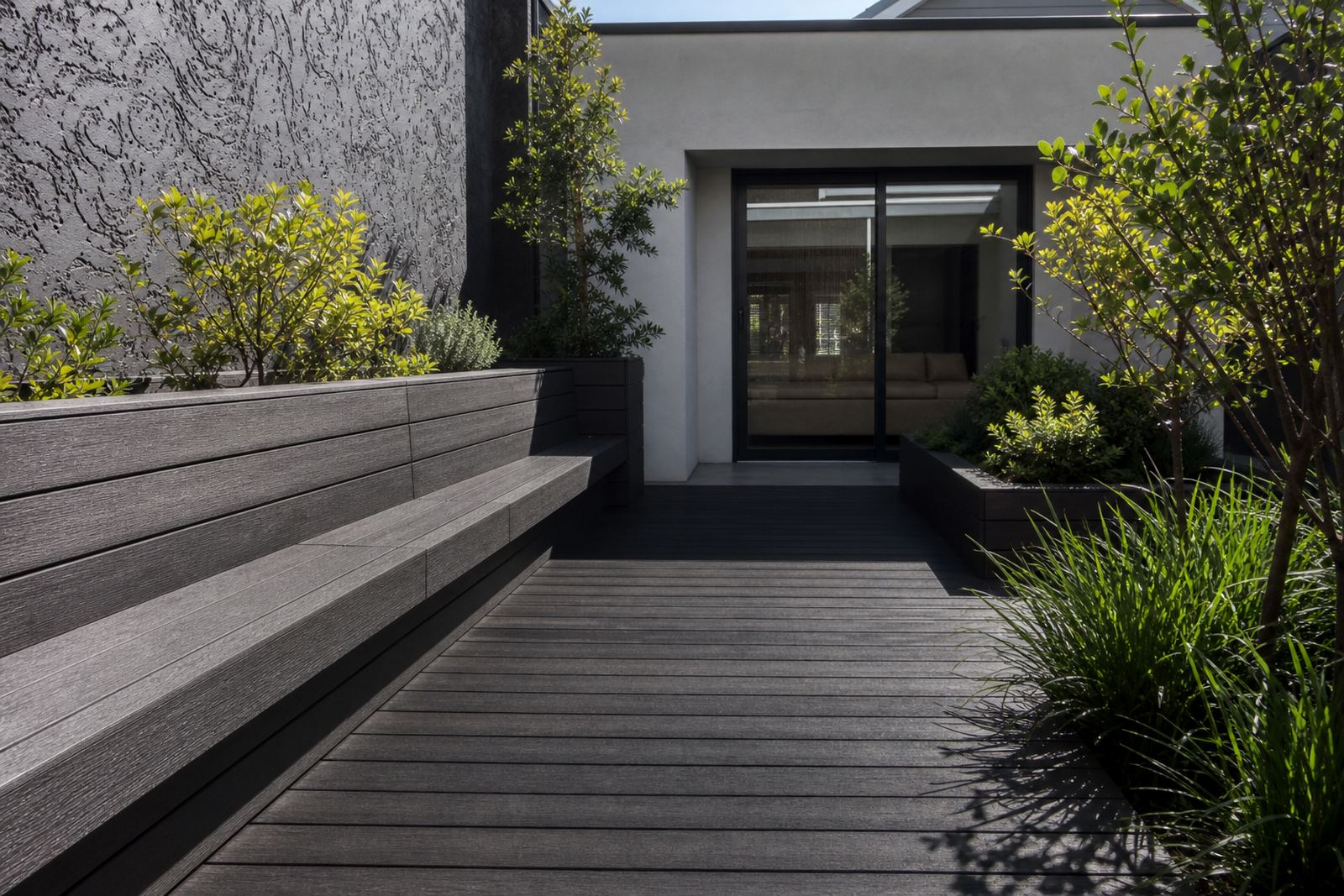
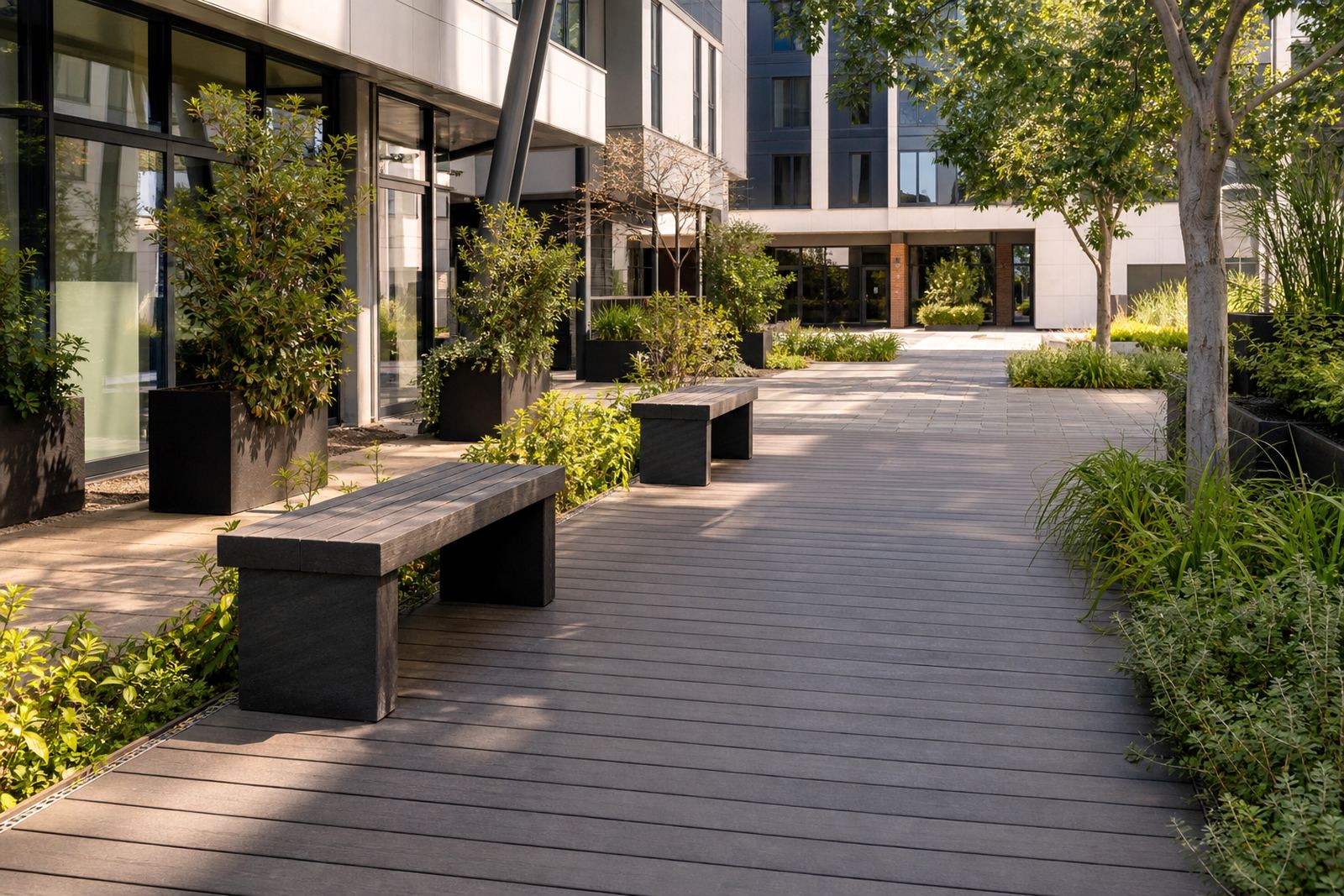
Good decking starts with practical layout. Straight runs are easier to maintain, but many sites need step changes, corners and transitions to paving or lawn. A clear plan helps avoid awkward cuts and helps the installer set out consistent board spacing, edge finishing and movement allowances. In windy coastal towns like George or on exposed rooftops in Cape Town, the fixing method and substructure need proper attention.
Our journal pieces look at how to read a site before any material is ordered. That includes the way people move through the space, where chairs or planters will sit and how to keep the finished area easy to clean. It also helps to think about access for delivery, because long lengths and heavy components are easier to handle when the route is clear.
- Measure the full area and note levels, drains and fixed features.
- Decide where joints, trims and edge details will land.
- Plan for cleaning access under and around the deck.
- Allow for trade coordination if other work is happening nearby.
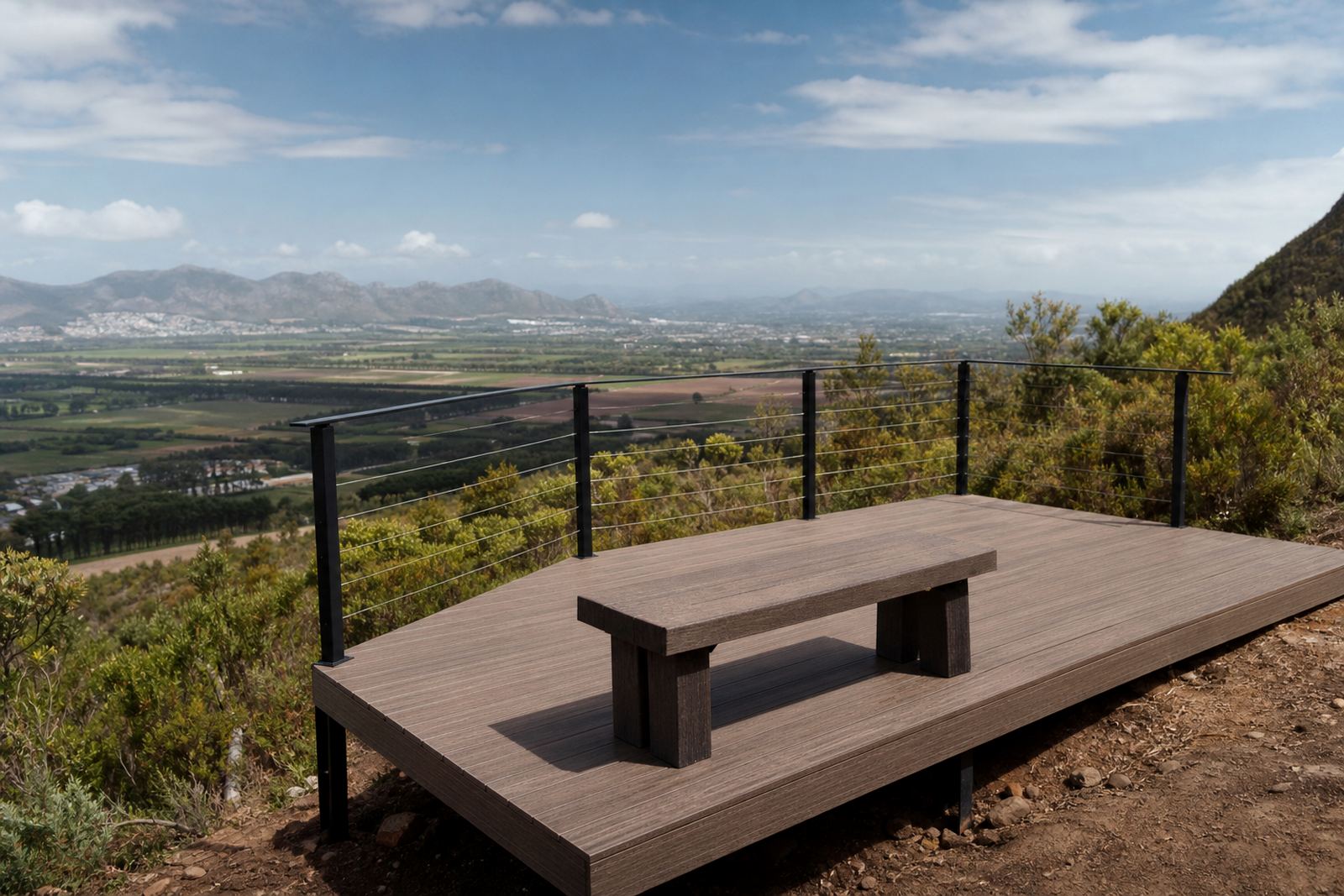
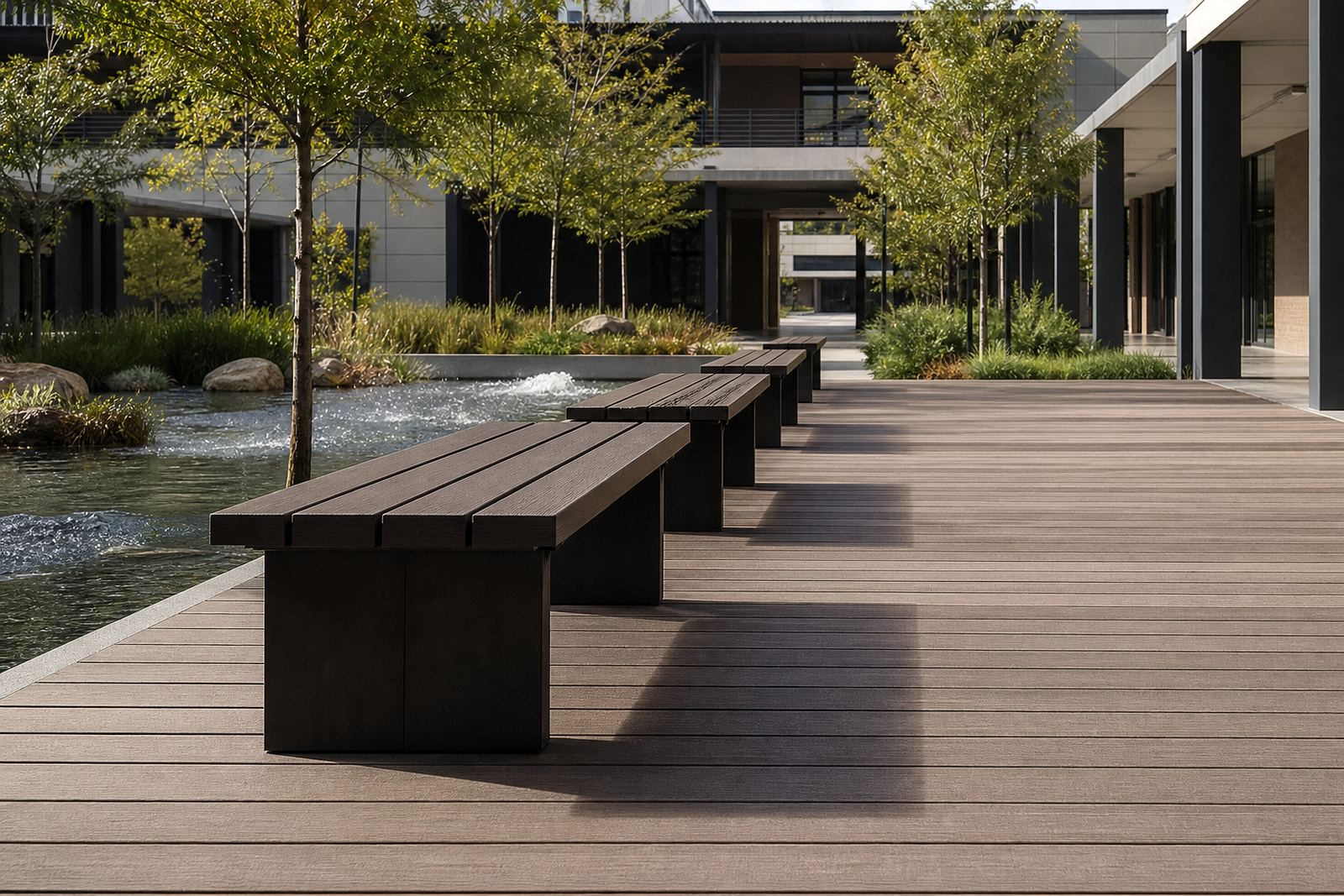
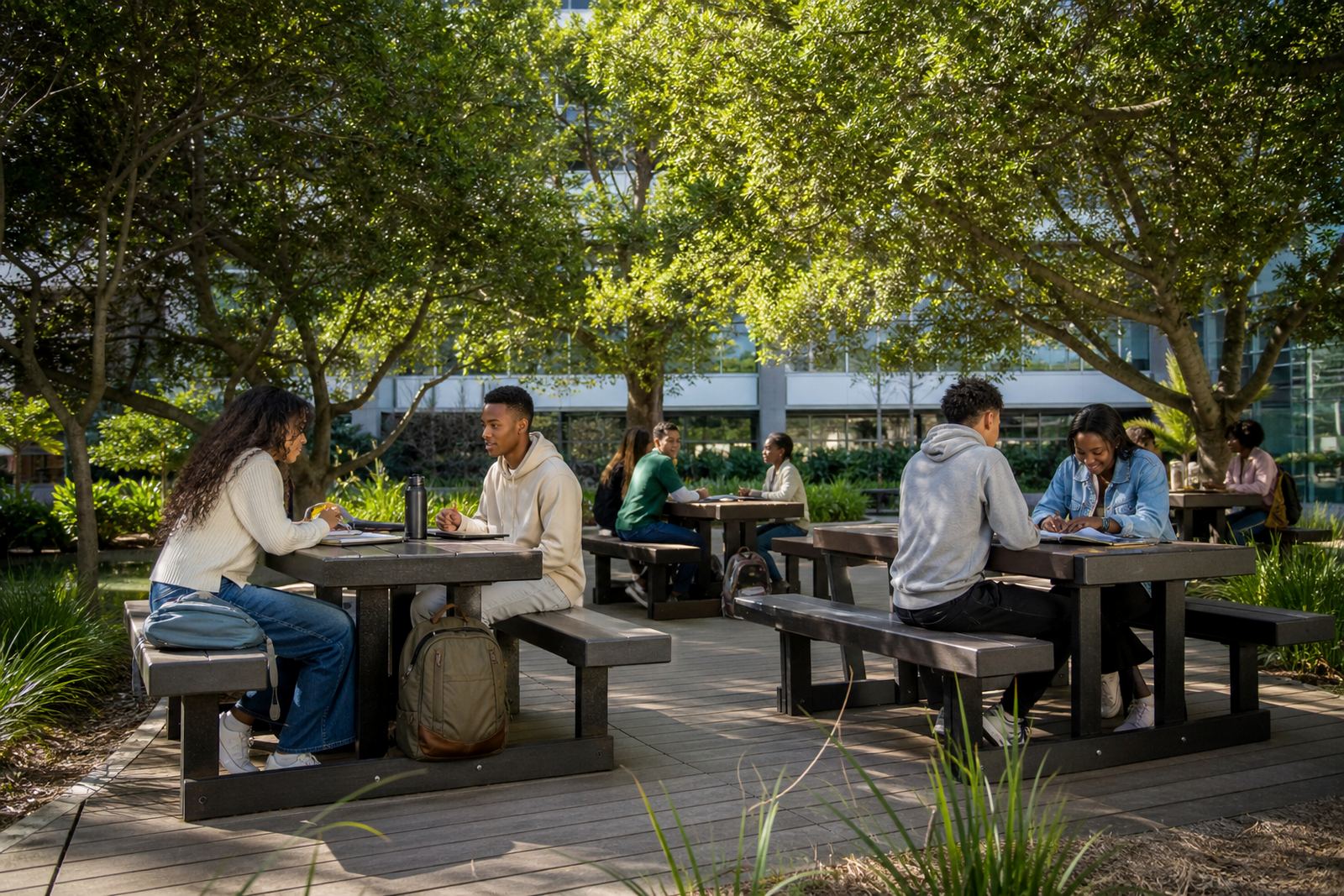
Benches that suit schools, estates and public spaces
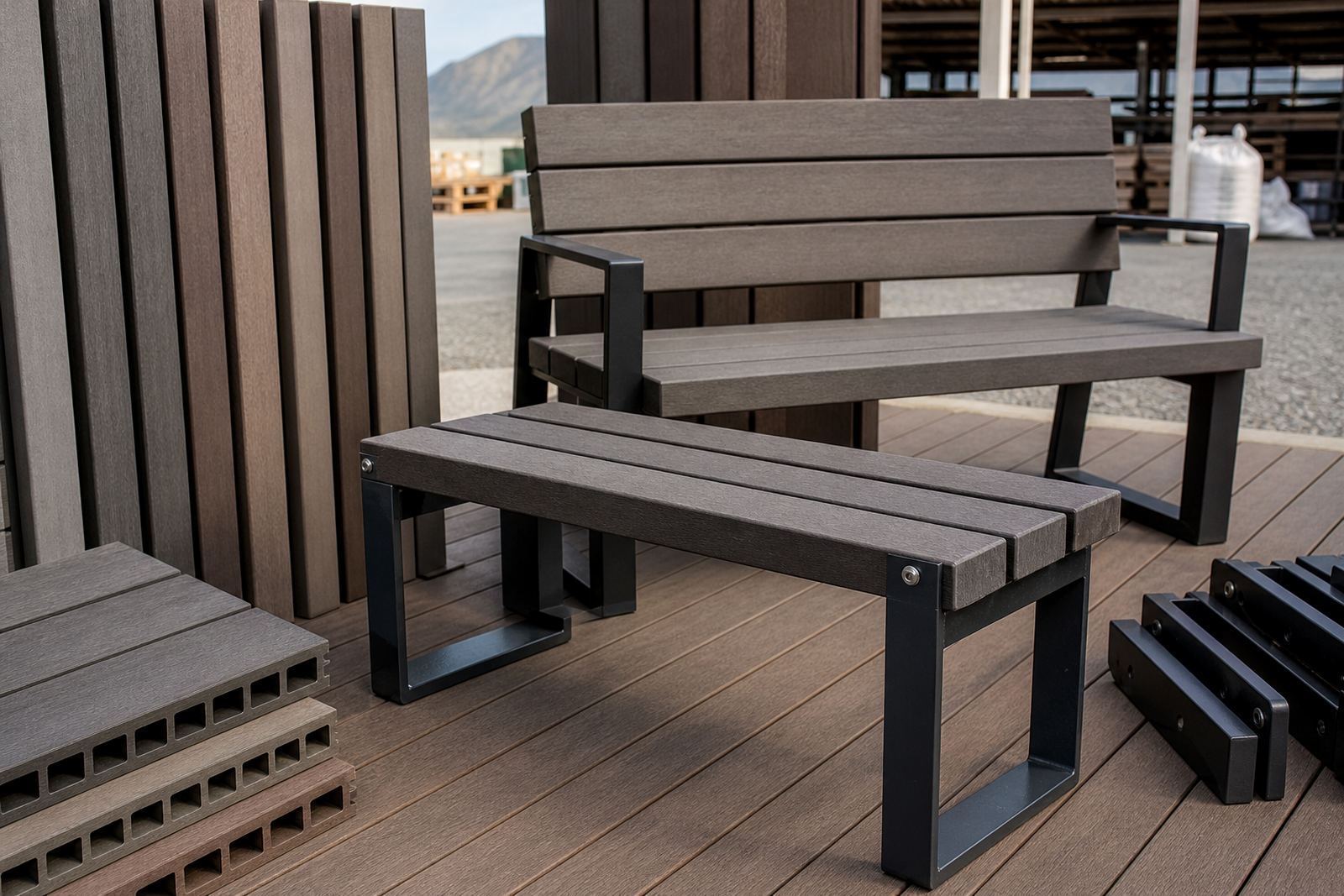
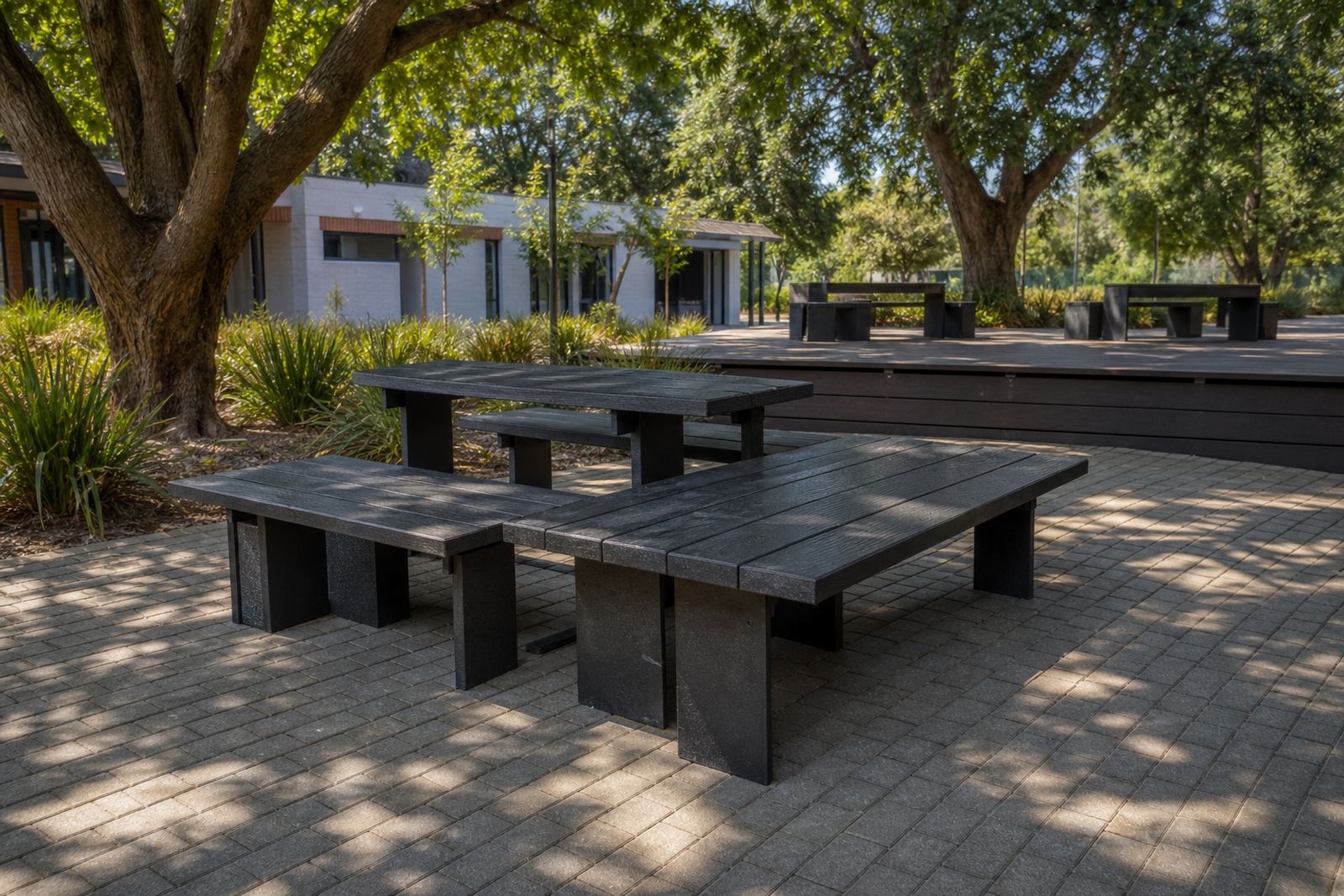
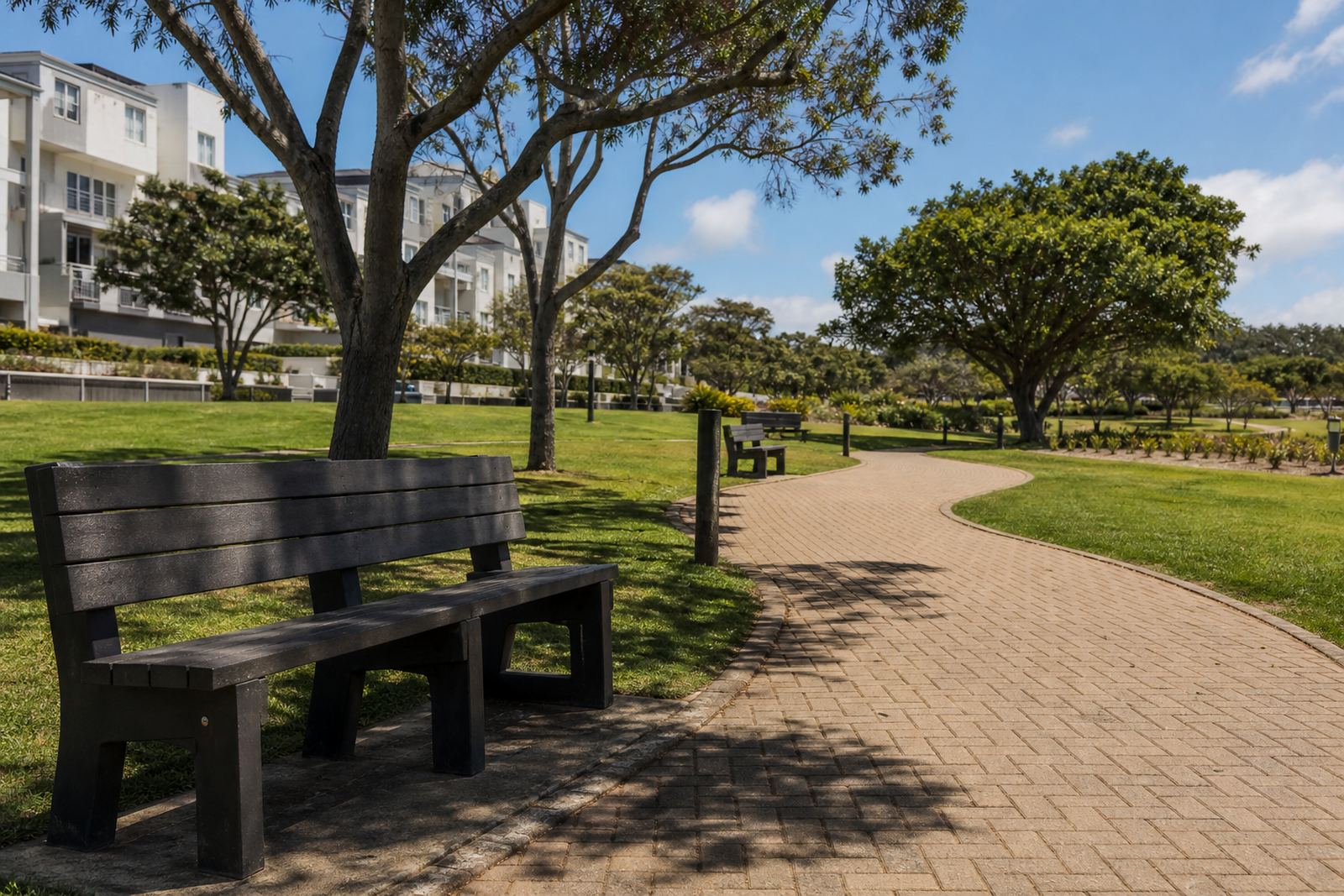
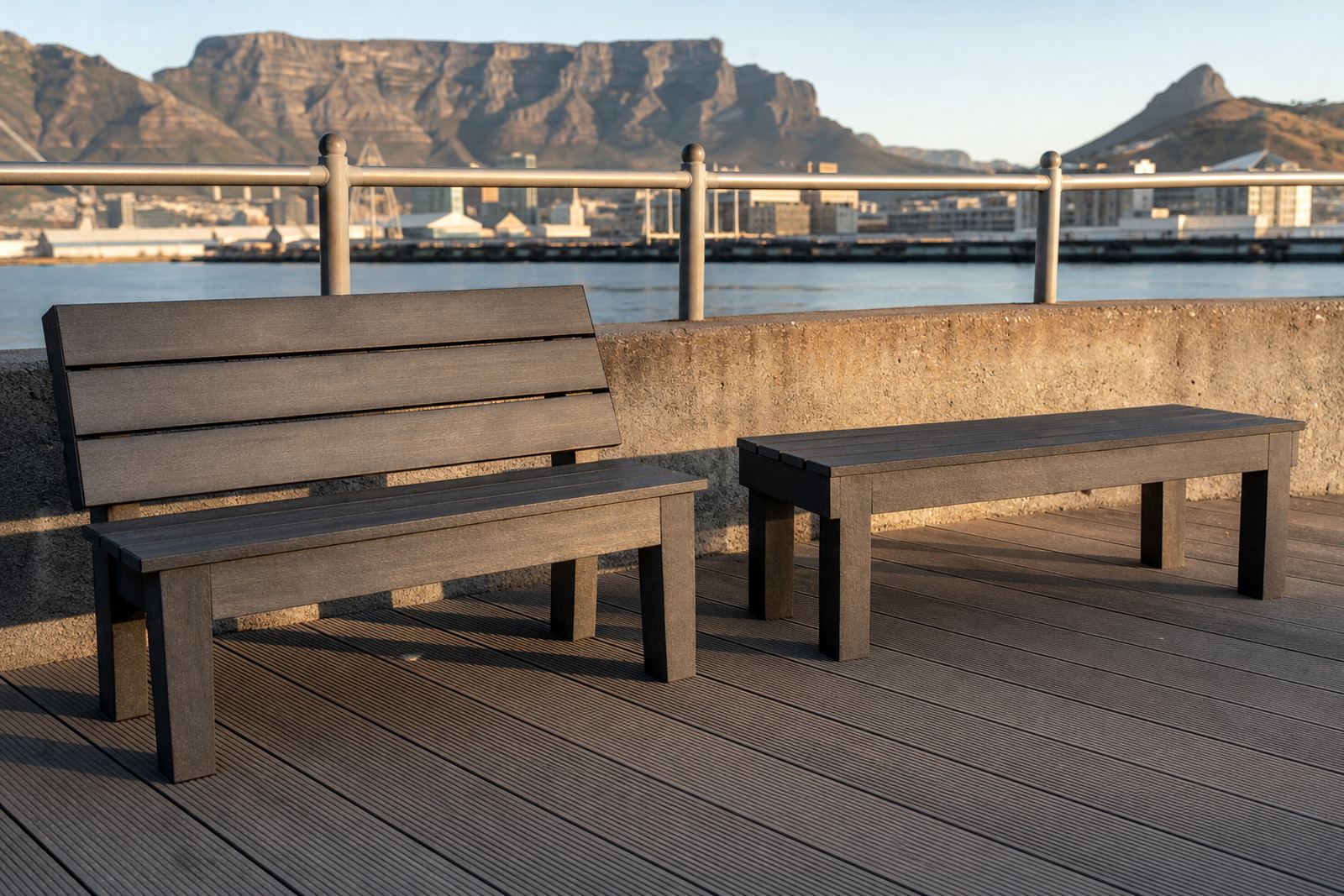
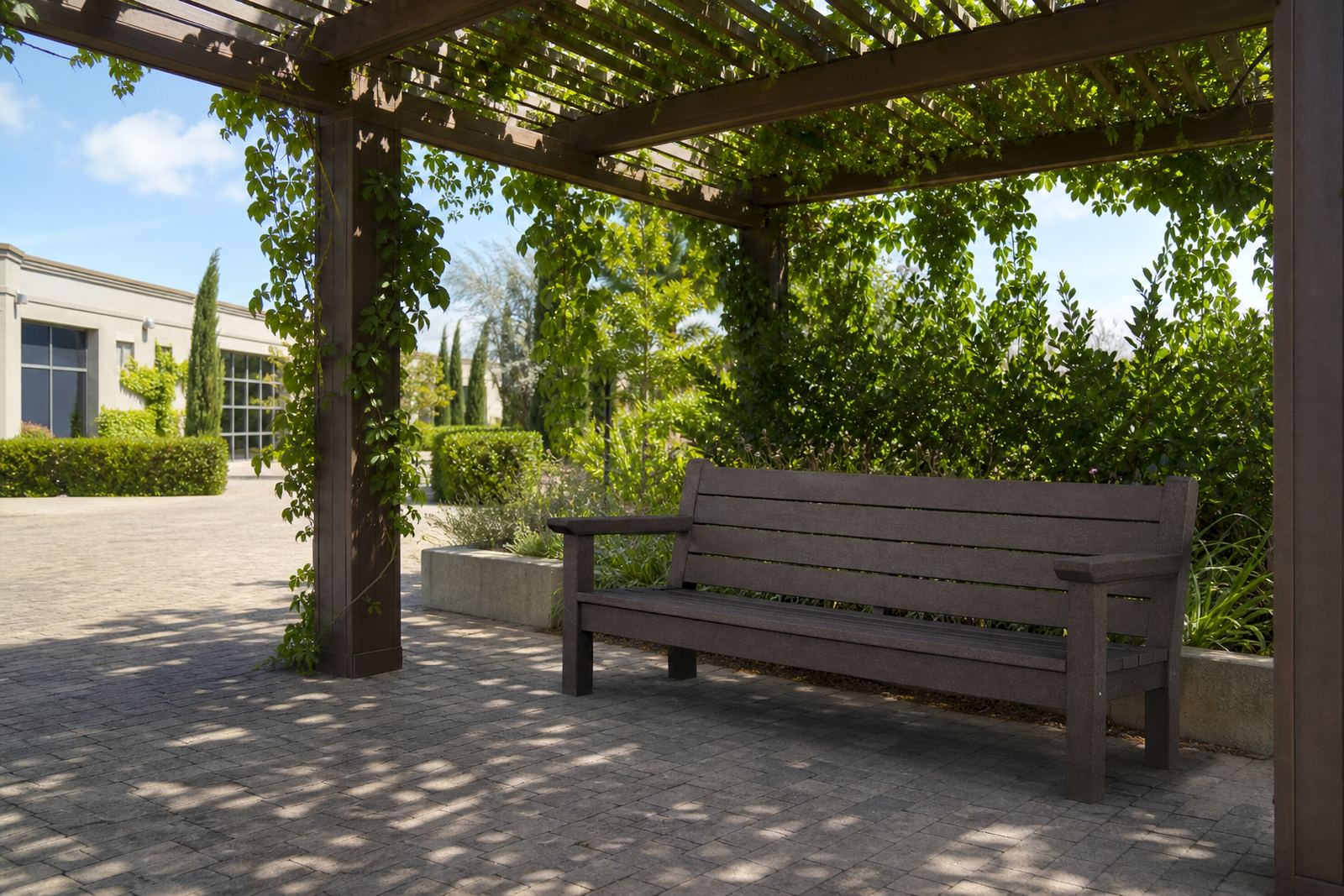
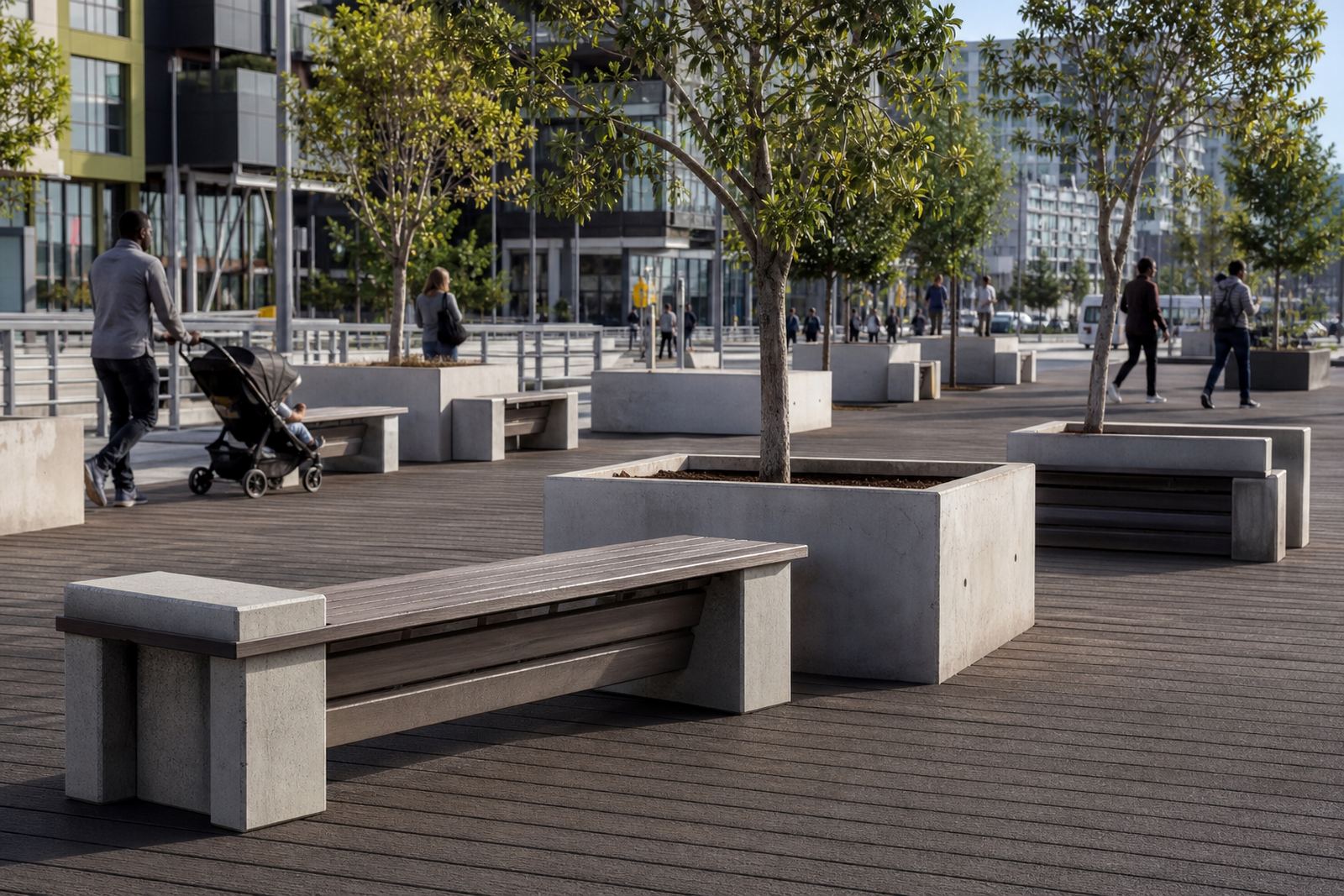
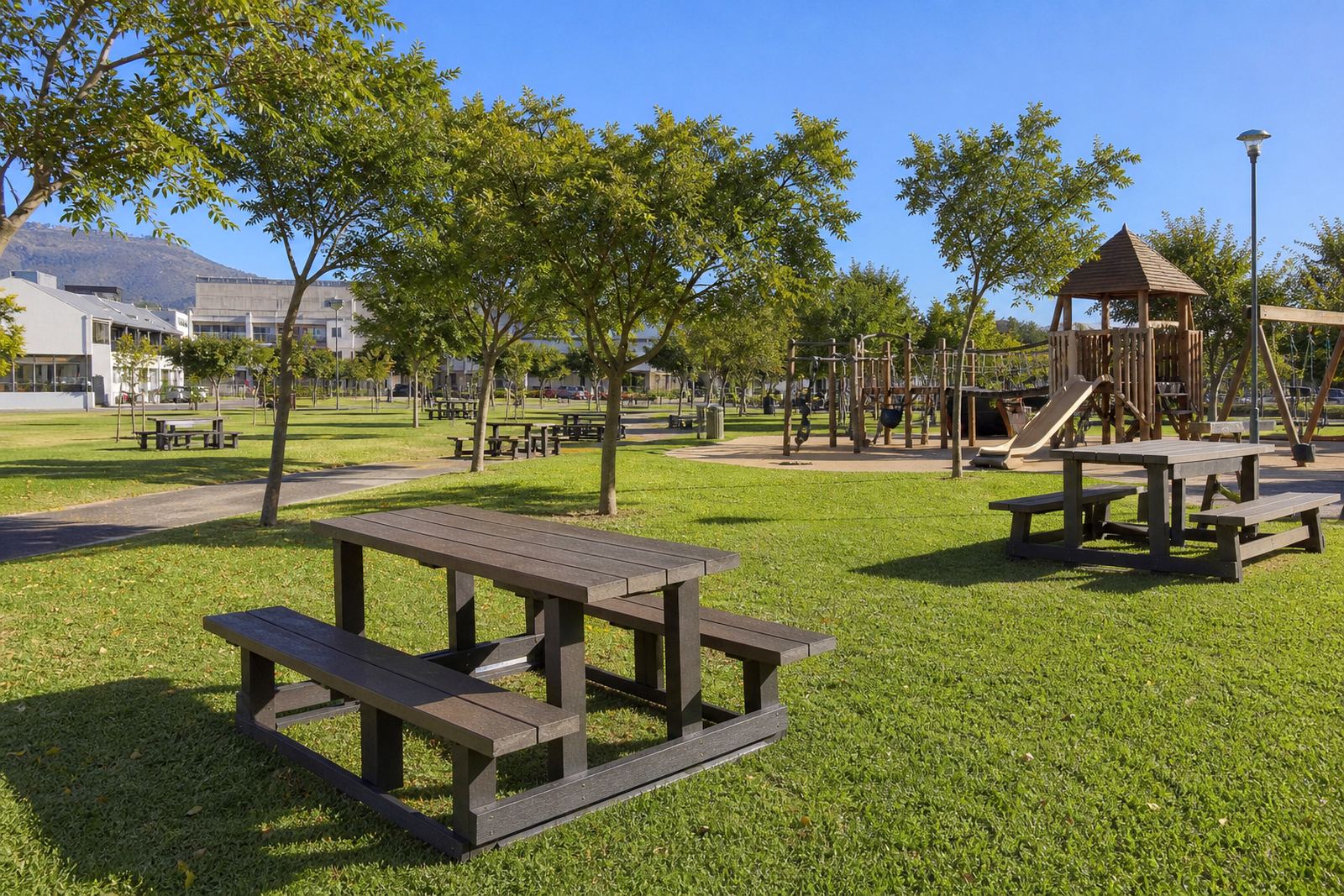
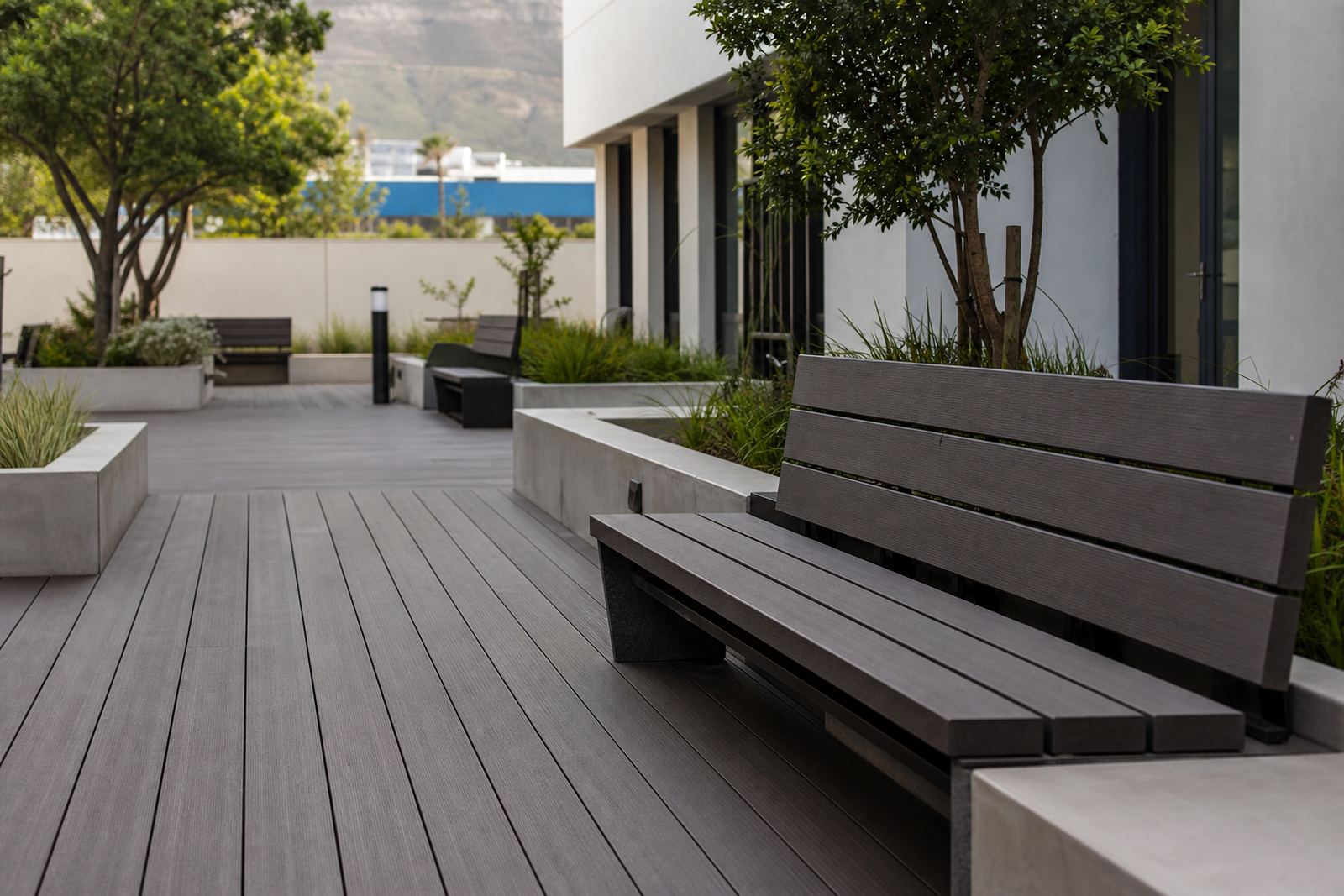
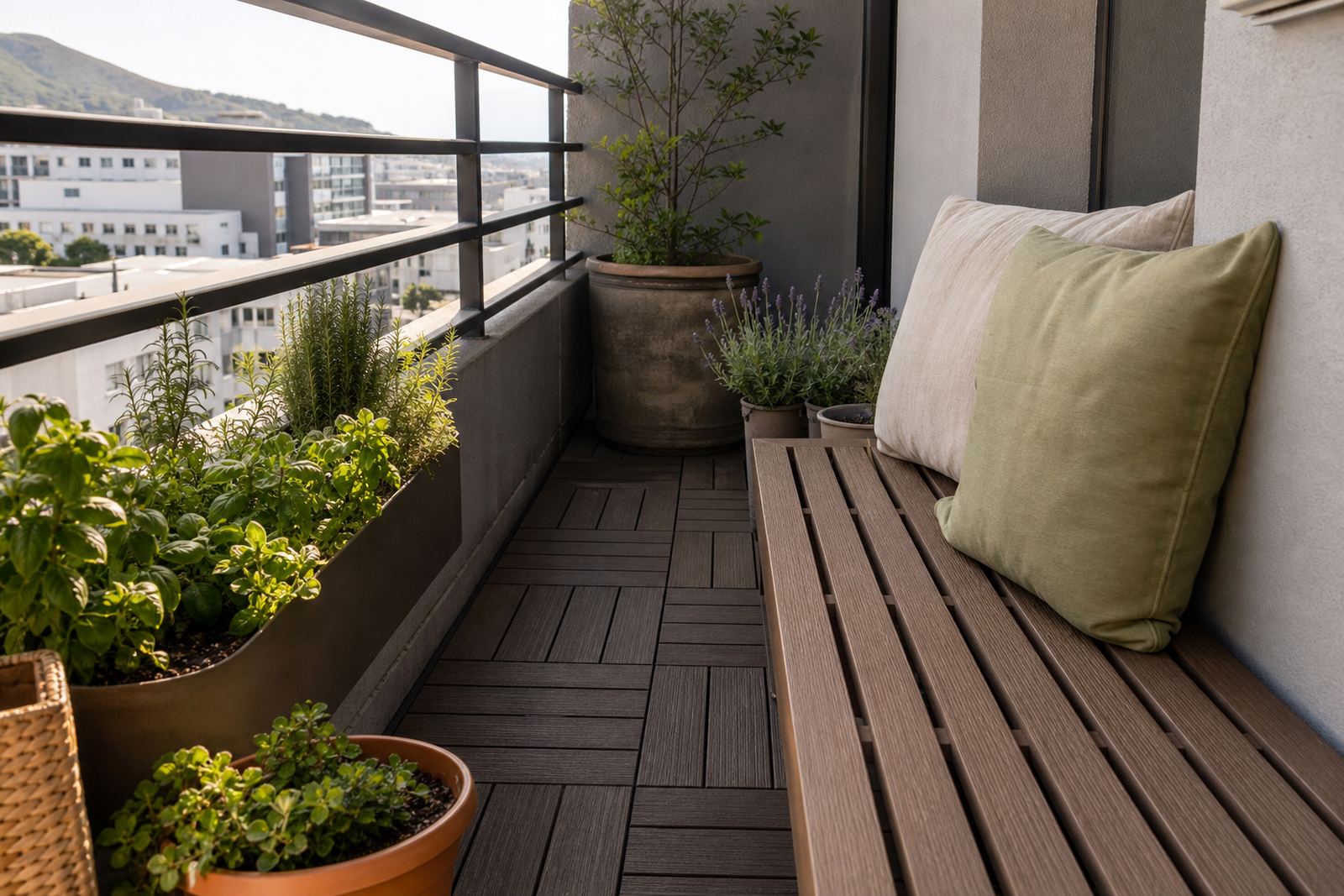
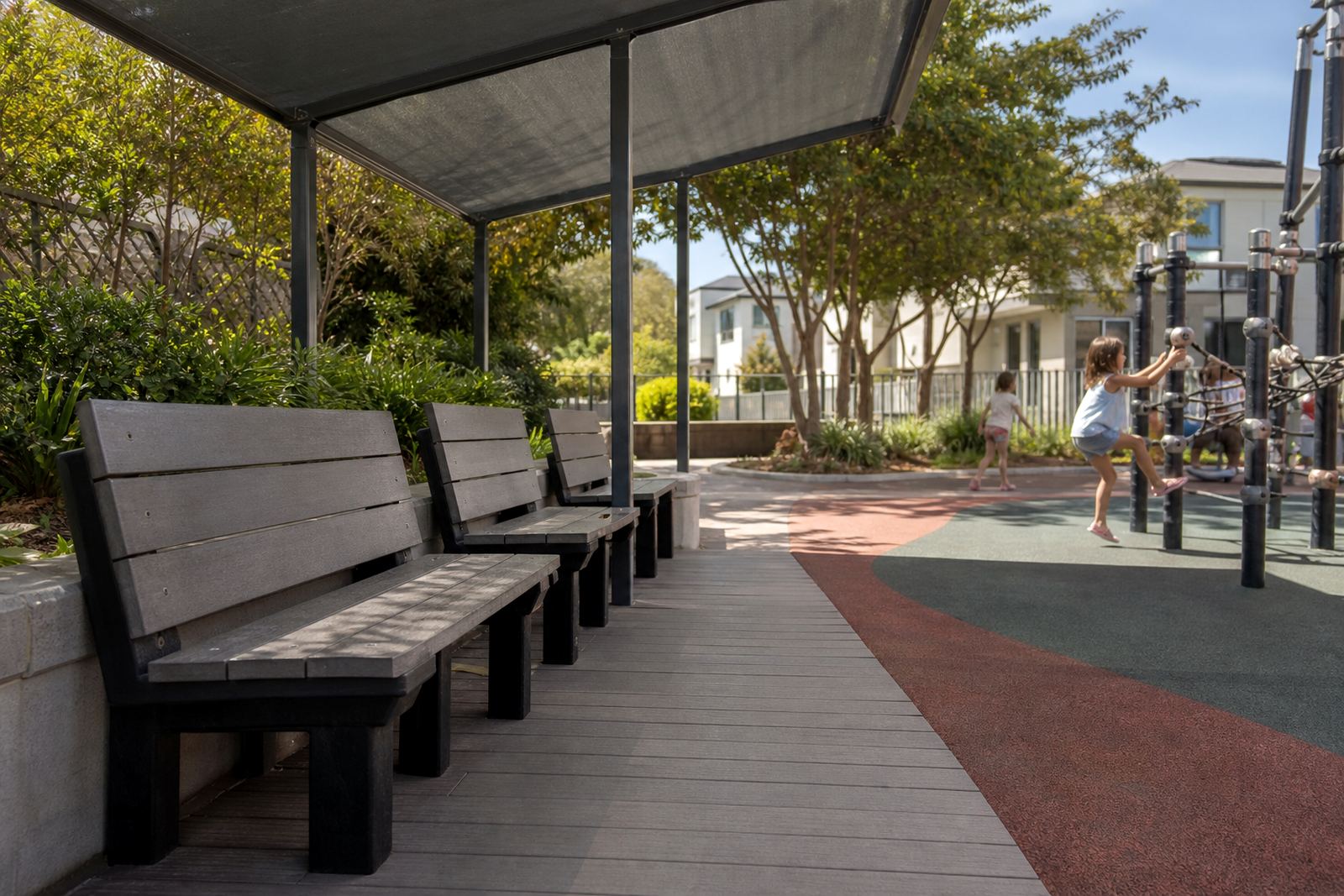
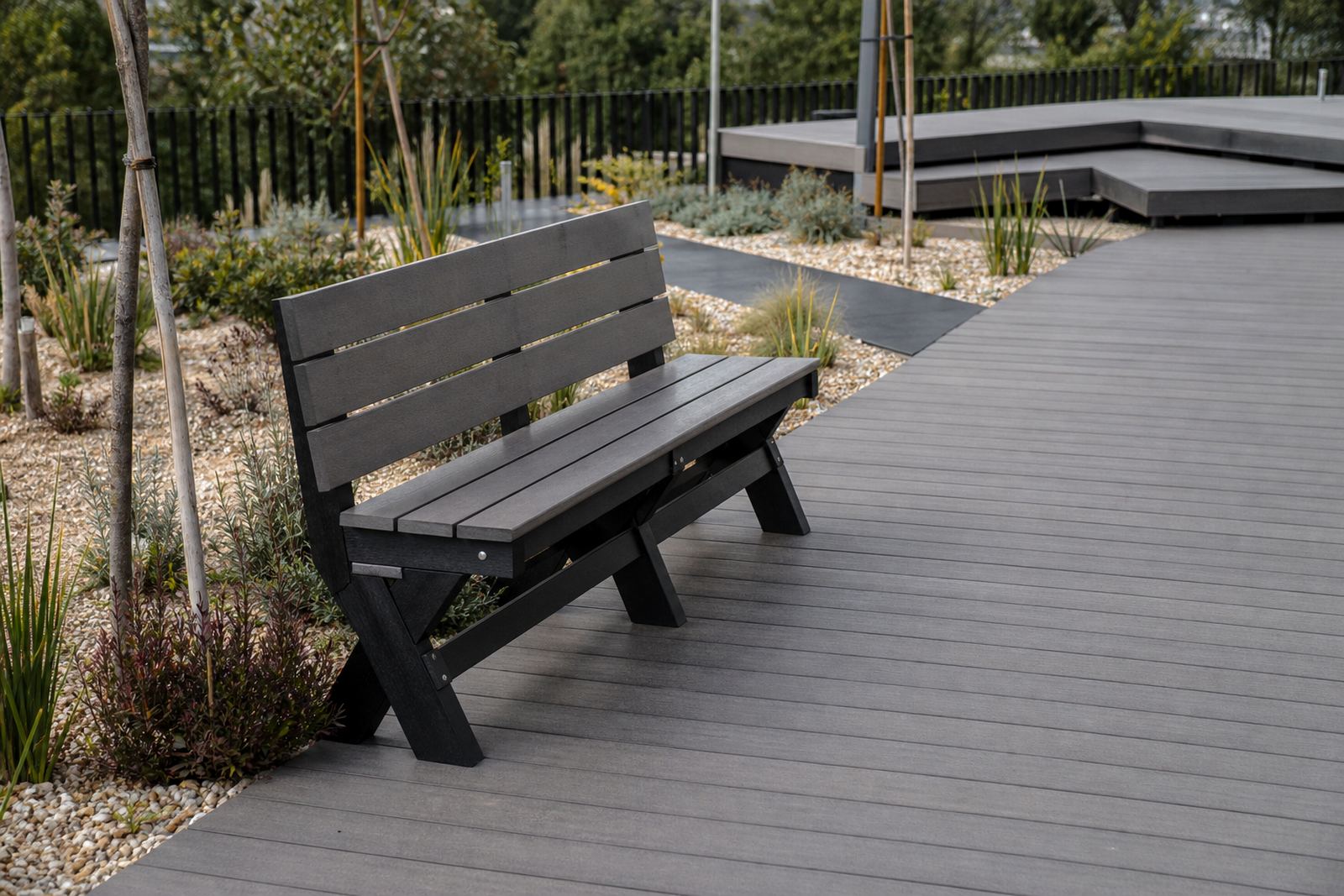
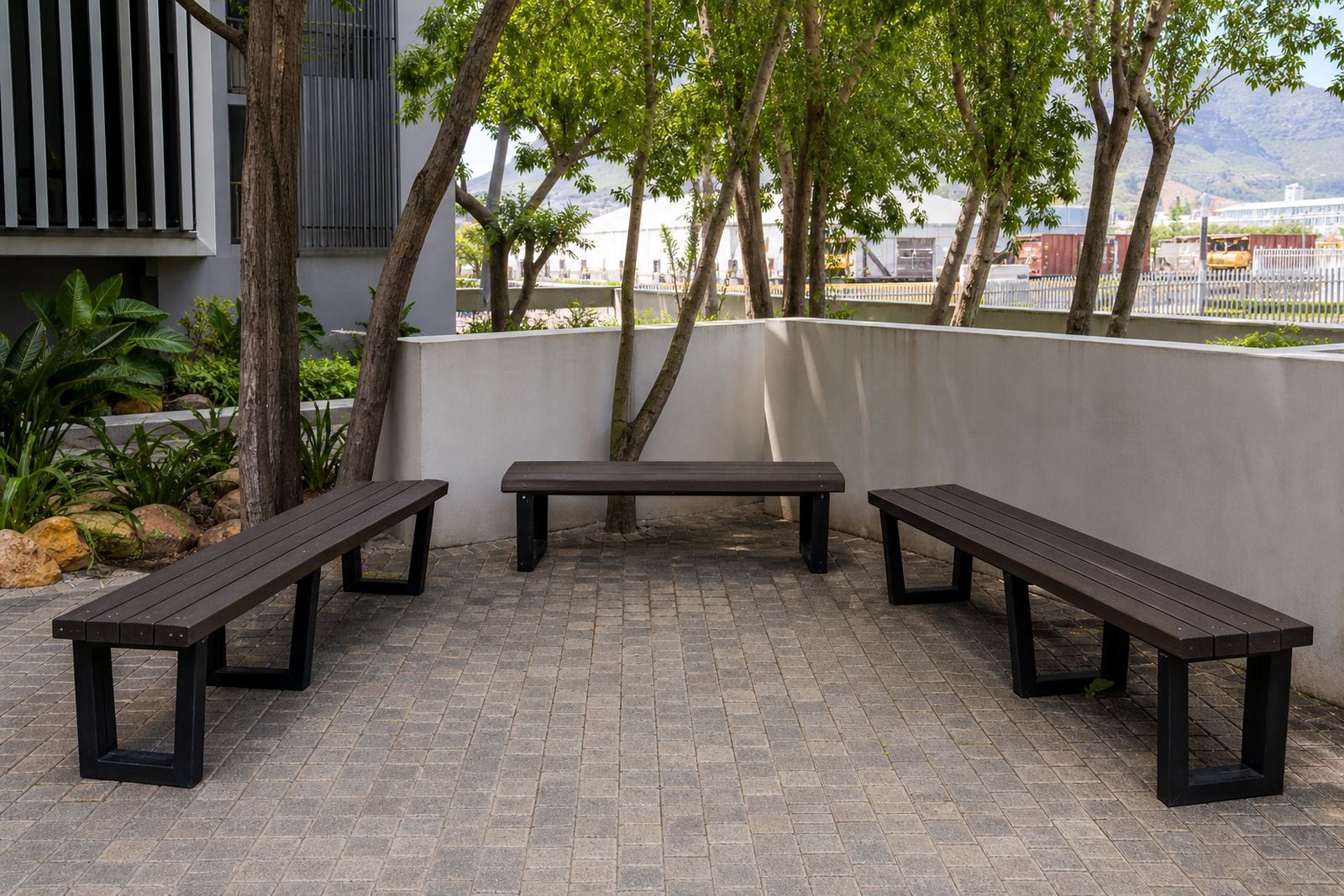
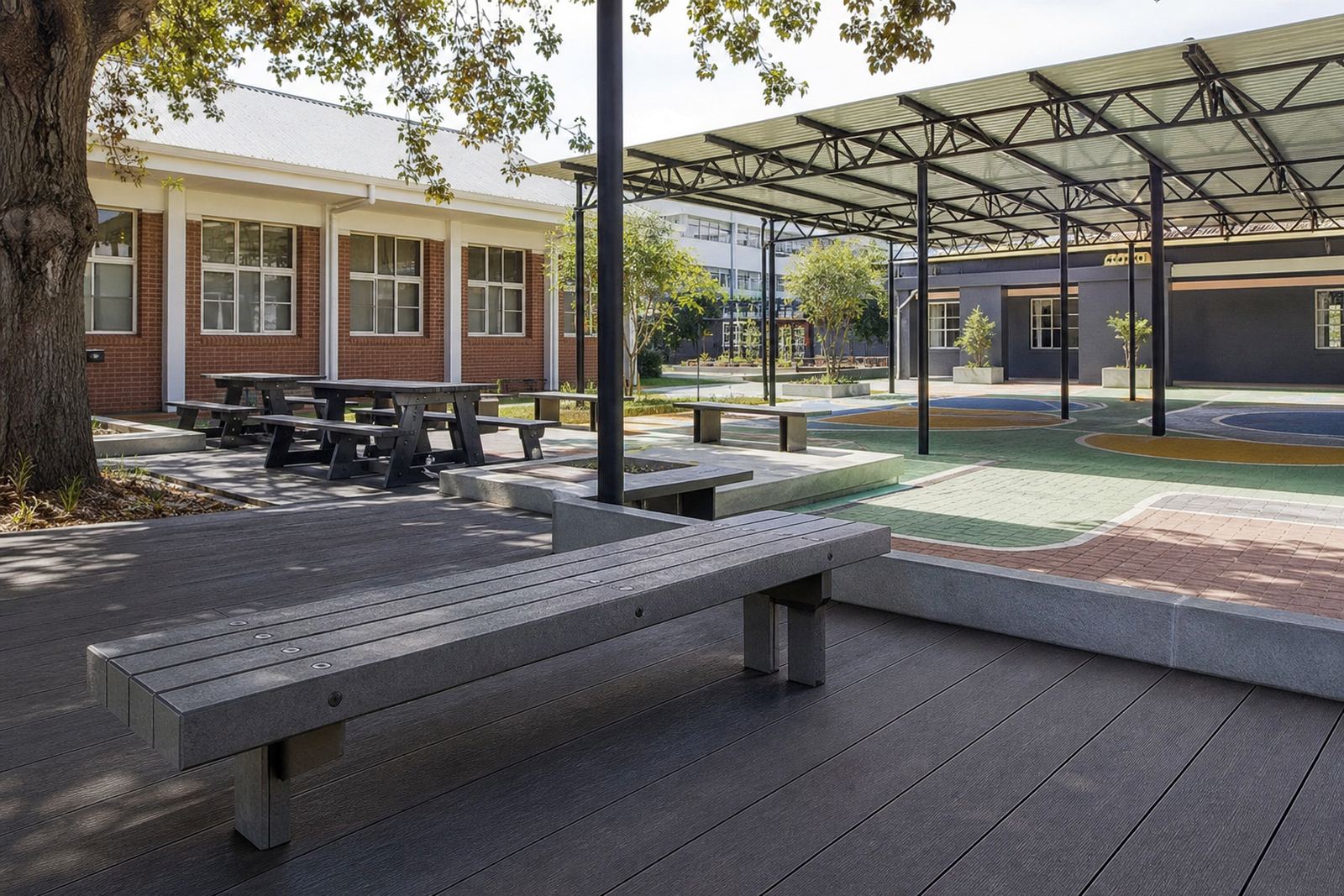
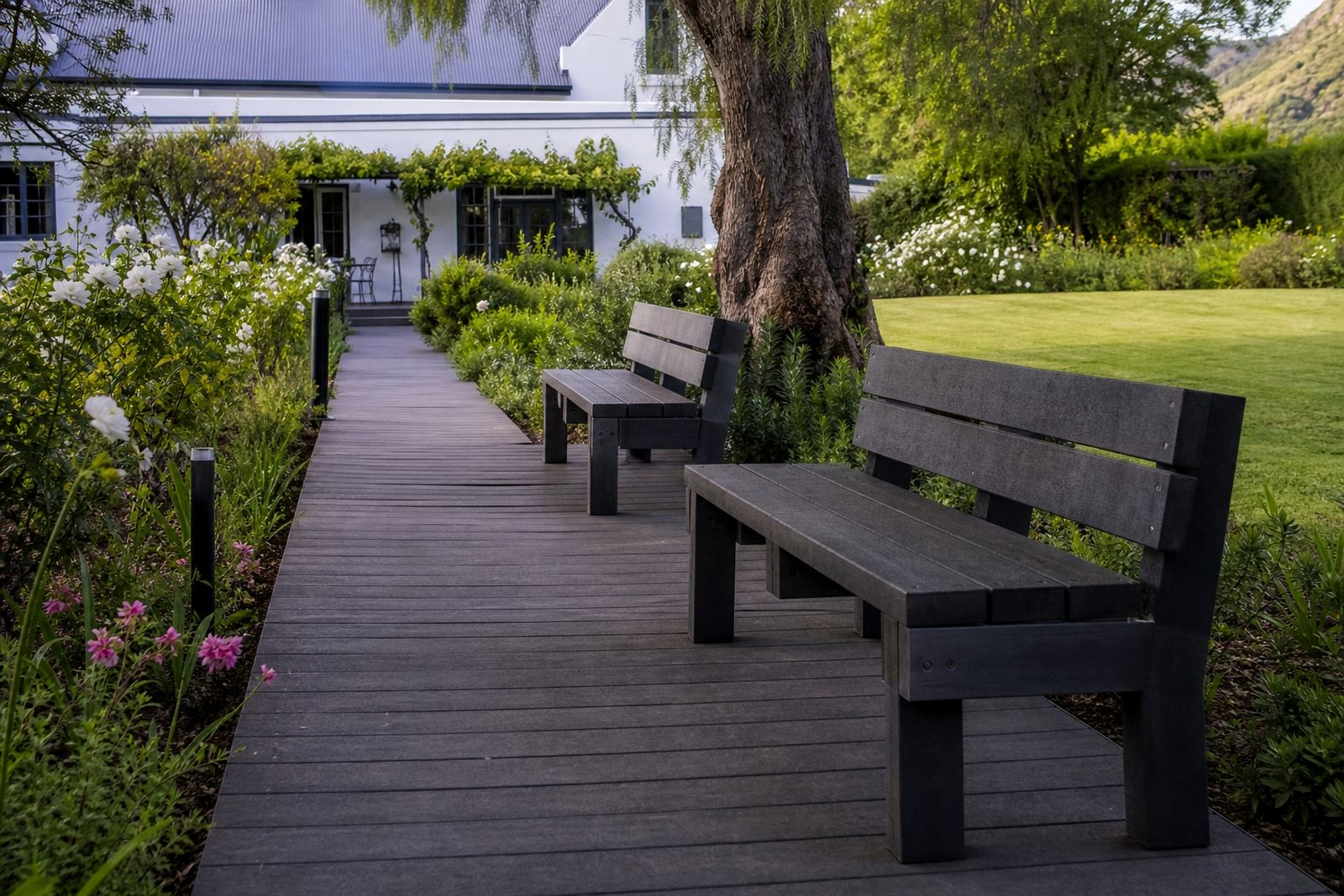
Benches made from recycled plastic lumber are often chosen for places where durability matters and maintenance must stay simple. They are useful in gardens, courtyards, entrance areas, outdoor dining spaces and shared facilities. Because the material handles rain and regular wiping down well, it suits sites that need a neat look without constant sanding or repainting.
For managers and specifiers, the main questions are comfort, placement and upkeep. A bench that is too close to a wall may trap dirt, while one placed in direct afternoon sun may be uncomfortable in midsummer. Positioning also matters for safety and access, especially on sites that must keep walkways clear for visitors, staff or residents. Small details make a big difference over time, and they are easy to miss in the early stages.
- Choose locations with enough circulation space around each unit.
- Keep benches clear of sprinkler overspray and low drainage points.
- Match the style to the site, from private homes to shared outdoor areas.
- Check whether the bench needs to be fixed in place or kept movable.
What to know about care in coastal and inland conditions
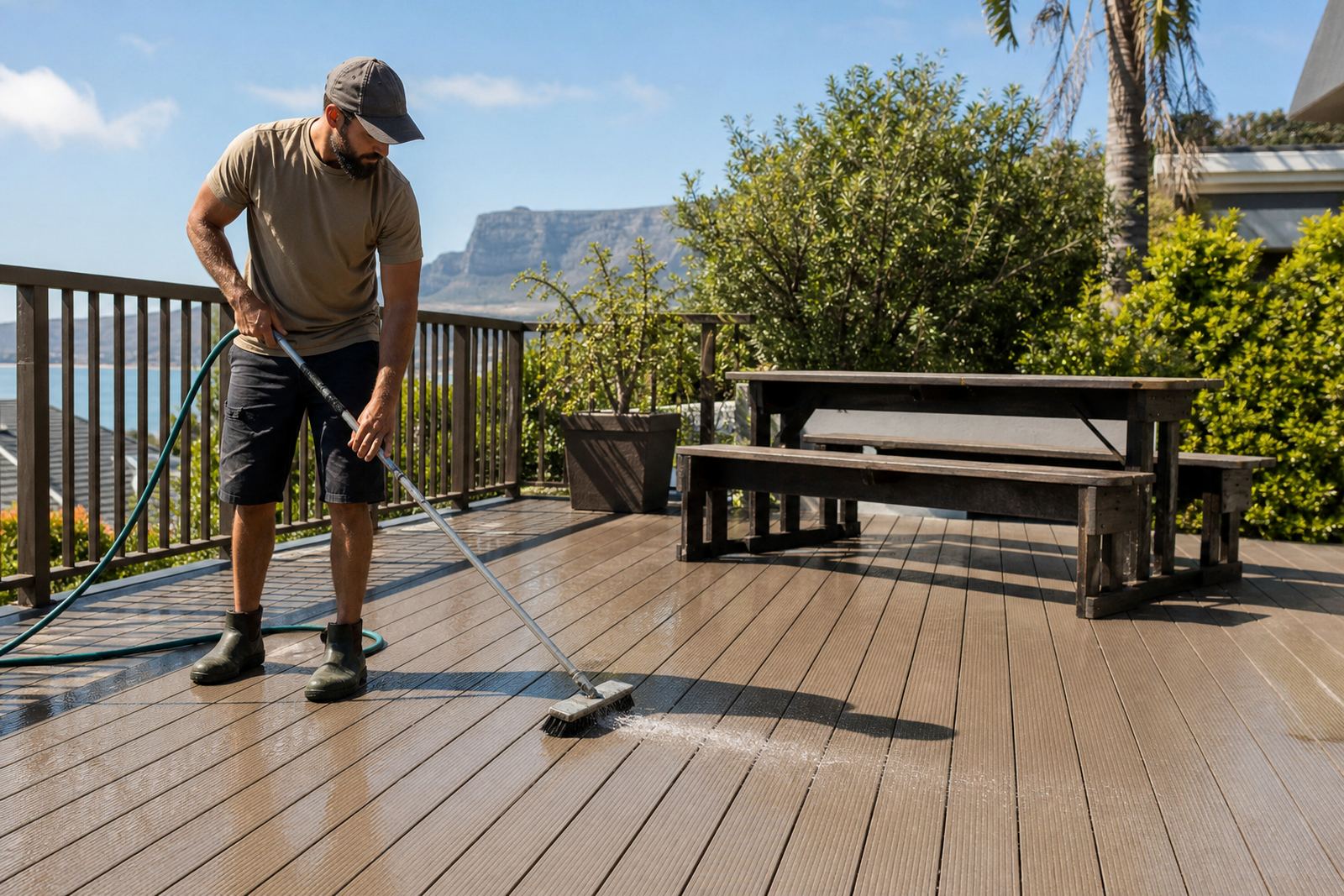
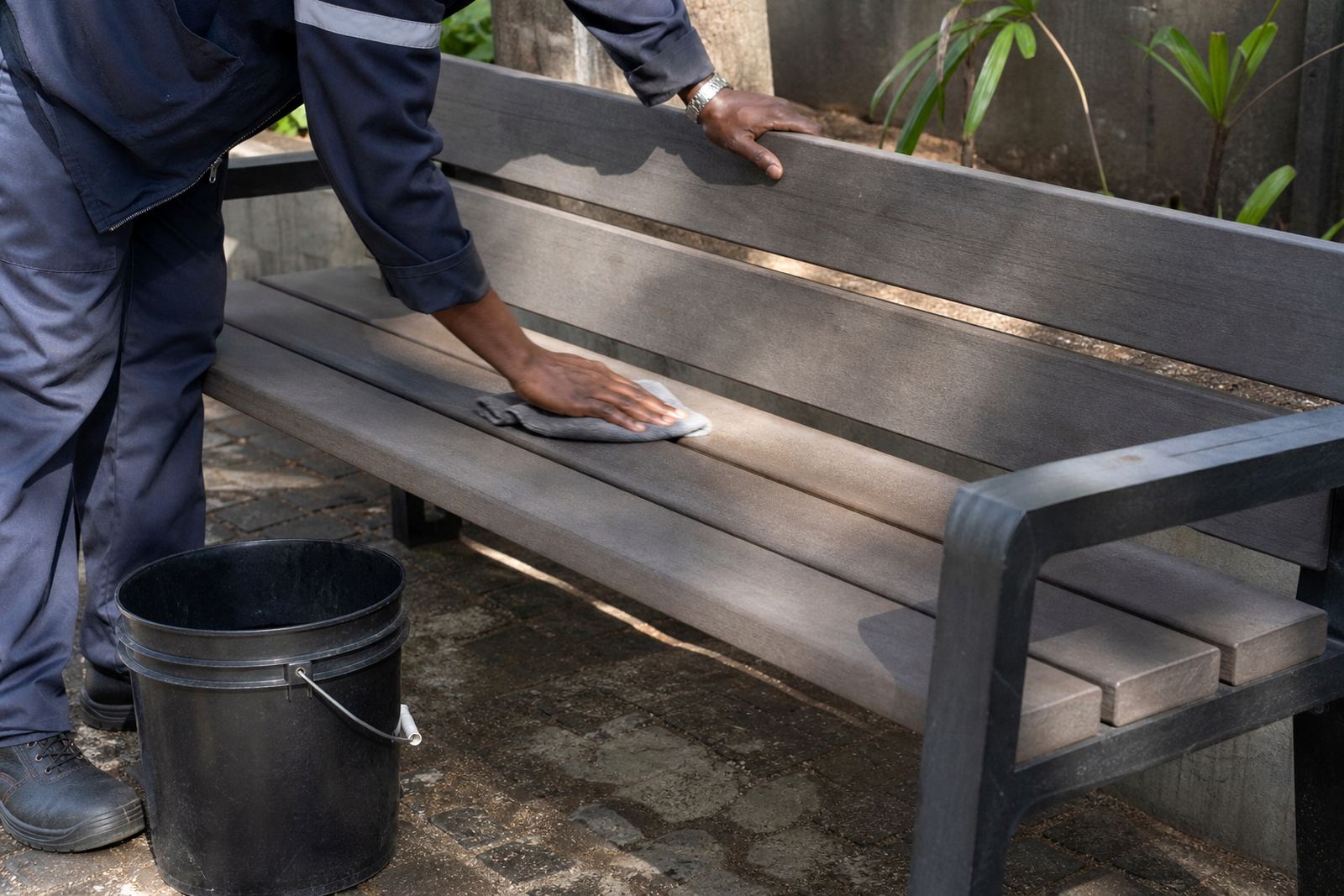
Outdoor materials behave differently across South Africa. In Cape Town and the coastal belt, moisture and salt can affect many finishes, while inland sites may face stronger UV exposure and dust. Recycled plastic lumber is generally selected because it needs less routine upkeep than timber, but it still benefits from sensible care. A regular wash, occasional inspection and prompt replacement of damaged components will keep the installation working well.
For property owners, the main advantage is predictable maintenance. There is no need for repeated sealing or staining in the same way as with timber, though site conditions still matter. If the area is used by the public or by multiple tenants, it helps to set a cleaning schedule and check fixings after heavy weather, especially after strong wind or summer storms. That small bit of attention goes a long way.
Planning support for builders, architects and managers
Many of our journal articles are written for people who need to balance design and practical delivery. That includes builders, architects, facilities managers, estate teams and owners doing upgrades in stages. Clear planning can save time on site, reduce waste and make it easier to coordinate with paving, landscaping, plumbing and access routes. It also helps when projects are split across several visits.
If you are comparing options for a new deck or seating area, the first step is usually to understand the site conditions and the intended use. From there, layout, material quantities and delivery timing can be aligned with the rest of the project. This is especially useful for multi-unit properties, hospitality venues and larger developments where people expect the work to be tidy and on schedule.
- Use site measures to confirm dimensions before ordering materials.
- Plan delivery around access, lifts, loading bays or narrow roads.
- Coordinate with other trades to avoid delays on installation day.
- Set aside time for care advice and handover once the work is complete.
Browse topics on decking, benches and product care
The Outdoor Journal brings together practical reading on recycled plastic lumber decking and benches, with guidance on installation, refurbishment and day-to-day care. It is a useful starting point when you are choosing materials for a home in Paarl, a commercial courtyard in Johannesburg or a shared space in Durban. The aim is simple: help you choose what suits the site and keep it in good condition for as long as possible.
The listings on this hub are added separately, so use the articles here to narrow your choices before requesting support. If you need help with trade support, material quoting, delivery coordination or refurbishment planning, the right article can point you in the right direction before the project moves ahead.