
What matters before you choose a bench material
A bench is more than a place to sit. In a home courtyard, school, public walkway or retail forecourt, it has to handle weather, cleaning, regular use and sometimes rough treatment. Before picking a material, it helps to think about the setting, the look you want and the upkeep you are prepared to do over the years.
For coastal sites the material choice matters most where salt air, rain and sun all meet and maintenance budgets are tight. Inland, strong sun and wide temperature changes can still cause cracking, fading or movement if the wrong product is used. A good bench material should suit the setting first, then the style of the project.
- Outdoor exposure: sun, rain, wind and coastal air
- Expected use: private garden, commercial seating or public space
- Cleaning needs: simple wash down or regular sealing and repainting
- Appearance: natural timber look, modern finish or low-key practical look
- Access: can the bench be delivered and fitted in one piece or built on site
Timber benches: familiar, attractive and maintenance-heavy
Timber remains a popular bench material because people know how it looks and feels. It can suit gardens, stoops and hospitality spaces where a warm, traditional finish is wanted. The challenge is that timber asks for ongoing care. In South African conditions it may need regular sealing, sanding, coating or replacement of damaged parts.
Where benches are exposed to moisture, timber can swell, split or twist if it is not looked after properly. In busy settings the wear is even more obvious. A good-looking timber bench can stay that way, but only when someone keeps an eye on it and services it on time.
- Best for: sheltered patios, decorative seating and design-led spaces
- Watch outs: water damage, splitting, termites and surface wear
- Upkeep: sealing, repairs and occasional part replacement
For many property owners, the finish is not the problem, it is the ongoing attention needed to keep the bench looking good.
Metal benches: strong profile with rust to manage
Metal benches suit places that need a neat, hard-wearing form. They are often chosen for schools, station areas, complexes and public walkways. The advantage is strength and a clean appearance. The drawback is corrosion, especially close to the coast where salt air can shorten the life of exposed steel if coatings fail.
Metal also heats up quickly in strong sun, which is worth thinking about in exposed courtyards and parking areas. If a bench is used by children or older people, surface temperature and comfort become important. In practice, metal benches often need protective coatings, touch-ups and inspection for rust at joints and fixings.
- Best for: high-use areas and simple modern layouts
- Watch outs: rust, hot surfaces and coating damage
- Upkeep: inspection, repainting and fixing corrosion early
Concrete and stone benches: permanent but not always practical
Concrete and stone benches are chosen when the goal is permanence. They work well in parks, public gardens and civic spaces where movement is not needed. They also suit places where vandalism is a concern, because the bench itself is heavy and difficult to shift. That said, they can be cold to sit on and are not always the most comfortable option for long use.
Another point is installation. Heavy benches need careful planning for access, placement and ground preparation. If the site has uneven paving, drainage issues or limited vehicle access, the logistics can become a bigger part of the job than the bench itself. For some projects that is fine, but it is not always the most practical route.
- Best for: parks, civic spaces and fixed seating areas
- Watch outs: weight, comfort and difficult installation
- Upkeep: low day to day care, but repairs can be costly
Why recycled plastic lumber fits so many South African sites
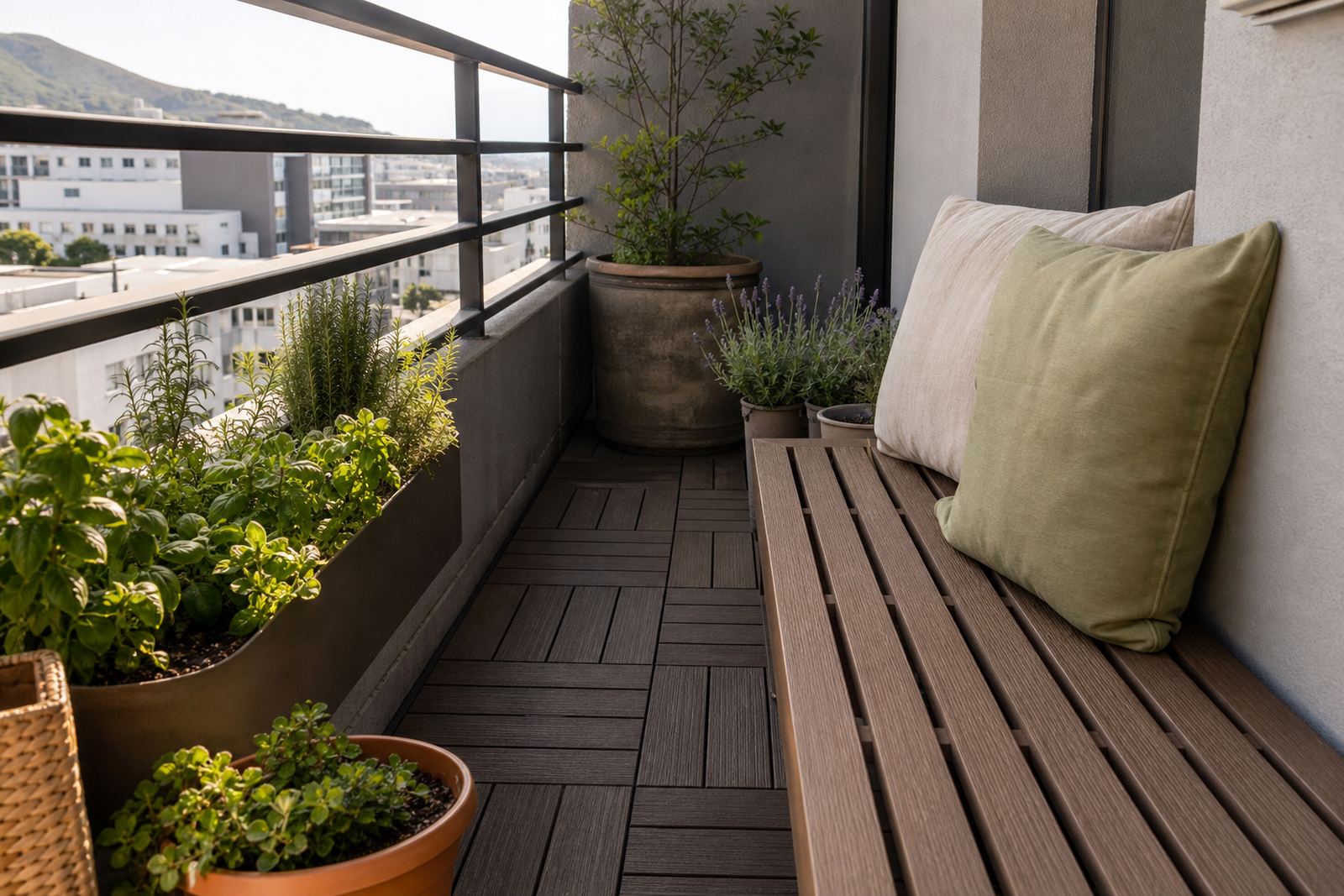
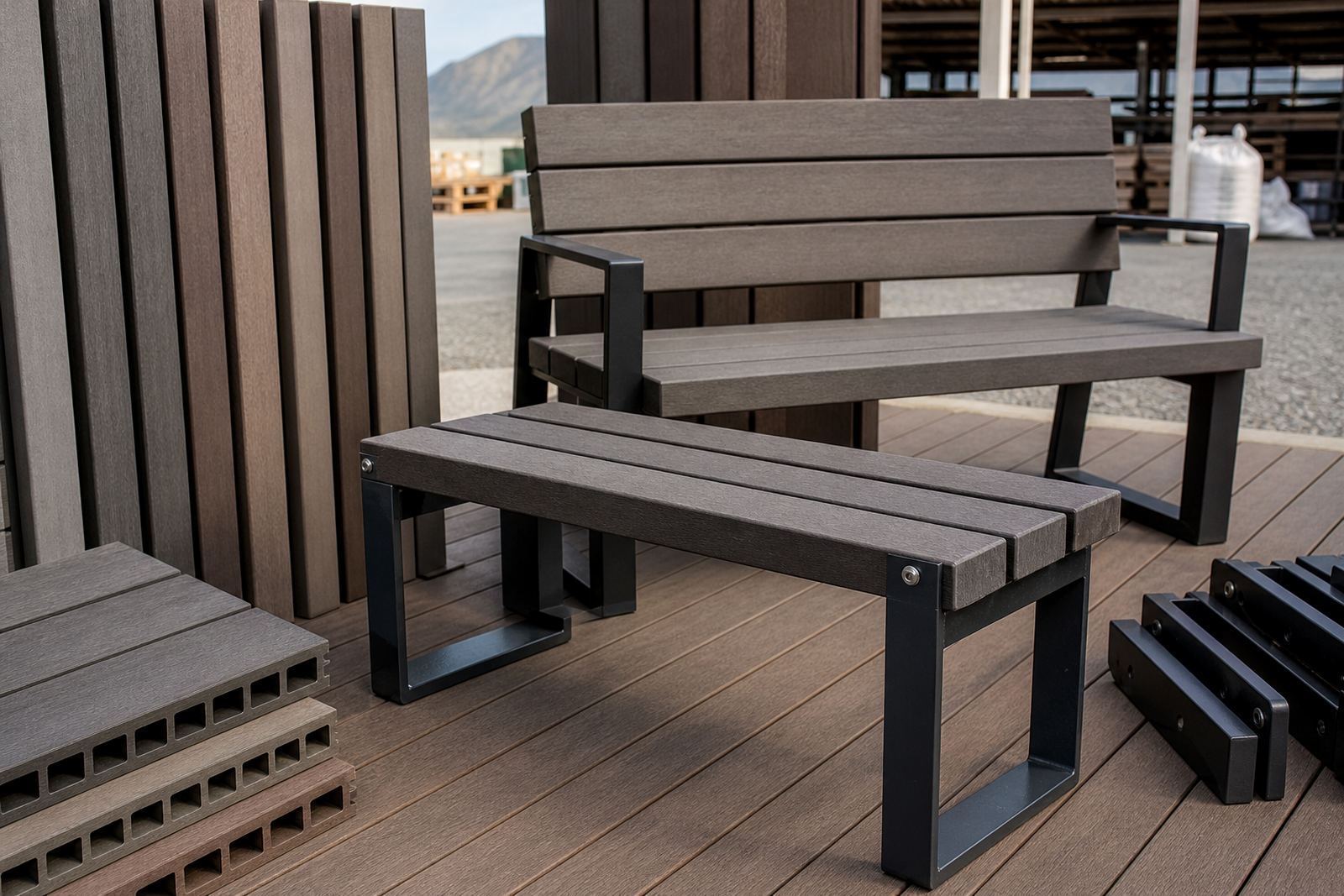
Recycled plastic lumber is a useful bench material where low maintenance and weather resistance matter. It is made into boards and components that can be used for bench seating, frames and slats. Because it does not behave like natural timber, it avoids many of the common problems linked to rot, swelling and insect damage. That makes it especially practical for coastal towns like George, Durban and Cape Town, where moisture and salt can be hard on timber.
It also works well in places that need regular cleaning. Councils, schools, estates and businesses often want seating that can be washed down without constant repainting or resealing. For outdoor spaces in Paarl, Somerset West or Bellville, it gives a neat finish that stays serviceable with less fuss. It is not trying to imitate timber perfectly, it just gives a practical alternative that holds up in real use.
- Useful for: residential gardens, estates, public seating and commercial courtyards
- Good in: coastal air, wet conditions and high-sun exposure
- Lower upkeep: no regular painting or timber sealing
- Practical for: projects where long service life matters more than a natural grain
For many clients the deciding factor is simple: they want a bench that still looks presentable after years of sun, rain and cleaning, without turning into a maintenance job.
Where recycled plastic benches are a smart choice
Not every site needs the same bench. A small private courtyard may suit timber, while a busy apartment block or public walk-through needs something easier to maintain. Recycled plastic lumber is especially useful where the bench will see daily use and cannot be babied. It is also handy where project teams want a consistent finish across several seating areas.
In a mixed-use development in Stellenbosch, for example, a bench has to cope with sun, coffee spills, bag scratches and general traffic. On a Durban promenade, it has to stand up to humidity and constant exposure. On a Johannesburg office campus, the concern might be dust, dry air and lots of foot traffic. In each case the practical question stays the same: what material will keep its shape and appearance with the least trouble?
- Choose recycled plastic lumber when low maintenance is a priority
- Choose it when the bench will be outdoors year round
- Choose it when replacement cycles need to be less frequent
- Choose it when a project team wants practical support for layout and installation
Getting the bench material right from the start
Once the material is selected, the rest of the project still needs proper planning. Site measures, layout planning and delivery coordination all matter, especially when benches are going to multiple locations or need to fit around paving, planters or access routes. A well-planned bench is easier to install and easier to live with.
Plastimber, based in Paarden Eiland in Cape Town and working across Cape Town, Stellenbosch, George, Johannesburg and Durban, supports projects from the first measure through to installation and aftercare. That includes bench installation, edge finishing, bench refurbishment, component replacement and care advice. For trade clients, the value lies in matching the material to the site before any boards are cut or fixings are set.
When a bench is specified properly, it does its job quietly for years. That is the point: useful seating, less upkeep and fewer surprises later on.