
Why the deck edge matters more than most people think
An outdoor deck can be well laid and still feel unfinished if the edge detail is rushed. The outer line is what you see first from the yard, the braai area, or the steps coming off a sliding door, so the finish at that point carries a lot of visual weight. It also takes the most handling. Shoes catch there, brooms hit it, and water tends to sit on the exposed side after rain or washing down.
With recycled plastic lumber, the edge needs to be planned with the same care as the main layout. The material is stable and suited to coastal humidity, but the way it is cut, capped, rounded or boxed in will change how neat the deck feels. In places like Paarden Eiland and Milnerton, where salt air is part of daily life, a clean edge detail helps the deck stay tidy longer and cuts down on snag points and grime build-up.
Common edge finishs used on patios and walkways
There is no single correct edge detail. The right choice depends on the shape of the patio, the height above ground, and how the deck meets paving, grass or a pool surround. A good installer will look at the slope of the site, the drainage path and how people move through the area before deciding on the finish.
- Square trim edge: A neat, straight finish that suits modern patios and simple layouts.
- Radius or rounded edge: Softer on the leg and useful where children play or where people pass close to the border.
- Framed edge board: Creates a clear outline and helps hide cut ends for a more finished look.
- Mitred return: Useful on steps, corners and exposed ends where the board line turns back on itself.
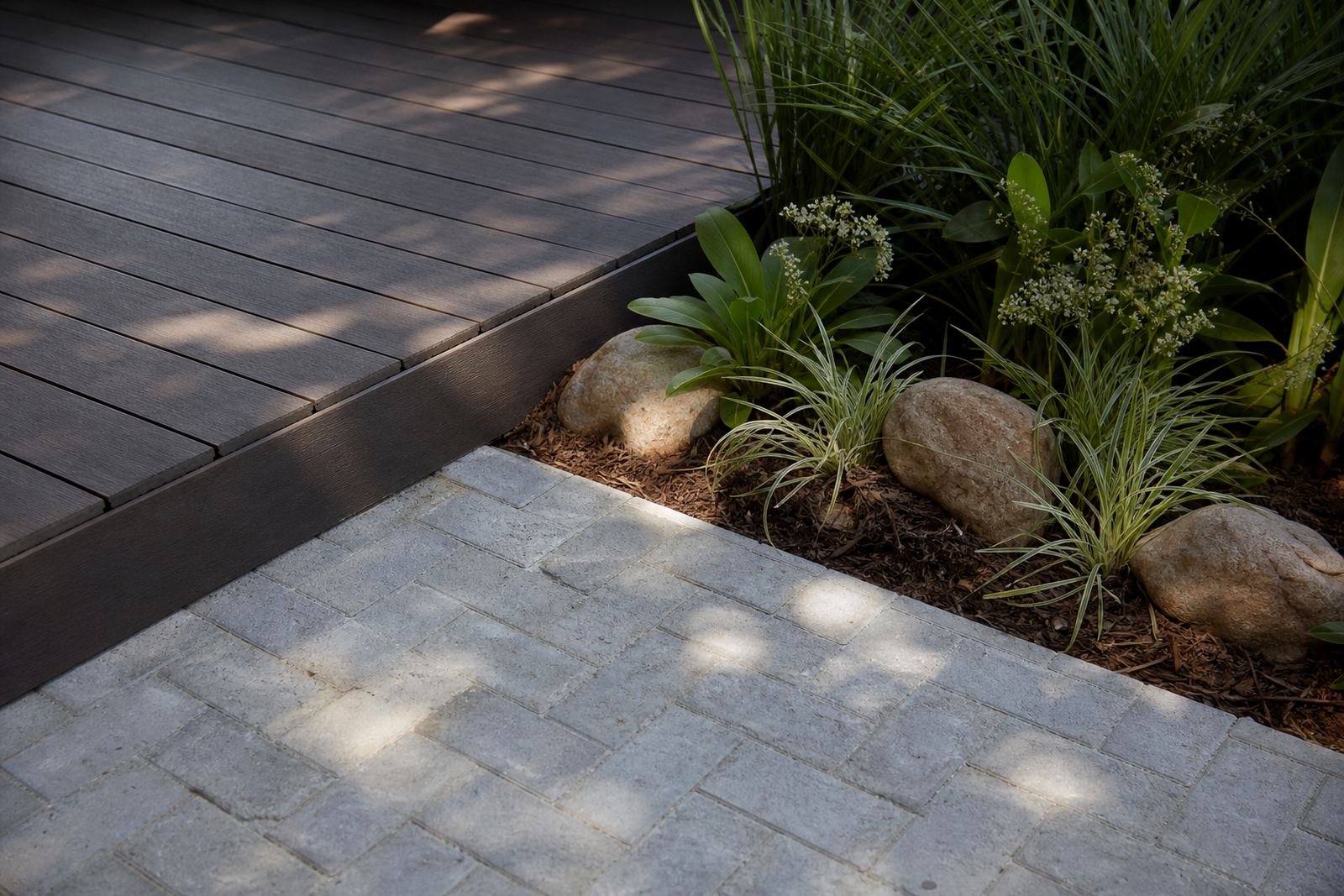
- Inset border detail: Works well when the deck meets paving or another material and you want a clean transition.
Each of these can be made to suit a home veranda, restaurant terrace, school courtyard or retail smoking area, but the detail must match the structure below it. A pretty edge that traps water or flexes underfoot will cause trouble later.
How the right edge supports long-term performance
Outdoor decks in South Africa deal with strong sun, sudden rain, wind-blown grit and regular washing. On the coast, salt and moisture add another layer of pressure. That is why the edge is never only cosmetic. It protects the exposed ends, helps reduce splintering on mixed-material structures, and gives installers a defined line for fixing and finishing.
Recycled plastic lumber is often chosen because it handles moisture better than many timber alternatives and does not need the same level of ongoing sealing. Even so, the finish still matters. If the outer board is left too proud, it can chip or catch. If it is cut back too far, the border can look uneven. On a raised deck in Stellenbosch, for example, a cleanly boxed edge can make the whole patio feel more tailored, while also keeping the underside easier to inspect during maintenance.
Good edge work also helps with cleaning. Sand, leaves and fine dust tend to settle at the outer line, especially where wind comes in from the sea or from open land. A neat finish gives fewer ledges for dirt to sit on, and that makes regular care simpler.
Matching the edge to the site and the use
A family deck, a hospitality terrace and a small balcony do not need the same finish. For a home in Somerset West, the owner may want a smooth rounded edge where children sit and play. For a commercial property in Durban, where foot traffic is higher, a squared edge with a clear border can make the route easier to read and maintain.
Before choosing the detail, it helps to ask a few practical questions:
- Will the deck sit next to paving, lawn, gravel or another deck level?
- Is there a step down, a pool edge, or a boundary wall close by?
- Will chairs, planters or braai equipment be moved across the edge regularly?
- Does the site get strong prevailing wind, heavy rain or afternoon salt spray?
- Do you want the edge to disappear into the layout, or stand out as a border?
These questions help the finish work with the site instead of against it. A straight border may suit a crisp courtyard, while a stepped or framed edge can soften an irregular patio line. The aim is not only to look tidy on day one, but to keep looking right after a few seasons of use.
Local example from a coastal patio in Cape Town
On a project in the Cape Town area, the patio sat beside a sliding door and a narrow strip of garden that picked up wind every afternoon. The owner wanted a cleaner line where the deck met the open edge, but did not want something bulky or complicated. The best result came from a framed border with careful corner returns, allowing the outer line to read clearly from inside the house while still keeping the surface easy to sweep.
That kind of detail works well in coastal suburbs because it gives the deck a finished perimeter without adding unnecessary maintenance. The edge was planned with the slope of the ground in mind, so water could move away naturally and not sit against the border. It is a small thing, but small things matter when the space is used every day for coffee, braai prep and evening seating.
The same thinking applies in George, Paarl or Bellville, where patios may be exposed to different wind patterns and dirt levels. A local site measure and layout plan makes it easier to see which edge detail will suit the property best before materials are cut.
Finishing details that keep the deck neat
The best edge finish is usually the one that looks simple but has been carefully thought through. That often means keeping fixings tidy, aligning the border board properly and choosing a detail that suits the thickness and span of the decking boards. If steps are involved, the edge should also be easy to see so people do not miss the level change.
- Keep cut ends aligned so the outer line stays straight from every angle.
- Use consistent spacing and fixing placement to avoid a patchy appearance.
- Plan for drainage so the finish does not trap water at the border.
- Where possible, keep the edge profile comfortable underfoot and easy to clean.
- Check how the finish meets doors, rails and adjoining surfaces before final fitting.
For properties across Johannesburg, Durban and the Cape, a good edge finish also makes later care easier. If a component ever needs replacement or a board needs to be lifted for access, a well planned border saves time and reduces the chance of damaging surrounding sections.
Choosing a finish that suits your property and maintenance needs
Patio edge finishes should do three jobs at once. They should make the deck look complete, help it perform in local weather and keep upkeep manageable. That is especially important for recycled plastic lumber, where owners often want a low-maintenance outdoor area that still looks neat after daily use. A sensible edge detail supports that goal without adding fuss.
Whether the deck is for a home in Stellenbosch, a business in Paarden Eiland, or a family property in Somerset West, the right edge depends on the setting. If the area is likely to carry foot traffic, garden furniture and regular cleaning, choose a finish that is straightforward to inspect and maintain. If the deck is more decorative, the border can carry a little more visual detail, as long as it remains practical.
For trade clients, the clearest approach is to measure the site properly, plan the layout before fixing starts, and agree the edge detail early. That way, the finished deck reads as one piece instead of a set of parts joined at the last minute.