
Why Guesthouse Gardens Need Proper Pause Points
In a guesthouse, outdoor seating is part of the welcome. A bench in the right place gives guests a reason to linger in a courtyard, read under a tree or wait comfortably while rooms are being prepared. It also helps turn a simple patch of paving or lawn into a practical part of the stay, especially where space is limited and every corner has to work hard.
For owners, the benefit is simple. Benches create structure without blocking movement. They can be used near a braai area, beside a pathway, under a pergola or along a wall where guests naturally gather. In coastal towns like Cape Town and George, they also make sense because they can handle moist air and salt exposure better than many traditional timber options when the material is chosen and fitted properly.
A guesthouse bench should look calm and be easy to keep clean. It must suit early breakfasts, afternoon arrivals and the occasional wet shoe after a winter shower. That means thinking about the whole guest flow, not only the view from the window.
What Recycled Plastic Lumber Brings to Outdoor Seating
Recycled plastic lumber is widely used for outdoor benches because it does not behave like ordinary timber. It does not need sanding and sealing every season, and it is not prone to the same kind of rot or insect damage that can shorten the life of wood in exposed conditions. For guesthouses that need low-maintenance outdoor furniture, that makes a real difference.
The material is also well suited to South African conditions where strong sun, summer heat and wet winters all take their turn. In Paarden Eiland, for example, many properties are close to industrial traffic and sea air at the same time, so outdoor pieces need to cope with dust, moisture and constant use. Recycled plastic lumber benches are often chosen for exactly that reason: they are practical, tidy and do not demand much attention once installed.
There is also value in consistency. The surface stays predictable, which matters where guests may be in light clothing, carrying bags or sitting for longer periods. It gives the area a clean finish without the upkeep cycle that comes with painted timber.
- Suitable for courtyards, garden paths and breakfast patios
- Useful where regular repainting or resealing is not welcome
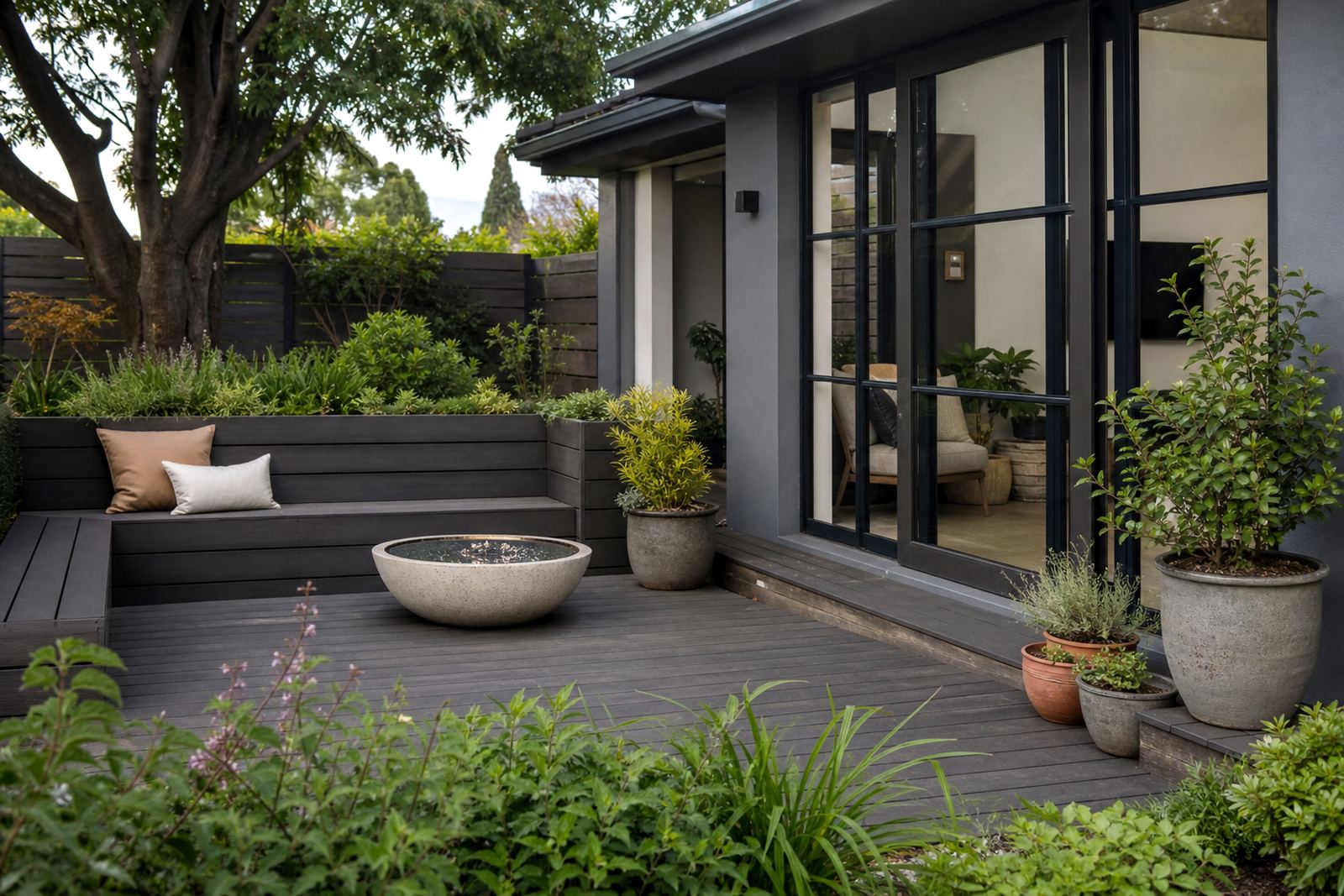
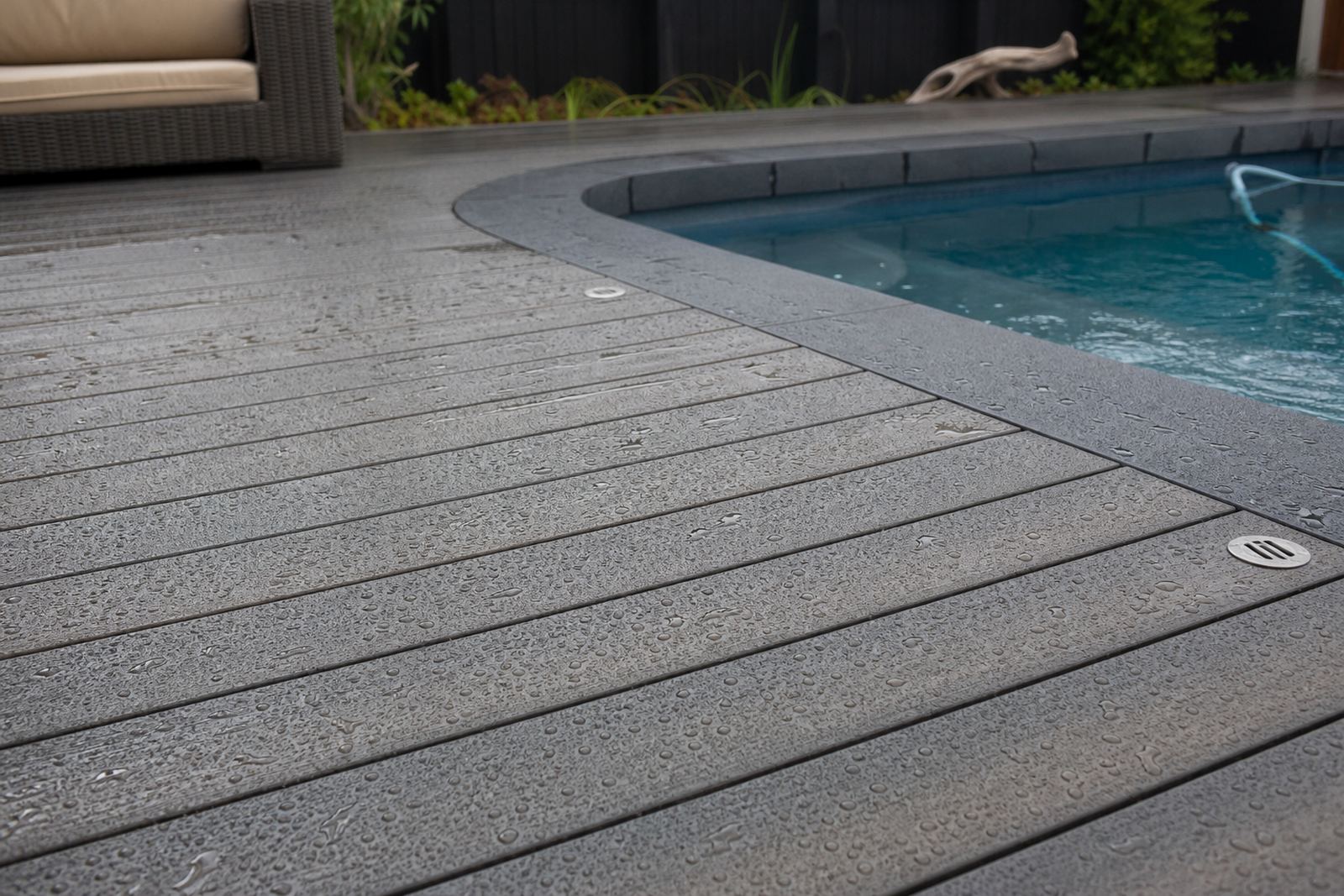
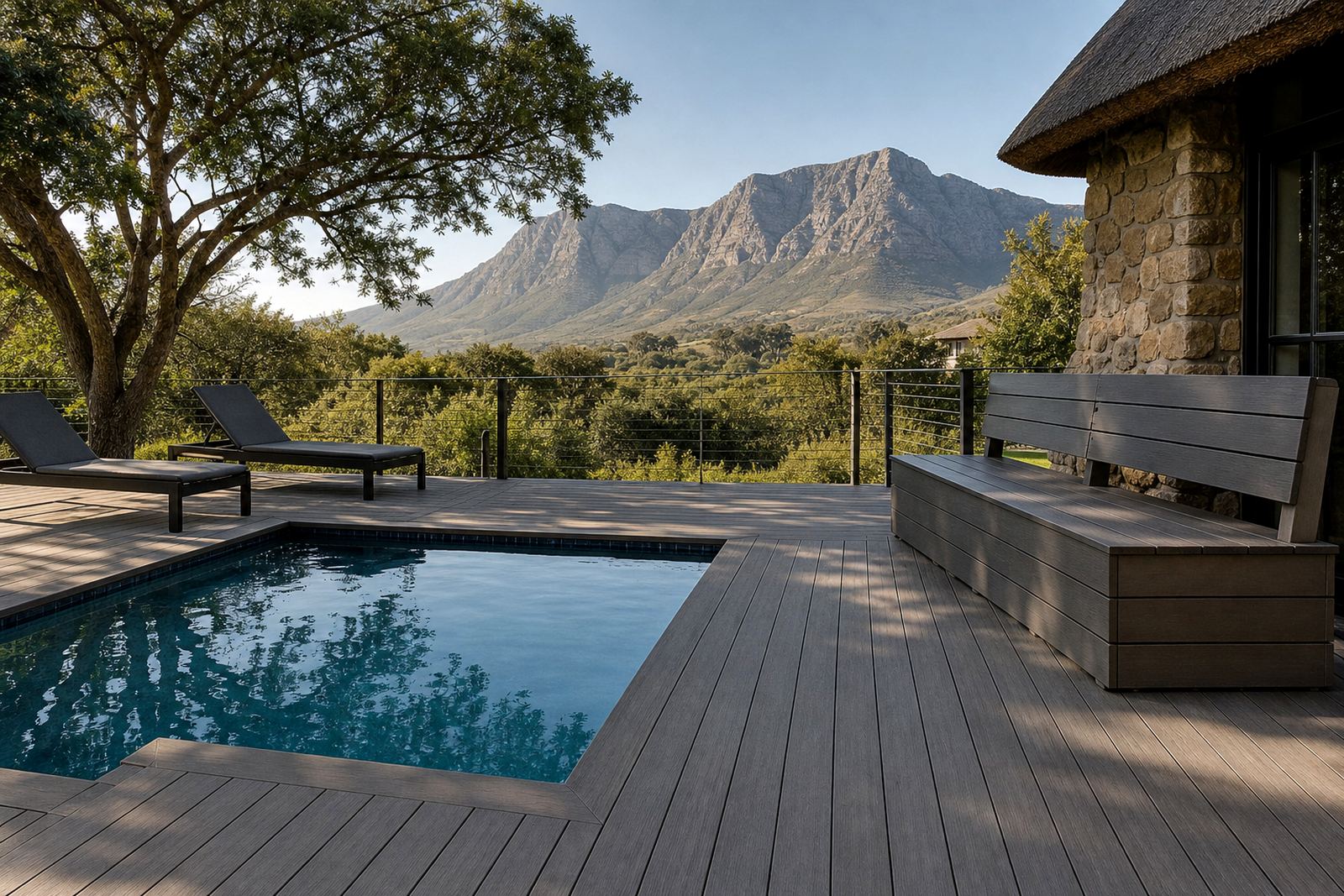
- Can be matched to deck areas for a single, orderly look
Placing Benches Where Guests Actually Use Them
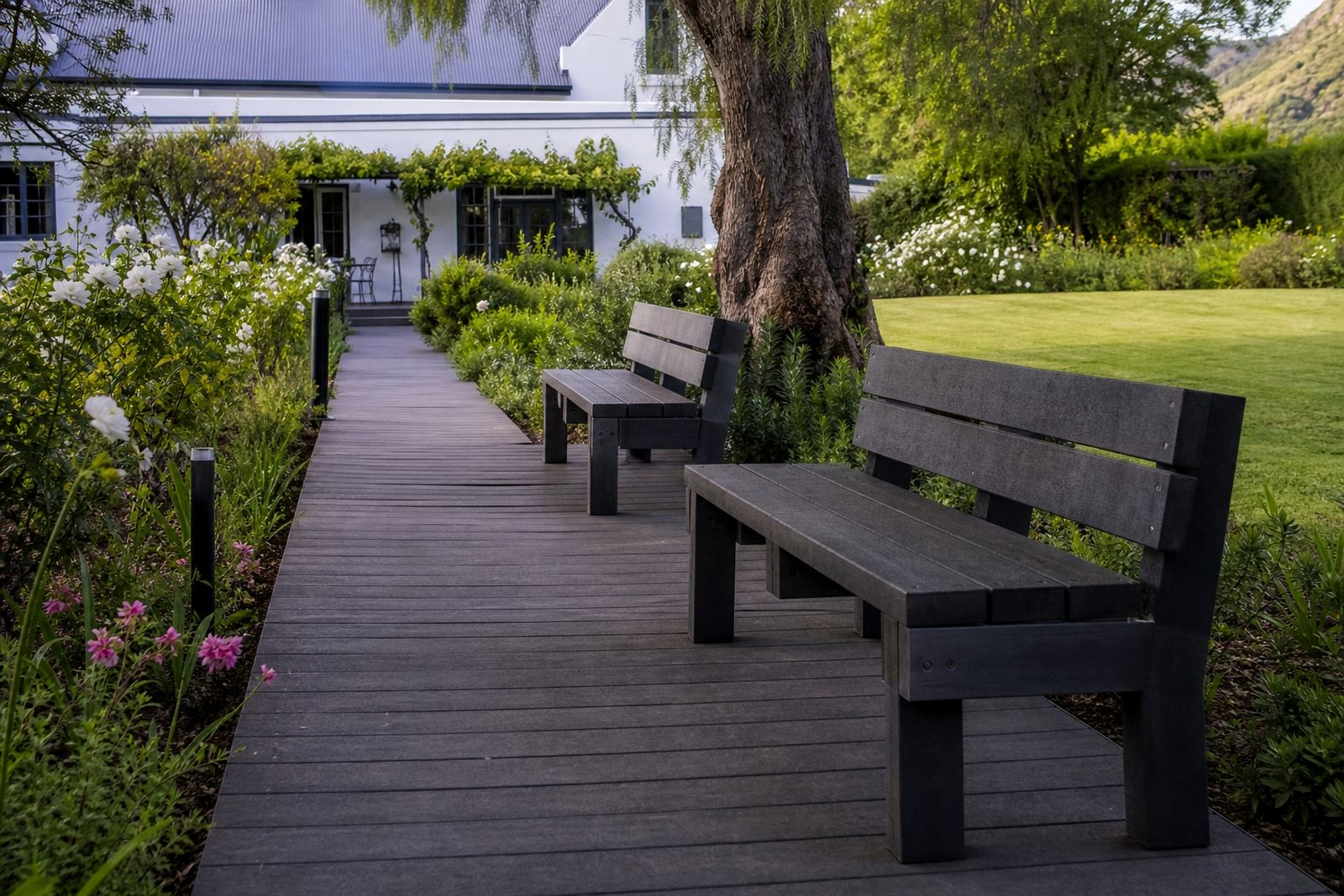
Good bench placement is about behaviour, not decoration. Guests tend to sit where there is shade, a view, a little privacy and an easy route back to the room. That is why a bench beside a mature tree often works better than one placed in the middle of an open lawn. If the seat is too far from the entrance or too exposed to wind, it gets ignored.
In guesthouses with smaller outdoor areas, benches can define a pause point without taking up much floor space. Along a wall, they create a neat edge to a courtyard. Under a covered stoep, they give guests somewhere to remove shoes or wait for a transfer. In larger properties, a few well-spaced benches can help divide quiet reading areas from busier communal zones.
A practical layout also considers cleaning routes and garden maintenance. Benches should not block access to irrigation valves, drains or service paths. That matters in places like Somerset West and Stellenbosch where gardens are often well kept and regular maintenance is part of the routine.
- Put benches in shade where possible, especially for summer use
- Keep enough clearance for cleaning, mowing and sweeping
- Link seating to paths, entrances or views so guests see it naturally
- Avoid placing benches where wind or direct afternoon sun makes them uncomfortable
A Local Example from Paarden Eiland to the Winelands
A small guesthouse owner in the Cape metropole may face a familiar problem. The courtyard looks neat, but guests have nowhere comfortable to sit after check-in or before breakfast. A simple bench solution can change that without turning the garden into a furniture showroom. In one practical layout, a pair of benches were placed near a paved edge and another beside a sheltered planting bed, giving guests two different places to pause depending on the weather.
That approach works well in the Western Cape because the climate can shift quickly. A morning bench in Stellenbosch might be ideal in the sun, while the same arrangement in Cape Town may need a more sheltered position for wind. In George, afternoon rain can make drainage and surface choice important. The bench itself is only one part of the picture, but the placement, access and finish are what decide whether guests actually use it.
For properties serving business travellers, couples and small tour groups, these pause points make the stay feel considered. They also photograph well without looking staged, which helps a guesthouse present itself as cared for and well run.
Keeping Outdoor Benches Serviceable Through the Seasons
Guesthouse furniture gets used more often than many people expect. Bags are dropped on it, children climb on it, and housekeeping may move it for cleaning. A bench that is built for heavy daily use should still be checked from time to time for loose fittings, uneven feet and surface wear. That is especially true after winter storms, or after a long summer of strong UV and dry air.
Recycled plastic lumber benches are popular because they keep maintenance straightforward. They can be washed down, checked for stability and returned to service without a long treatment process. Where decks or paths also need attention, it makes sense to plan the furniture and the walking surfaces together so that the whole outdoor area feels orderly.
Good care advice should also be simple enough for staff to follow. That means knowing what to clean with, how often to inspect fixings and when a bench needs a replacement component rather than a full swap. For busy properties, that kind of routine helps keep the garden looking ready for the next arrival.
- Wipe down regularly to remove dust, pollen and sea spray
- Check fixings after storms or heavy guest use
- Keep drainage clear around bench feet and nearby paving
- Replace damaged components before they affect comfort or safety
Matching Benches to the Rest of the Outdoor Area
A guesthouse garden works best when the benches feel part of the site rather than added as an afterthought. If there is decking, walkways or planting beds, the furniture should sit comfortably within that pattern. Matching the tone of the seat to the surrounding materials helps create a quiet, tidy look that suits both city guesthouses and wine route properties.
That is where careful layout planning and edge finishing matter. A bench beside a deck should not catch toes or create an awkward gap. Near a planted border, it should leave enough room for watering and trimming. On commercial properties in Johannesburg or Durban, the same practical thinking applies, although the climate and use patterns may differ. The goal is always the same: comfortable seating, easy upkeep and a garden that feels welcoming from the first glance.
For owners working across Cape Town, Stellenbosch, George, Paarl, Somerset West and Bellville, a bench can be a small detail that carries a lot of weight. It helps the guesthouse feel thoughtful, ordered and ready for people, which is exactly what outdoor space should do.