
Why Lodge Pool Decks Need Practical Materials
Guest properties need outdoor areas that stay presentable through weekends, peak season, and the odd patch of heavy rain. Around pool areas, the surface must cope with splashing, sunscreen, sand, moving furniture, and constant foot traffic from adults and children. Recycled plastic lumber is often chosen for these jobs because it does not behave like timber in the same way. It does not need painting, sanding, or regular sealing, and it is useful where staff have limited time for upkeep.
For lodge owners, the real value is in reduced maintenance and consistent appearance. In places like Cape Town and Durban, where coastal humidity can be hard on outdoor materials, a deck that holds its shape and colour better over time makes day to day management simpler. It also helps when municipal water use is restricted, since cleaning and care can be kept basic.
- Suitable for pool surrounds, viewing decks, and guest pathways
- Useful in coastal towns where moisture is constant
- Handy for properties that want less upkeep between guest turnovers
Comfort Underfoot Matters To Guests
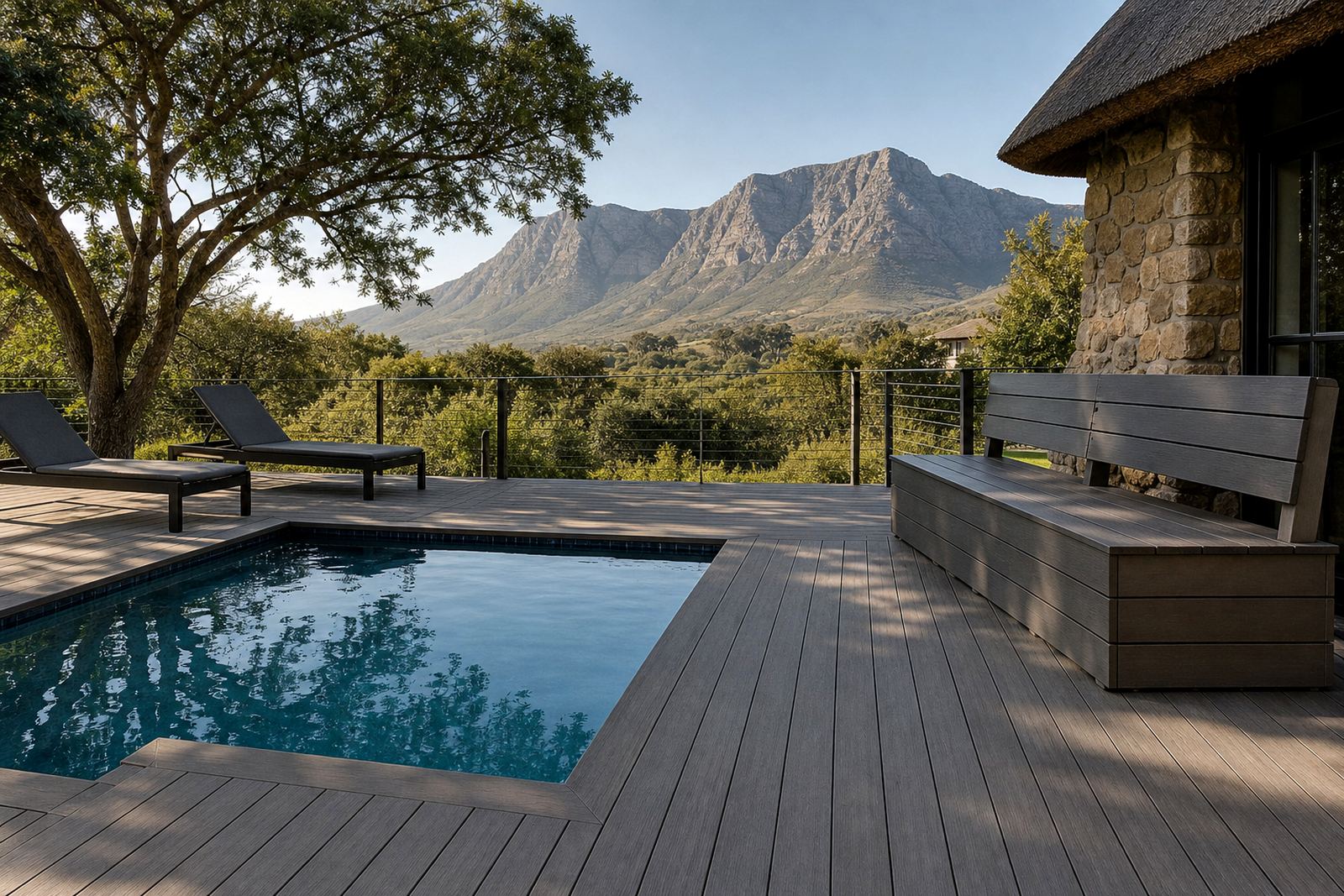
Guest comfort is not only about seating and shade. Underfoot comfort matters too, especially where people move from pool to room with wet feet. A well planned deck should allow enough space for towels, loungers, and safe circulation around the pool edge. The layout must also leave clear access for staff carrying cleaning equipment, drinks, or linen. If the deck feels cramped, guests notice it quickly.
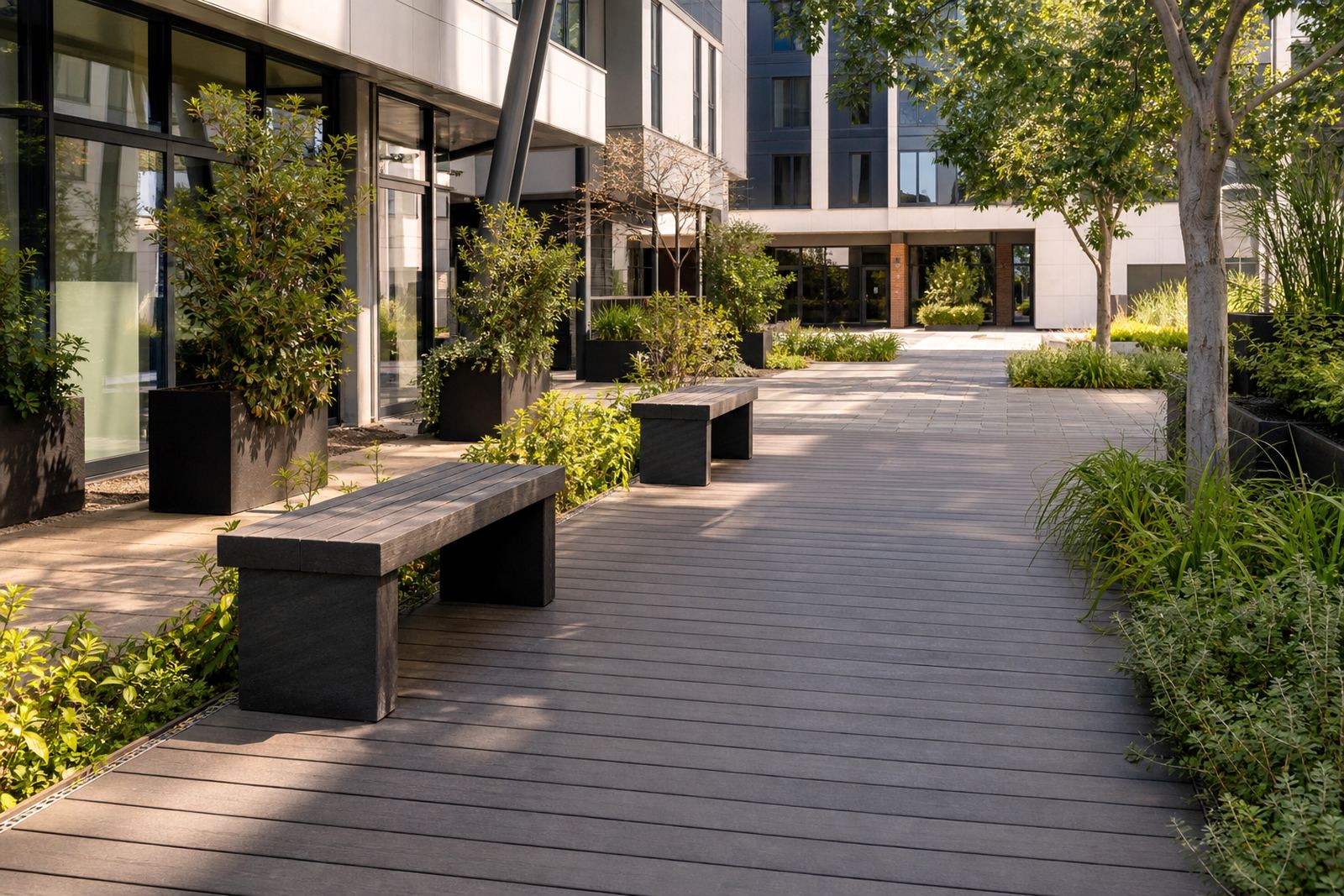
Recycled plastic lumber can be shaped and installed for straight runs, corners, and raised sections, making it practical for lodge courtyards and terraces. It is commonly used with neat edge finishing so the result feels tidy and easy to maintain. Around accommodation blocks in Stellenbosch or Somerset West, for example, it can give a clean, ordered look without requiring constant attention from the maintenance team.
- Allow clear walkways between pool, rooms, and braai areas
- Keep furniture spacing generous for loungers and side tables
- Plan edges carefully so water runs off and does not pool at thresholds
How To Plan A Lodge Pool Deck Layout
Good planning starts with a proper site measure. Before any material is ordered, the dimensions of the pool area, nearby doors, steps, drains, and boundary walls should be checked. This is especially important at lodges where the deck must fit around existing paving, planter boxes, or uneven ground. If the layout is not planned well, the result can feel awkward, and costly changes may be needed later.
At Plastimber, layout planning and material quoting are part of the early process so the deck works for the site from the start. This matters in places such as George and Paarl, where properties may have sloping ground or wind exposure. A practical plan should also think about guest movement, service access, and how the pool deck links to dining areas or verandas.
- Measure pool edges, door clearances, and service routes before ordering
- Check levels, slopes, and drainage points on site
- Decide early where benches, planters, and handrails will sit
Benches And Rest Spots Add Value To Guest Areas
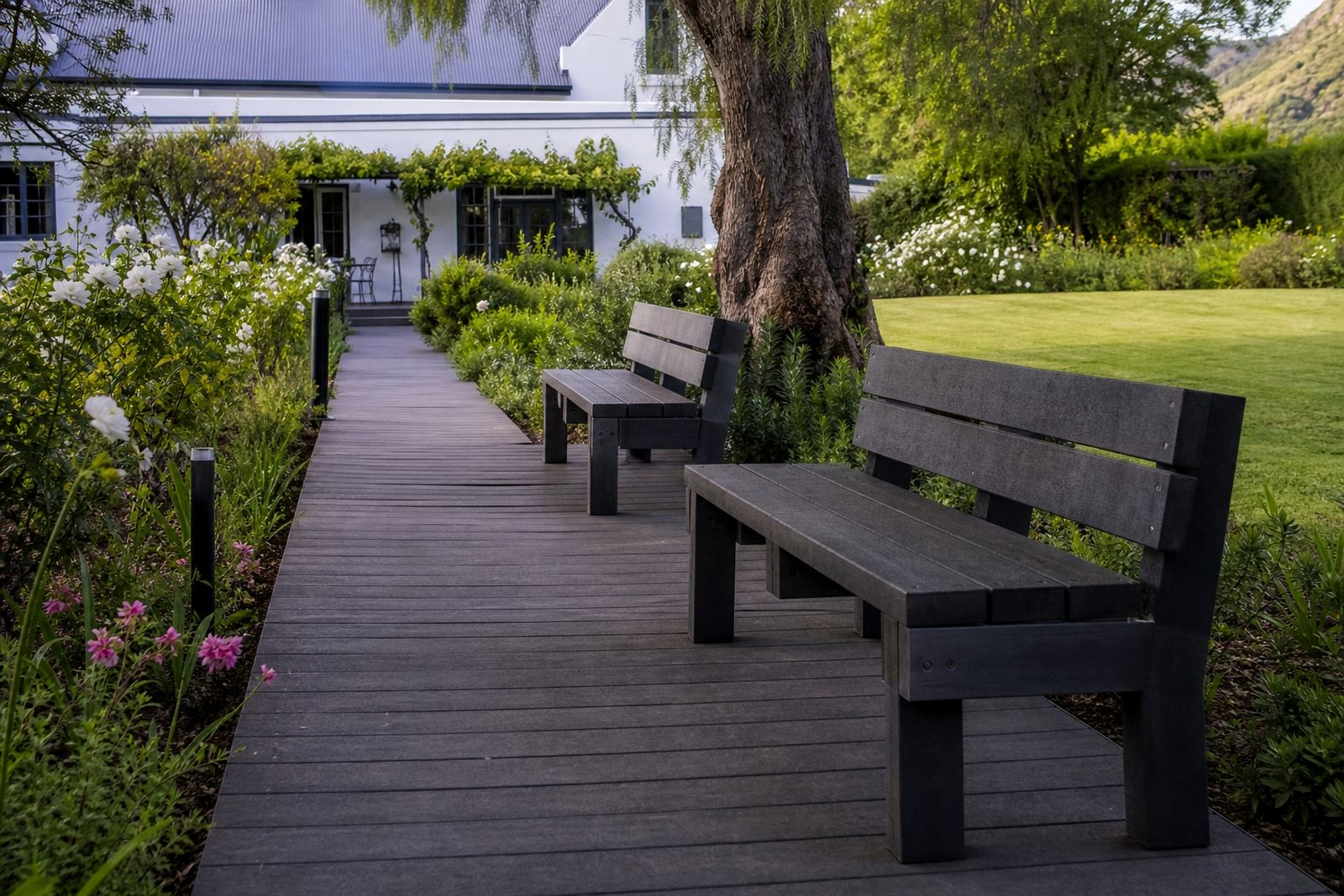
Pool decks work better when there are places to pause. Benches can be used for luggage, changing shoes, waiting for transfers, or simply sitting out of the sun. In lodge settings, these seating points are often more useful than loose furniture because they stay in place and can be built into the overall layout. Recycled plastic lumber benches are practical in wet zones because they are made for outdoor use and are easier to keep clean than many timber alternatives.
For guest properties in Johannesburg, Durban, and Cape Town, benches near the pool or along a deck edge can help the area feel organised. They also support staff, since there is less furniture to move in and out. Where a property has family rooms or shared outdoor spaces, benches can be combined with planters or low privacy screens to make the area more useful without crowding it.
- Use fixed benches for poolside waiting and resting areas
- Place seating where there is shade, but avoid blocking circulation
- Choose simple forms that suit both modern and more traditional lodge settings
Installation, Finishing, And Ongoing Care
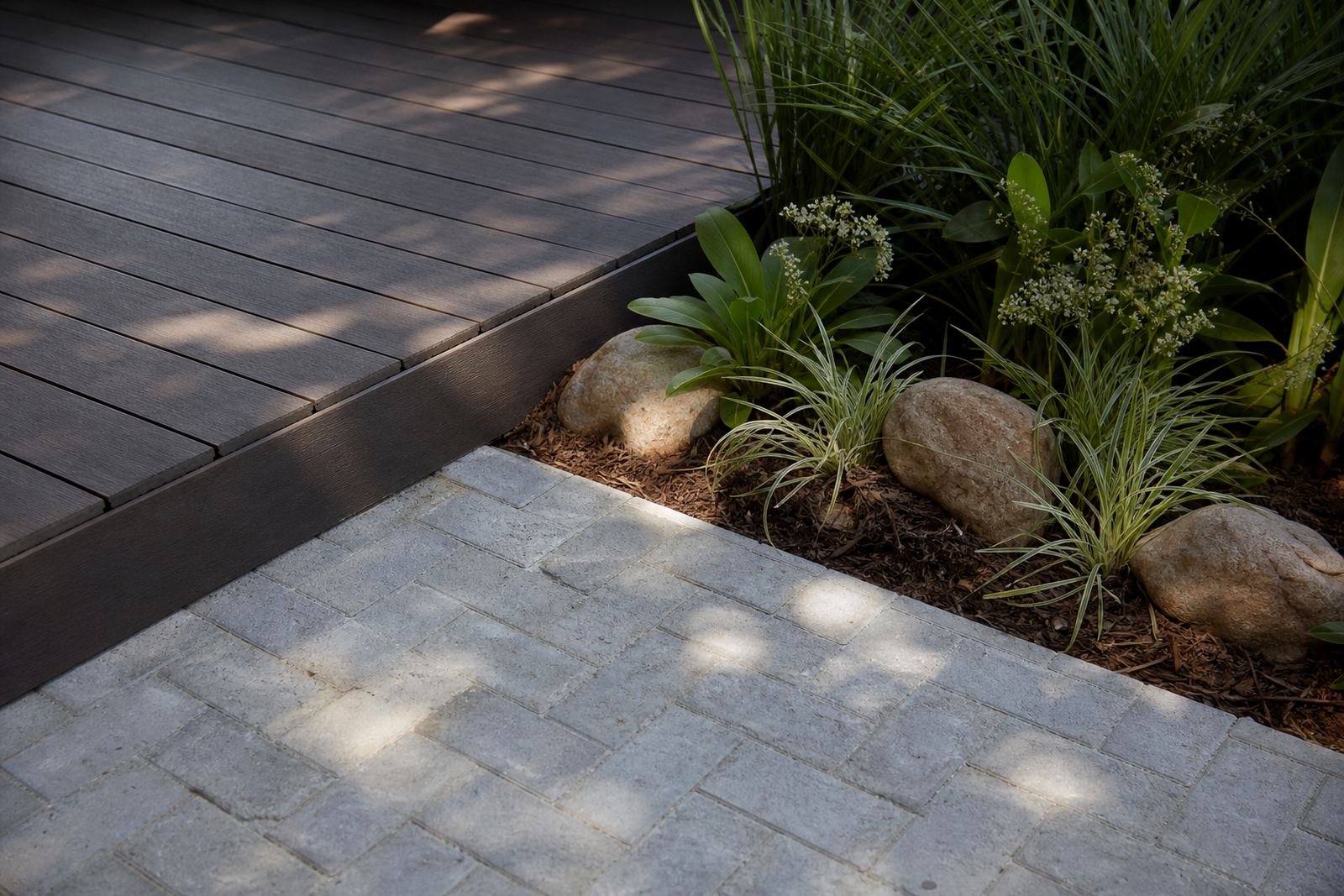
Pool decks only perform properly when installation is handled carefully. Deck boards need correct spacing, secure fixing, and proper support underneath so the surface feels steady under foot. Around water, attention to edge finishing is important because guests will notice any rough corners or uneven transitions. A good installation should also account for movement, drainage, and the way the deck meets concrete or paving at the boundary.
Installation teams working in South African conditions must also think about sun exposure, salt air, and heat. In coastal areas like Durban and Cape Town, materials and fixings should be chosen with care, while inland properties may need stronger attention to expansion and ground movement. After installation, care advice should be straightforward: regular sweeping, washing with water, and basic checks after heavy use are usually enough for many lodge environments. If a section later needs repair, component replacement and refurbishment can extend service life without replacing the entire deck.
- Use proper support spacing and clean edge finishing
- Keep drainage clear so standing water does not collect under the deck
- Plan for simple cleaning and scheduled inspections by staff
A Local Example From The Western Cape
Consider a guest property near Somerset West that wants a pool area for weekend visitors and wedding guests. The owners need something neat, low maintenance, and easy for staff to manage during busy check-in periods. A recycled plastic lumber deck can be planned to wrap around the pool, with a small seating zone for two benches and enough room for loungers without blocking access to the rooms. Because the site is close to the coast, the material choice helps reduce worry about rot and constant repainting.
That kind of project suits a trade supplier based in Paarden Eiland, Cape Town, with delivery and support across the country. The same approach can work in Bellville, Stellenbosch, George, Johannesburg, or Durban, as long as the site is measured properly and the layout is matched to the property. For lodge owners, the aim is not a showpiece that needs constant attention, but a practical outdoor space that keeps guests comfortable and staff workload under control.