
Why arrival spaces need a proper seating point
Entrance seating zones are often overlooked until the first busy morning, school pick-up, delivery run, or visitor group arrives at once. A bench near the entrance gives people a practical place to wait without blocking walkways, stoops, ramps, or door swings. It also helps homes, offices, estates, schools, clinics, and visitor sites feel organised from the start.
In South African conditions, that matters more than people think. Coastal humidity, summer rain, harsh sun, and regular dust can wear out timber quickly, while metal can get hot and need more maintenance. Recycled plastic lumber benches are a sensible option for entrance areas because they handle daily use well and do not need the same level of sealing, painting, or insect treatment as traditional wood.
What recycled plastic lumber does well at the front door
Recycled plastic lumber is suited to exterior seating because it resists moisture, does not splinter, and is easy to wash down. That makes it useful for entrances in places like Paarden Eiland, Somerset West, Bellville, Stellenbosch, and George where weather and foot traffic can both be hard on finishes. It is also a practical choice for Durban and other coastal areas where salty air and damp conditions can shorten the life of many conventional materials.
For entrance seating, the main benefit is low upkeep. A bench can stay in place for years with simple cleaning and periodic inspection, which is useful for body corporates, schools, guesthouses, and commercial properties that do not want another item demanding constant attention. It is also helpful where load-shedding affects access lighting and movement after dark, because visitors still need a steady, visible place to wait or set down belongings.
- Useful where shoes, bags, prams, or parcels need to be handled before entry
- Suits covered stoops, foyers, guardhouse areas, and sheltered outdoor thresholds
- Helps reduce crowding at reception points and gate controls
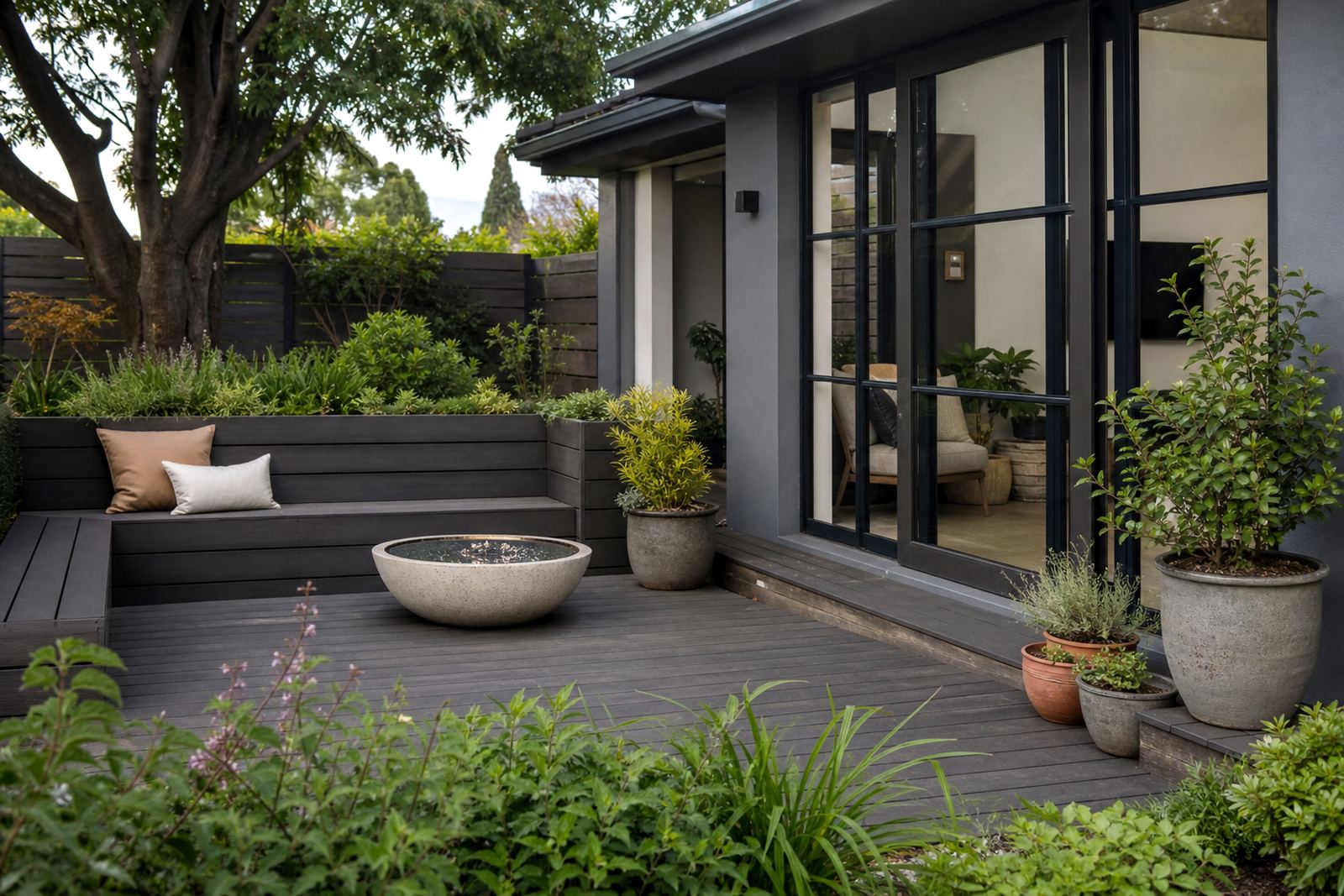
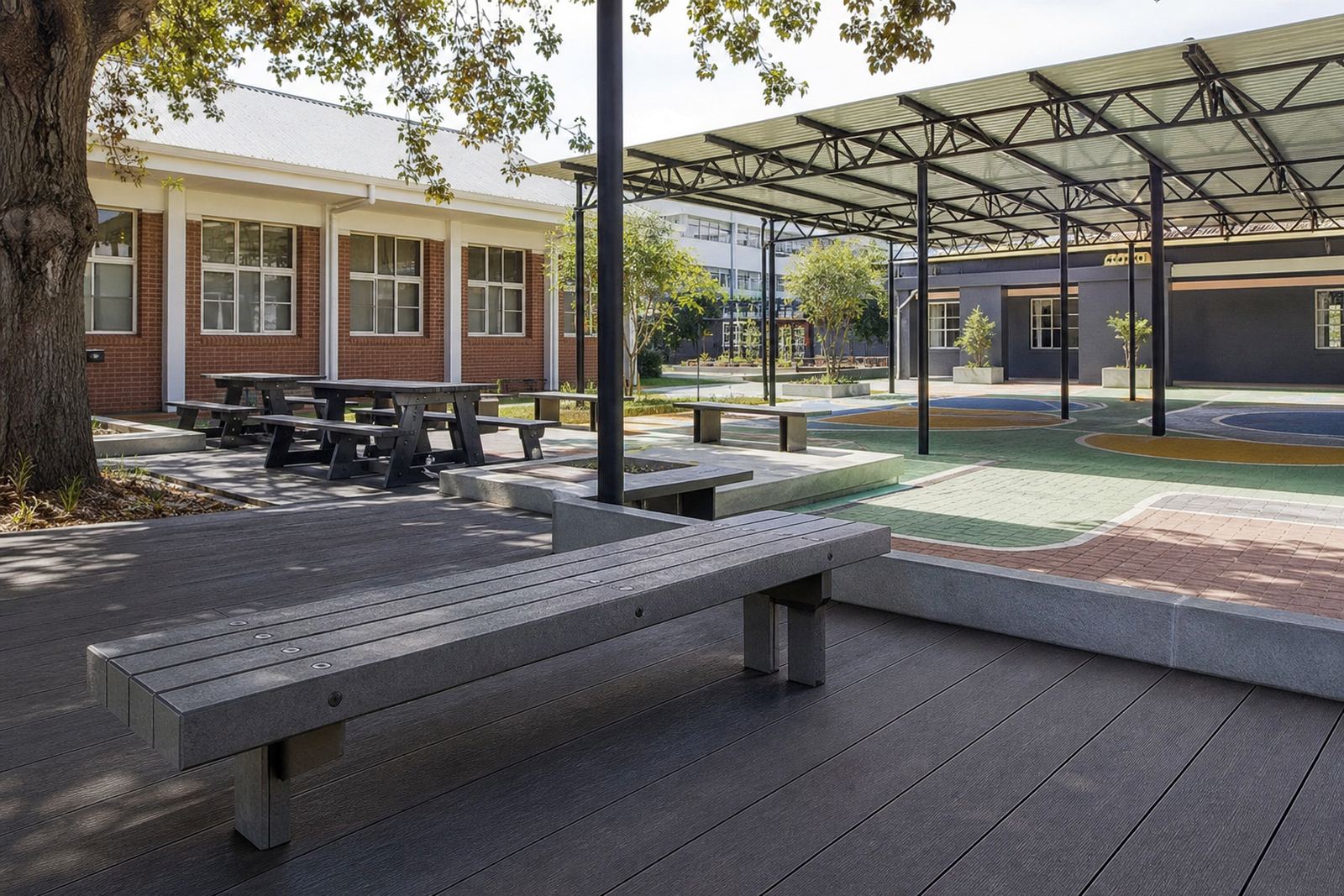
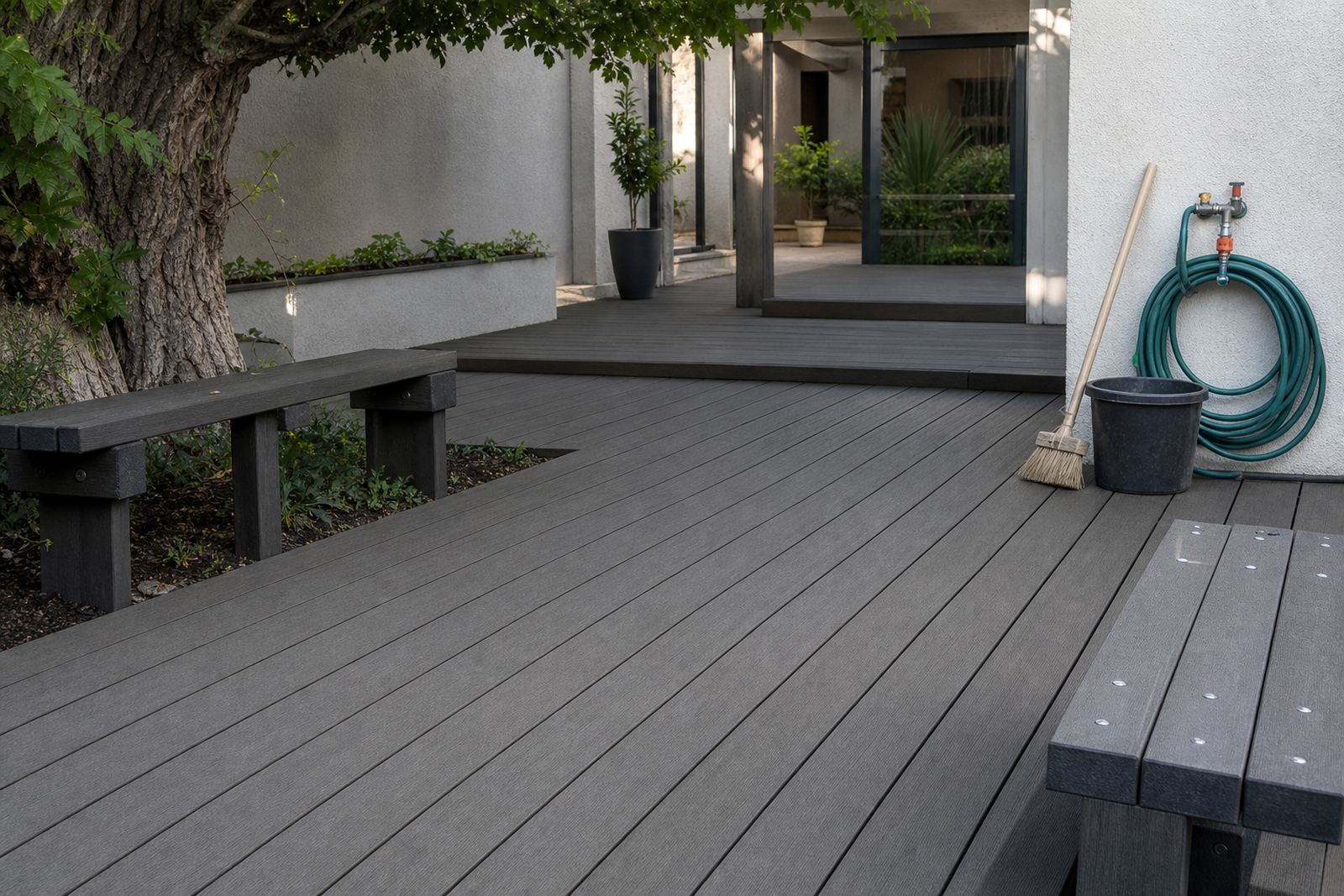
- Can be matched with deck edging or paved surrounds for a neat arrival zone
Planning the right bench for the space you have
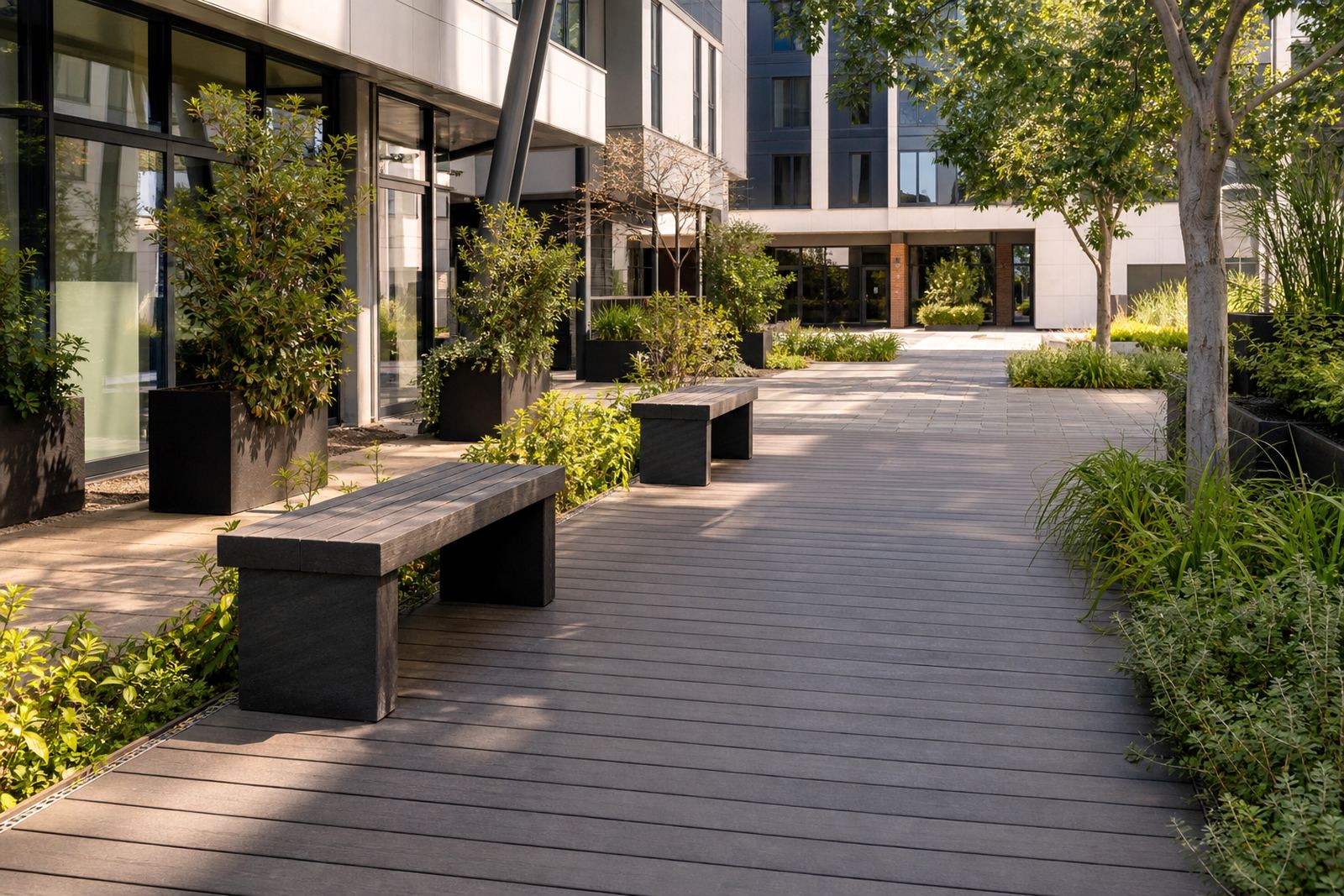
The best entrance seating is sized for the actual movement around it. A narrow passage needs a compact bench with clear circulation space, while a wider forecourt can take a longer unit with room for two or three people to sit comfortably. It is worth checking how the door opens, where people stand while waiting, and whether the bench will sit in full sun or under cover.
Good layout planning also takes access into account. If elderly visitors, residents with mobility aids, or parents with small children use the space often, the seating height and position should support easy access. For commercial sites, the bench should not interfere with security queues, parcel drop-offs, or delivery trolleys. A simple site measure before ordering can prevent a lot of rework later.
- Allow clear walking space in front of the seat and around the entrance
- Keep benches away from opening gates, fire exits, and emergency routes
- Choose a position with some shade where possible, especially in hot inland towns
- Check whether fixing points are needed for a public or high-use area
Entrance seating for homes, estates, and visitor-facing properties
Different properties use entrance seating in different ways. At a family home in Paarl or Somerset West, a bench near the gate can be a useful pause point for visitors and domestic staff, especially where the front door sits deeper inside the plot. At a sectional title estate, seating near the entrance can help residents while they wait for a lift, a ride, or a neighbour. At a lodge, school, or clinic, it gives people a calm place to sit before entering the main building.
For busy sites, the finish around the bench matters too. A tidy edge, level surface, and sensible placement can make the whole entrance feel more orderly. Where paving meets a decked area, the seating can act as a visual anchor that guides movement without extra signs. It is a small thing, but the effect is noticeable when people arrive in groups.
In Cape Town, we often see that entrance areas need to do a lot in a small footprint. Wind, visitors, security checks, and changing weather all play a part. A simple bench can make the space more usable without turning it into a waiting room outdoors.
Keeping benches neat with minimal upkeep
One of the main reasons people choose recycled plastic lumber benches is that they are straightforward to keep clean. A regular wash and a quick check for loose fixings is usually enough for everyday care. In dusty inland areas, or along the coast where airborne salt can settle on surfaces, that kind of maintenance is practical and easy to schedule.
Refurbishment can also be worthwhile if the seating area is already in place and only needs a refresh. Edge finishing, component replacement, or a full bench refurbishment can extend the useful life of an entrance zone without starting from scratch. For schools, churches, body corporates, and businesses with tight maintenance budgets, this can make a big difference.
- Wash down with mild soap and water when needed
- Inspect brackets, fixings, and level seating surfaces regularly
- Replace worn components before they affect comfort or safety
- Keep the ground beneath the bench free of debris and standing water
A practical local example from Paarden Eiland to Durban
Think of a busy entrance at a commercial property in Paarden Eiland. Staff, suppliers, and visitors all arrive at different times, and there is often a short wait while access is checked. A bench placed out of the main traffic line gives people a proper spot to sit without blocking the flow. The same logic works at a residential estate in Stellenbosch, a lodge near George, a business park in Johannesburg, or a family-friendly site in Durban where guests may arrive early and need a place to wait under cover.
What makes the difference is not just the bench itself but the whole seating zone around it. The right layout, delivery coordination, and installation approach can turn a plain entrance into a space that feels managed and welcoming. That is especially useful where weather, foot traffic, and local rules all influence how the front area is used.
For projects across Cape Town, Stellenbosch, George, Johannesburg, Durban, Paarl, Somerset West, and Bellville, entrance seating should be planned with the same care as any other exterior feature. If it is sized well, placed well, and kept simple, it will serve visitors and residents every day without becoming a maintenance headache.