Why school courtyards need practical upgrades
A school courtyard works hard. It is a waiting area, lunch spot, break-time meeting point, and sometimes a route between classrooms, admin blocks, and halls. When the surface is uneven or the seating is tired, pupils and staff feel it straight away. Loose timber, chipped concrete, and rusting fittings can become a nuisance, especially after heavy rain or in coastal air.
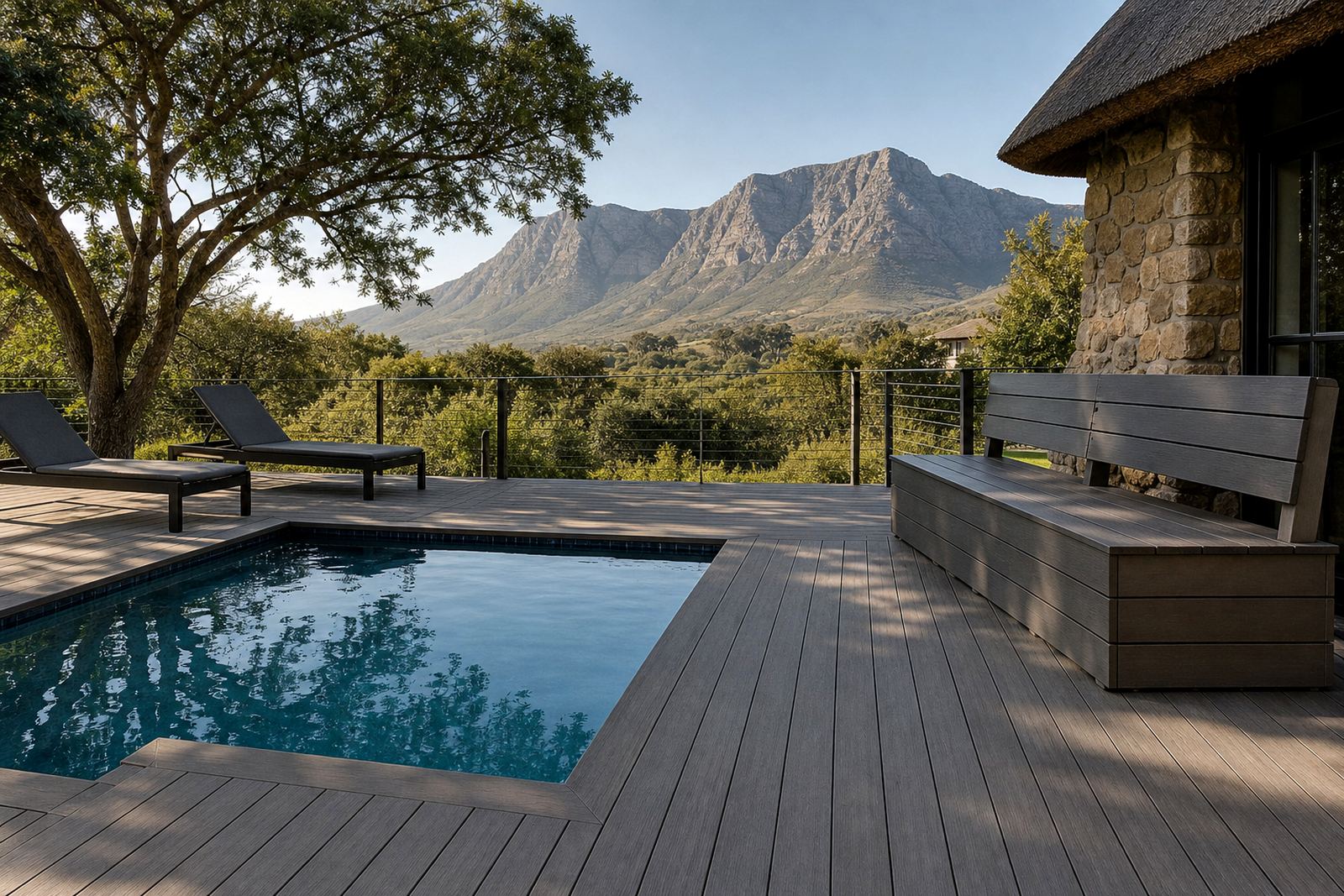
Recycled plastic lumber offers a useful option where schools want a cleaner finish with less ongoing upkeep. It can be used for decking, edging, and benches in places where children gather every day. It is also a sensible choice for schools that want to reduce splinters, exposed nails, and frequent repainting. In busy courtyards, the main aim is not to make the area fancy, but to make it orderly, safe, and easy to maintain.
What recycled plastic lumber does well in school settings
Recycled plastic lumber is made for outdoor use and is suited to places that see sun, rain, dust, and regular cleaning. It does not behave like timber, so school maintenance teams are not dealing with swelling, rotting, or termite damage. It also holds up well in Cape Town’s coastal air and in inland towns where the sun can be harsh through summer terms.
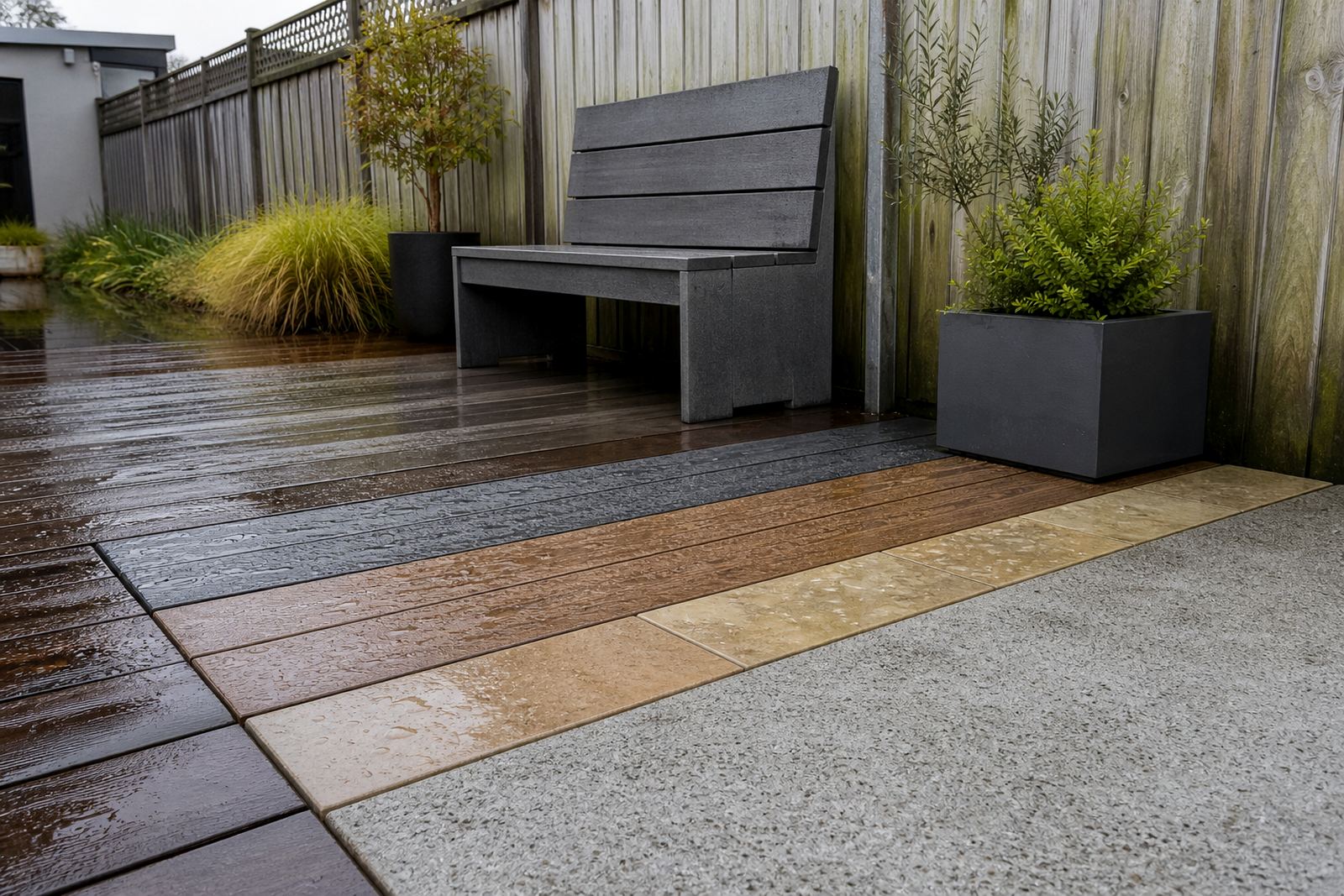
For courtyards, this material is often used for walkways, seating platforms, planter surrounds, and bench structures. It has a neat, consistent look that suits both older school buildings and newer campuses. Because it can be washed down, it works well near tuckshops, assembly points, and dining areas where spills and dirt are part of the day.
- Useful for exposed outdoor areas with high foot traffic
- Suitable where regular repainting is not practical
- Helps reduce splinters and loose surface fibres
- Works in coastal and inland conditions alike
Seating changes that make break times easier
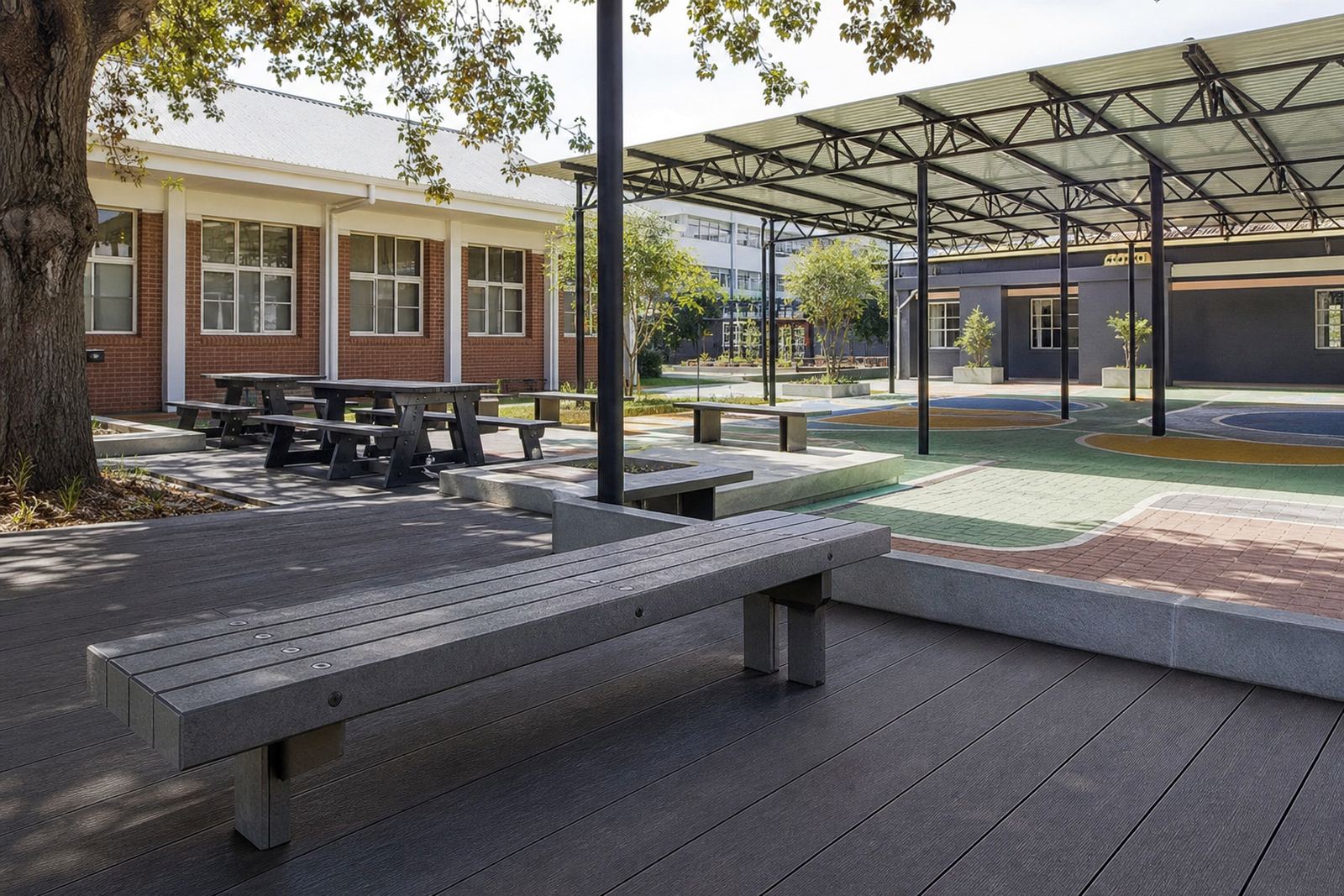
Bench placement matters as much as the bench itself. A courtyard should allow pupils to sit, wait, chat, and move through the space without crowding doorways or blocking supervision lines. Fixed benches can be arranged along walls, around open edges, or in small group zones depending on the layout of the school grounds.
It helps to think about age groups and the way the courtyard is used. Younger learners often need seating close to class blocks and shaded areas, while older learners may need more open space around the benches. In some schools, a few well placed benches are more useful than a larger number of poor ones. Refurbishing existing seating can also be worthwhile when the frame is sound and only the top boards or seat sections need replacing.
- Place seating where supervisors can see across the full courtyard
- Keep clear paths for movement between classrooms
- Allow enough space for bags and school shoes during breaks
- Use edge finishing so corners and joins feel neat and tidy
Surface updates that tidy up the whole area
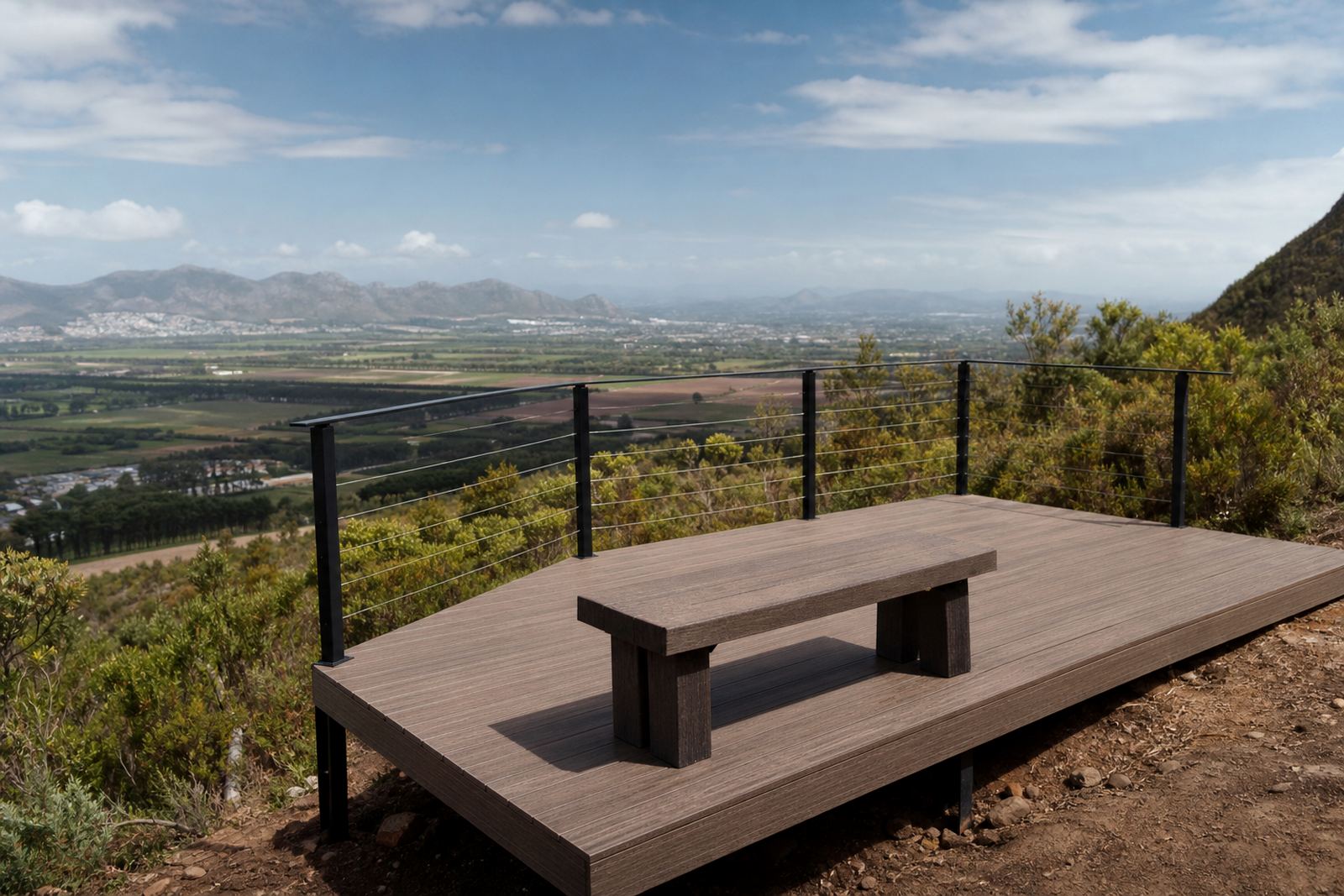
Many school courtyards look tired because the surface is patchy rather than because the whole area needs rebuilding. A small decked section can improve the feel of a space and define where learners sit or move. It can also help on uneven ground, around planted areas, or where an existing slab has worn unevenly over time.
Surface changes should be planned with drainage in mind. Schools in Durban, George, and other wetter areas need water to run off properly so puddles do not sit under benches or at doorways. In dry places, a raised surface can also help reduce dust being tracked into classrooms. The goal is a courtyard that stays usable through the school year, with less sweeping and less patching up after each season.
A local example: a Cape Town courtyard with everyday use in mind
A coastal school in the Cape Town area may have a courtyard that faces wind, salt air, and a lot of foot traffic between lessons. In that setting, a practical update might include a small decked seating area, a few fixed benches, and cleaner edges around the central open space. The work does not need to be large to make a difference. Even a modest seating zone can give learners a place to sit without bunching at classroom doors.
For schools in places like Stellenbosch, Somerset West, Paarl, Bellville, or George, the same approach can be adjusted to suit the layout and local conditions. The important part is accurate site measures, careful layout planning, and delivery that fits the school calendar. During term time, work often needs to be phased so lessons can carry on with minimum disruption. That kind of planning matters just as much as the materials used.
What schools should check before ordering
Before any courtyard update goes ahead, it helps to walk the site properly and note where pupils queue, sit, or cut across the space. A quick visual is not enough. Small slope changes, drainage points, and existing cracks can affect where decking or benches should go. Trade support also helps when a school needs to compare a full replacement with a smaller refurbishment.
These are the main checks schools usually need:
- Measure the available area and allow for movement between buildings
- Check for drainage, standing water, and uneven concrete
- Decide whether existing benches can be refurbished or need replacement
- Plan delivery access for campuses with tight entry points
- Confirm where the work can happen safely during the school day
From first measure to final handover
School work is easiest when each step is clear. Site measures come first, then layout planning and material quoting. After that, delivery coordination and installation can be arranged around the school timetable. Once the courtyard is in place, edge finishing and care advice help staff understand how to keep it looking tidy with normal cleaning routines.
For schools that need more than a new build, bench refurbishment, deck refurbishment, and component replacement can extend the life of existing outdoor spaces. That can be a practical route when budgets are tight or when only part of the area has worn out. A well planned courtyard update should feel calm and useful on day one, and still do the job properly after many terms of use.