Start With the View, Not the Seat
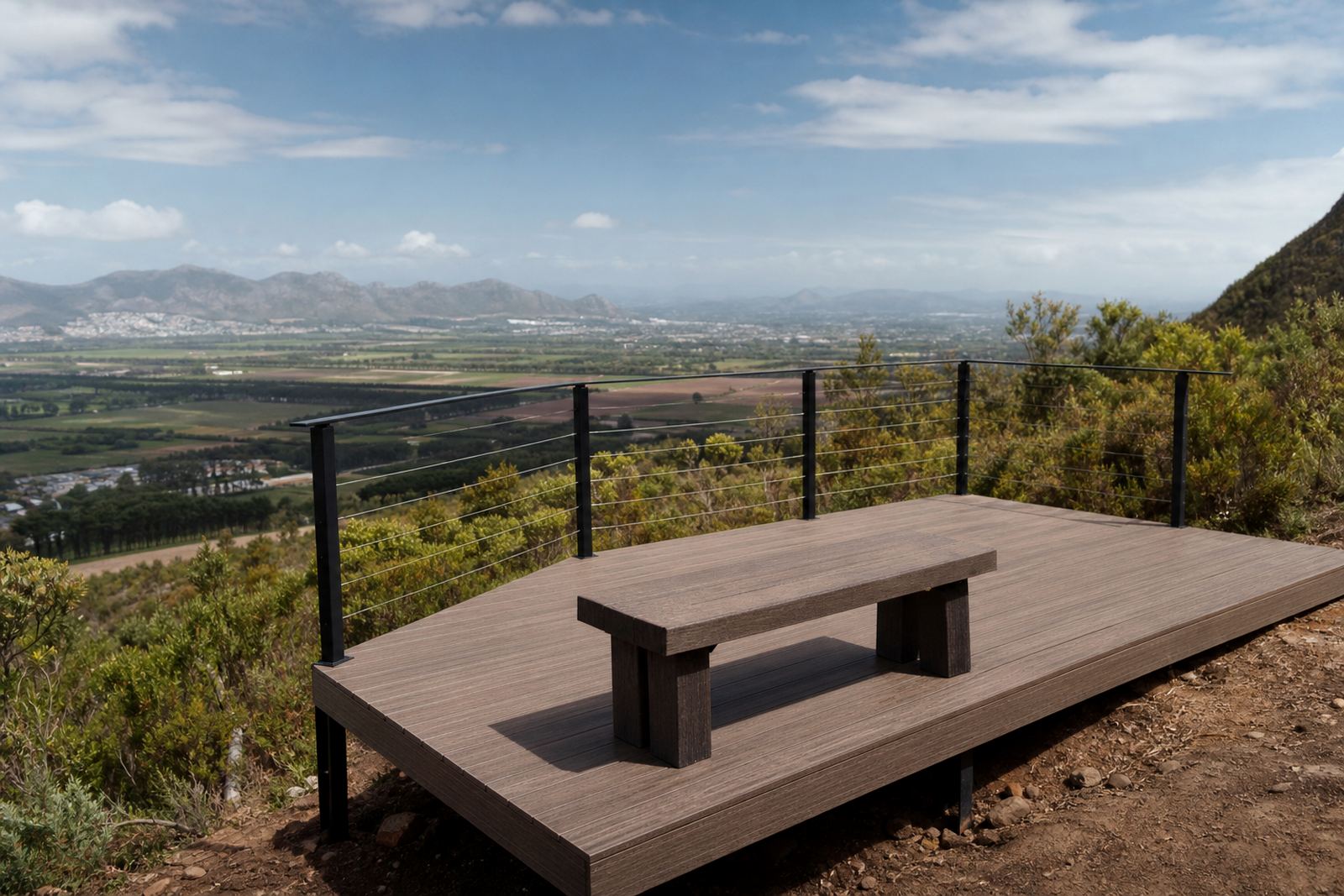
When people ask for bench ideas at a viewpoint, the first question is not the style, it is where people are meant to look. The seat should face the strongest sightline, whether that is a harbour edge in Cape Town, a slope above Stellenbosch vineyards, or an open garden with long afternoon light. If the bench is turned even a few degrees off, people will twist their bodies to see properly, and the setting feels awkward.
It helps to stand at the site at the time of day people will use it most. Morning light, late sun and prevailing wind all change the experience. In exposed coastal spots, a slight offset can keep spray and direct gusts off the seated area, while still giving a full view. In public spaces, make sure the view is not blocked by planting once the area matures.
Choose a Position That Feels Calm and Safe
People stay longer when a bench feels settled in place. Put it on firm, level ground where feet can plant easily and the base will not shift after rain. On slopes, a small terrace or paved pad usually works better than trying to level the whole area. That also makes cleaning easier and reduces mud tracking back onto the seat.
- Leave enough space behind the bench for someone to pass without brushing past the seated person.
- Keep the front edge clear so knees and bags do not hit a wall, planter or railing.
- Avoid placing benches where runoff collects after heavy rain.
- In public areas, allow for access by maintenance staff and refuse removal.
For municipal or commercial sites, think about visibility from nearby paths. A bench placed where it can be seen from the main route tends to be used more and is less likely to be damaged or left hidden in a corner.
Why Recycled Plastic Lumber Works Well at Viewpoints
Recycled plastic lumber is a practical choice for benches where weather and maintenance matter. It does not take on moisture like untreated timber, so it holds up well in coastal humidity, winter rain and strong sun. That matters in places like Durban, George and the Cape Peninsula, where outdoor furniture is exposed for most of the year.
It also keeps its shape well under regular use. For schools, estates, public gardens and hospitality sites, that means less time spent sanding, repainting or replacing worn parts. The surface is easy to wipe down, and it does not require the same ongoing care that timber usually does. You still need proper installation and sensible detailing, but the day to day upkeep is far lighter.
- Suitable for busy outdoor areas with regular cleaning routines.
- Works well where salt air, damp or strong sun are part of everyday conditions.
- Can be used for both simple bench forms and more tailored seating layouts.
- Useful where a neat, practical finish matters more than decorative fuss.
Think About How People Will Actually Use the Bench
A viewpoint bench is not only for sitting still and admiring the scene. People use it to pause with a coffee, wait for friends, rest on a walk, or take a break during a site visit. That changes the layout. A pair of shorter benches may work better than one long run, especially where groups arrive in small numbers and want a little space between them.
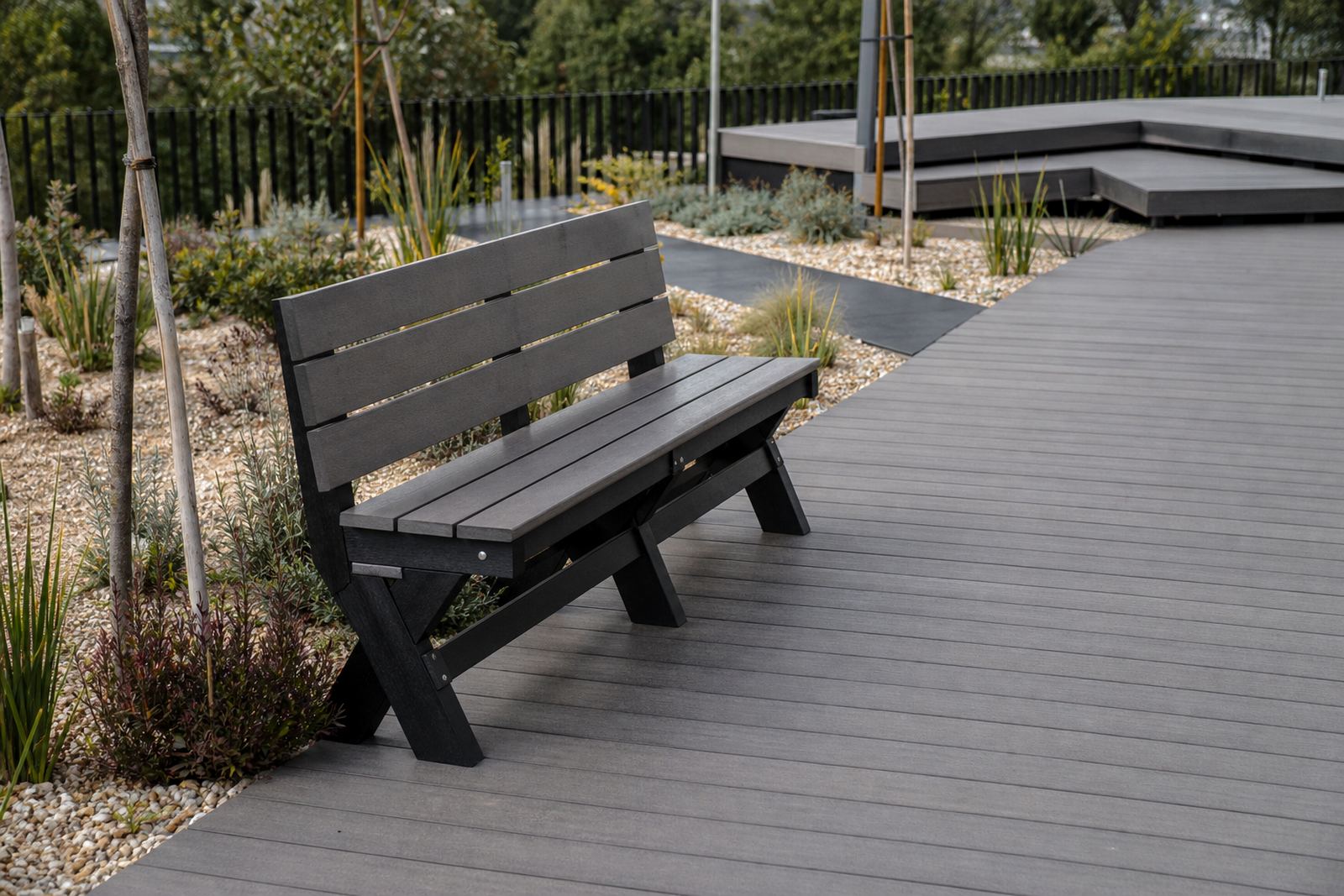
Seat height, depth and spacing should be comfortable for a wide range of users. If the bench is too deep, shorter users struggle to sit back properly. If it is too shallow, people do not feel supported. Backrests are useful where views invite longer stays, while backless seating can suit quick pauses along a promenade or path.
At a wine route stop outside Paarl, for example, a bench that faces the valley but sits just off the main footpath gives visitors a place to settle without blocking others. The same idea works in Somerset West at a lookout point with steady visitor flow, where one bench in the right spot can be more useful than several placed without thought.
Detailing Matters More Than Decoration
Small design choices change how a bench performs outdoors. Edge finishing should be neat so there are no sharp corners, loose ends or places where dirt builds up. Where benches are fixed in place, the base should be solid and tidy so the seating area looks ordered and can be kept clean. If the bench is part of a larger lookout terrace, the join between deck and seat should be planned as one space, not as separate pieces added later.
For heavier use, ask about component replacement and refurbishment options. It is often easier to replace a single worn slat or repair a section than to remove the whole bench. That keeps the site looking cared for, which matters in places where visitors judge the whole setting by a few details. A bench that looks looked after sends the right message.
Trade teams also benefit from clear site measures and layout planning before installation. A bench squeezed into the wrong corner can interfere with drainage or create a maintenance headache. Good planning avoids that from the start.
A Local Example From Paarden Eiland to the Coast
In Paarden Eiland, projects often need practical handling from the start because access, delivery timing and site coordination all matter. A bench for a coastal viewing area near Cape Town might need to arrive in sections, be placed quickly, and fit around limited working space. From there the same approach can be scaled for Stellenbosch, Bellville, George or Durban, where the setting changes but the need is the same: seating that fits the view and does not become a maintenance problem.
For a hotel terrace, public walkway or residential lookout, delivery coordination makes a real difference. If the material arrives before the site is ready, work slows. If installation is rushed, the finish suffers. A practical sequence is simple:
- Confirm the site dimensions and viewing direction.
- Agree the number of seats and where each one should face.
- Check access for delivery and any loading limits on site.
- Install on a level, prepared surface with the right clearances.
- Finish with care advice so the bench stays presentable over time.
That is the sort of measured process that keeps a viewpoint usable through summer traffic, winter rain and the normal wear that comes with people enjoying a good outlook.
Pick Bench Placement That Supports the Whole Space
The best viewpoint benches do not shout for attention. They sit where they should, let the scenery do the talking, and make the space easier to use. Whether the site is a private garden in Somerset West, a business courtyard in Johannesburg, or a public edge in George, the same rule applies: the bench should help people pause comfortably and see more clearly.
When the layout is right, the bench becomes part of the place instead of an afterthought. That is where the value is. You get a seat that suits the weather, the view and the daily use, without demanding constant attention from the people who own or manage the site.