
Why braai areas need a harder wearing deck surface
A braai space gets used differently from a quiet patio. Chairs are pulled in and out, grease splashes happen, drinks spill and ash finds its way onto every surface. In many South African homes the braai area also becomes the route between the kitchen, the garden and the pool, so the deck must cope with daily traffic as well as weekend gatherings.
Recycled plastic lumber is useful here because it does not behave like timber. It does not absorb water in the same way, and it is not prone to splitting, rot or termite damage in the way untreated wood can be. That makes it a practical choice for homes in Cape Town, Stellenbosch, George, Johannesburg and Durban, where conditions vary a lot from dry inland heat to coastal humidity.
For entertainment spaces, the goal is usually a surface that stays neat, cleans easily and does not need constant sanding or sealing. A well planned deck can do that while still giving the area a warm, finished look.
What recycled plastic lumber brings to an outdoor braai space
Recycled plastic lumber decking is made for outdoor use and behaves differently from natural timber. It is commonly used where owners want the look of a timber deck but with less ongoing upkeep. Around a braai area, that can make a real difference to day to day use.
- It can be washed down after ash, dust or food spillages
- It handles damp conditions well, which matters in coastal suburbs and shaded yards
- It does not need regular painting or staining like many timber surfaces
- It is often chosen for areas where moisture and sun exposure are both a concern
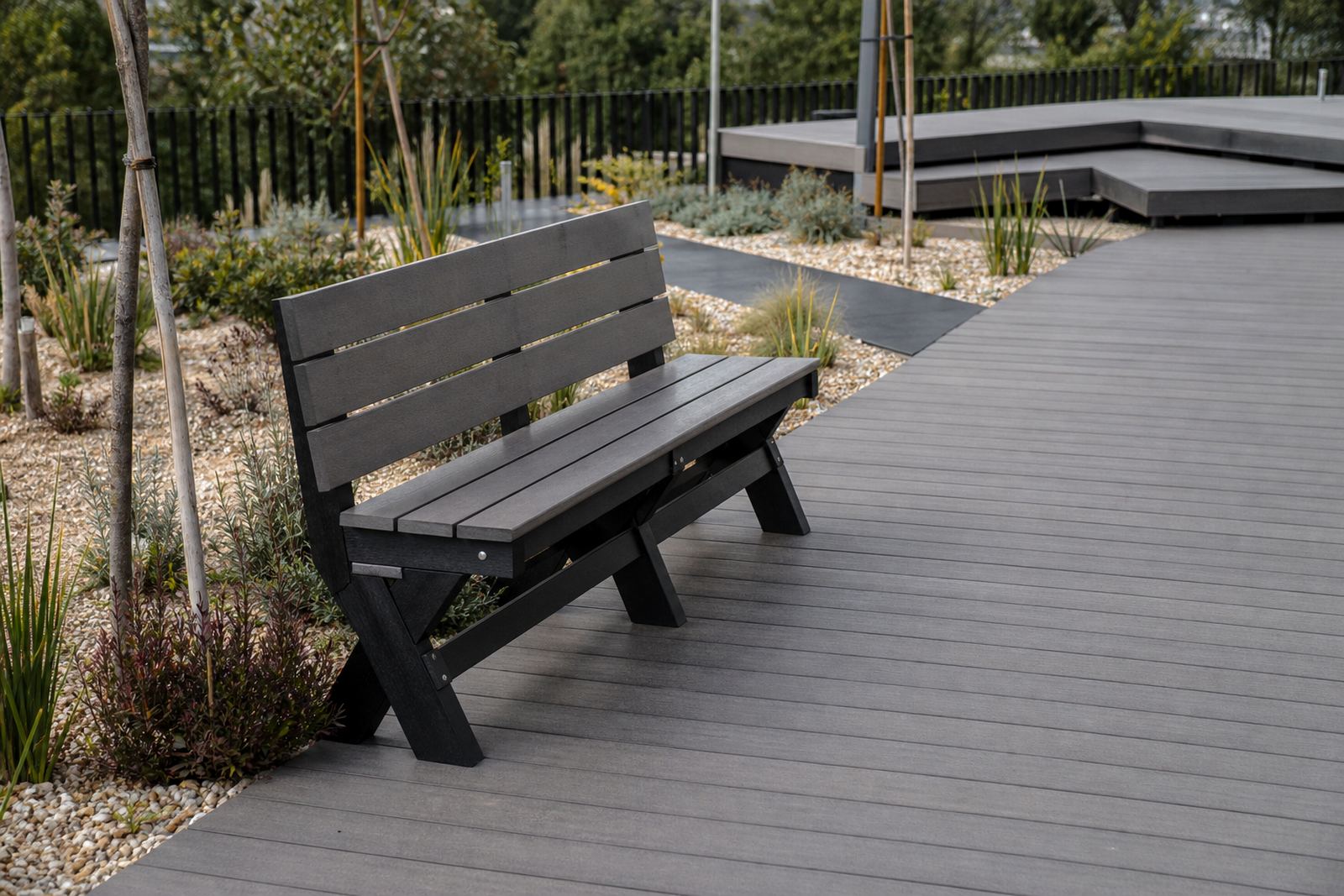
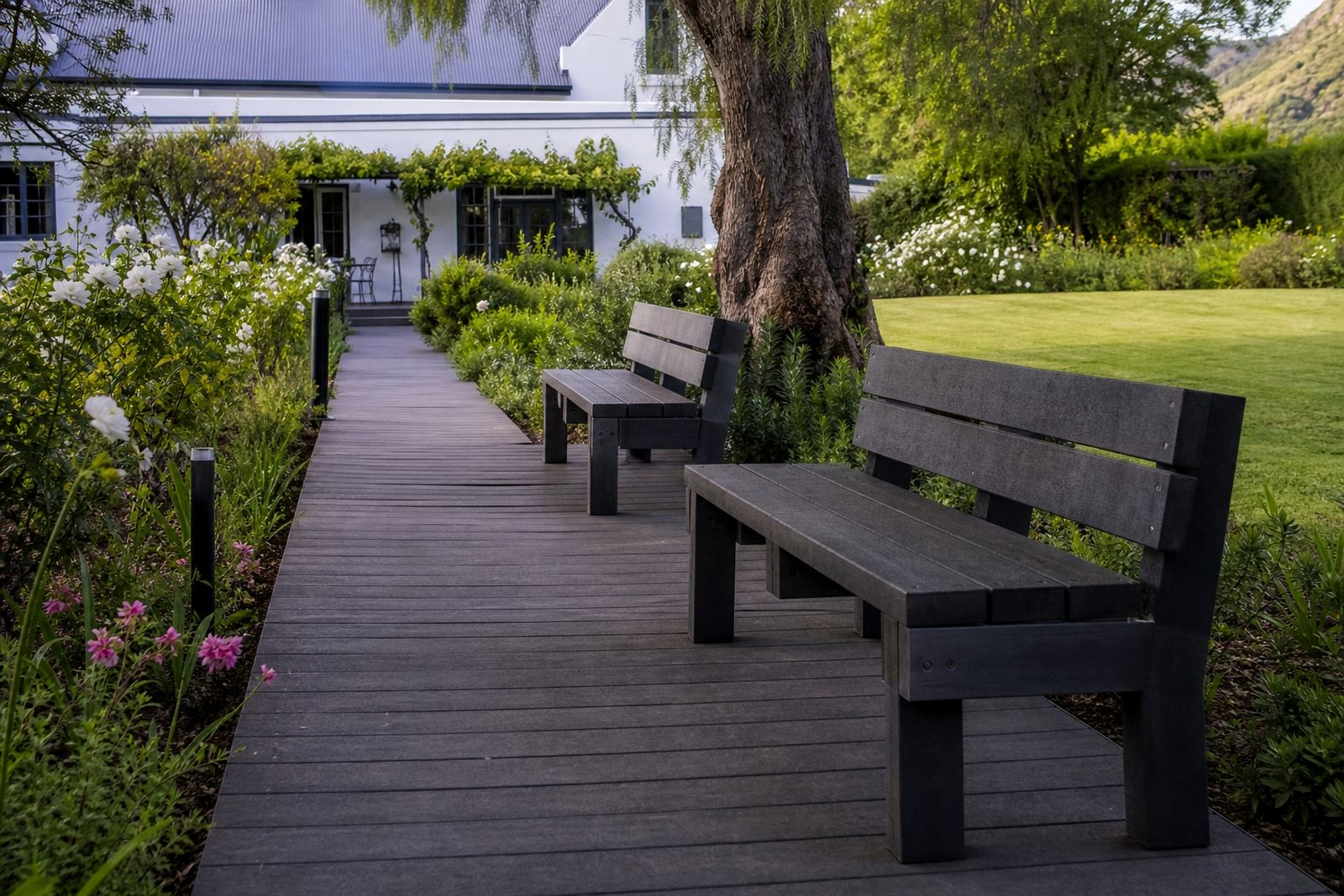
- It can be paired with matching benches for a tidy, built in seating area
The finish and profile matter. Smooth surfaces are easier to wipe down, while shaped edges and good fastening details help keep the area comfortable and practical. Around a braai, small details like clean board edges and sensible spacing can make the whole space feel better organised.
Planning the layout around heat, movement and seating
A braai area deck should be laid out for how people move, not just how it looks in a photo. The braai itself needs enough clearance, and so do serving tables, chairs and foot traffic. If the area is too tight, people gather in the wrong place and the surface takes unnecessary wear.
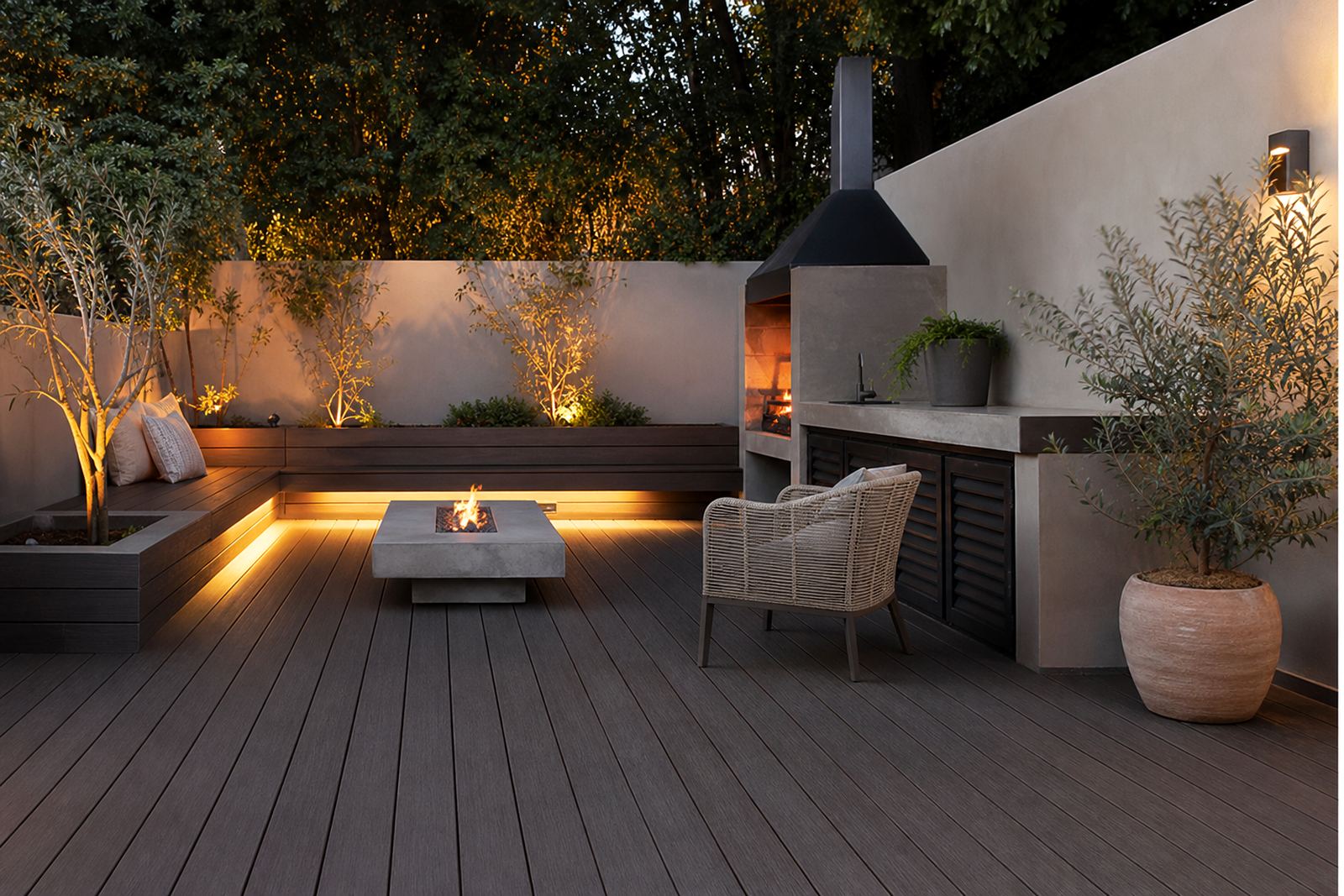
Good layout planning starts with the basics. Measure the usable area, mark where smoke may drift, and think about where people stand while food is being cooked. In many homes a simple L shape or rectangular deck works well because it separates the cooking side from the social side without making the space feel boxed in.
It also helps to plan for shade and drainage. In sunny parts of Paarl or Somerset West, some protection from direct heat is useful. In wetter parts of the country, water should be able to leave the area without pooling near door thresholds or under the deck structure.
- Keep enough space for the braai lid or door to open fully
- Allow a safe working zone between heat source and seating
- Place benches where guests can sit without blocking movement
- Plan for easy access from kitchen doors and garden paths
- Leave room for cleaning around corners and edges
Benches that make the space work harder
In an outdoor entertainment space, benches are often better than loose seating because they take less moving around and can be fixed where they are most useful. Recycled plastic lumber benches suit braai areas well because they can be kept outside and still remain useful through changing weather.
For family homes and guest spaces, benches can be fitted along a wall, around a raised deck edge or beside the braai zone. That keeps the layout neat and gives people a place to sit without needing lots of separate furniture. In commercial properties such as guesthouses, courtyard venues or office entertainment spaces, fixed seating can also help with maintenance and daily cleaning.
Bench installation should be done with drainage, foot traffic and cleaning access in mind. A bench that looks right but blocks access to a hose point or service hatch is not practical. The best result usually comes from a simple layout that is easy to use and easy to maintain.
A local example from the Western Cape
A common request in the Western Cape is for a braai area that can handle both family use and visiting guests. In a Paarden Eiland project, a homeowner may want a deck that links the back door to a sheltered braai corner, with seating that keeps the space open but organised. That kind of layout works well for summer evenings, but it also needs to cope with windy days and salt in the air.
For that kind of site, recycled plastic lumber offers a practical answer because the surface is easy to keep clean and does not need constant treatment after winter rain. It also suits properties where the owner wants less maintenance between seasons. The deck can be finished so that the edges are neat, the transitions are safe, and the benches feel like part of the space rather than something added later.
Where access is tight, delivery coordination matters too. Placing materials, measuring accurately and planning installation in stages can make the work run smoother especially when the property is occupied or the braai area sits close to a garden gate or parking bay.
Keeping the deck and benches in good order over time
Even low maintenance materials benefit from good care. Around a braai area, regular sweeping is worth doing so ash does not sit in corners for too long. A quick wash now and then helps keep the surface looking tidy, and it also makes it easier to spot any loose fixings or wear at edges.
If a deck becomes scratched, stained or weathered over time, refurbishment can often improve the appearance without replacing the whole area. Component replacement may also be useful if one section takes more wear than the rest. That can happen near the braai stand, at steps or where chairs are moved most often.
For homeowners and trade clients alike, the main advantage is predictability. A good outdoor deck should not become a weekly project. It should simply do its job while the braai fire, the conversation and the meal take centre stage.