
Start With the People Who Will Use It
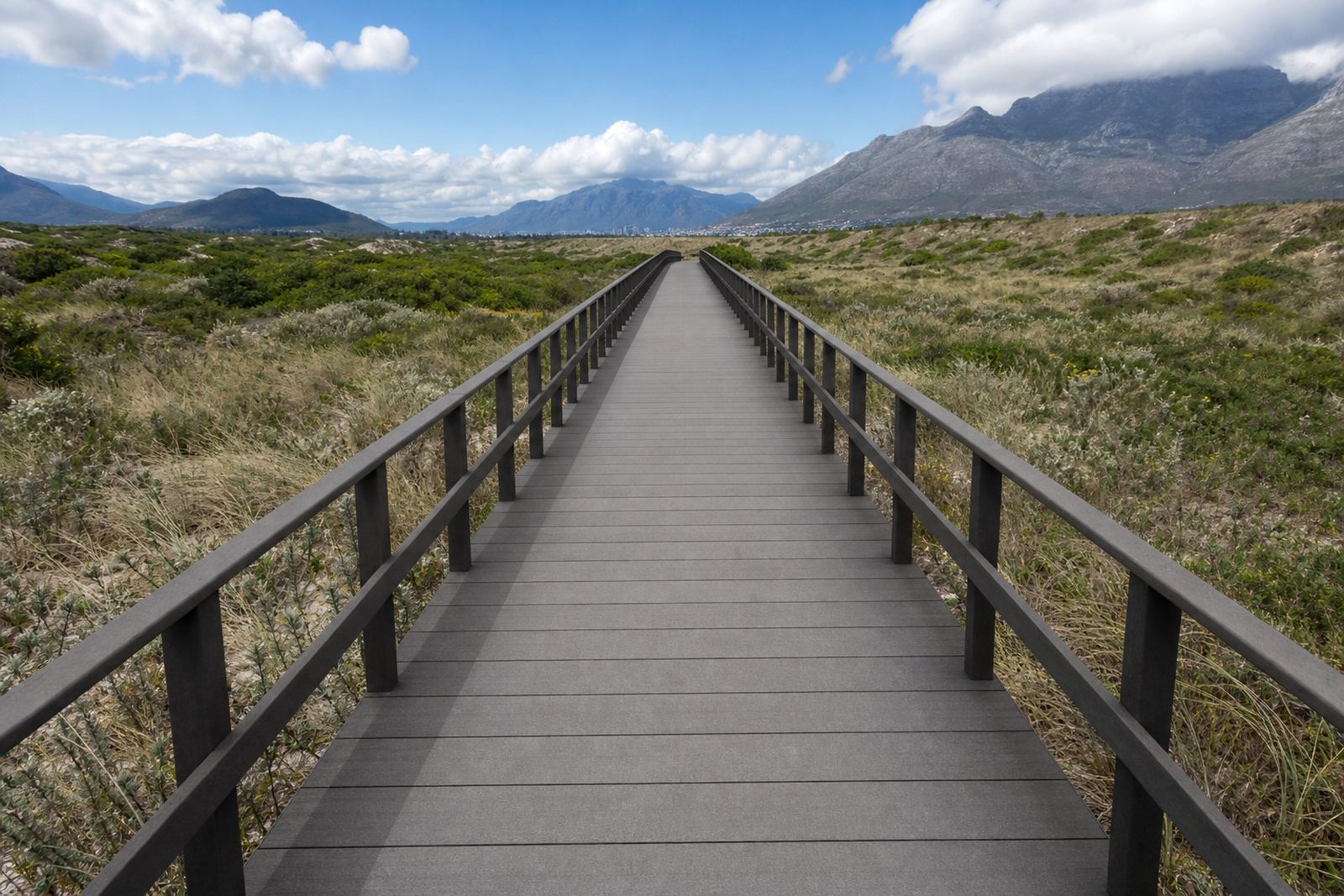
Boardwalk-style routes work best when the first question is not what it looks like, but who will use it and how often. A short path to a viewing deck in George will not need the same layout as a busy promenade link in Cape Town or a commercial walkway in Durban. Think about prams, wheelchairs, delivery trolleys, maintenance access and whether people will stop to sit along the way.
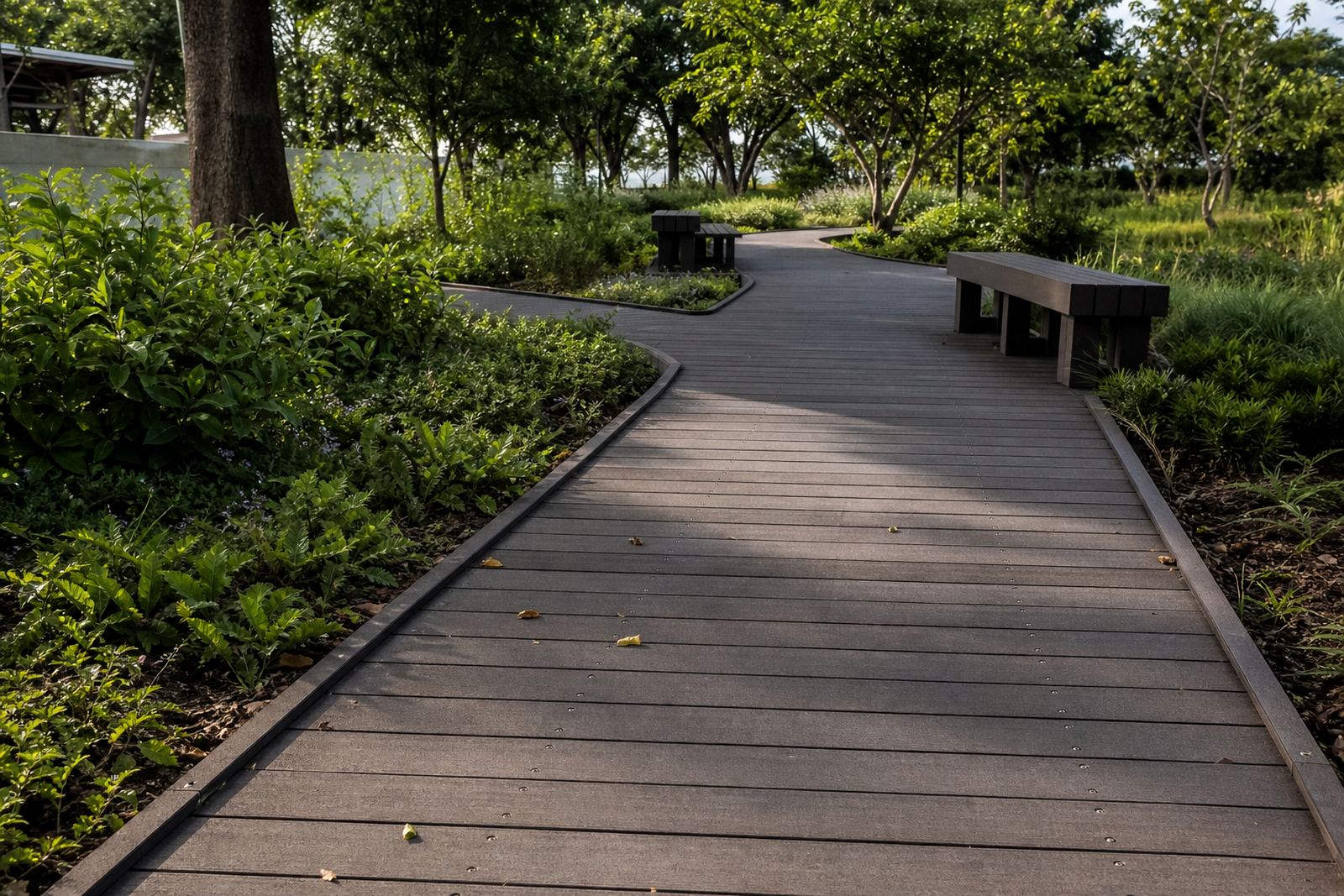
The width should be driven by movement, not just available space. A narrow path can feel cramped once two people meet or a cleaner needs to pass with equipment. Curves, landings and turning areas should be placed where the route needs to slow down, change direction or connect with steps, ramps or seating. Where the site is exposed to wind or coastal spray, the route should also feel stable underfoot and easy to inspect after bad weather.
Choose Materials That Suit South African Conditions
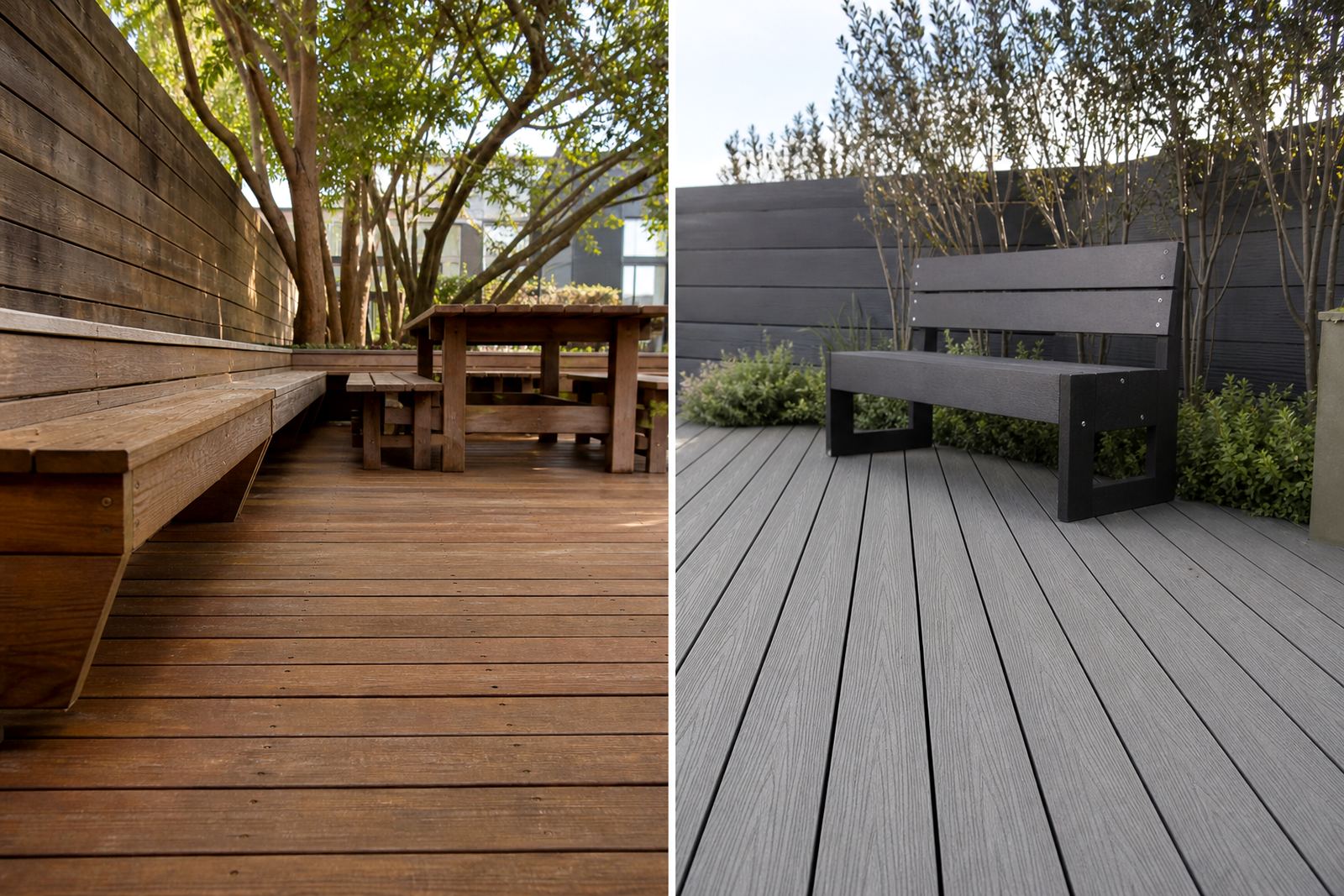
Recycled plastic lumber is widely used where moisture, termites and regular maintenance are part of the brief. It does not behave like natural timber, so the detail matters. It should be fixed with the correct fasteners, laid with sensible spacing, and supported properly so movement is controlled over time. That helps reduce squeaks, cupping and the kind of uneven finish that becomes a trip hazard.
For coastal projects in Paarden Eiland, Somerset West or any seaside location, salt air and humidity can be hard on many materials. Recycled plastic lumber is often chosen for its low upkeep and resistance to common decay issues. It also suits places where cleaning needs to be quick after sand, rain or public use. For benches, the same logic applies: stable seating, smooth edges, and surfaces that can handle daily use without constant sanding or repainting.
- Use materials that resist moisture and insect damage
- Allow for thermal movement in sun-exposed areas
- Keep fixings accessible for future component replacement
- Match the finish to the site, whether that is a lodge, school, municipal walkway or retail forecourt
Build in Drainage, Grip and Safe Edges
Water management is one of the main differences between a boardwalk that lasts and one that becomes slippery or uneven. Surfaces should shed water, not trap it. On sloped sites, the structure must move runoff away from walking lines and support points. In places like Stellenbosch, where summer heat can alternate with heavy rain, small drainage mistakes show up quickly.
Grip is another basic issue. A surface can be durable and still feel unsafe if it is too slick when wet. The design should consider tread pattern, board spacing, slope and the sort of footwear people actually wear. Edge details matter too. A raised edge can help guide traffic, but it must not create a stubbed toe risk or make cleaning difficult. If the route is used near dunes, gardens or pool areas, tidy edge finishing keeps the whole path easier to maintain.
Plan Seating as Part of the Route, Not an Extra
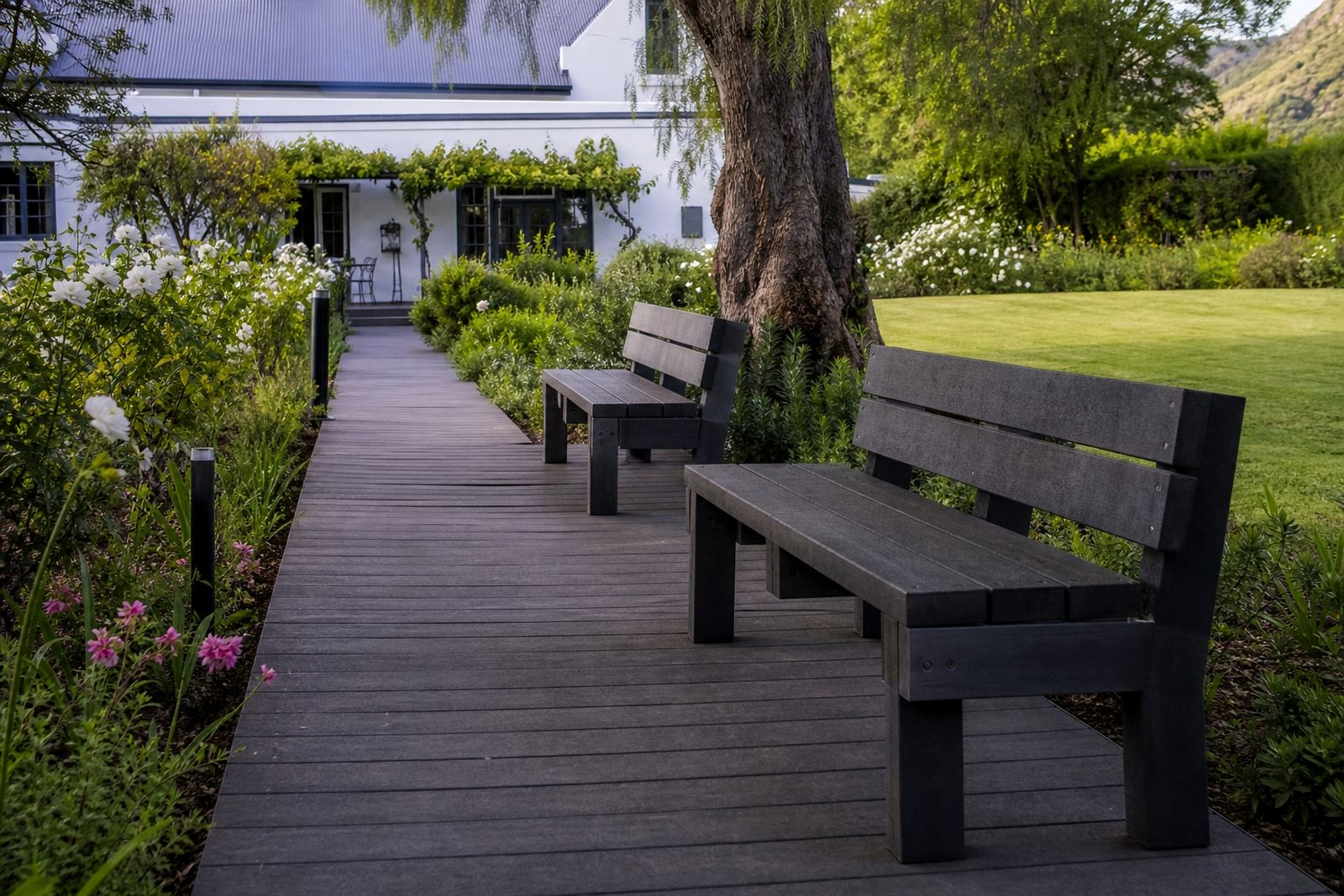
Benches are not just for comfort. They help break up long walks, support older users, and create pauses where people can enjoy the view or wait for others. On public or mixed-use routes, seating can also manage how people move, giving the route a natural rhythm. A well placed bench can reduce bunching at narrow points and encourage people to rest where the path is wider.
For South African sites, bench placement should also consider sun exposure, shade, wind direction and supervision. In Johannesburg a bench near a school route may need to sit under cover, while in Durban a beachfront boardwalk may need seating that handles sand and easy cleaning. The surface beneath benches should be level, and the fixing method should allow for maintenance without major disruption.
- Place benches where users naturally pause, not in the middle of a bottleneck
- Keep enough clear space around seating for wheelchair access
- Use details that make cleaning simple after rain, dust or sand
- Think about sightlines so seating feels safe and practical
Allow for Installation, Access and Future Maintenance
Good boardwalk planning includes what happens after the opening day. If access is difficult, even a well built route becomes hard to maintain. Panels, boards, supports and bench components should be arranged so that individual sections can be reached for inspection and replacement. That matters for commercial sites, estates and public areas where closing the whole route for a small repair is not realistic.
Site measures and layout planning should be done before material quantities are confirmed. Ground levels, edge conditions, drainage lines and tie-ins to existing paving all affect the final result. In places like Bellville or Paarl, where the route may need to connect to a mixed hardscape, careful planning helps avoid awkward steps or patchy transitions. Delivery coordination matters too, especially when the site has limited access, working hours or municipal restrictions.
A Cape Town Example: Coastal Route With Heavy Foot Traffic
Picture a pedestrian route in Paarden Eiland that links a parking area to a viewing point and includes a few resting spots along the way. The site gets wind, salt air, dust from nearby traffic and regular footfall from staff, visitors and contractors. In that setting, a recycled plastic lumber boardwalk with simple bench stops makes sense because the priority is low maintenance and reliable day-to-day use.
The route would need a clear width, a sensible slope, sturdy support points and surfaces that can be washed down without damaging them. Bench installation should be planned so the seating does not block movement or cleaning. If the site expands later, component replacement and refurbishment become part of the long-term plan rather than a major disruption. That is the practical value of boardwalk design basics: not fancy, just thought through.
When the design is grounded in the site conditions, the route stays useful for longer and the upkeep stays manageable for the people responsible for it.