
What changes when you move from timber to recycled plastic decking
Timber has been the familiar option for years because it looks natural and can suit many styles, from a small backyard stoep to a larger commercial walkway. Recycled plastic lumber decking takes a different approach. It is made from recovered plastic material shaped into boards that are used for decking, benches and similar outdoor applications. The result is a product that does not behave like wood in the same way, which changes how it performs in daily use.
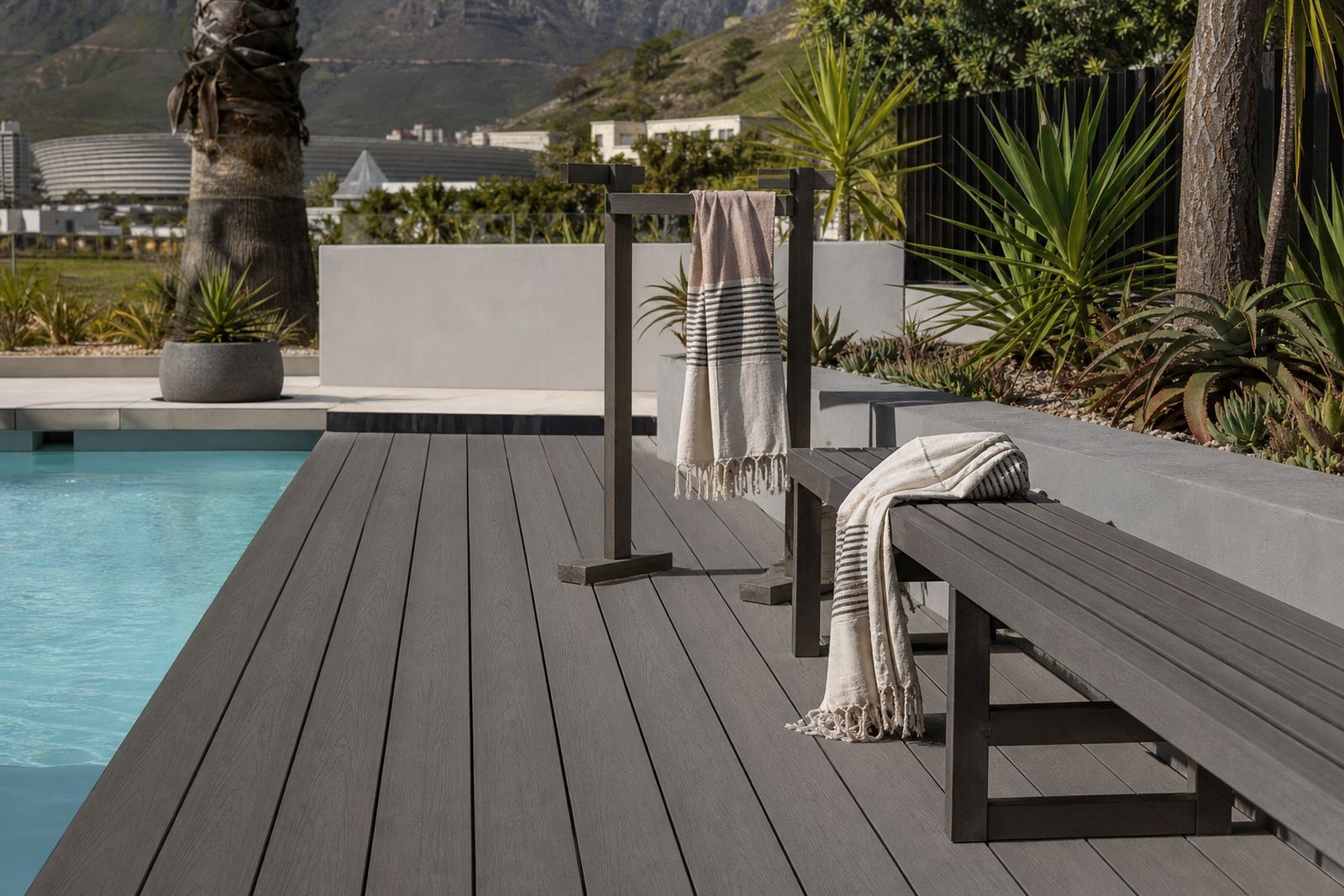
The biggest difference is how each material responds to water and weather. Wood can swell, shrink, crack and need regular sealing or painting. Recycled plastic boards are generally less affected by moisture, which is useful in places like Paarden Eiland, Somerset West and Durban where damp air and sea mist can be hard on outdoor finishes. That does not mean one is always better than the other, but it does mean the maintenance routine is very different.
For many property owners, the decision starts with one question: do you want the natural variation of timber, or the lower upkeep of a recycled material that stays more consistent over time?
Maintenance, weather and everyday wear
Wood can be attractive when freshly installed, but it usually asks for more attention. Depending on exposure, it may need sanding, re-coating, sealing or board replacement as the years pass. In South Africa, where sun, wind and seasonal rain can hit the same surface hard, that work can become a real factor in the total cost of ownership.
Recycled plastic decking and benches are often chosen because they reduce the routine jobs around upkeep. A hose down, basic cleaning and periodic checks are usually part of the care cycle. There is no need to chase knots, loose fibres or peeling coatings in the same way. That can be valuable for apartment blocks, schools, guesthouses and commercial spaces that want a clean finish without constant maintenance schedules.
- Less frequent sealing or painting than timber
- Useful where coastal humidity or wet conditions are common
- Can help reduce downtime for busy sites
- Often preferred for spaces that see regular public use
Wood still has its place, especially where a client wants a traditional material and is prepared for the upkeep. The key is to match the material to the site, not just the look.
Appearance, comfort and the way each material ages
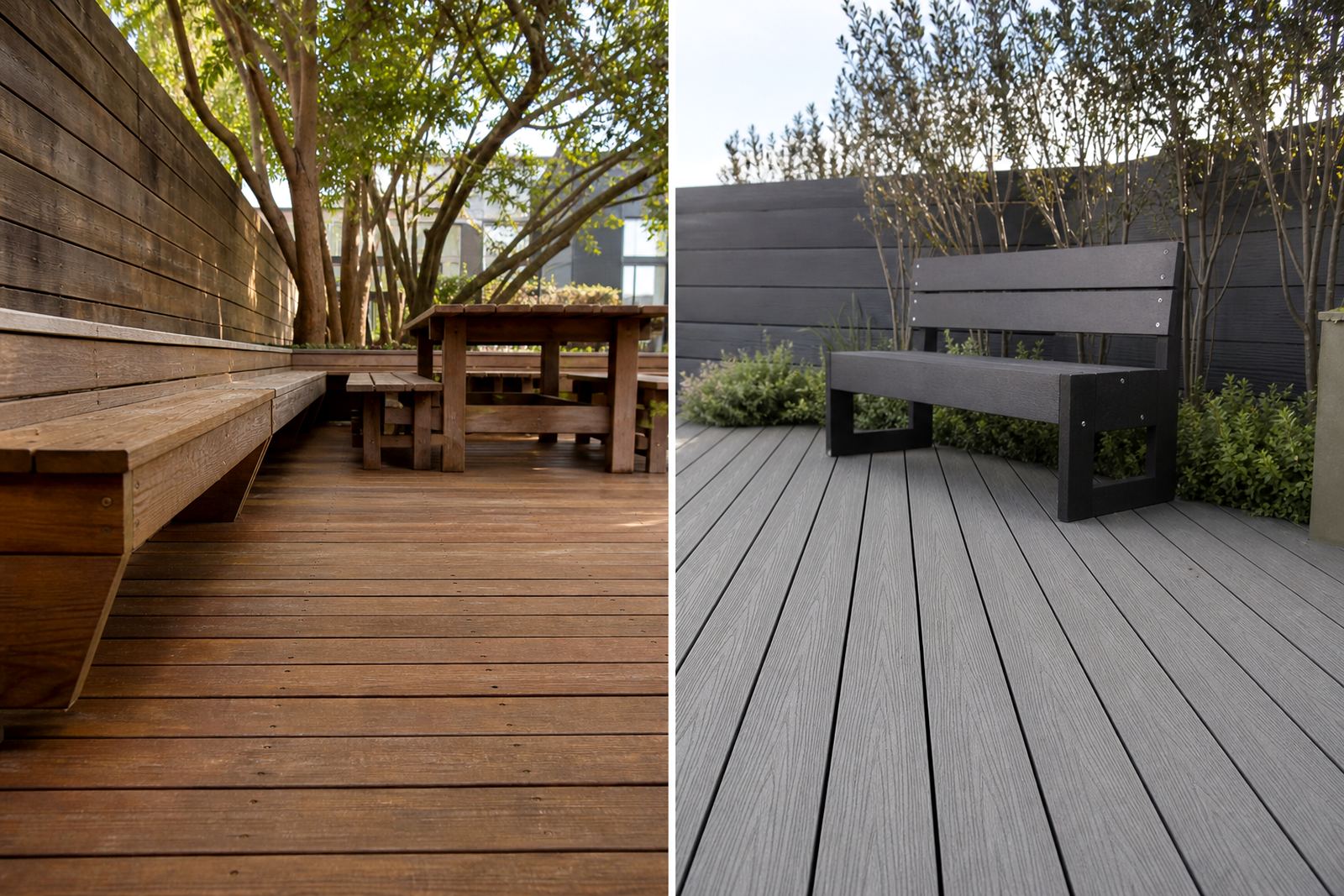
There is no getting around the fact that timber has a familiar visual appeal. Some owners like the grain, the warmth and the way wood can be finished to suit a range of colours and styles. Over time, though, timber changes. Even with care, weathering can bring fading, movement and surface wear that alters the original appearance.
Recycled plastic lumber has a more uniform look. For some projects that is exactly the point. It can give a neat, ordered finish that works well on boardwalks, seating areas and outdoor structures where consistency matters. In practical terms, it is often selected for places where people use the space hard and want the surface to keep looking tidy with less effort.
Comfort is also worth thinking about. Timber may feel more traditional underfoot, while recycled plastic boards can behave differently in strong sun. Site orientation, shade, and ventilation all play a part, so a layout plan matters as much as the material itself. A deck in Stellenbosch under partial tree cover will not face the same conditions as a fully exposed installation in George or Johannesburg.
Neither material is the same after a few seasons outdoors. The question is whether you prefer natural ageing or a more controlled, low maintenance finish.
Where recycled plastic decking makes strong practical sense
There are projects where recycled plastic decking clearly earns its place. Sites with frequent moisture, public access, or limited maintenance budgets often benefit from a material that does not need constant attention. That includes residential patios, pool surrounds, walkways, hospitality areas, shared courtyards and outdoor seating zones.
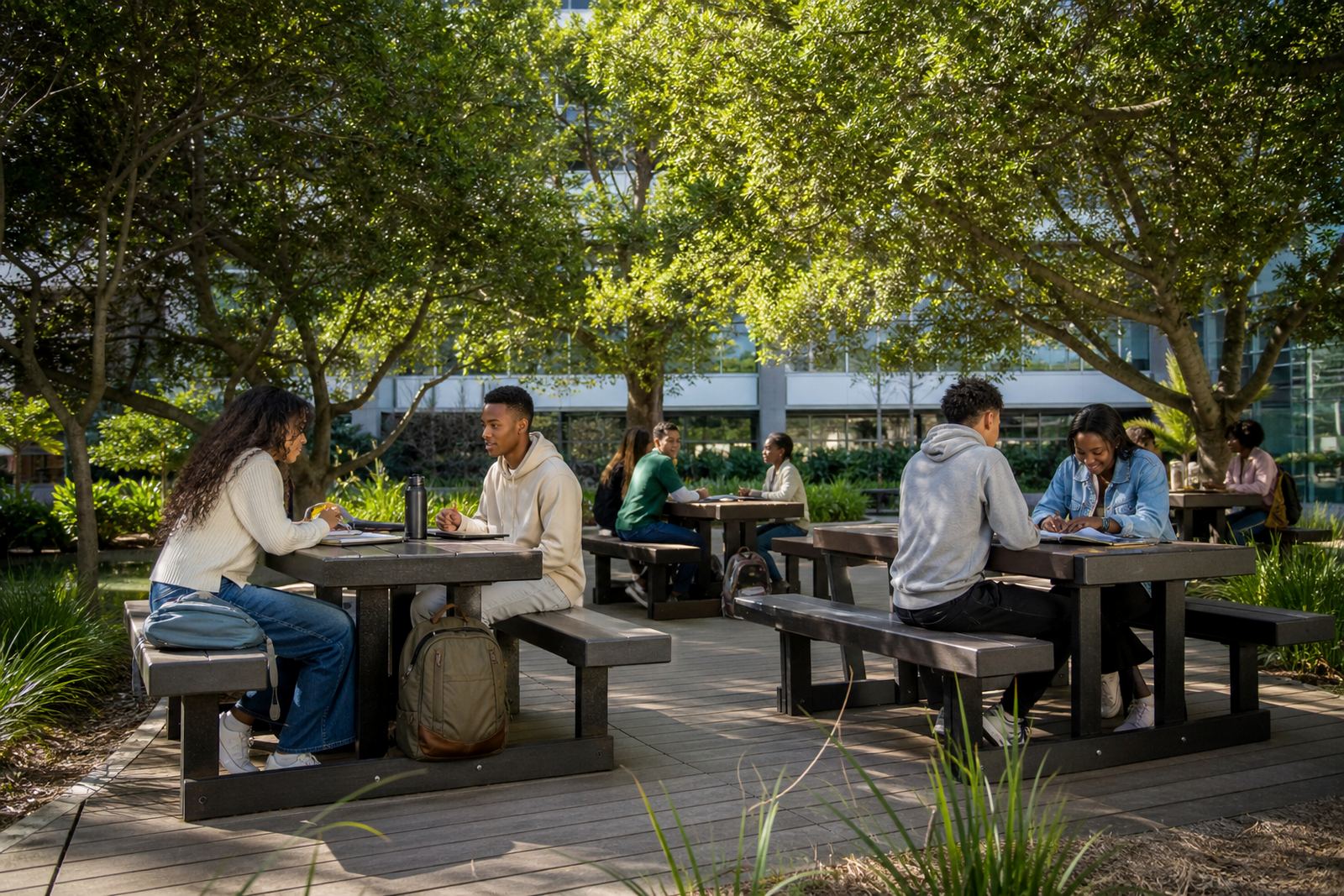
Benches made from recycled plastic lumber can also be a useful choice where durability matters. They are often used in schools, parks, transport areas and trade environments because they can handle regular use without the same finish concerns as wood. In a windy coastal area or on a site with heavy foot traffic, that makes day to day management easier.
- Pool areas where splash and damp are constant
- Coastal properties exposed to salt air
- Commercial spaces with regular public use
- Projects where maintenance access is limited
That said, timber still suits some premium residential settings and heritage-style spaces where the client wants a natural material and is prepared to maintain it properly. The best choice is the one that fits the site, the budget and the upkeep plan, not just the catalogue photo.
A local example from a Cape Town project
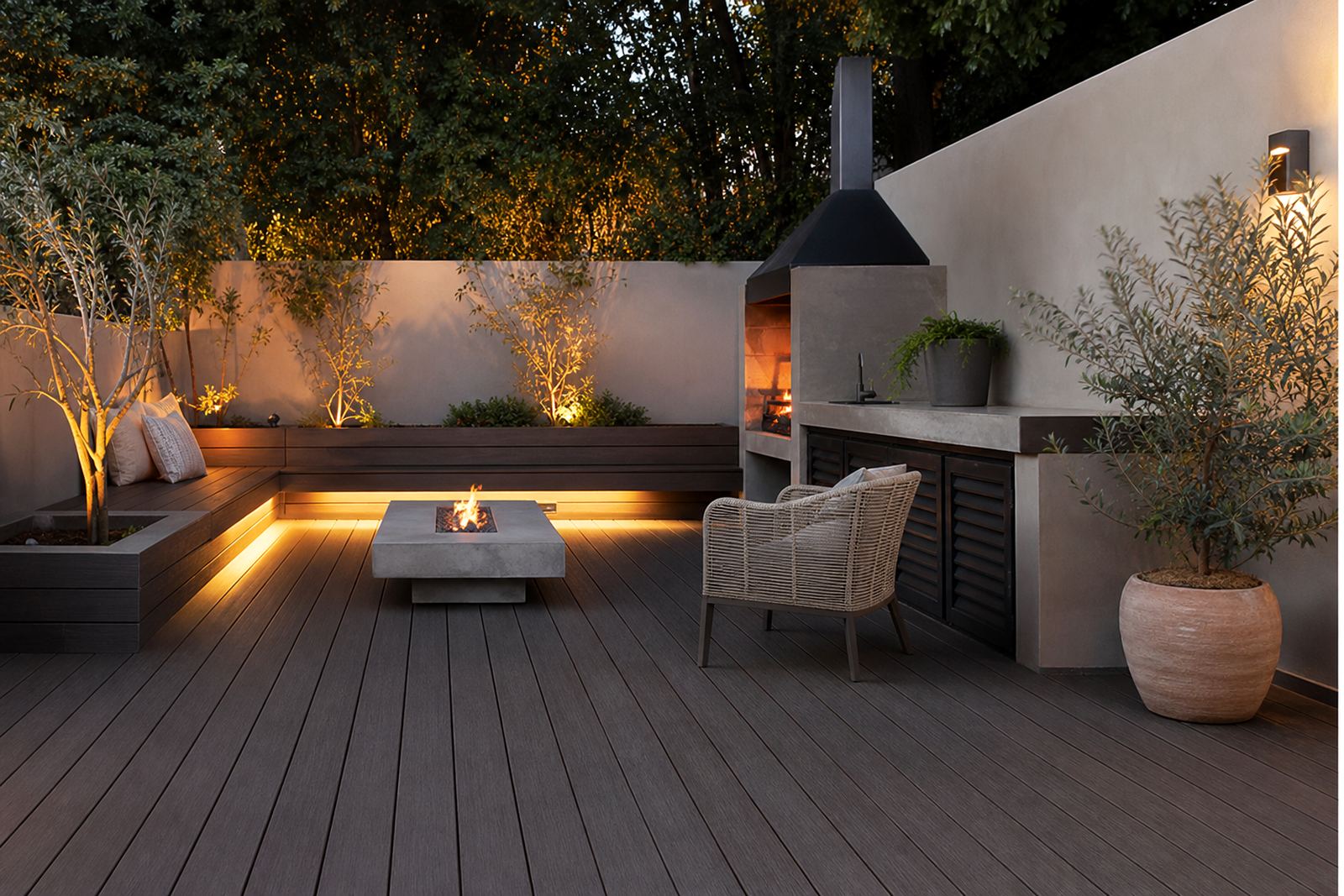
Take a coastal property in Cape Town with a small deck outside a braai area and a few benches for guests. Salt in the air, summer sun and winter rain all put pressure on outdoor materials. If the owner chooses timber, they may need to budget for regular treatment and a closer watch on board movement after wet weather. If they choose recycled plastic decking, the finish is likely to be easier to maintain, with less concern about rot or repeated coating work.
Now compare that with a commercial site in Durban or George where benches are used by staff, visitors or customers every day. The material needs to be practical, tidy and easy to clean. In that setting, recycled plastic benches can make sense because the cleaning routine is simple and there is less risk of the material breaking down from moisture exposure.
For a project like this, the site measure, layout planning and material quoting matter just as much as the product choice. Good planning helps avoid waste, awkward joins and avoidable call-backs later on.
How to choose the right option for your project
If you are deciding between decking and wood, start with the conditions on site. Ask how much sun, rain and foot traffic the area gets, and how often anyone will be available to maintain it. A busy property in Bellville will have different needs from a private home in Paarl, and a seaside site in Somerset West will face different weather again.
It also helps to think about the full lifespan of the project. The cheapest option on day one is not always the easiest to live with later. Timber can be the right answer where appearance and tradition matter more than upkeep. Recycled plastic decking and benches can be the better fit where durability, moisture resistance and lower maintenance are the priority.
Our work in Paarden Eiland includes delivery coordination, deck installation, bench installation, edge finishing, refurbishment and component replacement, so we see both materials in real conditions. The practical answer usually comes from the site itself, not from theory. If you are planning a new build or replacing worn outdoor surfaces, compare the long term care you want with the look you are aiming for.