
Why outdoor study areas need more than a basic bench
Outdoor learning spaces do better when the seating supports both quiet focus and group work. A straight bench against a wall is fine for a quick break, but informal study needs places where students can sit in small clusters, keep bags off the ground, and move between solo work and discussion with ease. That is where recycled plastic lumber seating has real value. It stays practical in rain, sun and salty air, and it does not call for constant sanding, sealing or repainting.
For campuses, schools and training centres, the aim is not to make the space feel formal. It is to make it usable every day. Benches with enough depth and a sensible backrest angle can keep people comfortable for longer sessions, while stable layouts help reduce clutter around walkways and entrances. In places like Bellville or Somerset West, where outdoor circulation areas get heavy foot traffic, that matters just as much as appearance.
How recycled plastic lumber suits South African outdoor use
Recycled plastic lumber is a practical material for outdoor seating because it is made to cope with weather, spills and general wear in a way timber often struggles to match. It does not absorb moisture like untreated wood, so it is better suited to coastal conditions in Durban or Cape Town where humidity can be hard on natural materials. It is also a sensible option for spaces where cleaning needs to be straightforward, especially under trees or near food areas.
Because the material is used in solid sections, benches can be built for repeated use in shared spaces without the loose grain, splintering or frequent surface damage associated with timber. That makes it a good fit for student courtyards, tech parks, library forecourts and community training centres. It also supports a cleaner finish in spaces where people sit with laptops, files or notebooks and need a stable surface around them.
- Better suited to damp or coastal conditions than untreated timber
- Easy to wipe down after daily use or light spills
- No splinters, which helps in student and public settings
- Useful where maintenance access is limited during term time
Layout choices that make study seating work outdoors
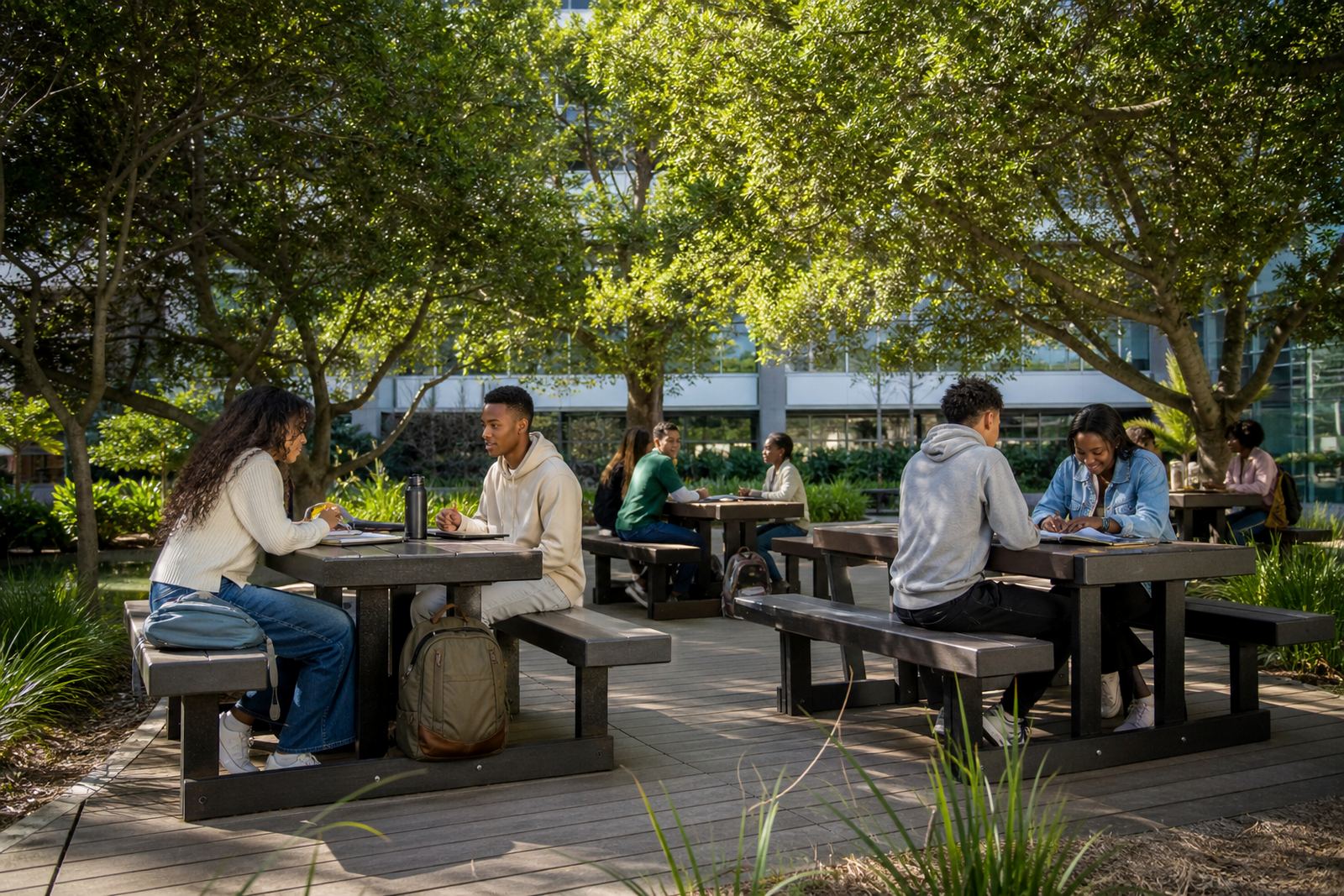
The best outdoor study seating is planned around how people actually use the area. A row of benches facing one direction can suit quiet reading, while paired benches or angled group seats work better for collaboration. In practice, you want enough space between units for people to stand up without disturbing others, and enough circulation room for staff, cleaners and deliveries to pass through. On a campus in Stellenbosch for example, shaded benches near a coffee point may be used differently from a quiet courtyard behind the lecture halls.
Good layout planning also considers sun, wind and noise. In Cape Town, a seating area exposed to afternoon wind may need a more sheltered position or a low wall nearby. In Johannesburg, where outdoor spaces can be bright and dry, shade and orientation matter more. The point is to make the seating useful across seasons, not just pleasant for one part of the year.
- Place seats near shade where possible, but not in dark corners
- Leave space for bags, books and movement around the bench
- Mix straight seating with clustered seating for different study styles
- Keep the route to bins, water points and entrances clear
Bench features that support longer study sessions
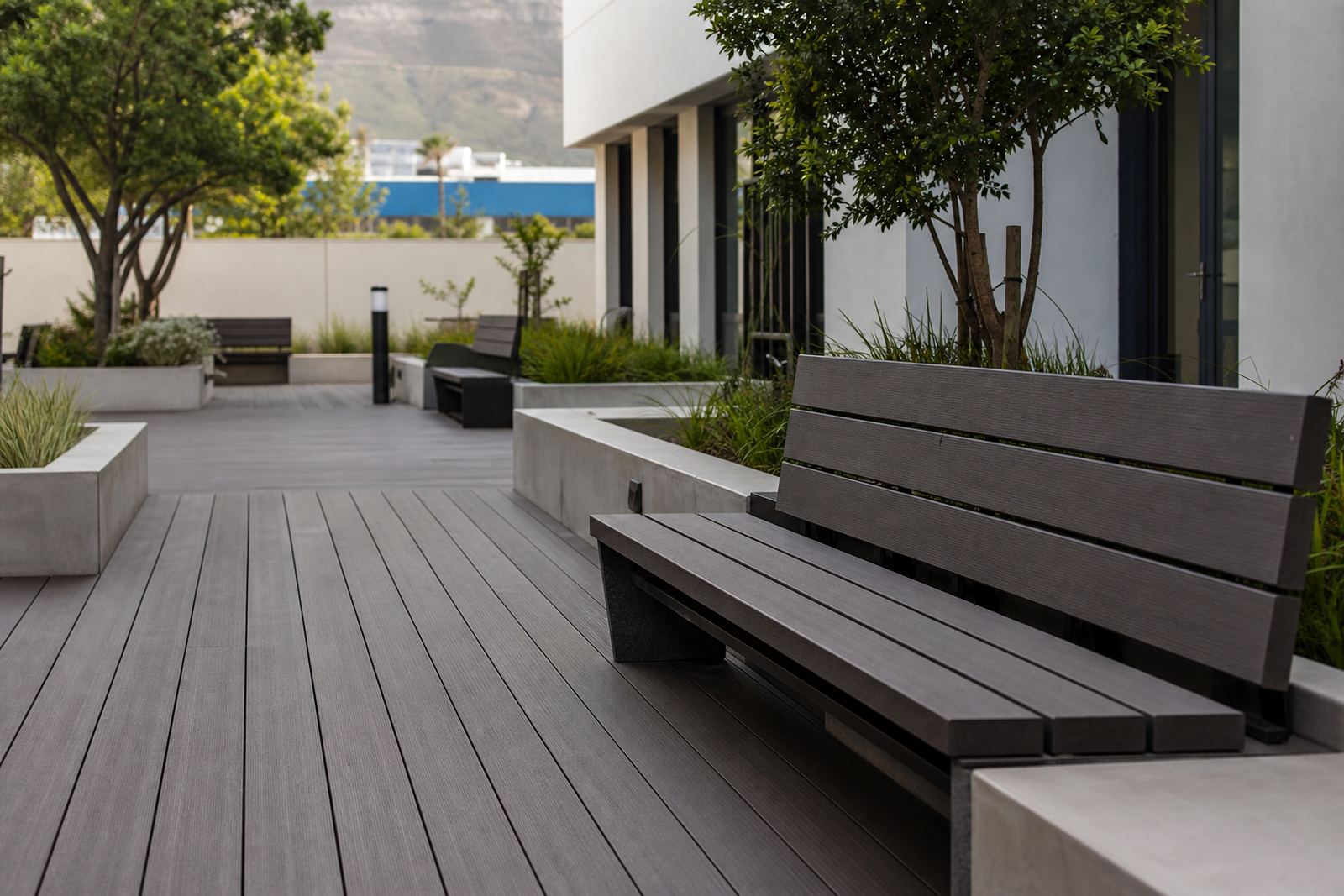
For study use, a bench should be more than something to sit on for five minutes. Seat height, depth and back support all affect whether people stay comfortable during a full afternoon session. A backrest can help with posture, while a well-finished edge makes the seat easier to use for longer periods. When benches are positioned in collaboration areas, small details become important, like whether the layout allows two or three students to face one another without feeling squeezed.
There is also value in keeping the design simple. A clean bench profile is easier to maintain, and fewer exposed joints mean less chance of trouble in busy outdoor areas. In Paarl or George, where schools and colleges often need practical outdoor furniture that lasts through changing weather, simple forms usually make more sense than decorative shapes that are harder to care for. The same goes for edge finishing, which helps the seating feel neater and more comfortable under daily use.
- Backrests help support longer reading or discussion sessions
- Simple lines are easier to clean and maintain
- Rounded or finished edges improve comfort
- Grouped seating encourages discussion without needing extra tables
A local example: a campus courtyard in Cape Town
In Paarden Eiland, where practical use and access matter, a campus or training venue can benefit from seating that stands up to constant movement. Imagine a courtyard used between lectures, where students arrive early, spread notes, and work in pairs before class. Recycled plastic lumber benches can be arranged along the shaded edge of the space, with a few grouped units closer to the centre for group discussion. That gives the area flexibility without turning it into a crowded waiting zone.
For a site like this, the delivery and installation plan matters as much as the seating itself. Heavy foot traffic, limited service access and municipal rules about keeping walkways clear can all affect how the benches are set out. In practice, the coordinator needs the site measured properly, the layout checked against circulation routes, and the delivery timed to avoid peak campus movement. It is simple work when planned well, but it saves a lot of trouble later.
Keeping study seating useful with low maintenance
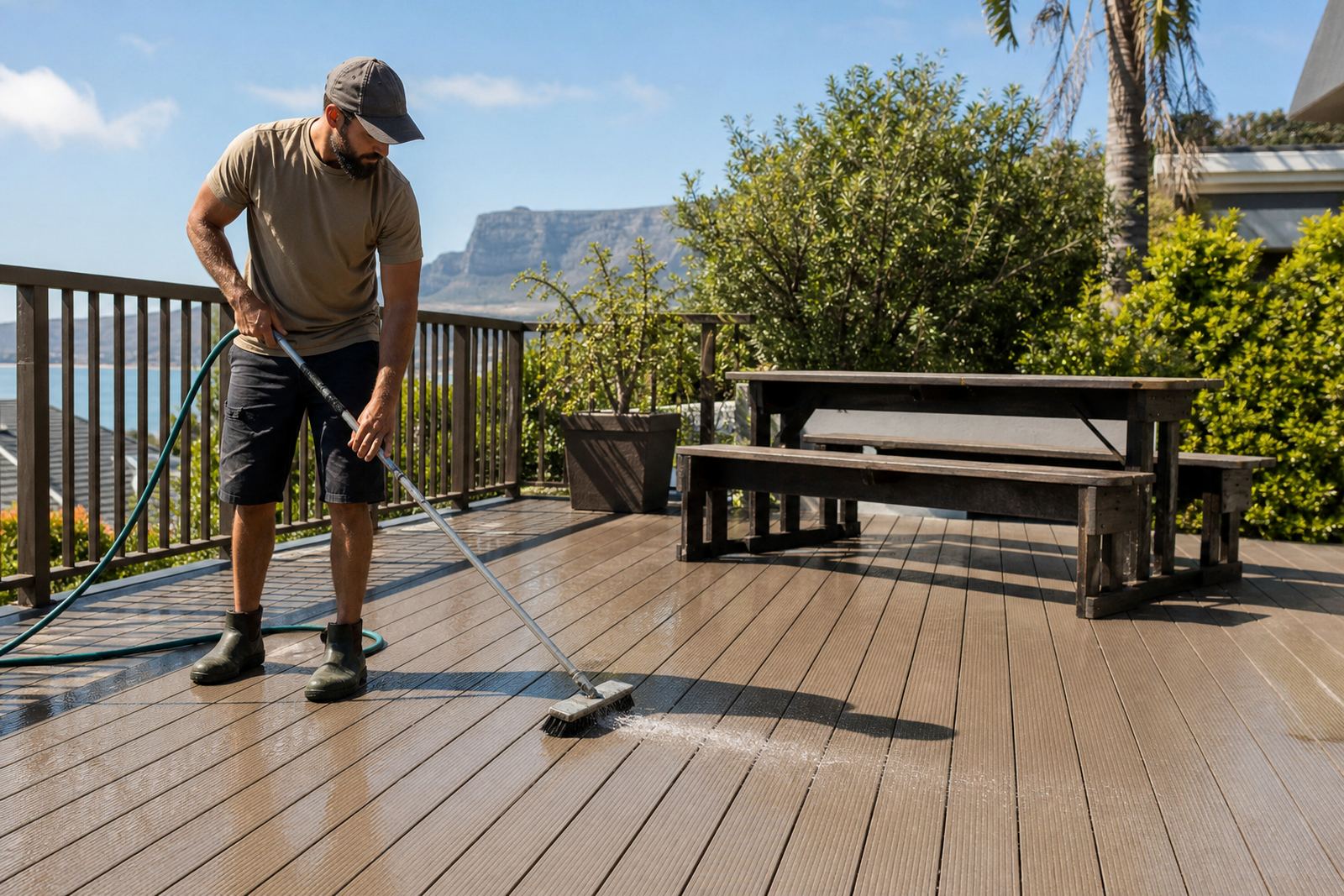
Outdoor study furniture should not create a maintenance burden for staff who already deal with lawns, bins, cleaning and general upkeep. Recycled plastic lumber helps here because routine care is usually straightforward. Basic washing, regular checks on fixings, and the occasional component replacement where needed can keep seating in good condition for a long time. For institutions with limited maintenance teams, that is a practical advantage.
It also helps that the material is well suited to refurbishment rather than full replacement in many cases. If a part is worn or damaged, a targeted repair can restore the bench without taking the whole area out of use. That matters in schools, colleges and public spaces where the seating must stay available through term time. The goal is simple: keep the area tidy, safe and ready for use, with as little disruption as possible.
- Wash down regularly to remove dust and residue
- Check fixings after heavy use or strong winds
- Plan for targeted refurbishment where possible
- Keep the seating area clear so it remains welcoming and easy to use
Planning and supply across South Africa
From Cape Town and Stellenbosch to George, Johannesburg and Durban, outdoor study seating needs to suit local weather, usage patterns and site rules. That is why the process usually starts with site measures and layout planning, followed by material quoting and delivery coordination. Once the setup is agreed, deck installation, bench installation and edge finishing can be handled to suit the space, whether it is a school courtyard, a college garden or a shared training area.
At Plastimber, the work is based in Paarden Eiland, Cape Town, with trade support available for projects across Cape Town, Stellenbosch, George, Johannesburg, Durban, Paarl, Somerset West and Bellville. Under the direction of Morne van Zyl and the team, including Anele Mkhize, Bianca Fourie, Thabo Molefe, Leanne Naidoo, Jason Petersen and Sibusiso Dlamini, the focus stays on practical seating that fits the site and gets used properly. If the outdoor area is meant for study, conversation or quiet pause, the layout should make that easy from day one.