Start With Regular Sweep-Downs, Not Heavy Scrubbing
The easiest way to keep a deck looking cared for is to stop dirt from settling in the first place. A soft-bristle broom, a leaf blower on a low setting, or a quick hand sweep after windy weather will remove dust, sand, flower petals and loose grit before they grind into the surface. In places like Paarden Eiland, Bellville and Somerset West, airborne dust can collect quickly, especially where there is construction activity or strong afternoon wind.
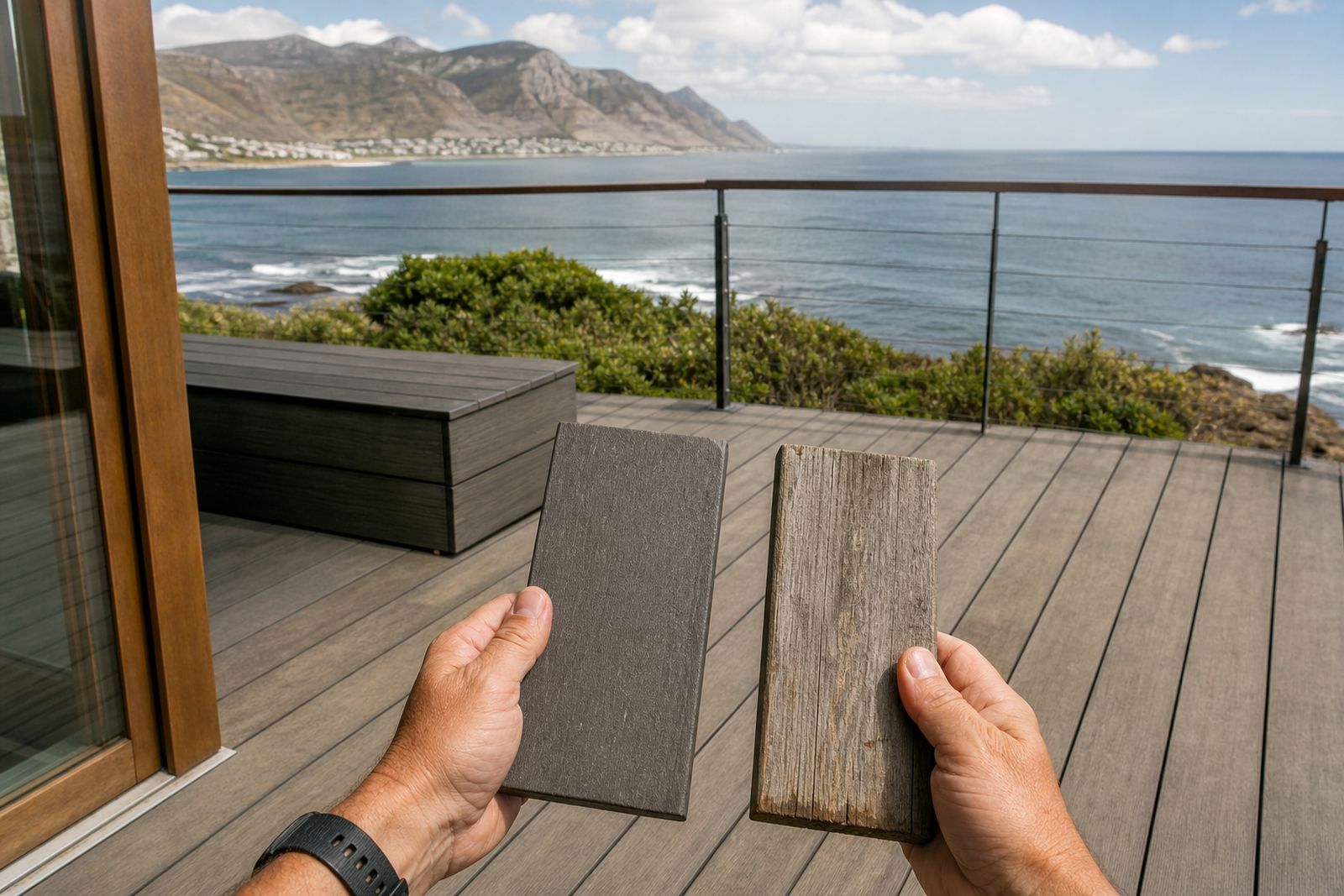
Recycled plastic lumber decking is low maintenance, but it still benefits from routine attention. Sweep along the board direction and clear the gaps between boards so water can drain properly. If leaves are left to sit for too long they can stain, and damp debris can encourage slippery patches. A few minutes each week usually does more good than a big clean once in a while.
- Sweep after windy days and after garden work
- Keep drainage paths and board gaps free of leaves
- Remove sand from coastal areas before it gets ground in
- Check corners, steps and edges where dirt builds up first
Use Mild Soap and Clean Water for Most Marks
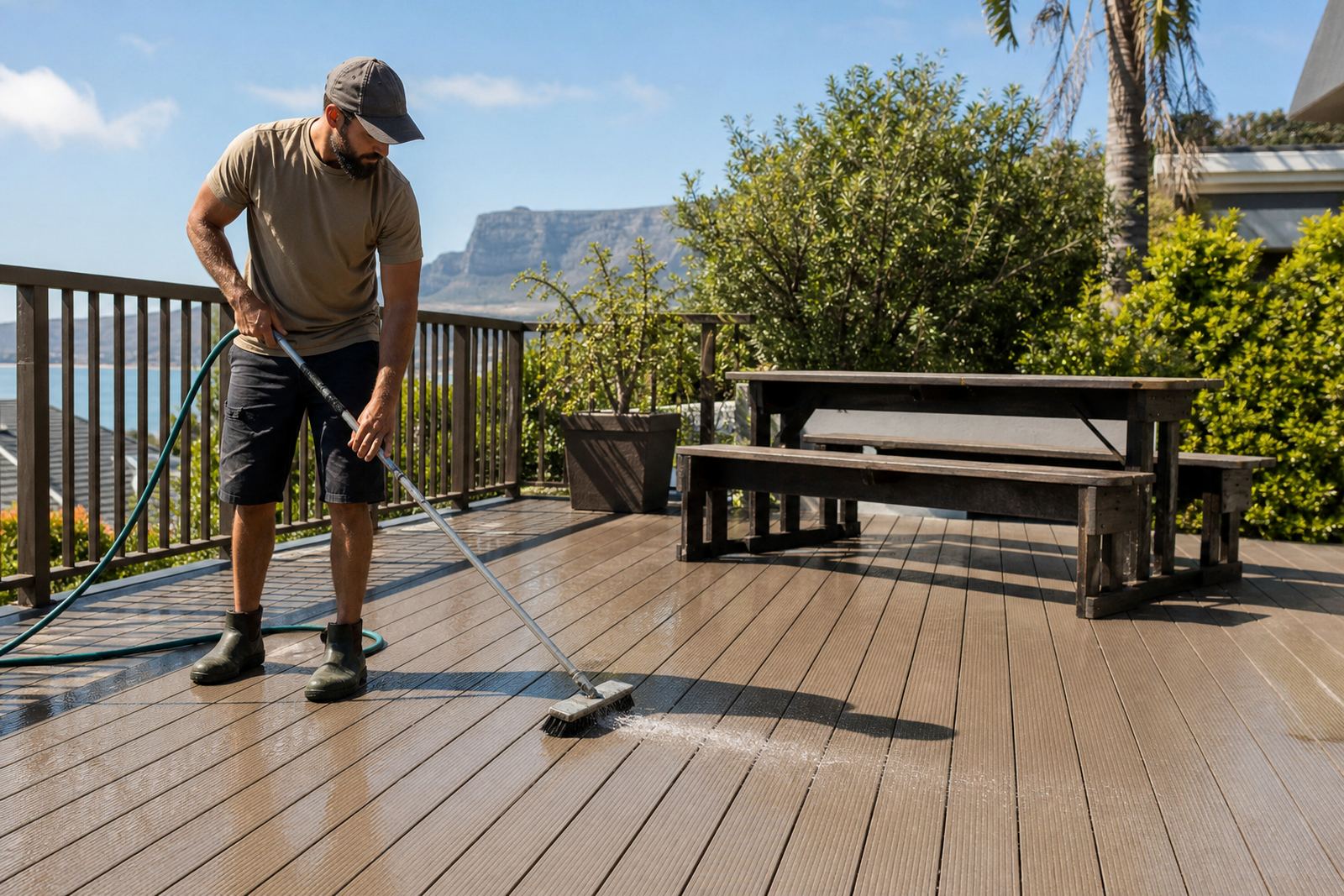
For everyday dirt, warm water and a mild household soap are usually enough. Mix the solution in a bucket, wet the surface, then use a soft brush or microfibre mop to loosen grime. Rinse well so no soapy film remains, because residue can attract dust again. This is especially useful for family patios and outdoor seating areas where food spills, sun cream and foot traffic leave a dull layer over time.
Avoid harsh cleaners unless the product maker specifically says they are suitable for the surface. Strong chemicals can affect the finish, and some cleaners are simply unnecessary for this type of decking. If a mark is stubborn, repeat the mild wash first before trying anything more aggressive. The goal is to clean the deck, not strip it.
- Use lukewarm water for general washing
- Choose a soft brush rather than a stiff wire brush
- Rinse thoroughly to prevent streaks or slippery residue
- Test any stronger cleaner on a small hidden area first
Handle Coastal Humidity and Inland Dust Differently
Cleaning habits should match the location. In coastal places like Cape Town, George and Durban, moisture, salt spray and morning condensation can leave a film on outdoor surfaces. A regular rinse and light wash helps stop that build-up from becoming patchy or sticky. In drier inland areas such as Johannesburg and parts of the Cape Winelands, fine dust and windblown grit are often the bigger issue, so sweeping becomes even more important.
On shaded decks, algae can appear where water lingers after rain or irrigation. If that happens, increase the cleaning frequency and check whether nearby pots, gutters or sprinklers are keeping the surface damp. A clean deck is easier to maintain when surrounding water sources are managed well too.
- Rinse more often in salty coastal air
- Sweep more often in dry, dusty conditions
- Move plant pots now and then to stop moisture rings
- Check for shaded corners where dampness stays longer
Treat Spills Quickly So They Do Not Set
Food, drinks, oil and muddy footprints are part of normal outdoor use. The best time to deal with them is straight away. Wipe up spills with absorbent cloths, then clean the area with soap and water. For grease or cooking splashes near a braai area, do not leave the spot until later in the week. Fresh spills are much easier to remove than dried ones.
If the deck sits beside a pool, rinse off chlorinated water and sand after busy weekends. If it is used for a shop entrance, restaurant courtyard or office patio, more foot traffic means more chance of dark marks from shoes and wheelchairs. A steady clean-up routine helps the surface stay neat without a lot of fuss, and keeps the area more pleasant for visitors.
- Act quickly when spills happen
- Keep a cloth and bucket nearby for fast clean-ups
- Rinse poolside areas after busy use
- Pay attention to entrances and walkways where marks show first
Avoid Damage From Pressure and Sharp Tools
It is tempting to reach for a pressure washer when a deck looks tired, but too much pressure can drive dirt deeper into joints or affect the surface if the nozzle is too close. If a pressure washer is used, keep the pressure modest and hold the nozzle at a safe distance. A garden hose and brush are often enough for routine cleaning. That is the safer route for many homes and commercial spaces across South Africa.
Also avoid scrapers, metal tools and coarse scourers. They can leave visible marks even on hard-wearing surfaces. For stuck-on mud or dried sap, soften the area first with water and mild soap, then lift the dirt gently. It takes a little longer, but the deck keeps its appearance for longer too.
Where benches or edging are fitted around the deck, clean those parts as well. Dirt can collect under seating and against borders, so it helps to clean the whole area rather than only the centre. If there are loose fittings, damaged ends or worn joints, sort those out before grime settles around the problem.
Build a Simple Maintenance Routine That Fits the Space
Good deck care is mostly about routine. A basic schedule makes the work manageable whether the surface is at a home in Stellenbosch, a business yard in Paarden Eiland or a holiday property near George. The point is not to over-clean. It is to keep the area orderly enough that dirt never becomes a bigger job than it needs to be.
A useful routine might look like this: quick sweeping during the week, a mild wash every so often, and a proper check after heavy rain or strong winds. If the deck is near a braai, pool or garden tap, inspect it a bit more often. Over time, this habit helps reduce staining and makes the surface easier to keep tidy between seasons. It also helps owners spot early wear, loose components or blocked drainage before they become bigger issues.
If a deck needs refurbishment, component replacement, or edge finishing, it is worth dealing with that early. A surface that drains well and has neat joints will always be easier to clean than one with trapped dirt or uneven edges.
- Set a weekly sweep routine
- Wash lightly as needed rather than all at once
- Inspect after storms, windy days and long weekends
- Keep nearby drainage and gutters clear