
Why compact courtyards need materials that can take a beating
In a tight city courtyard, every square metre has to work hard. People move chairs around, wheel bins past the edge, and track in sand after a wet Cape Town day or a humid Durban afternoon. Recycled plastic lumber is useful in these conditions because it does not behave like untreated timber and it handles regular washing well.
For shared outdoor breaks, the main concern is usually maintenance. Timber can splinter, stain, and need frequent sealing. Recycled plastic lumber decking and benches offer a cleaner surface for everyday use, with fewer touch-up jobs for landlords, body corporates, and facility teams. It suits places where downtime matters and where access for repairs is limited.
Plastimber works from Paarden Eiland in Cape Town and supplies projects across South Africa, including Stellenbosch, George, Johannesburg, Durban, Paarl, Somerset West, and Bellville. That makes it practical for urban sites that need coordinated delivery and clear planning before installation.
Layout ideas that make a small courtyard feel usable
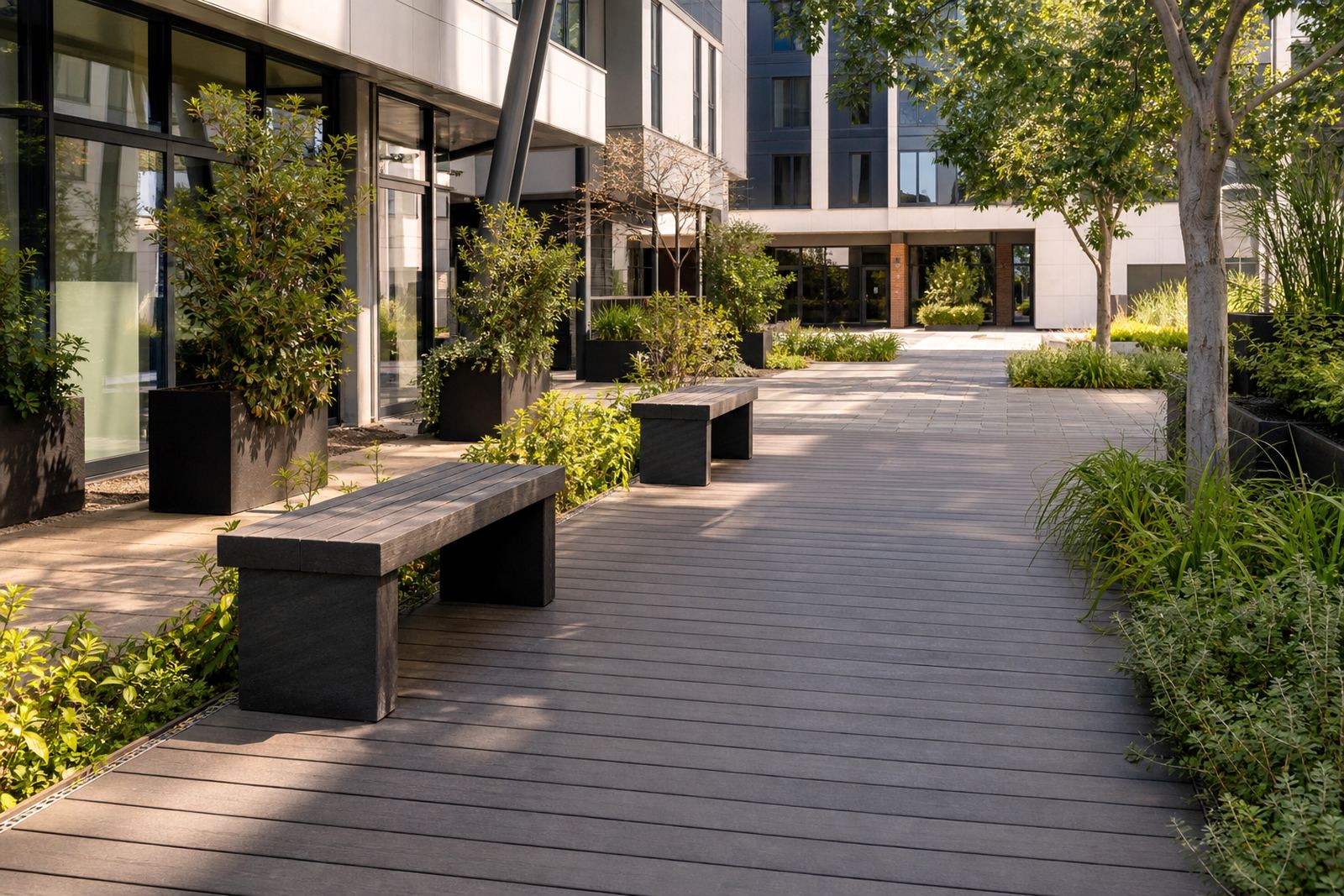
The best courtyard decks do not try to do everything. They create clear zones for sitting, walking, plant displays, and movement between doors. In a compact space, a neat edge and a simple run of decking can make the area feel organised without wasting room on unnecessary shapes.
- Keep the main circulation path straight and uncluttered
- Use benches along one side instead of loose seating that shifts around
- Allow space for bins, planters, and cleaning access near the back edge
- Choose board direction to visually widen a narrow yard
- Leave room for drainage so water does not pool after rain or washing
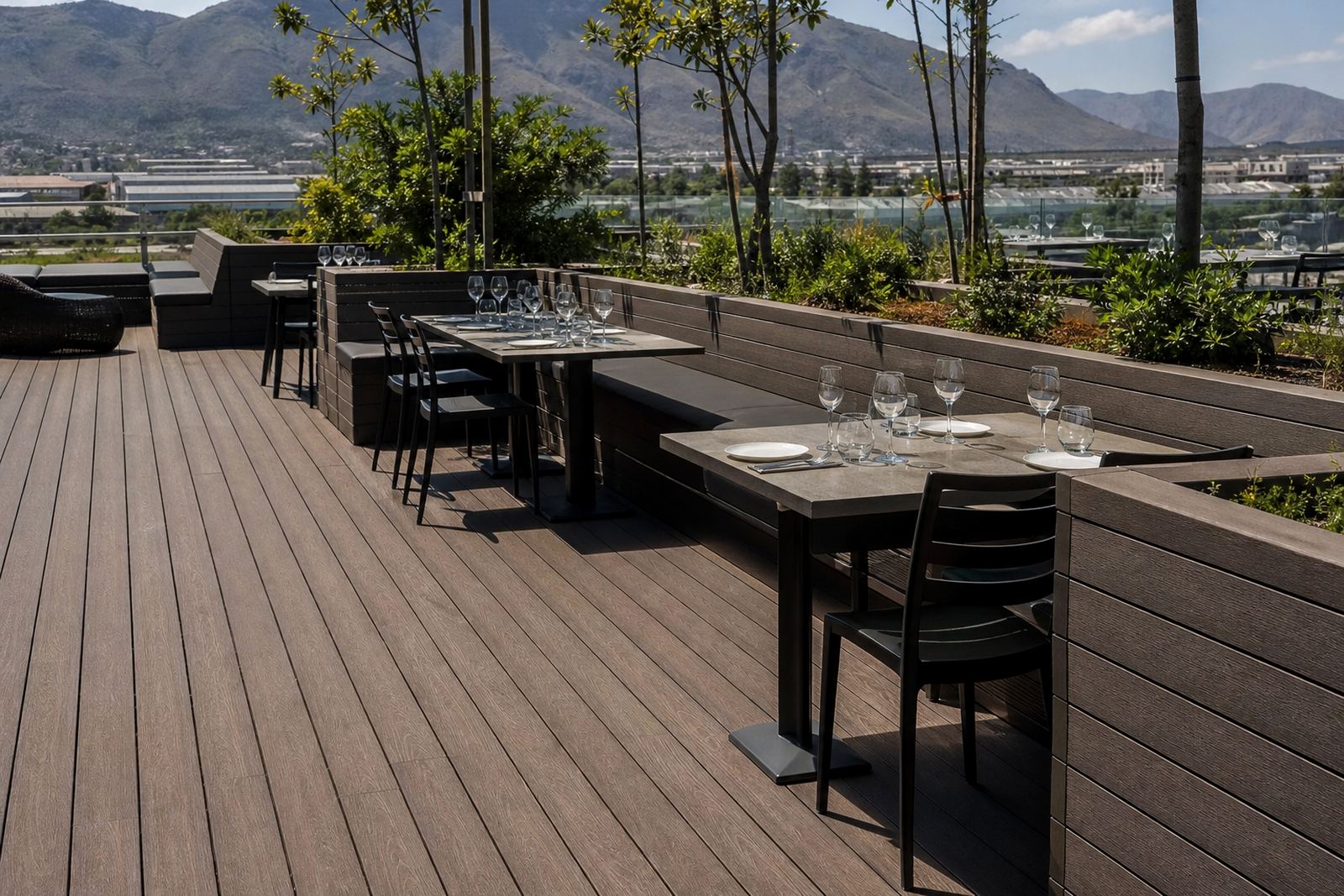
In mixed-use buildings, a courtyard often serves lunch breaks, quick meetings, and after-hours access. A simple layout helps the space work for all three without feeling crowded. If the area is narrow, fixed benches can be better than tables and chairs because they free up floor area and reduce clutter.
Recycled plastic lumber for coastal weather and inner-city wear
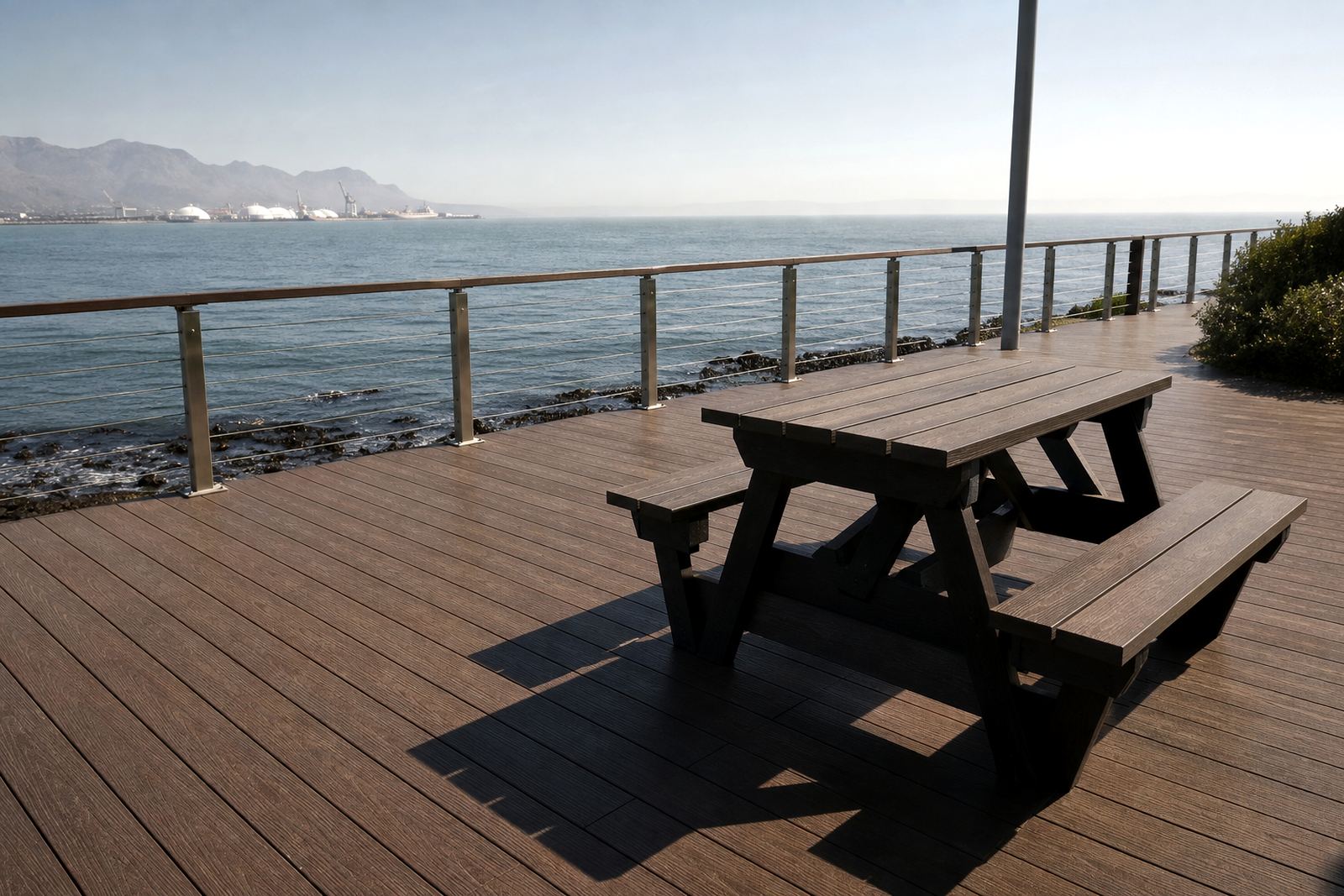
South African courtyards face different conditions depending on location. In Cape Town and along the coast, moisture and salt air can be hard on ordinary timber. In Johannesburg, strong sun and dust are more common, while Durban brings humidity that can affect surface finish and hardware over time. Recycled plastic lumber is well suited to these conditions because it does not absorb water in the same way as natural wood.
The material is also a sensible choice where load-shedding affects building routines. If outdoor lighting is used in the evenings, a low-maintenance deck surface reduces the need for constant upkeep when access is already awkward. For busy properties, that practical side matters just as much as appearance.
It is still important to plan for expansion, drainage, and the type of foot traffic expected. A courtyard used by office staff at lunch is different from one used by guests at a guesthouse, or by residents carrying shopping bags and prams. Good planning helps the surface stay stable and look tidy over time.
Bench placement that supports shared breaks
Benches are often the difference between a courtyard that looks finished and one that is simply empty space. Fixed benches can create order, encourage people to use the area, and make cleaning simpler because there are fewer movable items in the way.
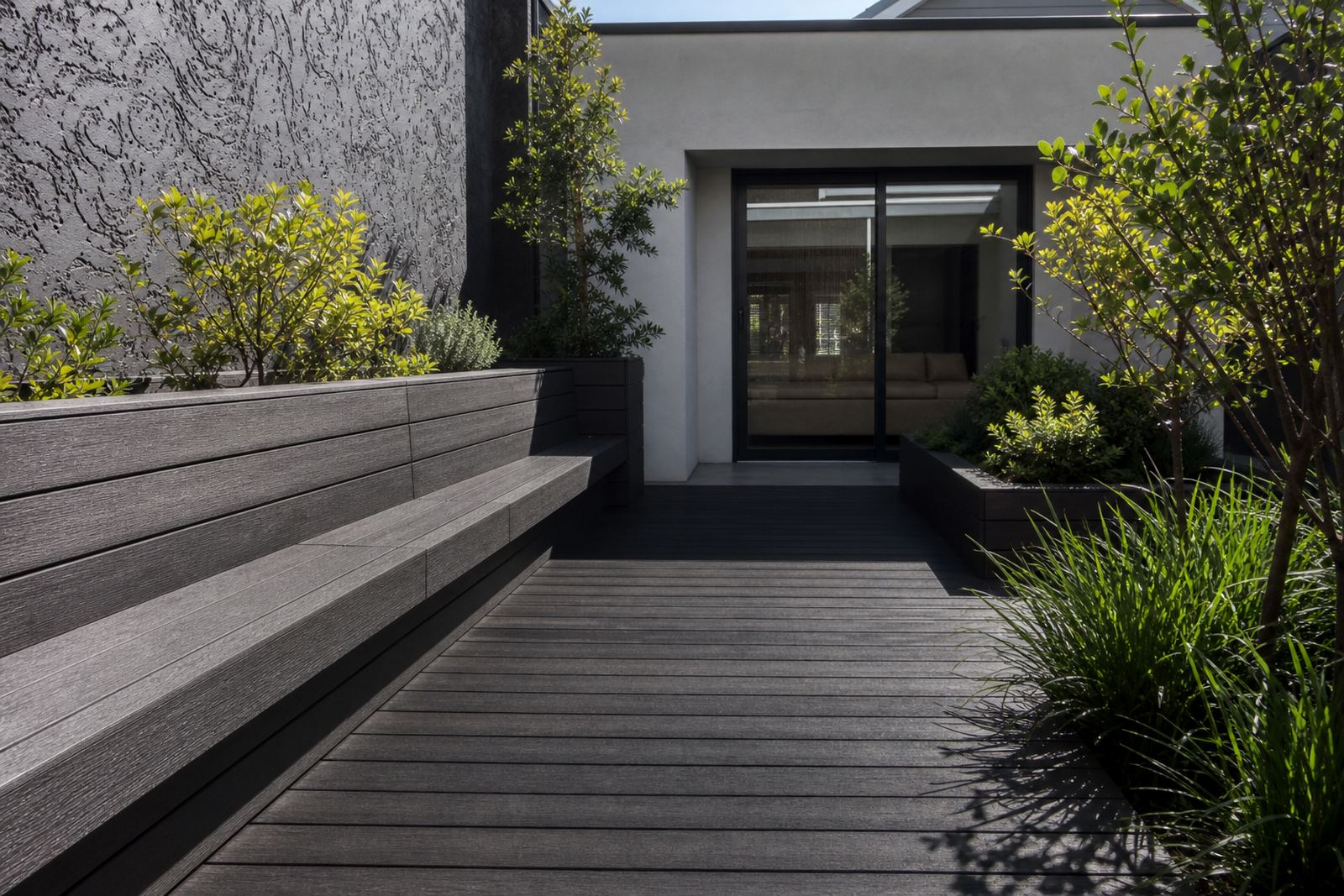
When choosing bench placement, think about shade, sight lines, and where people naturally pause. A bench beside a planter wall or along a boundary can give people a place to sit without blocking the centre of the courtyard. In commercial spaces, this also keeps fire exits and access routes clear.
- Place benches where they catch morning or late afternoon shade
- Keep edges smooth for comfortable daily use
- Allow enough space behind benches for passage and cleaning
- Match bench length to the scale of the courtyard, not the size of the building
For schools, clinics, and shared residential spaces, bench refurbishment and component replacement can also extend the life of an existing setup. If the base structure is sound, replacing worn parts and refreshing the finish can be a practical next step.
A local example: a courtyard in central Cape Town
Consider a small courtyard behind a mixed-use building near central Cape Town. The area needed to serve office tenants during the day and residents after hours. The main issues were uneven foot traffic, constant cleaning, and a surface that looked tired after winter rains. Rather than overcomplicate the space, the solution was a simple deck area with fixed benches and a clear path to the rear entrance.
That kind of project depends on accurate site measures, careful layout planning, and delivery coordination. In a city centre setting, access is often limited and timing matters, so materials need to arrive in order and installation has to fit around building use. A practical plan saves time for everyone involved, especially where municipal access rules, loading bay limits, or security arrangements affect the workday.
The result is a courtyard that feels calmer, looks cleaner, and supports daily use without constant maintenance. That is often the real goal in a city space, not a dramatic makeover but a place people actually use.
What to ask before starting a courtyard deck project
Before committing to any courtyard deck or bench install, it helps to think through the daily use of the space and the upkeep it will need. Trade teams and property managers usually want clear answers on access, finish, and future care before work begins.
- How many people use the space at one time?
- Will the surface be exposed to rain, sea air, or strong sun?
- Do you need deck installation, bench installation, or both?
- Is there an existing structure that needs refurbishment or component replacement?
- How will delivery be handled in a tight city location?
Plastimber supports projects with site measures, material quoting, trade support, care advice, and delivery coordination. That makes it easier to move from an idea to a finished courtyard without guesswork. The right setup should suit the building, the users, and the day-to-day reality of a busy urban property.
Keeping the finish neat with less ongoing work
Courtyard spaces work best when they are easy to maintain. Recycled plastic lumber decking and benches are a practical choice where regular washing, quick inspections, and minimal surface repair are part of the routine. They do not need the same sealing schedule as timber and they are less likely to show the wear that comes from damp conditions and frequent use.
For property owners in Cape Town, Stellenbosch, George, Johannesburg, Durban, Paarl, Somerset West, and Bellville, that can mean less disruption and fewer call-outs over time. The key is still proper installation and sensible detailing at the edges, joints, and drainage points. A good courtyard should look orderly on day one and stay that way with ordinary care.
If the space is being planned for a residential block, office courtyard, or shared outdoor break area, the most useful design is often the simplest one. Clear lines, fixed seating, and materials that hold up in local conditions will usually do more for daily use than a fancy layout that is hard to maintain.