
Start with the site, not the material list
Before anyone orders boards or sketches out a frame, look at the actual site in detail. Coastal properties in South Africa can change a deck plan fast. A spot that feels sheltered in summer may get strong wind, driving rain and fine salt spray in winter. The ground may also be uneven, sandy, damp or close to retaining walls and drainage lines.
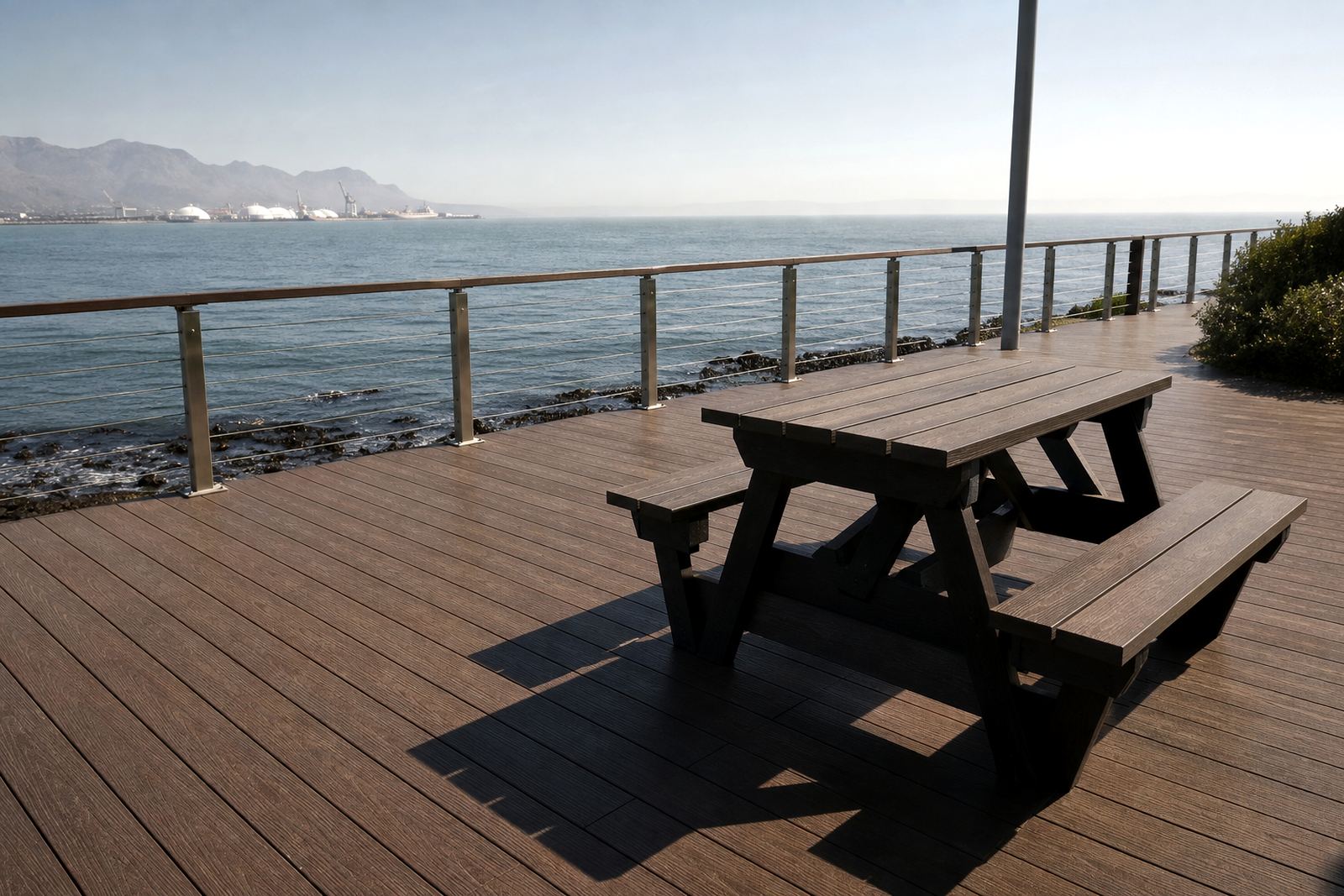
On a Paarden Eiland project, the first step is usually a site measure and layout discussion. That helps identify access points, boundary lines, door thresholds and any level changes that affect steps or ramp transitions. It also helps decide whether the deck is best kept low to the ground or raised slightly for drainage and airflow.
- Check the direction of prevailing wind and sea spray
- Note where water pools after rain or hose-downs
- Measure finished floor levels at doors and thresholds
- Allow for access around pumps, valves, traps and service points
Why recycled plastic lumber works well near the sea
Recycled plastic lumber is often chosen for coastal decks and benches because it handles moisture differently from timber. It does not take on the same kind of water movement, so there is less swelling, splitting and regular sealing work. In areas with coastal humidity, that matters. It also suits shaded spots where timber can stay damp for long periods.
For homeowners and trade clients alike, the main appeal is steady performance with less day-to-day maintenance. You still need proper detailing, but the material itself is suited to outdoor use where salt, sun and rain all play a role. It is commonly used for deck boards, edging pieces, seating and bench components in residential and commercial spaces.
That said, the material still needs correct installation. Poor support spacing, trapped water or tight fixed joints can shorten the life of any deck, whatever it is made from. Good planning matters as much as the product choice.
Drainage and airflow are not optional extras
In coastal towns, the most common deck problems often come from water that has nowhere to go. If a deck sits too low, debris builds up underneath and moisture stays trapped. If the frame is packed too tightly against walls or paving, airflow suffers and the whole structure works harder through seasonal changes.
A useful rule is to think about the deck as a surface that should dry quickly after rain or washing. This means keeping falls sensible, allowing air movement underneath and avoiding dead pockets where leaves and sand collect. At the coast, fine grit moves easily and can build up in corners, so the layout should make cleaning simple.
- Leave space for water to drain away from the building
- Keep inspection access to the substructure where possible
- Avoid boxing in the underside unless there is a clear maintenance plan
- Plan for easy sweeping and hose cleaning, especially near the sea
Fixing details matter more than people expect
Coastal decks often fail at the fixings before the surface itself shows serious wear. Screws, brackets and support components are exposed to moisture and air movement every day, so the fixing method should be chosen carefully. A neat finish is important, but so is holding the structure steady through wind and seasonal movement.
When planning a deck in Cape Town, Stellenbosch or Durban, it helps to match the fixing approach to the site conditions. Where there is heavy exposure, the installation should allow for movement without causing board lift or squeaks. Edge finishing also matters, because exposed ends and rough transitions catch dirt and wear unevenly.
For commercial spaces such as courtyards, restaurant seating areas or guesthouse walkways, practical details make a big difference. A well-set edge, clear step line and tidy joint layout all reduce trip points and make day-to-day use easier.
Benches and seating should be planned with the deck
Benches are often added after the deck is already designed, but they work better when planned from the start. This is especially true in coastal areas where seating may face sea views, high wind or strong afternoon sun. Fixed benches can help define a space, improve flow and keep loose furniture from moving around in windy weather.
Recycled plastic lumber is a practical choice for benches because it suits outdoor exposure and is easy to keep clean. For family homes, a simple bench near a braai area or pool edge can make the space more usable. For schools, hospitality sites and public areas, bench placement should also consider visibility, cleaning access and how people move through the area.
- Place benches where there is shelter from the worst wind if possible
- Keep enough clear space for foot traffic and cleaning
- Check whether the bench will sit on the deck or on a separate base
- Allow for easy replacement of individual components if needed later
A local example from the Cape coast
Take a home in Somerset West with a small courtyard that gets winter damp and a lot of afternoon sun in summer. A timber deck in that setting would need regular sealing and close attention to moisture movement. A recycled plastic lumber deck can be a better fit if the layout is handled properly from the start.
In that kind of project, the deck might be kept slightly raised to encourage airflow, with clear drainage paths at the edges. Bench seating can be built in along one side to free up floor space, while edge finishing keeps the lines tidy around the patio doors. If the property is exposed to wind, the seating plan can also help the area feel anchored without cluttering it with loose furniture.
That same approach works in George, Paarl and Bellville too, although each site brings its own level changes, shade patterns and local conditions. Good planning is less about copying a standard design and more about fitting the deck to the site.
Keep maintenance practical for the long term
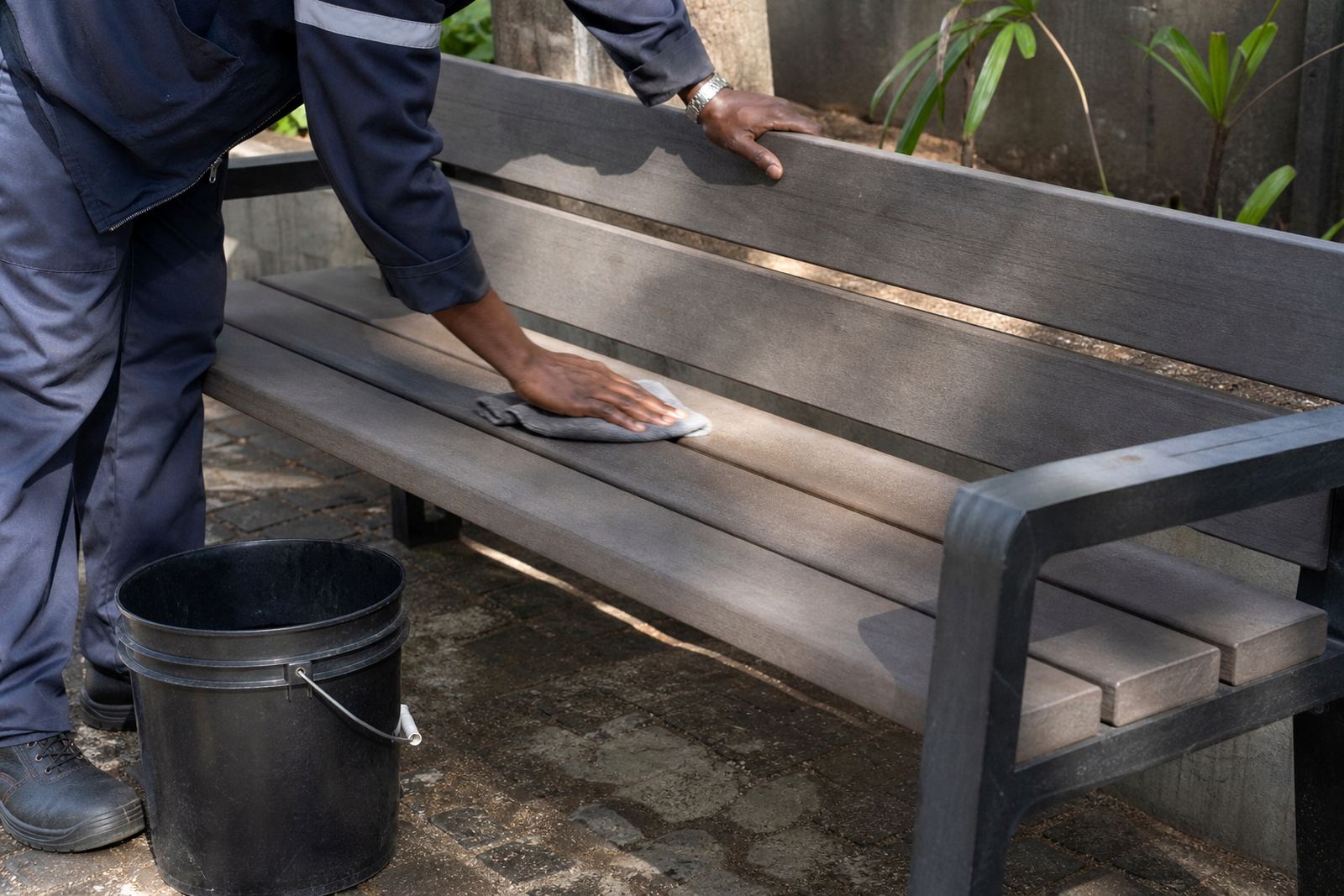
A coastal deck should be easy to look after. That does not mean no maintenance at all, but it should not require constant sealing, sanding or patch repairs. A simple care plan, regular cleaning and early attention to any loose components will usually keep the surface in good condition for years.
When refurbishing an older deck, it is worth checking whether the issue is only the top boards or whether the support structure needs attention too. In some cases, component replacement and edge repairs are enough. In others, a fuller refurbishment is the sensible route. Trade support is especially useful where a site must stay open while work is carried out.
For clients across Cape Town, Stellenbosch, George, Johannesburg and Durban, the best result usually comes from careful planning, honest material advice and a layout that suits daily use. A coastal deck should be useful, tidy and simple to live with, not something that turns into a maintenance job every season.