
Start With a Simple Weekly Wipe Down
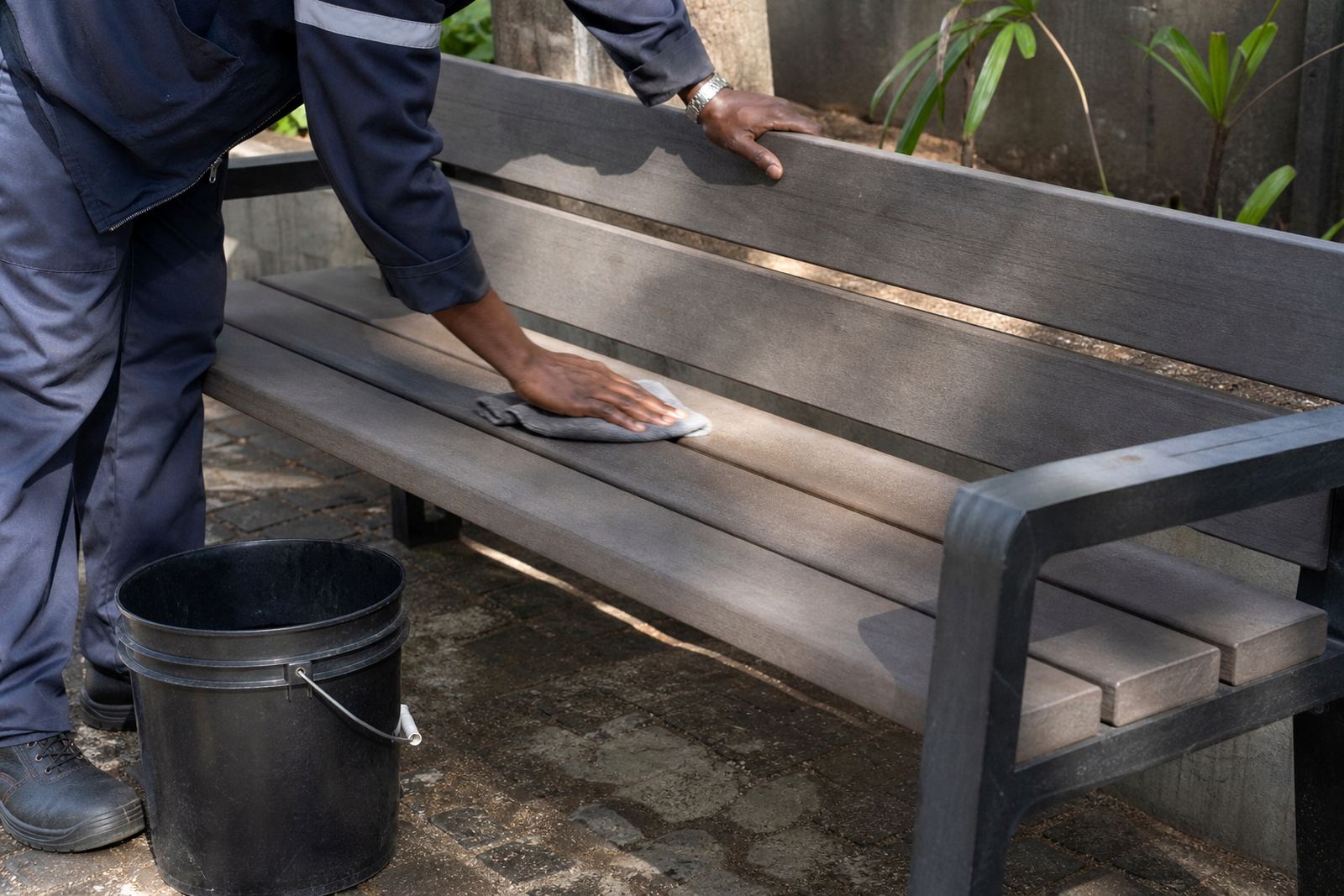
For benches in gardens, schools, body corporate courtyards and public areas, the best cleaning habit is a quick weekly wipe. Use a bucket of warm water with a mild soap and a soft cloth or sponge. That usually removes dust, sand, bird droppings and the marks left by daily use without scratching the surface.
In Paarden Eiland and other coastal areas, salt build-up can leave a dull film on outdoor furniture, especially where wind pushes spray inland. A regular rinse with clean water helps before the salt has time to sit on the bench. If the bench is under trees in Stellenbosch or Somerset West, wipe away sap and pollen sooner rather than later because they can mark the surface if left too long.
What to Use and What to Leave Out
Recycled plastic lumber is generally low maintenance, but the wrong cleaner can still cause damage. Strong solvents, abrasive powders and hard steel scourers are best avoided. They can leave the surface scratched or cloudy, which is not ideal on benches that need to stay neat in visible spaces.
- Use warm water and mild liquid soap for routine cleaning.
- Use a soft brush for dirt in corners, joints and slats.
- Use a microfibre cloth for the final wipe to reduce streaks.
- Rinse well so no soap residue is left behind.
- Avoid paint thinners, bleach-heavy mixes and rough pads.
When a bench has stubborn grime from foot traffic or catering use, it is better to clean twice with a gentle mix than to scrub hard once. That approach protects the finish and keeps the bench looking even across the full surface.
How to Deal With Bird Droppings, Food Spills and Stains
Outdoor benches pick up all sorts of marks, especially near cafés, loading areas, sports grounds and taxi ranks. Bird droppings should be removed as soon as possible with warm water and soap. Letting them sit can make cleaning harder and can leave a stain on any outdoor surface, not only plastic lumber.
For food spills, wipe up loose crumbs first, then wash with a damp cloth and mild soap. For sticky residue, let the soapy water sit for a minute or two before wiping again. Do not use a metal scraper. If someone has left chewing gum on the bench, harden it with ice in a small bag first then lift it carefully with a plastic tool.
- Work from the outside of the stain inward so it does not spread.
- Rinse the area after cleaning so no residue remains.
- Dry with a cloth if the bench is in a shaded area where water lingers.
- Check under the seat and around fixings because dirt collects there too.
Cleaning Benches in Coastal and Inland Conditions
South African weather changes the way outdoor benches age and how often they need care. In Durban and George, humidity can keep benches damp for longer, so it helps to clean them and leave them to dry properly. In Cape Town, windblown sand and sea salt can build up on exposed furniture faster than many people expect. Inland, Johannesburg and Paarl sites are more likely to deal with dust, dry wind and pollution from nearby roads.
A practical local example is a visitor seating area in Bellville that faces a busy parking lot. The bench may need a quick wipe every week because dust and road film settle on it, while a shaded bench in Somerset West may need more attention around mouldy spots on nearby paving or planter edges. The bench itself does not need polishing, but the area around it should stay clean too because grime often transfers from the surroundings.
If benches sit close to irrigation systems, check that they are not constantly getting sprayed. Recycled plastic lumber handles outdoor use well, but standing water around the base can still make the area look untidy and encourage dirt to collect.
A Proper Deep Clean for High-Use Public Areas
Benches in commercial developments, transport nodes and communal spaces benefit from a more thorough clean every few weeks. Start by removing loose dirt with a soft brush, then wash the full bench with soapy water and rinse with clean water. Pay attention to undersides, corners and the spaces between slats. That is where dust, sand and gum usually hide.
For sites with a lot of public use, a simple routine keeps maintenance manageable:
- Clear loose litter before washing.
- Brush the surface lightly before adding water.
- Use a bucket and cloth rather than a high-pressure spray at close range.
- Rinse from top to bottom so dirty water does not run back over clean sections.
- Inspect fixings and supports while the bench is clean.
Deep cleaning is also the right time to check for any damage from misuse, such as burnt marks, graffiti or loose components. Early attention keeps small problems from becoming bigger repairs later on.
When Cleaning Is Not Enough
Most marks on recycled plastic benches can be managed with normal cleaning, but some issues need repair attention. If a bench has a cracked component, damaged fixing point or a worn section that keeps trapping dirt, cleaning alone will not solve the problem. Replacement parts or refurbishment can restore the bench and extend its useful life.
That is one reason many property managers and contractors prefer recycled plastic benches for residential estates, schools and hospitality sites. They are easy to wash, they do not need sanding or staining and they hold up well in everyday outdoor use. With the right cleaning routine, the bench stays presentable for longer and the area around it looks cared for too. It is a small job, but it helps a site stay in good order, especially where there is a lot of foot traffic.
For teams managing several sites across Cape Town, Stellenbosch, George, Johannesburg and Durban, the best approach is often a simple written schedule. That way no one has to guess when the benches were last cleaned or checked.
A Practical Routine That Staff Can Follow
The easiest cleaning routine is the one that gets done consistently. For most sites, that means a quick weekly wipe, a monthly deeper clean and an inspection after heavy weather or events. Staff do not need specialist products, just a clear process and a few basic tools kept on site.
Use this simple order:
- Sweep off loose dirt and leaves.
- Wash with warm water and mild soap.
- Rinse with clean water.
- Dry if needed, especially in shaded or humid areas.
- Check for chips, loose parts or damage.
In many cases, that is all it takes. Recycled plastic benches are chosen because they are practical, and practical care should stay just as straightforward. A small routine done often is easier than waiting for the bench to look neglected and then trying to recover it in one big clean.