
Start with the sun path before you place a single seat
Good shaded seating begins with where the sun lands during the day. In Cape Town, a north facing spot can be comfortable in winter but fierce by midday in summer, while west facing areas often take the hardest late-afternoon heat. Before you fix a bench or deck seating zone, watch the area at 9am, 1pm and 4pm. You will quickly see where the glare, heat and wind sit.
For homes, schools, hospitality spaces and shared courtyards, the best seating often sits where there is already some shelter from a wall, planter or existing roofline. If that is not possible, plan for shade to work with the seating rather than against it. A shaded area should still allow airflow, because trapped heat under a low cover can make the space feel hotter not cooler.
- Choose spots with morning sun and afternoon shade where possible.
- Leave enough room for people to move around the seating without squeezing past.
- Avoid placing seats directly on surfaces that hold heat, such as dark paving in full sun.
- Check for wind exposure, especially near the coast where gusts can shift loose items.
Use shade structures that cool without closing the space in
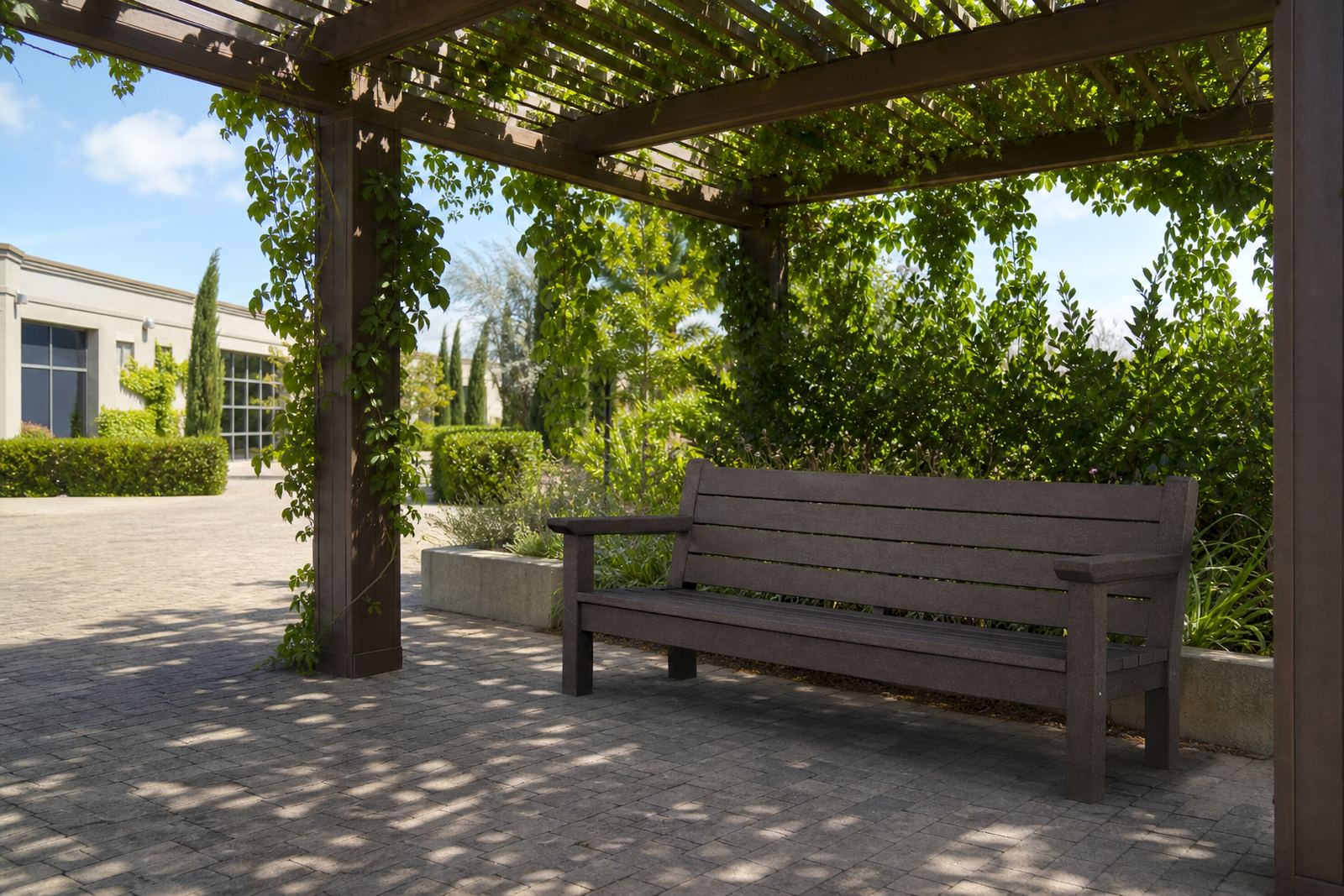
Shade does not have to mean a fully enclosed area. In many South African settings, partial shade gives the best result because it keeps the seating airy and usable. Timber pergolas, steel frames with roof sheets, shade cloth, vine cover and existing tree cover all work in different ways. The right choice depends on how much maintenance the site can handle and how much rain or salt air the structure will face.
In Paarden Eiland and other coastal zones, materials should be chosen with corrosion and moisture in mind. Fasteners, brackets and supporting frames need to cope with salty air, while the seating below should not swell, split or need constant sealing. For commercial sites that see lots of traffic, a simple roofed edge or louvred cover often works better than a decorative structure that needs frequent repair.
- Use fixed shade where you need predictable cover through the day.
- Use natural cover where the site can support slower changing shade and softer edges.
- Make sure the structure does not block ventilation over the seat area.
- Plan drainage so water does not drip onto seating after rain or washing.
Why recycled plastic lumber suits sunny seating areas
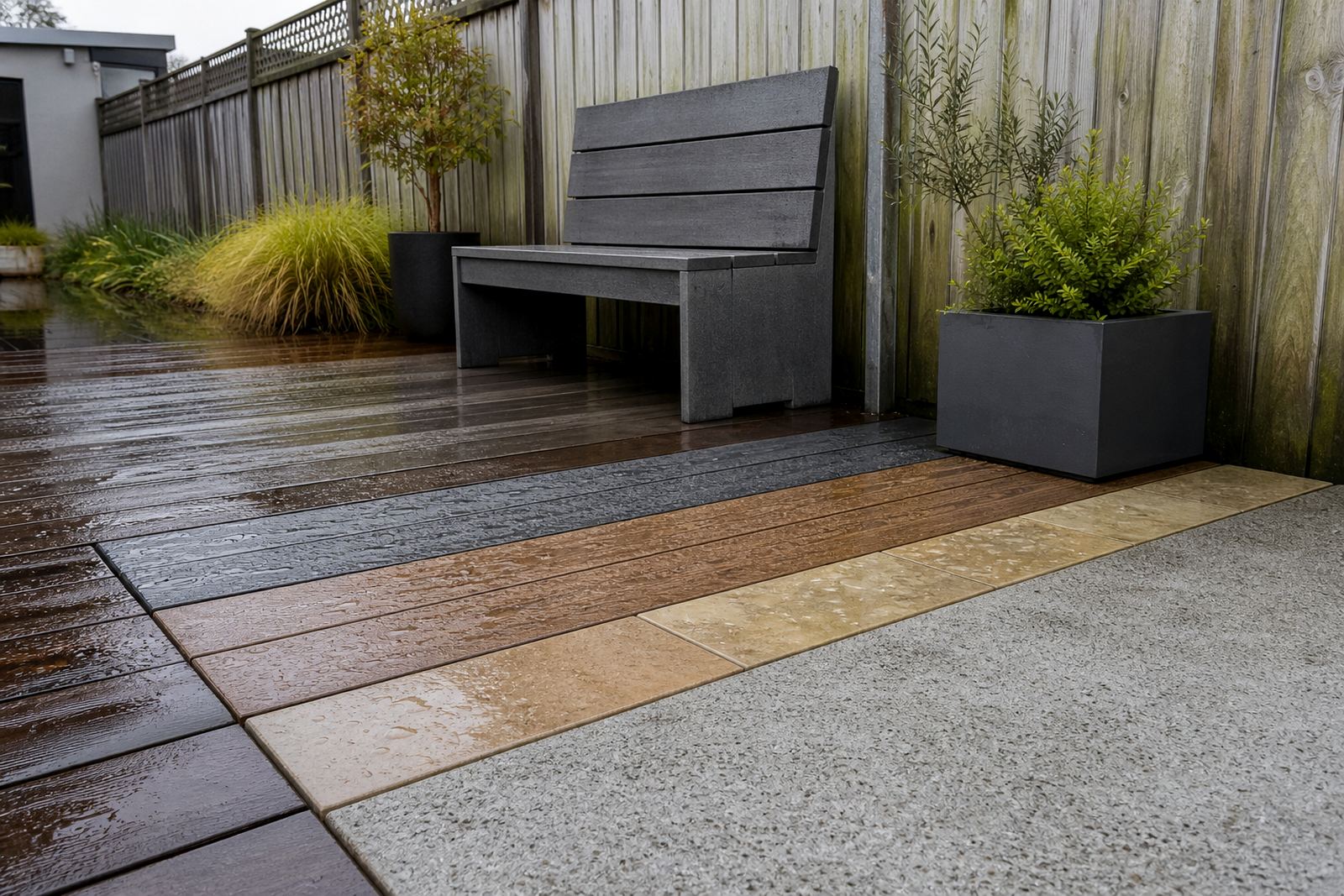
Recycled plastic lumber is a practical choice for benches and seating surrounds where heat, moisture and regular use are part of daily life. It does not need the same routine sealing as timber, and it handles damp conditions well. That makes it useful for coastal gardens, public walkways, apartment courtyards and trading spaces where upkeep time is limited.
It is also a strong option where people want a cleaner finish with less maintenance. The material is easy to wipe down, and it does not absorb water in the same way as natural wood. For seating that sits under shade cloth or partial cover, that matters because the shaded area still gets humidity, dust and seasonal rain. Over time, that can save a lot of repainting and surface repair. It is not the right answer for every detail, but for many outdoor seating jobs it gives a straightforward, practical finish.
- Suitable for benches, seat slats, deck edges and seating platforms.
- Useful in coastal towns where moisture and salt air affect timber.
- Works well where maintenance access is limited.
- Can be paired with cooler light coloured surroundings to reduce heat build-up.
Make the seat cooler to the touch, not just shaded
Shade helps, but material choice still matters. Dark surfaces can hold warmth well into the afternoon, especially in Durban humidity or inland heat around Johannesburg. If a seat is going to be used for long periods, think about the surface people actually touch. Backrests, armrests and seat slats all need to be considered together, because the hottest part of the seat is often the one people lean on most.
Spacing between slats can also help. Small gaps let air move through, which can make the seat feel less sticky on humid days. Rounded edges are easier on hands and clothing, and they are a sensible choice for family homes, restaurants and public spaces alike. If a seating run faces strong sun for part of the day, combining it with overhead shade and a cooler coloured finish around the base can make a clear difference.
- Prefer lighter tones where practical.
- Use spacing that allows air movement under and through the seat.
- Keep armrests and backs smooth for comfort in hot weather.
- Place seating away from reflected heat off walls or paving.
Plan benches for real use, not just for looks
A shaded seating area works best when it matches how people actually gather. A single long bench suits a courtyard or school edge, while smaller grouped benches can work better where people want to chat in pairs or small families. In commercial spaces, the flow around the bench matters just as much as the bench itself. If staff, guests or visitors need to pass through the area, the layout should keep the path open and the seating easy to access.
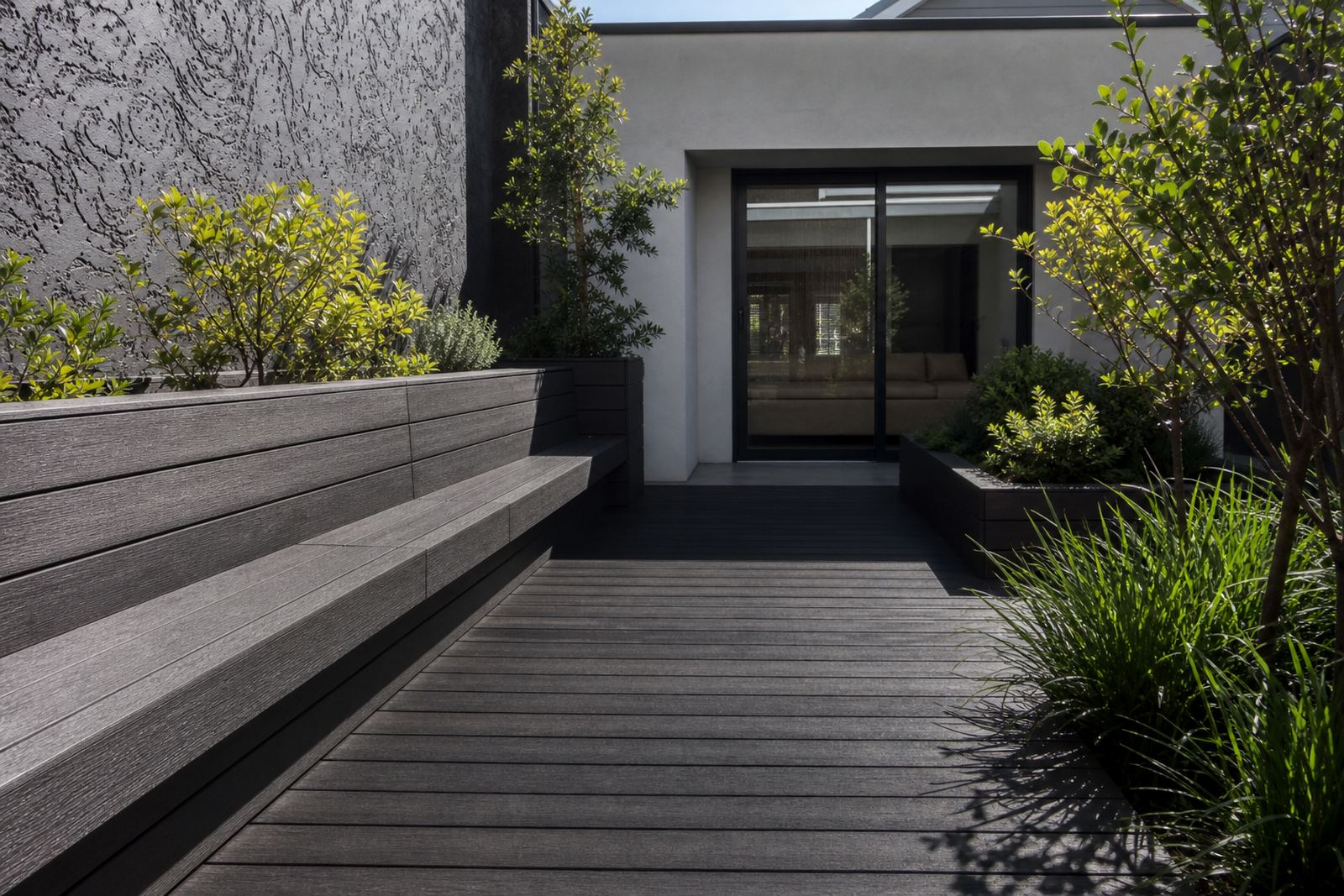
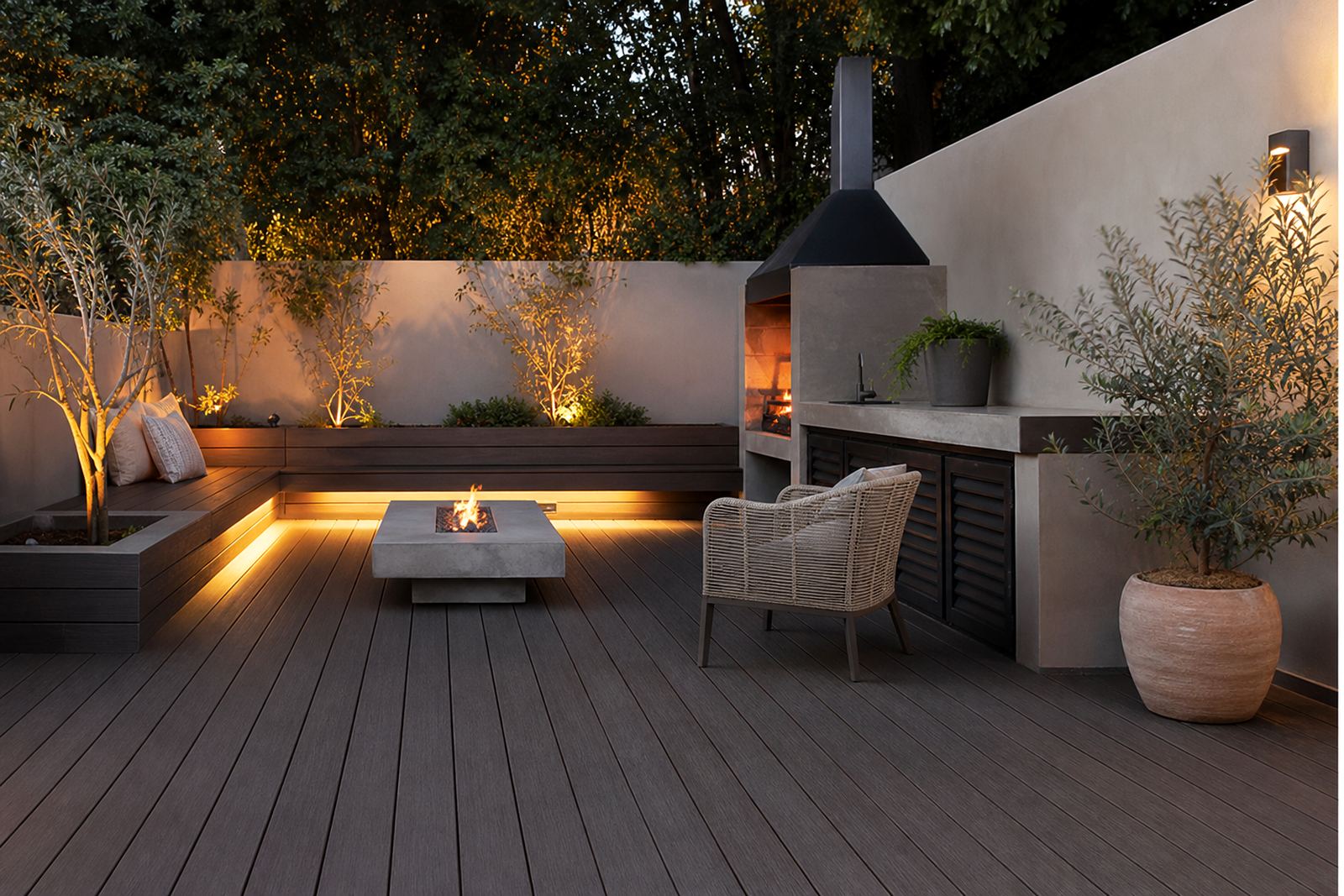
We often see that a seating area becomes more useful when it has a clear edge, a bit of overhead cover and enough space for bags, prams or outdoor dining. In a Cape Town townhouse complex, for example, a shaded deck corner with a couple of benches can turn a hard-used common area into a spot people choose on warm afternoons. The key is keeping the layout simple and durable, with components that can be maintained or replaced if needed.
- Group seats where conversation naturally happens.
- Keep circulation space clear for day-to-day use.
- Allow for cleaning access under and around the seating.
- Think about noise, privacy and sightlines as part of the layout.
Installation and maintenance that keep seating usable longer
Good installation is part of comfort. A bench that rocks, a deck edge that lifts or a fixing that works loose will put people off using the space. In outdoor seating areas, the base should be level, secure and suited to the surface below, whether that is concrete, paving or a timber frame. Where benches are fitted to decks or platforms, edge finishing matters too, because rough ends and open joints create wear points and can catch shoes or clothing.
Regular care is straightforward if the materials are chosen well. Wash down dust and salt, check fixings after heavy weather, and replace worn components before they affect the whole setup. For shared and trade spaces, that kind of upkeep is easier when the seating is built from materials that do not need constant sealing. Across Cape Town, Stellenbosch, George, Johannesburg, Durban, Paarl, Somerset West and Bellville, the most practical shaded seating tends to be the one that stays neat with ordinary care, not special treatment.
- Check fixings after storms, high winds or heavy use.
- Keep drainage clear so water does not sit under the seating.
- Wash off dust, coastal salt and spills before they build up.
- Replace worn components early to avoid larger repair work later.
A simple local example from the coast
In a coastal setting like Paarden Eiland, shaded seating has to handle salt air, wind and strong afternoon sun. A practical setup there would usually combine a covered edge or shade structure with benches made for low-maintenance use, plus enough open space for movement and cleaning. The result is not flashy, but it is the kind of seating people actually use on warm days because it stays cooler and looks tidy for longer.
That same approach works well for homes and commercial sites across South Africa. Start with the sun, use shade that suits the site, choose materials that can take weather and daily handling, then keep the layout simple. When those parts come together, outdoor seating becomes part of the space instead of something people avoid until the weather changes.