Start with how the pool area will actually be used
The best pool deck ideas begin with daily use, not only with appearance. Think about where people step out of the pool, where towels will be placed, and whether the space needs room for lounging, children playing or a few chairs around a braai area. A narrow edge deck may suit a small private pool in Stellenbosch, while a wider deck with seating pockets can work better for a lodge or guesthouse in George or Durban.
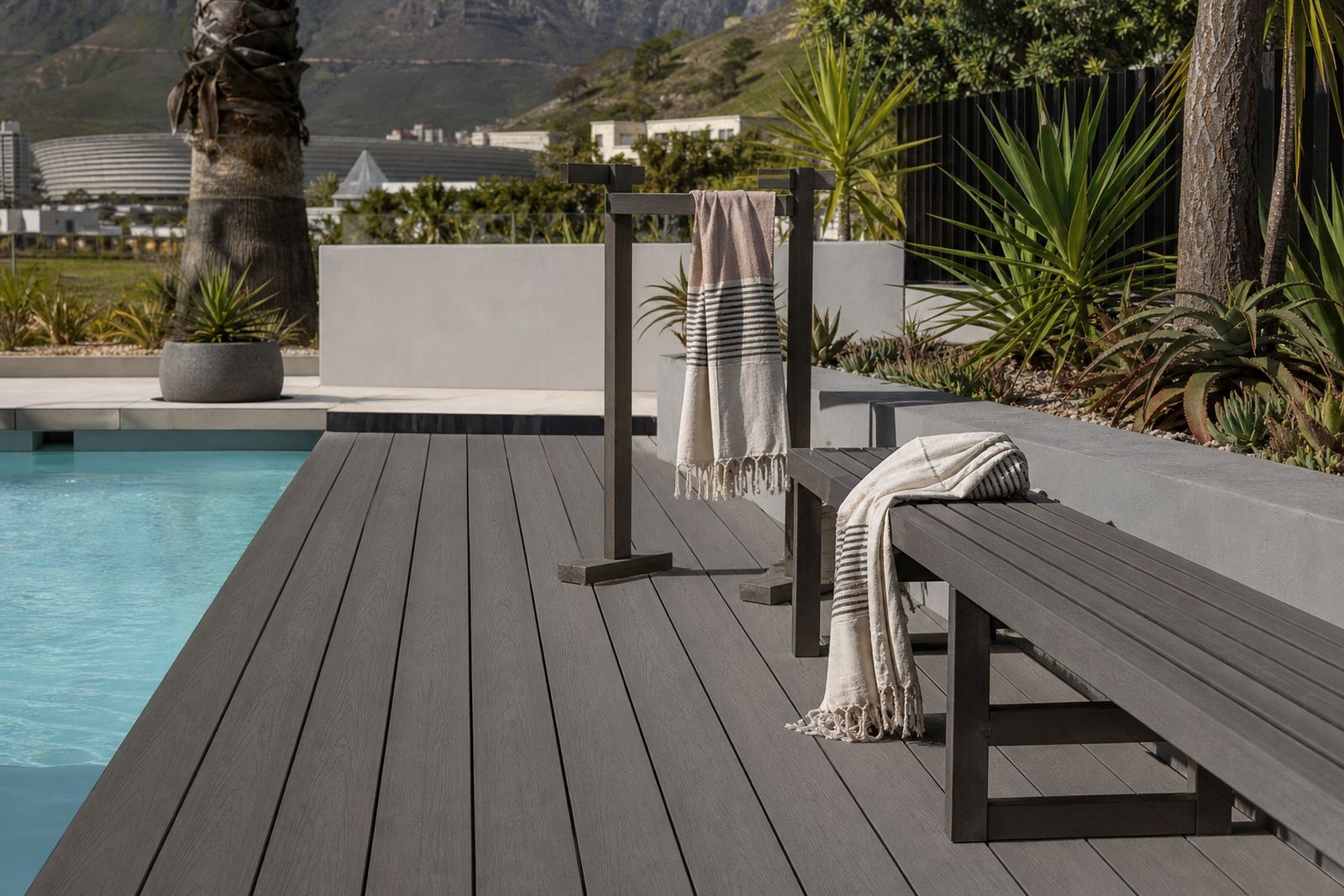
Recycled plastic lumber decking is a practical option where water splashes often and regular upkeep must stay simple. It does not need sanding or staining, and it handles moisture well in coastal areas like Cape Town and Somerset West. For many owners, that means less time on upkeep and more time using the pool area.
When planning the layout, allow for safe movement around the waterline and make sure access points stay clear. It also helps to think about the route from the house to the pool, especially if guests will carry trays, towels or cleaning items across the space.
Choose a layout that suits the size of your property
Not every pool needs a large wrapped deck. In compact suburban spaces, a simple strip deck on one or two sides can look neat and still give enough space for stepping out and drying off. In bigger yards, L-shaped or U-shaped layouts create distinct zones for lounging, seating and circulation. This is useful for family homes in Bellville or Paarl where the pool may be part of a larger entertainment area.
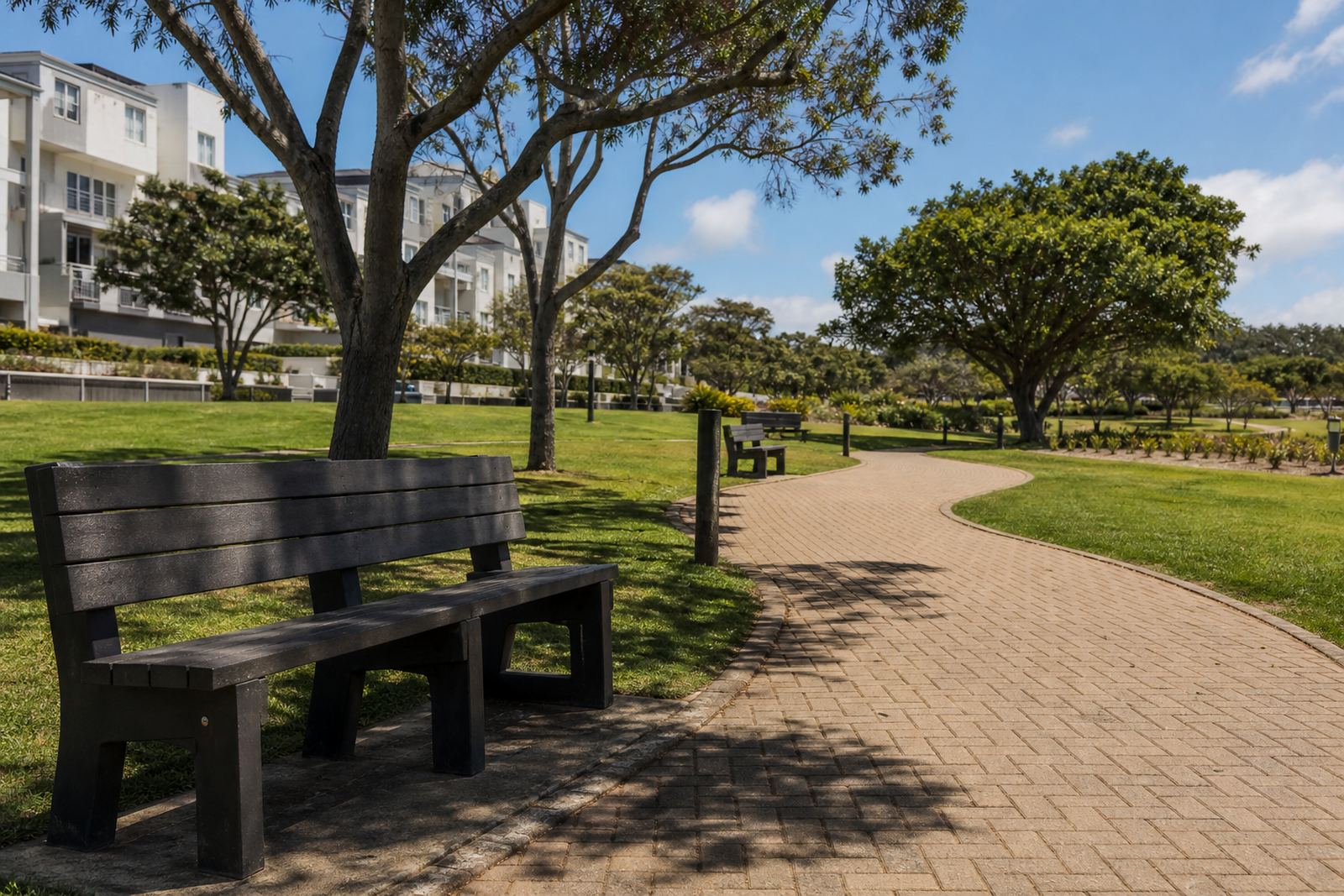
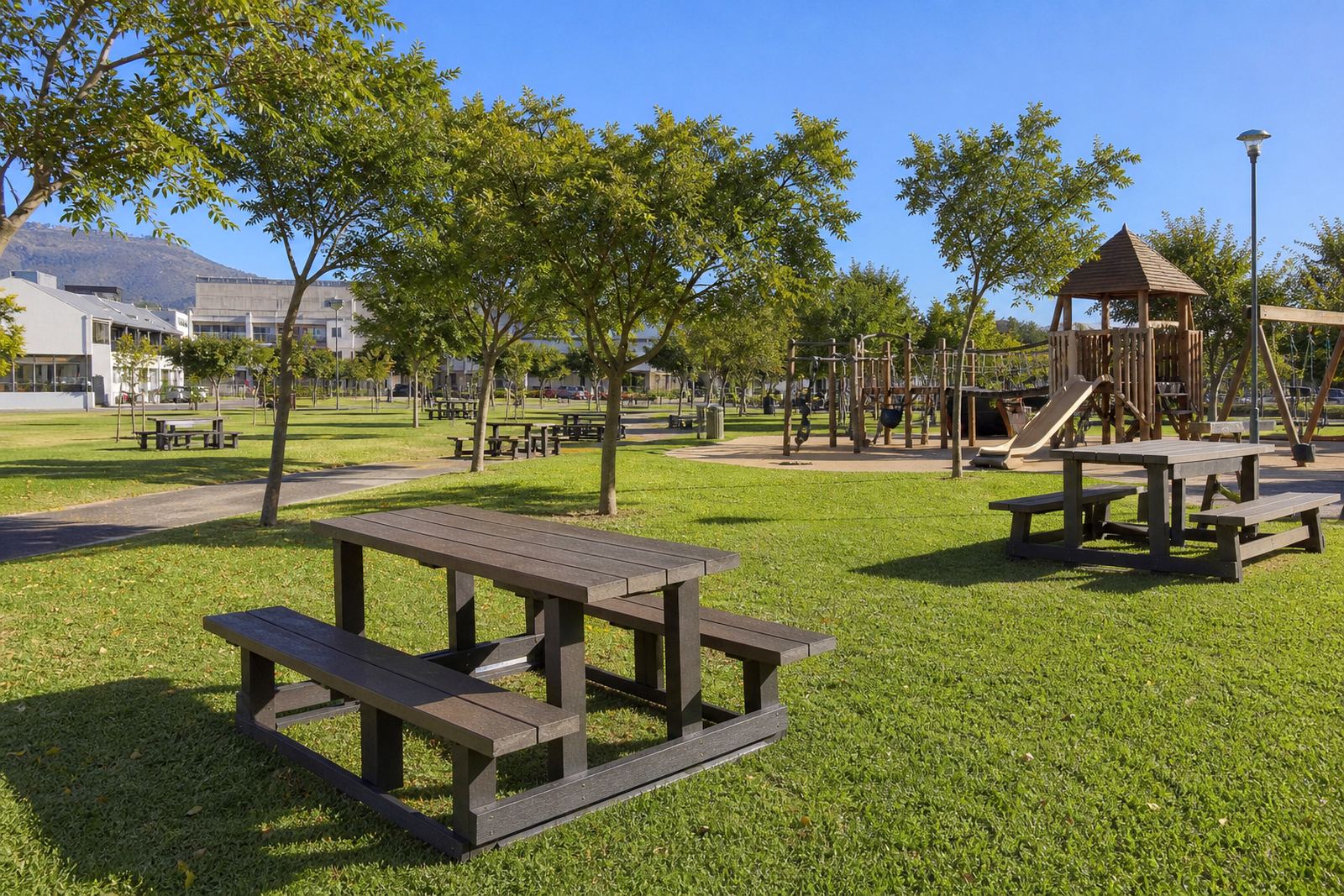
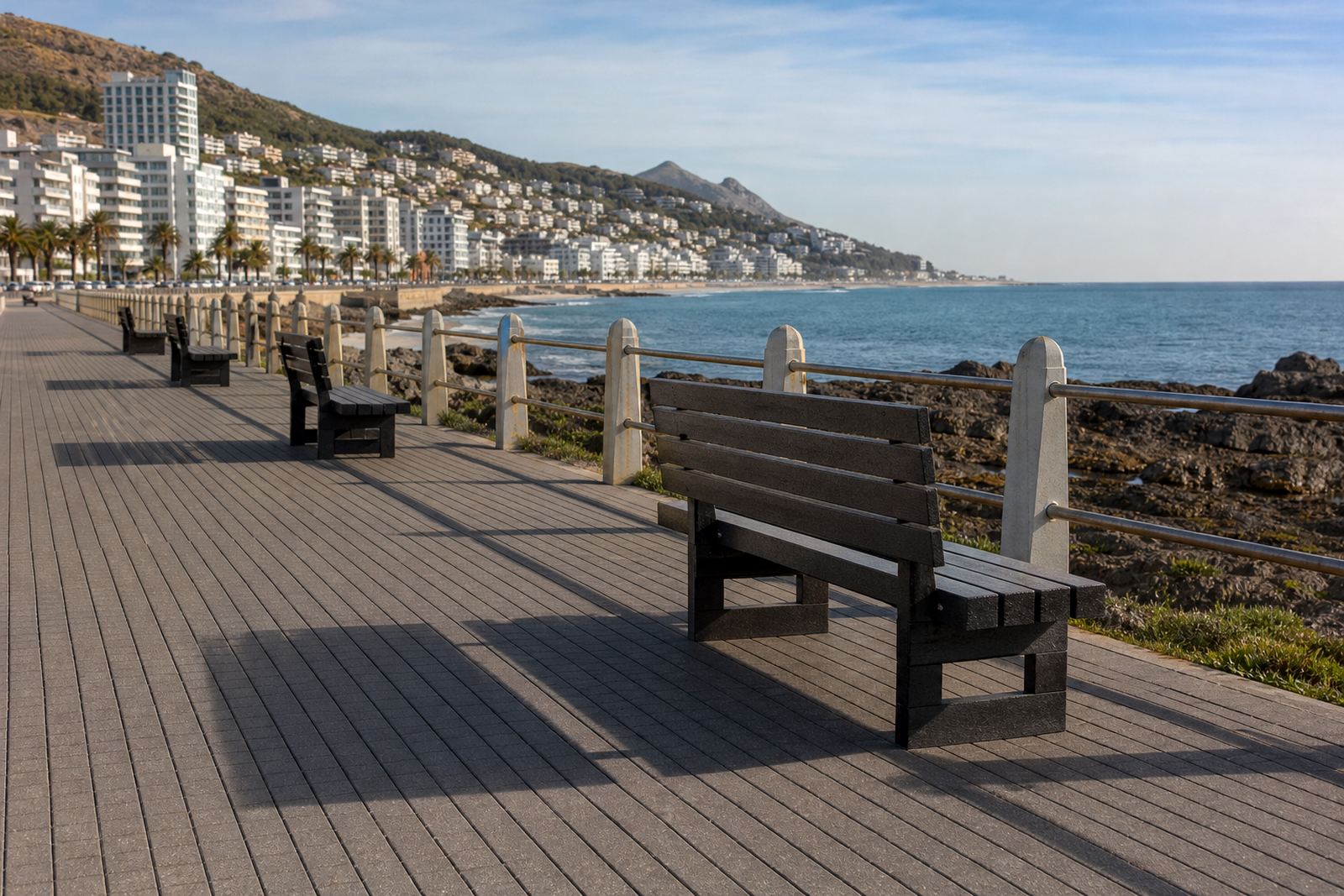
In commercial settings, layout matters even more. A guesthouse or school pool needs clear walkways, easy cleaning and seating that does not crowd the edge. Benches made from recycled plastic lumber can be placed where parents, guests or staff need to watch the pool without blocking movement. They also hold up well in public-facing areas where furniture gets used often.
- Small pool area: keep the deck tight to the pool and use one bench for seating.
- Medium family pool: add a wider lounge zone plus a clear path to the house.
- Commercial pool: separate wet feet traffic, seating and service access.
- Coastal site: choose materials that handle humidity, salt air and frequent washing.
Pick details that help the deck handle water and sun
Pool decks in South Africa need to deal with hard sun, sudden summer rain and constant foot traffic. Recycled plastic lumber is suited to these conditions because it is made for outdoor use and does not behave like timber that can split, swell or demand frequent sealing. That makes it a strong fit for places with coastal moisture as well as hot inland summers in Johannesburg.
Surface finish is worth considering. A deck around a pool should feel comfortable underfoot and should be planned with practical drainage in mind. Small gaps, proper levels and good runoff help reduce standing water after splashing or cleaning. Edge finishing matters too, because neat edges make the whole area safer and easier to maintain.
For homes with lots of sun exposure, think about shade as part of the deck plan. A bench positioned under a pergola or beside a wall can offer a useful rest spot and give people somewhere to sit while waiting for the pool to dry a bit. That kind of planning makes the area more usable through the day.
Use benches to make the pool area feel finished
Benches are often overlooked, yet they can change how a pool area works. A bench near the towel zone gives people a place to sit while changing shoes, and a pair of benches across from each other can turn a plain deck into a proper gathering space. For schools, clubs and guesthouses, benches also help keep people off the pool edge, which can be useful when managing traffic.
Recycled plastic lumber benches are a practical choice where maintenance time is limited. They do not need the same attention as timber seating and are easier to keep clean after wet feet, sunscreen and everyday dust. In a place like Durban, where humidity can be hard on outdoor furniture, that kind of durability is often a major plus.
Here are a few ways to use benches well:
- Place one long bench along a boundary wall to free up floor space.
- Use shorter benches near changing or shower areas for convenience.
- Add a bench under shade for supervising children at the pool.
- Keep seating slightly back from splash zones so it stays drier and cleaner.
Plan for installation, refurbishment and future changes
A pool deck should be planned with long-term use in mind. Site measures and layout planning help avoid awkward cuts, uneven edges and wasted material. That matters whether the project is in Cape Town, George or Johannesburg, because each site has its own slope, access points and weather exposure. It also helps when the deck needs to tie into an existing patio, paving or boundary wall.
Good planning also makes later work easier. If a section needs component replacement, or if a bench surface needs refurbishment after years of use, a well-organised layout can save time and disruption. That is especially useful for trade clients and body corporates who need the space back in use quickly.
During installation, details like edge finishing and fixing positions should be checked carefully. A pool area gets daily use, so the build needs to stand up to regular cleaning and people moving furniture around. Small decisions made early can prevent bigger maintenance work later on.
A local example: a Cape Town pool area that works year round
For a coastal property in Paarden Eiland or nearby Sea Point, the brief is usually simple: keep the area neat, low maintenance and safe around water. A practical layout might use a recycled plastic lumber deck along the main entry side of the pool, with a bench placed under a covered section for towels and seating. If the property has strong afternoon sun, a second bench can sit near a shaded wall for quieter use.
This kind of setup works well for a family home or a small hospitality site because it keeps movement natural. Guests can enter the pool easily, the seating stays out of the splash zone, and the surface remains easy to wash down after a windy day. In a city where salt air and summer use can wear down outdoor finishes quickly, a simple and well-planned deck often lasts better than a more complicated one.
For clients across Cape Town, Stellenbosch, Bellville, Somerset West, Paarl, George, Johannesburg and Durban, the same idea applies: keep the design practical, use materials that suit local conditions, and make sure the layout supports the way people really use the space.