
Why bench spacing changes the whole route
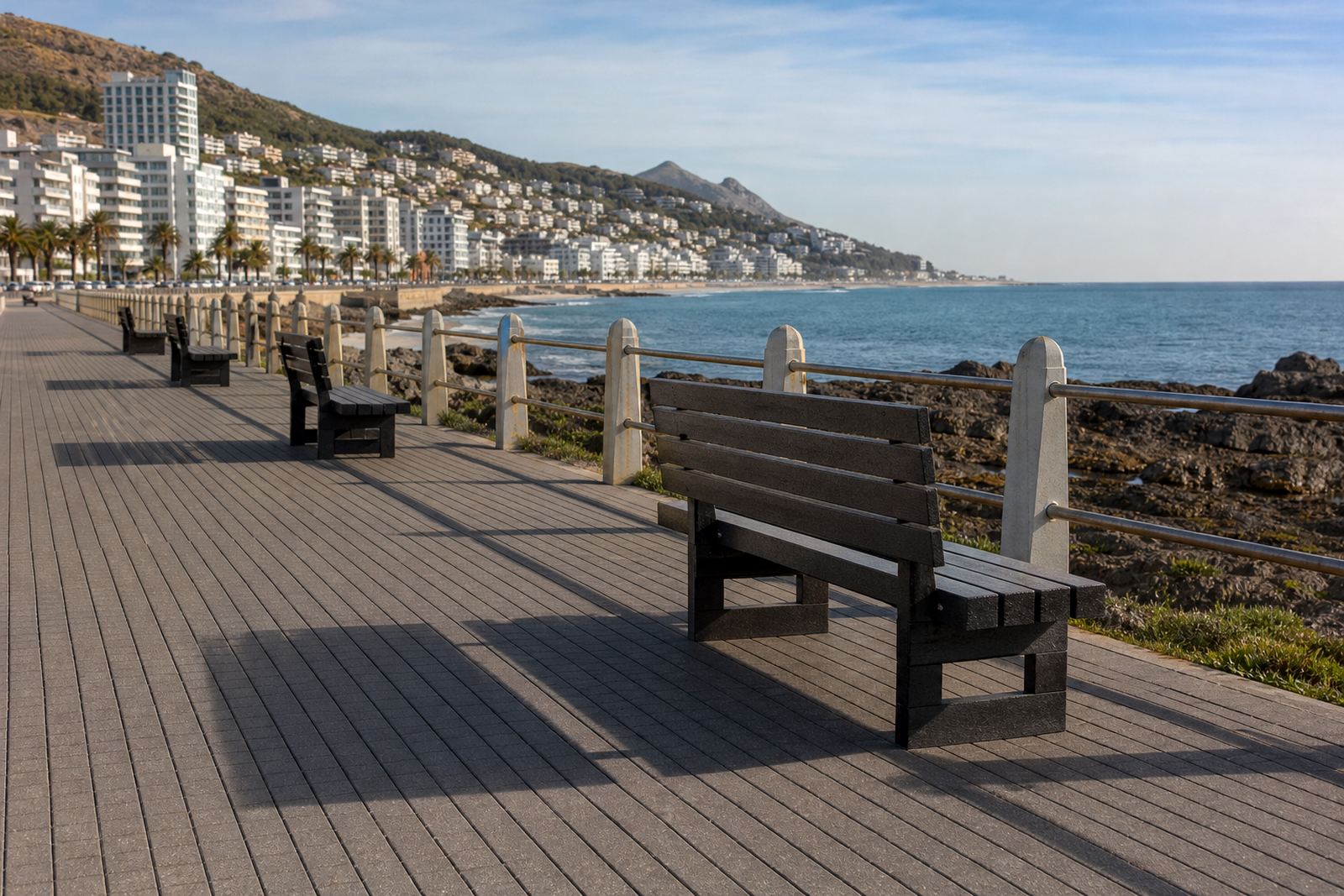
A promenade works best when it gives people a reason to slow down. Benches create those points naturally. On a coastal walk in Cape Town, a family may need a rest after pushing a pram into a headwind. In Durban, older visitors may want shade and a seat before heading back along the seawall. If benches are too far apart, people keep moving until they are tired. If they are too close together, the route can feel cluttered and the view gets broken up.
Good spacing depends on who uses the route and what the route is for. A leisure promenade near restaurants may suit more frequent seating, while a longer public path can work with fewer but better placed rest points. The aim is not to fill every gap. It is to set a calm rhythm that matches walking pace, pauses and sightlines. That is why promenade seating should be planned with the route itself, not added after the paving is already down.
Reading the site before you place the first bench
Before any bench is installed, the site needs a proper walk-through. Look at where people naturally stop. That might be a curve in the path, a section with open sea views, a spot near parking or a shaded edge where the afternoon sun is less severe. On exposed stretches, wind direction matters too. A bench that faces into strong coastal wind will be used less than one set behind a low wall or planting strip.
Site measures and layout planning should also take maintenance access into account. Municipal cleaning crews need room to pass. Pedestrians, cyclists and mobility aids should not be blocked. On busy public routes in places like Somerset West or George, it helps to leave enough clear walkway so benches do not narrow the passage at pinch points.
- Place seating where people naturally pause, not only where there is spare space.
- Keep a clear path for buggies, wheelchairs and cleaning access.
- Use shade, walls or planting to improve comfort on open stretches.
- Check drainage so standing water does not collect around the base.
Why recycled plastic lumber suits coastal promenades
Recycled plastic lumber is well suited to places where salt air, sun and high foot traffic can be hard on timber. It does not have the same routine maintenance needs as traditional wood, and it handles damp coastal conditions well. In areas such as Paarden Eiland, Stellenbosch and George, that matters because outdoor fittings are exposed to changing weather, cleaning chemicals and busy use. Benches made from this type of material also avoid many of the issues people face with splitting, swelling and repeated sanding.
For public walkways and commercial settings, the practical benefit is simple. The seating stays serviceable for longer and needs less attention between inspections. That is useful for property managers, hospitality sites, schools and municipalities that want a cleaner finish without constant upkeep. It also suits places where replacement parts must be easy to manage over time.
- Good for coastal humidity and regular wash-downs.
- Useful where low maintenance is preferred over periodic repainting.
- Works well for public areas that need consistent appearance.
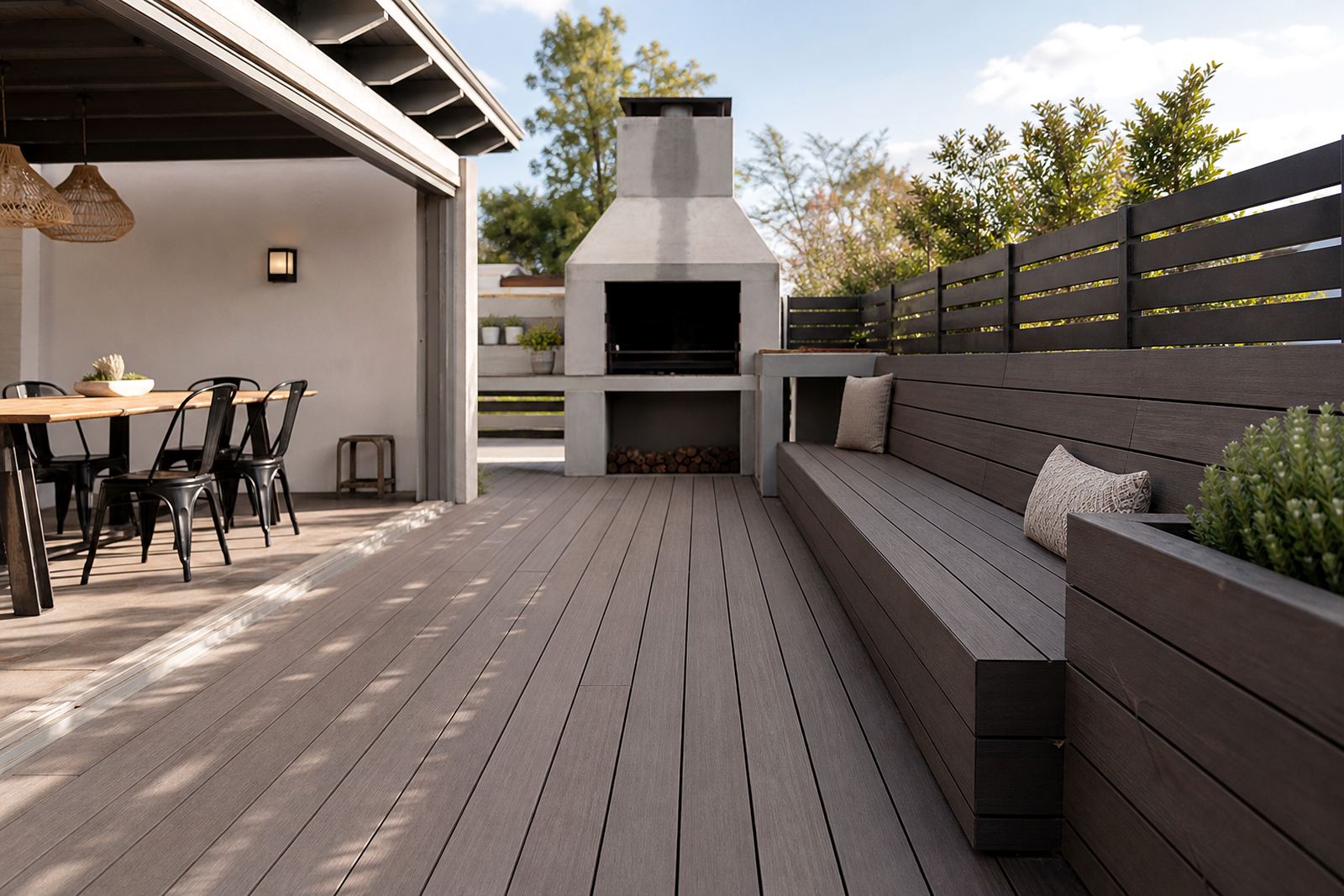
- Can be used for benches and associated deck elements in the same project.
Getting the rhythm right for views, rest and movement
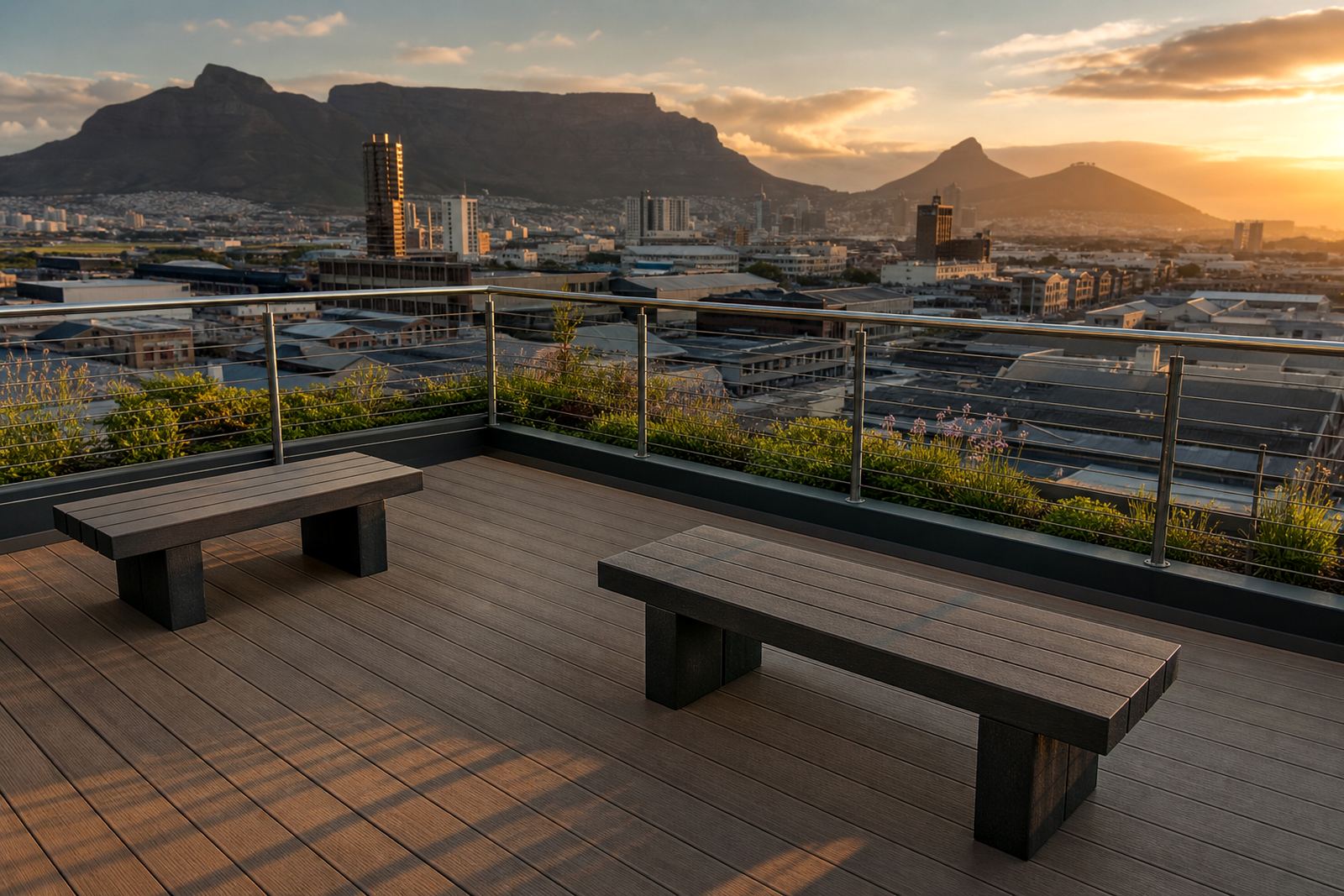
Bench rhythm is about more than metres between seats. It is about what a person sees between one stop and the next. On a promenade with open ocean views, benches can be set to frame a change in perspective. On a route with dune planting or urban streets, they can be placed where the outlook opens up. This helps the seating feel intentional instead of random.
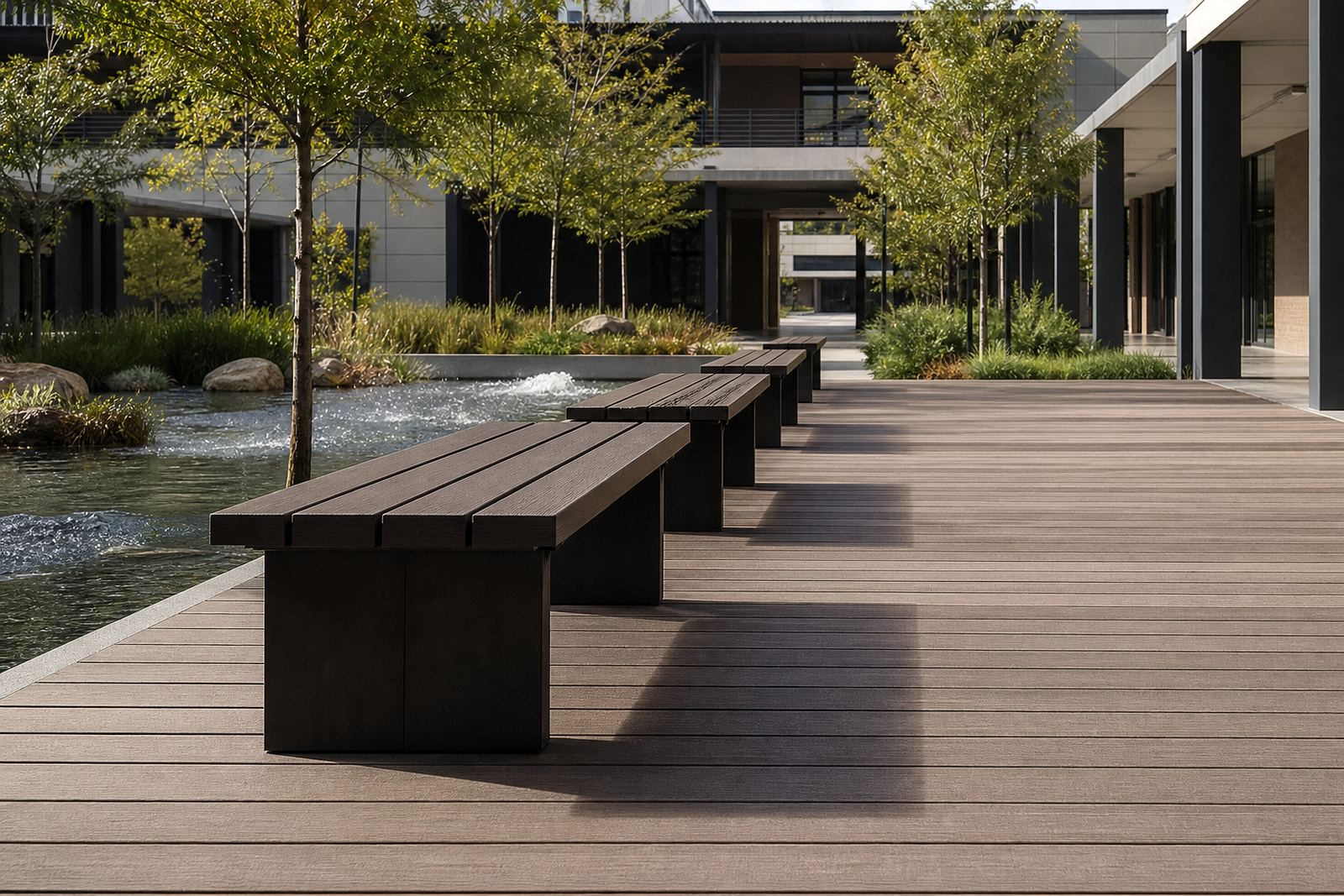
A practical layout often mixes shorter and longer gaps. For example, a more active section near a cafe or entrance can have seating closer together, while quieter stretches can be more spread out. That pattern helps people rest at natural intervals and keeps the line of the route from feeling overbuilt. It also lets the promenade serve different users at once, from morning walkers to people sitting with children after school.
For long routes across South Africa, the local context changes the spacing. In Johannesburg, shade and heat matter more than sea spray. In Durban, moisture and corrosion around fasteners and fittings need attention. In Cape Town, wind exposure and salt are often the deciding factors. The best bench layout responds to those details instead of using one fixed rule for every site.
Installation details that keep seating usable
A bench is only useful if it is secure, level and easy to sit on. Installation should suit the surface below it, whether that is a concrete plinth, paved promenade or a deck area beside the route. Any slight unevenness becomes more obvious once people start using the seating every day. Edges should be finished neatly so clothing does not catch and cleaning is straightforward.
Where benches are part of a larger route upgrade, edge finishing and component replacement should be thought through early. Public seating gets knocked, shifted and weathered. It is better to plan for serviceable parts and easy refurbishment than to wait until a full replacement is needed. That approach also helps trade clients working on phased upgrades across town centres, waterfronts and mixed use precincts.
At Plastimber, the work often starts with site measures and material quoting, then moves into delivery coordination and installation support. For larger routes, that can include logistics planning between Paarden Eiland and delivery points in Cape Town, Bellville, Paarl, Somerset West, Stellenbosch, George, Johannesburg and Durban. It keeps the job moving without unnecessary delays.
A local example: a waterfront route that needed calmer pauses
A waterfront path in Cape Town is a good example of why rhythm matters. The route had long open stretches, strong afternoon wind and frequent foot traffic from families, joggers and tourists. The seating needed to support short rests without interrupting movement. Rather than placing benches in a straight repeated line, the layout used a mix of viewing points and quieter stop areas behind some shelter.
The result was a more comfortable route for everyday use. People could pause to look out, sit out of the wind for a moment, then continue. Maintenance teams also found the seating easier to manage because the material was not tied to a high repainting cycle. In a place like that, the right bench spacing does more than provide a seat. It shapes how the whole promenade is used.
That same approach works inland too. A retail precinct in Johannesburg, a civic walkway in Paarl or a coastal path in Durban all need seating that is placed with purpose. The details change, but the principle stays the same: give people a place to stop before they are forced to stop.
What trade clients should ask for before ordering
Before ordering benches for a promenade, trade clients should ask for clear layout advice, practical delivery planning and guidance on future care. It helps to know where the high use points are, what the site exposure looks like and whether any refurbishment work will need to be carried out later. For new builds, the bench positions should be coordinated with paving, drainage and access routes so there are no awkward changes once the area opens.
A proper supply partner should be able to help with site measures, layout planning, material quoting, delivery coordination, deck installation, bench installation, edge finishing, refurbishment, component replacement, care advice and trade support. That gives project teams one point of contact from the first measure-up to the last fixing. For long promenades, that practical support matters just as much as the seating itself.
Benches are small pieces of a route, but they carry a lot of the user experience. Get the rhythm right and people stay longer, move more comfortably and notice the view. Get it wrong and the whole walk feels hurried.