
Why roof terraces work so well in city buildings
In Cape Town, Johannesburg and Durban, roof terraces often have one job too many. They need to give people fresh air, but they also have to cope with strong sun, wind, dust and regular foot traffic. Recycled plastic lumber decking is a practical fit because it does not need the same level of upkeep as timber and it handles weather exposure better in many roof settings.
For body corporates, landlords and business owners, the big advantage is simple: a terrace can be used more often if the surface is comfortable, neat and easy to clean. People are far more likely to sit outside for tea, a quiet call, or a short lunch break if the area feels finished and safe underfoot.
Staff break areas that actually get used
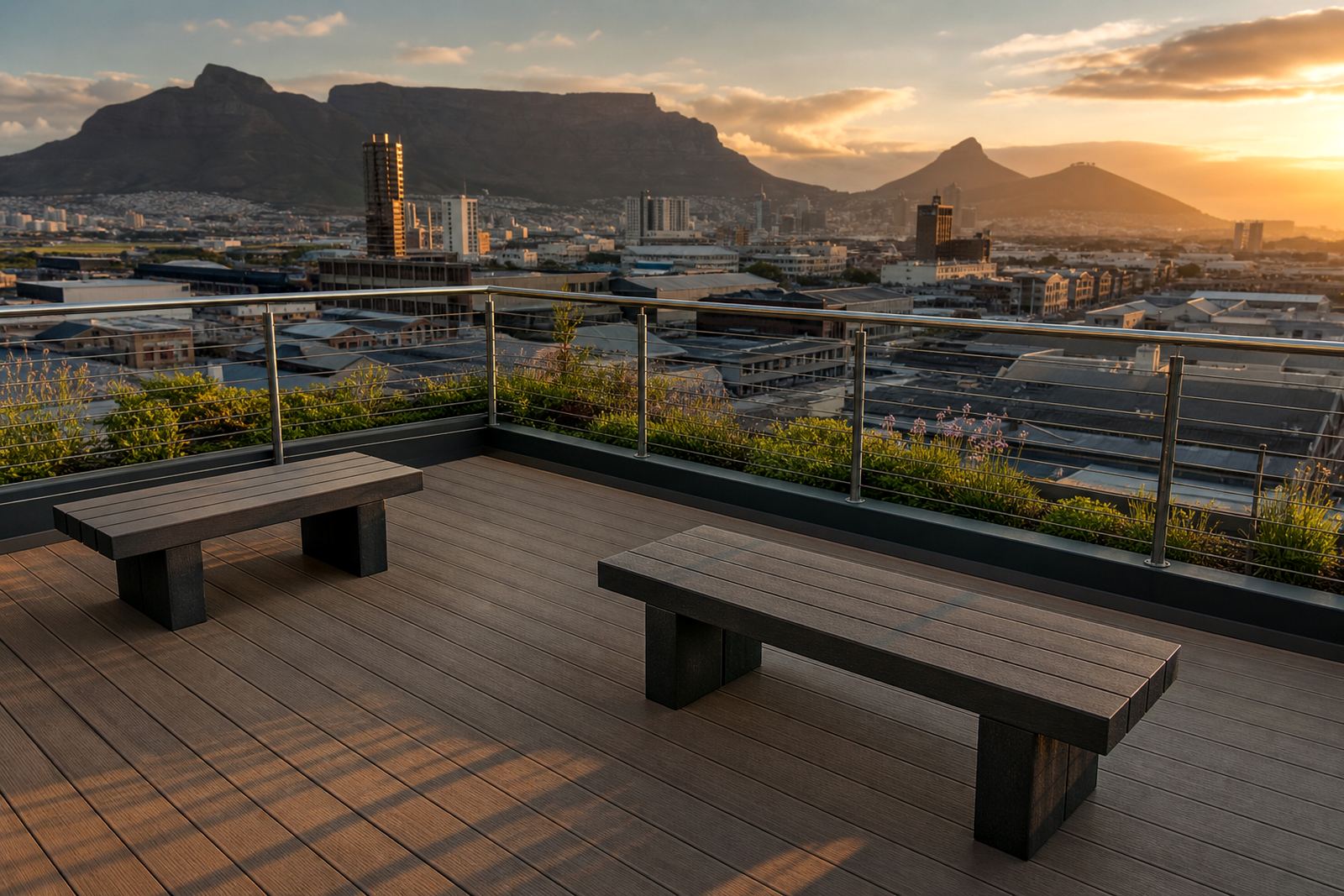
On commercial roofs, the terrace is often the only outdoor space available. A sensible layout can turn it into a proper staff area instead of a dead zone with a few pots and a drain cover. Benches give people a place to sit without having to carry loose chairs up and down, and decking helps define the space so it feels intentional.
- Short lunch breaks away from screens
- Quiet space for shift changeovers
- Outdoor call points for sales or support teams
- Smoking areas kept separate from internal work zones
- Rest spots for cleaning, security or maintenance staff
In a hot coastal area like Paarden Eiland, shade and airflow matter just as much as the seating itself. If the terrace gets full sun for most of the day, the finish and layout need to be chosen with comfort in mind, not only appearance.
Guest areas for hospitality and mixed-use buildings
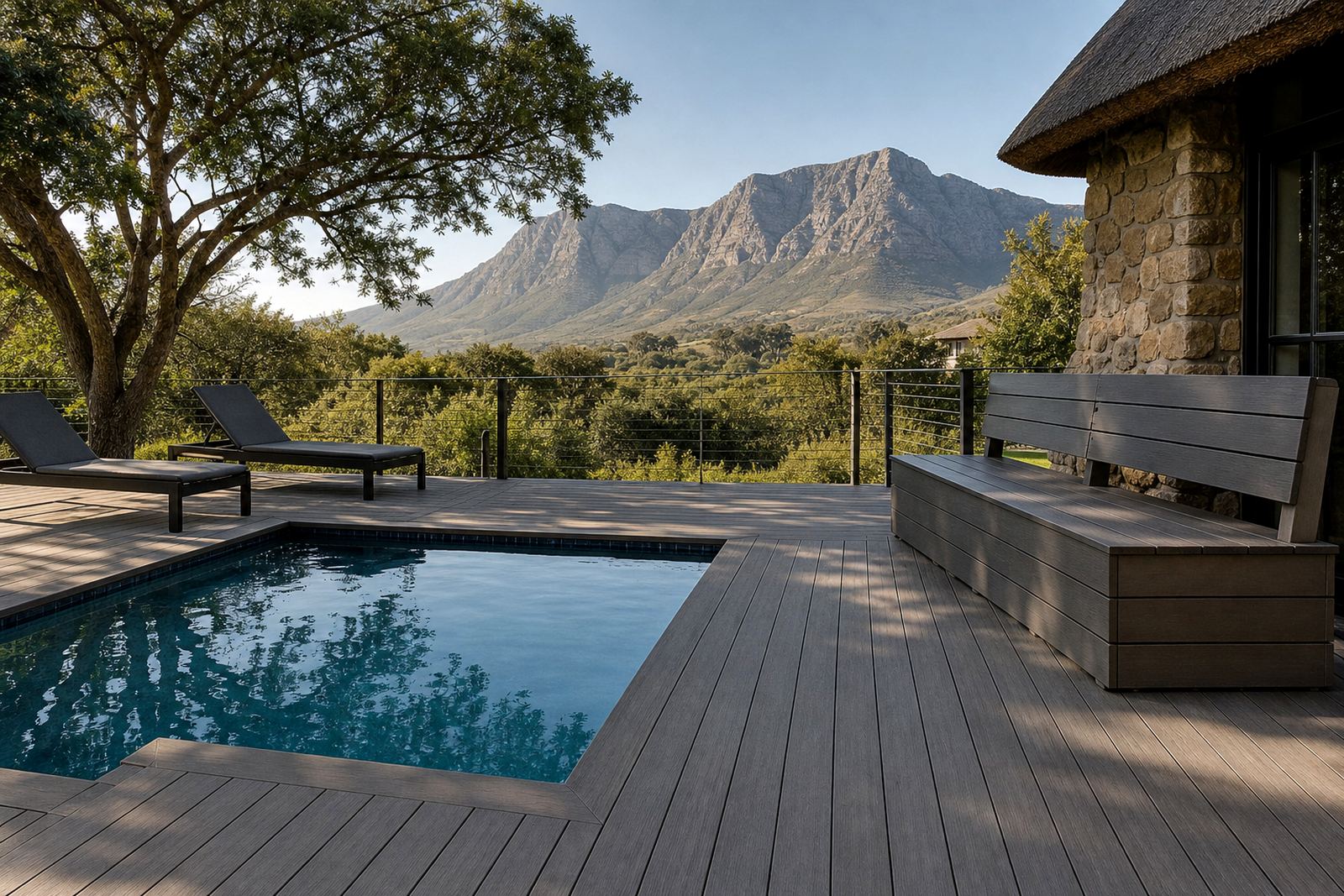
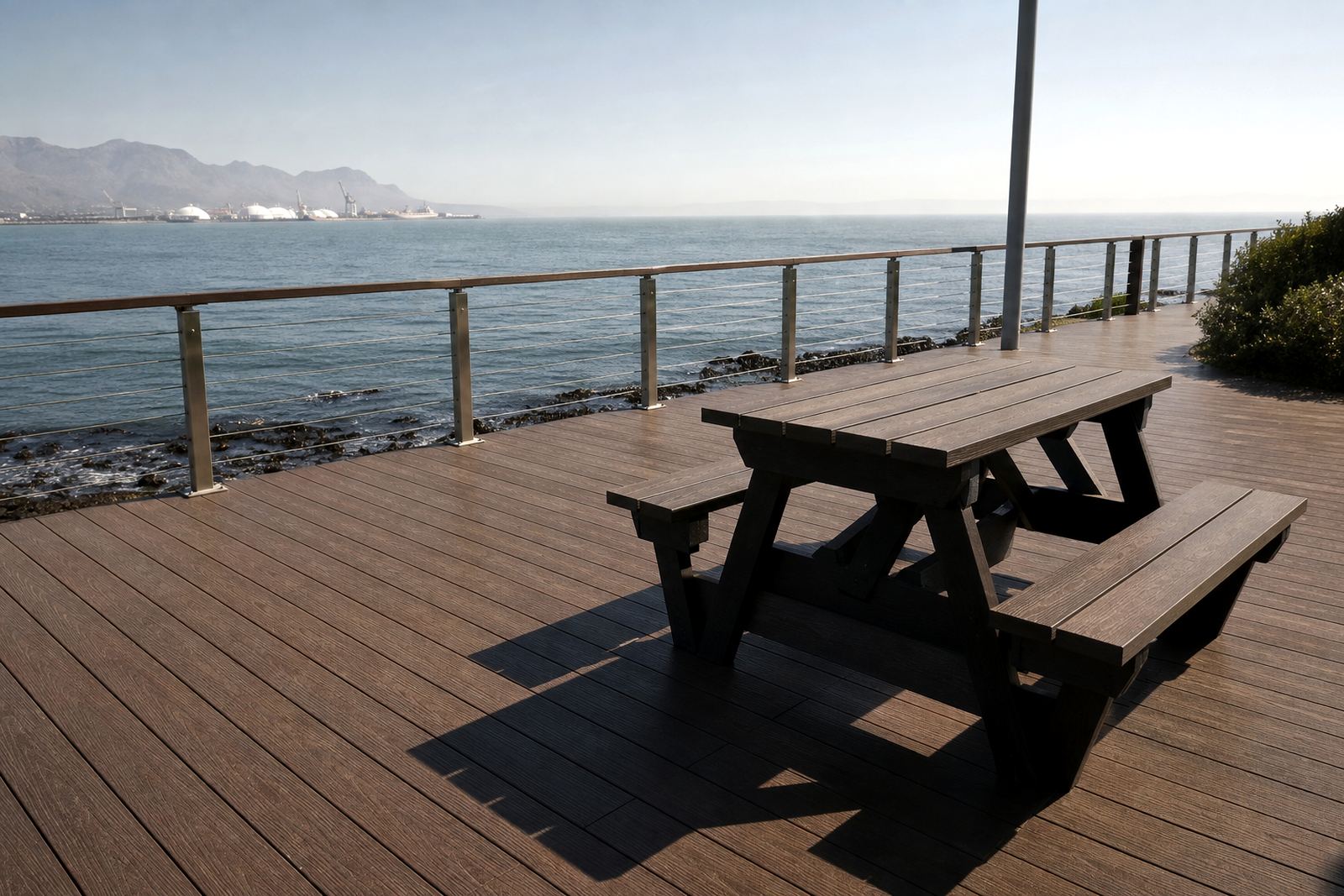
Hotels, guesthouses, restaurants and apartment blocks often want an outdoor area that feels polished without needing constant sanding, sealing or repainting. Recycled plastic lumber benches and decking are useful here because they can suit a rooftop setting where salt air, spillages and cleaning are part of the routine.
Guests usually notice the small details first. Straight edges, level walking lines and enough space between seating zones help a terrace feel organised. In places like Stellenbosch or Durban, where people expect to spend time outdoors, the terrace can become a real selling point if it is planned well.
- Breakfast seating for guests in the morning
- Evening drinks area with clear walkways
- Overflow space during events and functions
- Private seating pockets for residents or visitors
Residential roof terraces need comfort, privacy and easy care
For homes and sectional title buildings, roof terraces are often used for braais, family time, container gardens or a quiet place to read. The challenge is usually maintenance. Not every owner wants a surface that needs regular oiling or frequent patch repairs after a wet season. Recycled plastic lumber offers a practical alternative for those who want a cleaner routine.
Benches can be built into the edge of the terrace or placed as separate units. That makes it easier to keep the space open when needed. In smaller buildings, a fixed bench can save floor space and still give residents a proper place to sit, which is handy when the terrace is used for more than one purpose.
What to think about before you install anything on a roof
Roof terraces are not ordinary yards. Water run-off, access routes and surface movement all need attention before any decking or benches go in. A good layout should leave drainage points clear, keep maintenance access open and avoid making the roof feel cramped.
It also helps to think through how the space will be cleaned. If hose-down cleaning is part of the plan, the finish should be simple to maintain and the edge details should not trap dirt. In Johannesburg, dust can build up quickly on exposed roofs, while in coastal towns there is often salt in the air, so regular cleaning access matters.
- Check where drainage points already sit
- Allow clear access to rooftop plant and services
- Plan seating so movement paths stay open
- Keep edge details neat around walls and upstands
- Choose a layout that suits the actual use, not just the photo
A local example from Paarden Eiland to the wider market
A small office building in Paarden Eiland might want a roof terrace for staff tea breaks, client meetings and after-hours functions. The same terrace could need to work for a weekday team of six and a Saturday gathering of twenty. In that kind of setting, the goal is not flashy. It is practical use, steady wear and a space that still looks good after months of sun and foot traffic.
That is where recycled plastic lumber decking and benches make sense. The terrace can be used for different purposes without constant maintenance headaches, and the materials suit delivery and installation work across Cape Town, Stellenbosch, George, Johannesburg and Durban. For many property owners, the real value is that the space stays usable, not just presentable.
If the terrace is well planned from the start, it can support staff, guests and residents in one place. That makes the roof earn its keep, instead of sitting there unused.
Getting the layout right for long-term use
The best roof terrace is usually the one that does several small jobs well. It gives people a place to sit, keeps the circulation route clear, and stands up to daily use without demanding constant attention. That is especially important for buildings where access is limited and maintenance time is tight.
For trade clients, body corporates and property managers, support usually starts with site measures, layout planning and material quoting. From there, delivery coordination, installation and finishing can be organised to suit the roof access and the building schedule. If a terrace already has tired seating or worn surface sections, refurbishment and component replacement can extend the life of the area without starting from scratch.
Handled properly, a roof terrace becomes part of the building’s daily value, not just an extra space on top.