
Why pause points matter on longer walkways
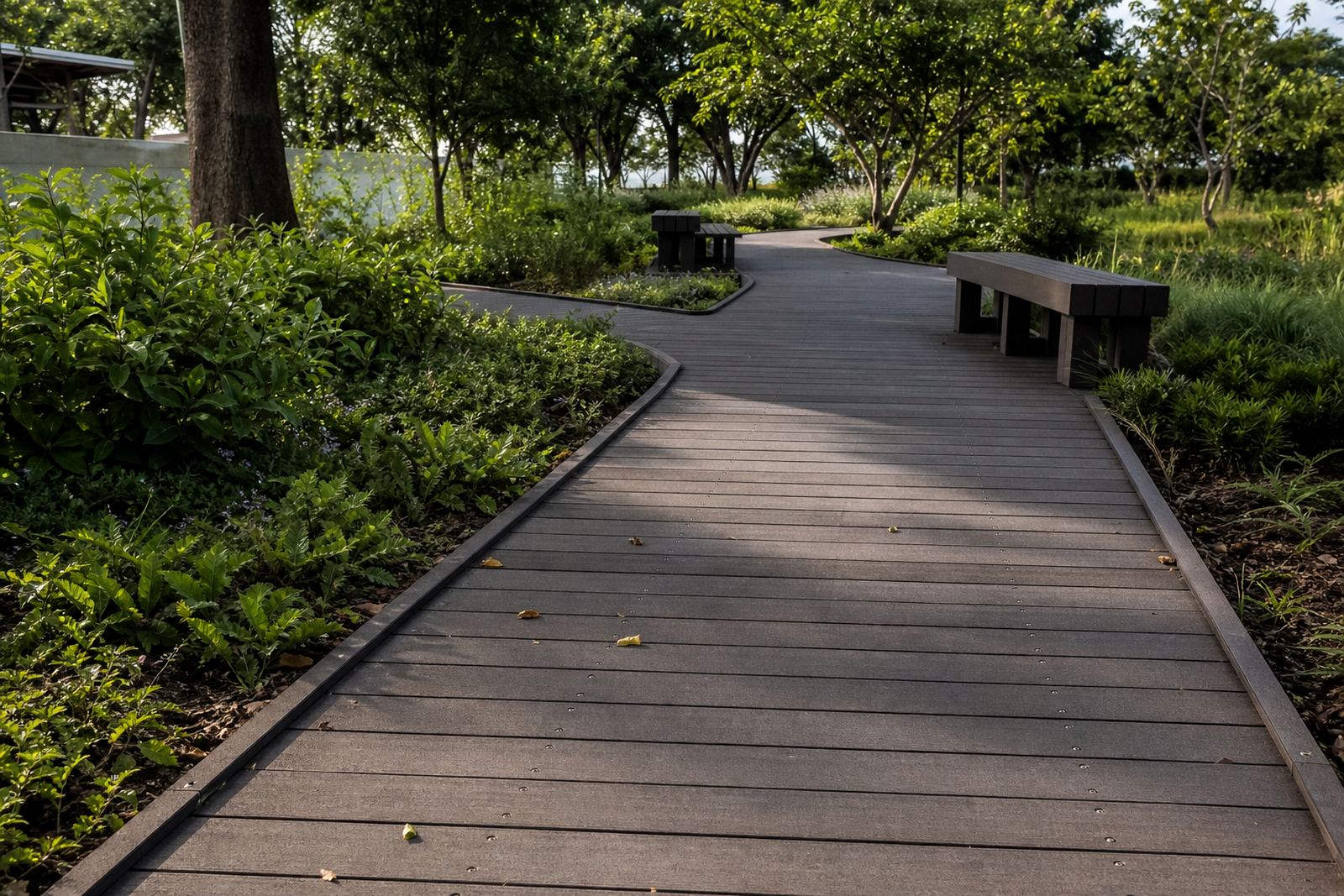
A walkway is not only about moving from one end to the other. On a coastal promenade in Cape Town, a school path in Stellenbosch or a business park in Johannesburg, people often need a place to stop briefly, especially older visitors, parents with children, security staff and maintenance teams. Seating points break up a long route and make the space more usable for more people.
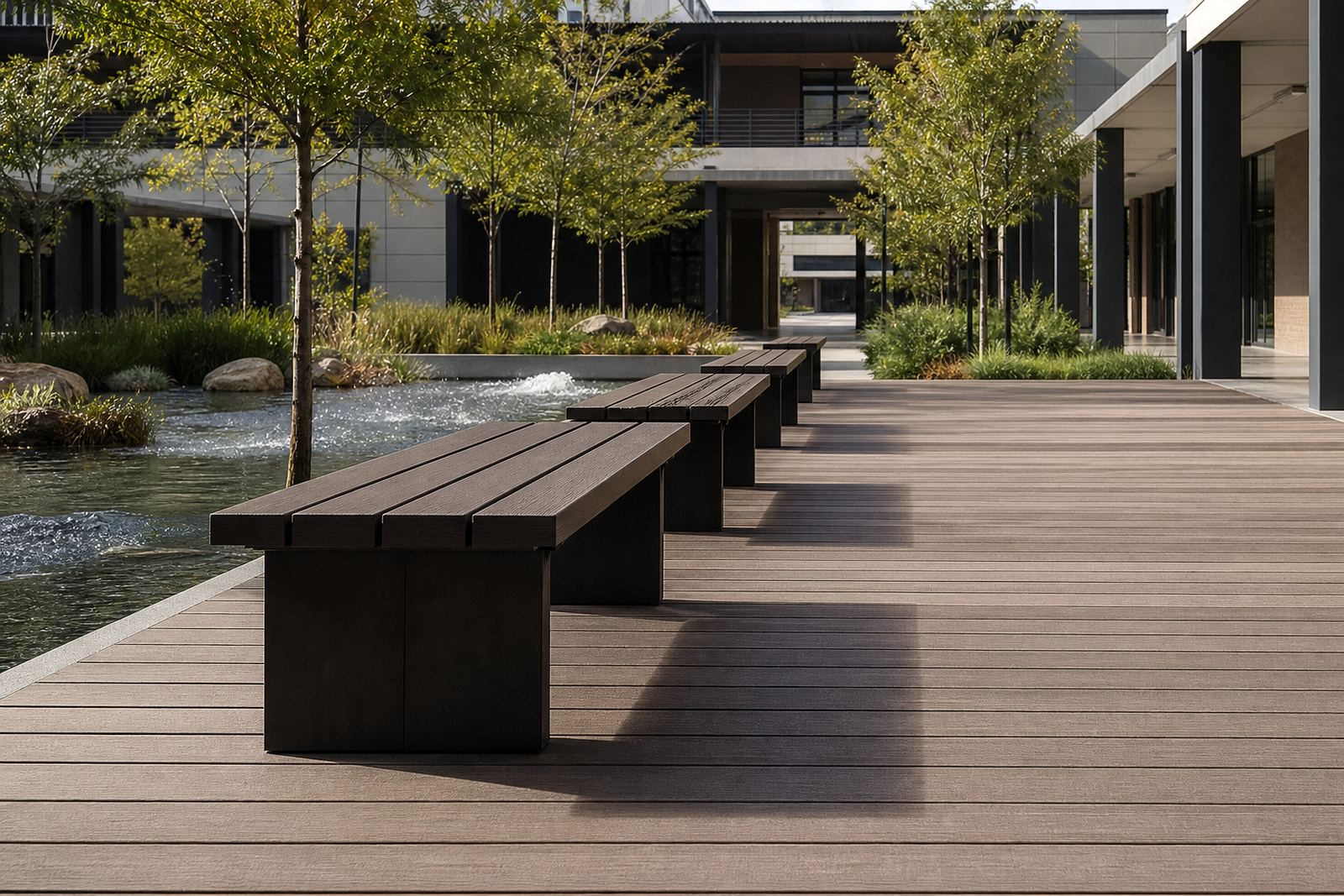
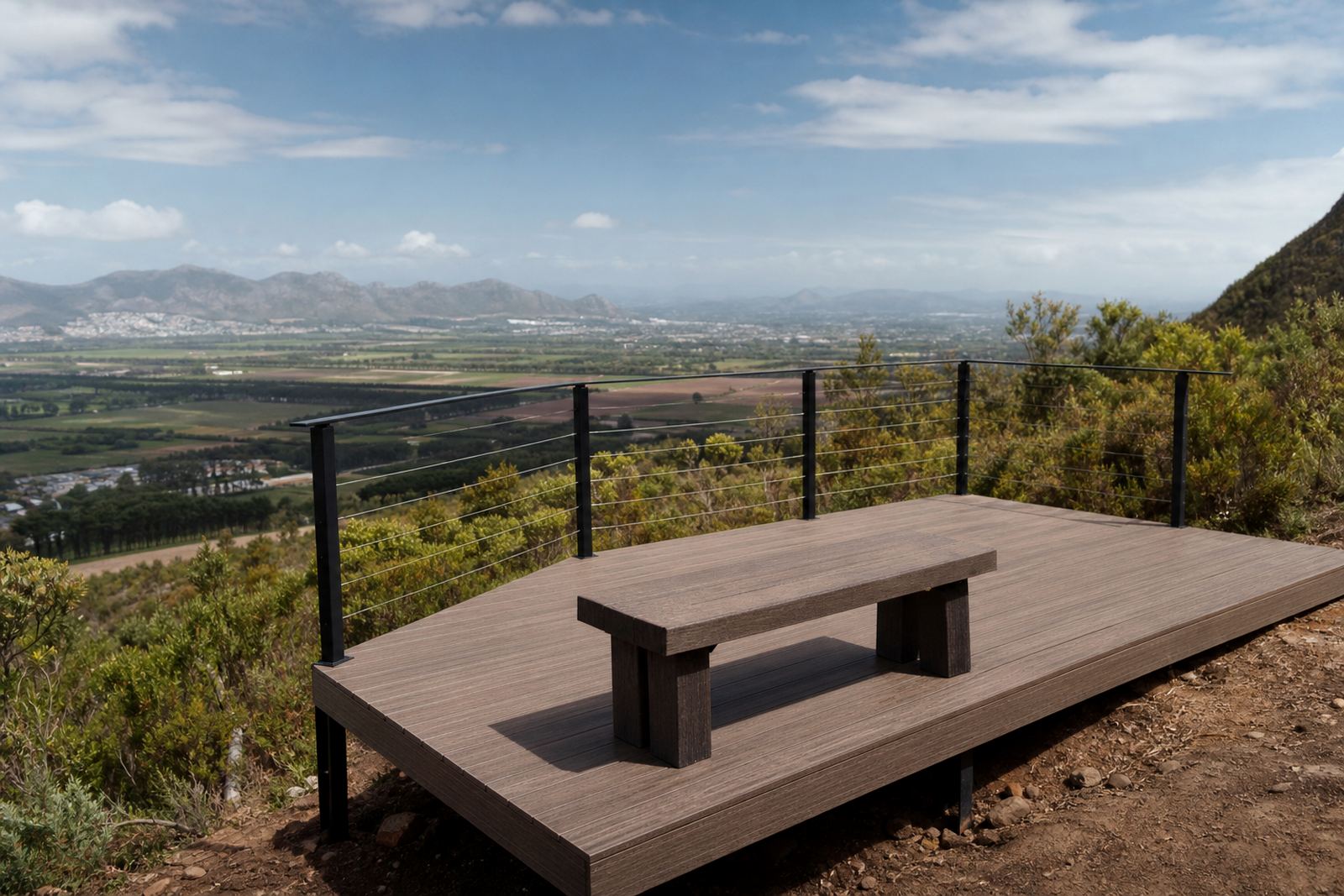
When benches are planned into the route from the start, the path feels more considered and easier to use. That matters in places with strong sun, wind or humid conditions because users are less likely to push through discomfort if there is nowhere to rest. It also helps with flow. A bench in the right spot can reduce informal sitting on steps, walls or kerbs, which often leads to wear and an untidy appearance.
For public and private projects alike, the aim is simple: add rest points where people naturally slow down, change direction or wait. If the walkway serves deliveries, gardens, parking bays or multiple entrances, those pause points can make the whole route work better day to day.
Choosing recycled plastic lumber for exposed sites
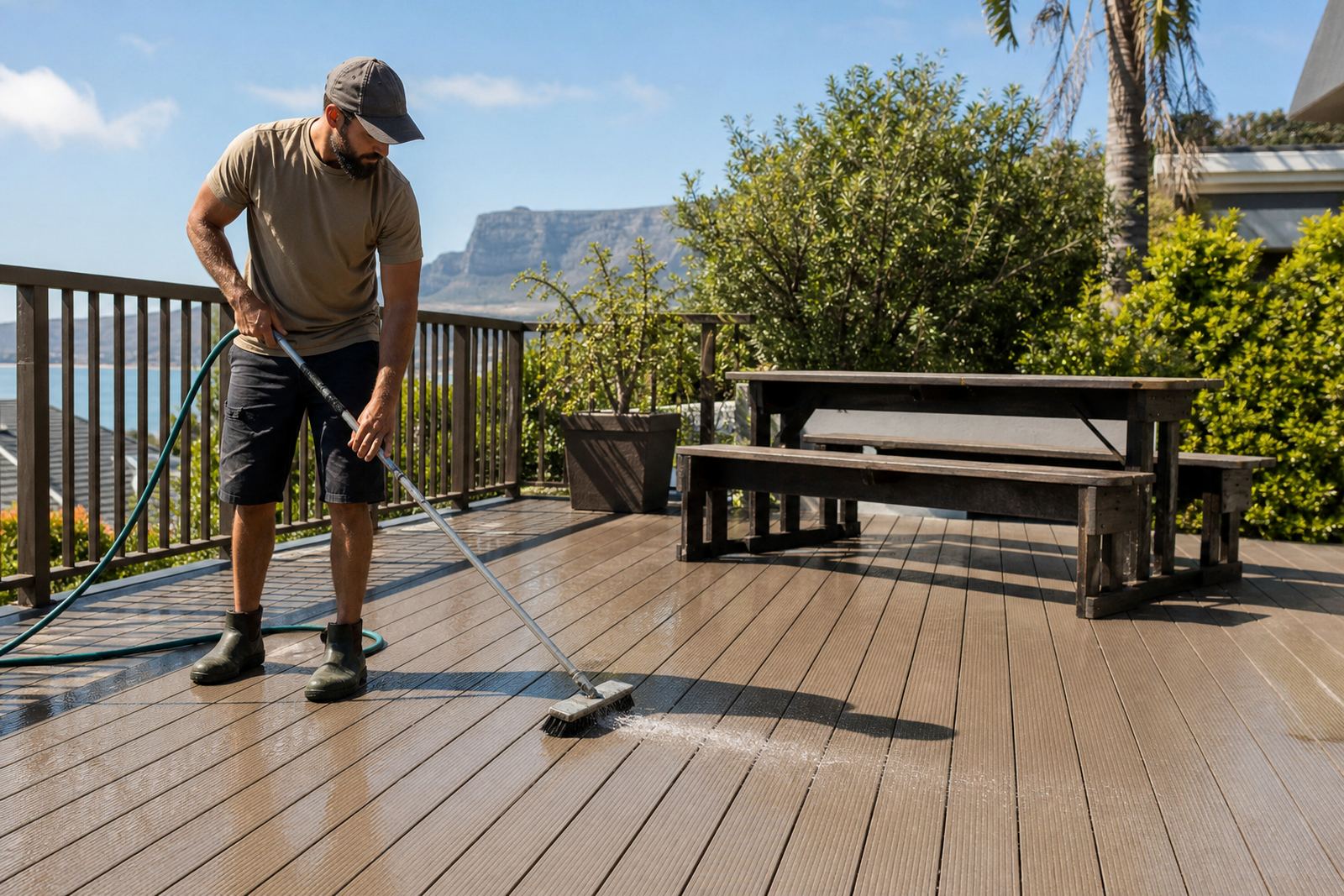
Recycled plastic lumber is often selected for seating along walkways because it handles moisture better than untreated timber and does not need the same level of ongoing care. That can be useful in Durban humidity, George rainfall or coastal areas around Paarden Eiland where salt air and weather exposure can be hard on outdoor furniture. It is also useful in places where load shedding or water restrictions make routine upkeep more difficult.
The material is commonly used for benches because it keeps its shape well in ordinary outdoor conditions and does not splinter in the same way as many timber products. It suits sites where cleaning needs to be quick and practical, such as retail centres, estates, schools, municipal paths and commercial developments. The surface and finish still need to be chosen carefully so the bench is comfortable and suited to the setting.
For walkway seating, the better approach is to think in terms of use, exposure and maintenance access. A bench in a shaded court, for example, may need a different arrangement from one placed on an open path with strong afternoon sun. Small decisions here matter over time.
- Good for exposed outdoor paths, courtyards and garden walkways
- Useful where regular painting or sealing is not practical
- Can suit coastal, inland and high-traffic environments
- Helps reduce ongoing maintenance compared with many timber options
Spacing benches so people use them properly
There is no single spacing rule that fits every site, but the layout should follow how people move. On a long pedestrian route, benches are usually most useful where a person naturally wants to stop, not in the middle of a straight section for no reason. Think about entrances, shaded sections, views, crossings and areas near ramps or steps. In places like Somerset West or Paarl, where afternoon heat can be strong, a shaded seating point can be more valuable than two benches placed too close together in open sun.
It helps to look at the route from the user’s side. A visitor carrying shopping, a gardener moving tools or a caretaker doing rounds will all use the space differently. If the bench is too far from the edge of the walkway, too close to plantings, or placed where people must turn awkwardly to sit, it will be ignored. If it is easy to reach and placed with enough clearance around it, it becomes part of the route rather than an obstacle.
- Place benches where people naturally slow down or wait
- Keep access clear for wheelchairs, trolleys and buggies
- Allow enough surrounding space for easy entry and exit
- Use shade, shelter or wind cover where the site calls for it
What to plan before installation begins
Before a seating point is installed, the site should be checked properly. That includes levels, surface conditions, drainage, nearby edges and any services below the ground. In places such as Bellville or central Johannesburg, hard surfaces may already be carrying foot traffic, service access and drainage all at once, so the installation needs to fit the route without creating a trip point or a maintenance headache.
Site measures and layout planning are important because a bench is not just a standalone item. It affects how people move, where they gather and how the area is cleaned. On commercial sites, the bench may also need to fit around access rules, fire routes, security boundaries or municipal requirements for public space. On residential estates, it may need to sit neatly alongside paving, planting and lighting.
A practical plan will also consider delivery access, fixing method and future replacement of components if the bench is likely to be used heavily. That makes later work easier and keeps the site looking orderly.
- Check levels, drainage and surface condition first
- Confirm access for delivery and installation equipment
- Allow for cleaning access around and under the bench
- Plan for future replacement or refurbishment if needed
Bench styles that suit public and private routes
Walkway seating can be kept simple or made more formal depending on the site. A bench near a garden path in Stellenbosch may suit a quieter, more relaxed setting, while a bench on a commercial walkway in Durban may need to be practical, fixed securely and easy to maintain. The same recycled plastic lumber material can work in both settings, but the finish, size and placement should match the use.
For public routes, the emphasis is usually on durability and easy care. For private estates or office parks, the bench may also need to match paving lines, planting layouts and entrance points. Where there is coastal exposure, the material choice can be especially helpful because the bench is less likely to suffer from damp conditions and repetitive weathering. That means fewer call-backs and less time spent on touch-ups.
If the seating points are part of a larger project, it often makes sense to coordinate the benches with decking, edge finishing or other walkway elements so the whole route feels planned rather than patched together. That approach is especially useful on longer paths where first impressions matter from start to finish.
Local delivery, fitting and support from Paarden Eiland
From a base in Paarden Eiland, Cape Town, seating projects can be supported across South Africa, including Cape Town, Stellenbosch, George, Johannesburg and Durban. That is useful when a project has more than one site or when a contractor needs the same bench style repeated across several locations. It also helps keep the line of communication clear from the first measure through to final placement.
Our team handles site measures, layout planning, material quoting, delivery coordination, deck installation, bench installation, edge finishing, deck refurbishment, bench refurbishment, component replacement, care advice and trade support. Morne van Zyl leads the business, with Anele Mkhize on sales, Bianca Fourie coordinating projects, Thabo Molefe supervising production, Leanne Naidoo managing customer support, Jason Petersen overseeing installation and Sibusiso Dlamini planning logistics. That structure matters when a site has to be handled properly and on time.
Clients reach us through the enquiry form on our contact page, which keeps project details in one place and makes follow-up easier. For walkway seating points, that usually means a quicker start and fewer surprises once the work begins.
When refurbishment makes more sense than replacement
Not every seating point needs to be replaced from scratch. If the frame or main structure is still serviceable, refurbishment or component replacement can be a practical option. That is often the case where benches have surface wear, loose sections or damage from repeated use, but the rest of the installation is still sound. On a long route, this can save disruption because the work is focused and targeted rather than starting over completely.
Refurbishment also helps with consistency across a site. If one bench on a route is tired while the others are still in good order, it is often better to restore it so the whole walkway feels coherent. For schools, estates and municipal-type spaces, that can make a visible difference to how the route is used and looked after.
With the right care advice and planned maintenance, seating points can stay useful for years without becoming a problem area. That is especially valuable on outdoor routes where weather, cleaning and daily wear all add up.