
Why estate benches matter in shared outdoor spaces
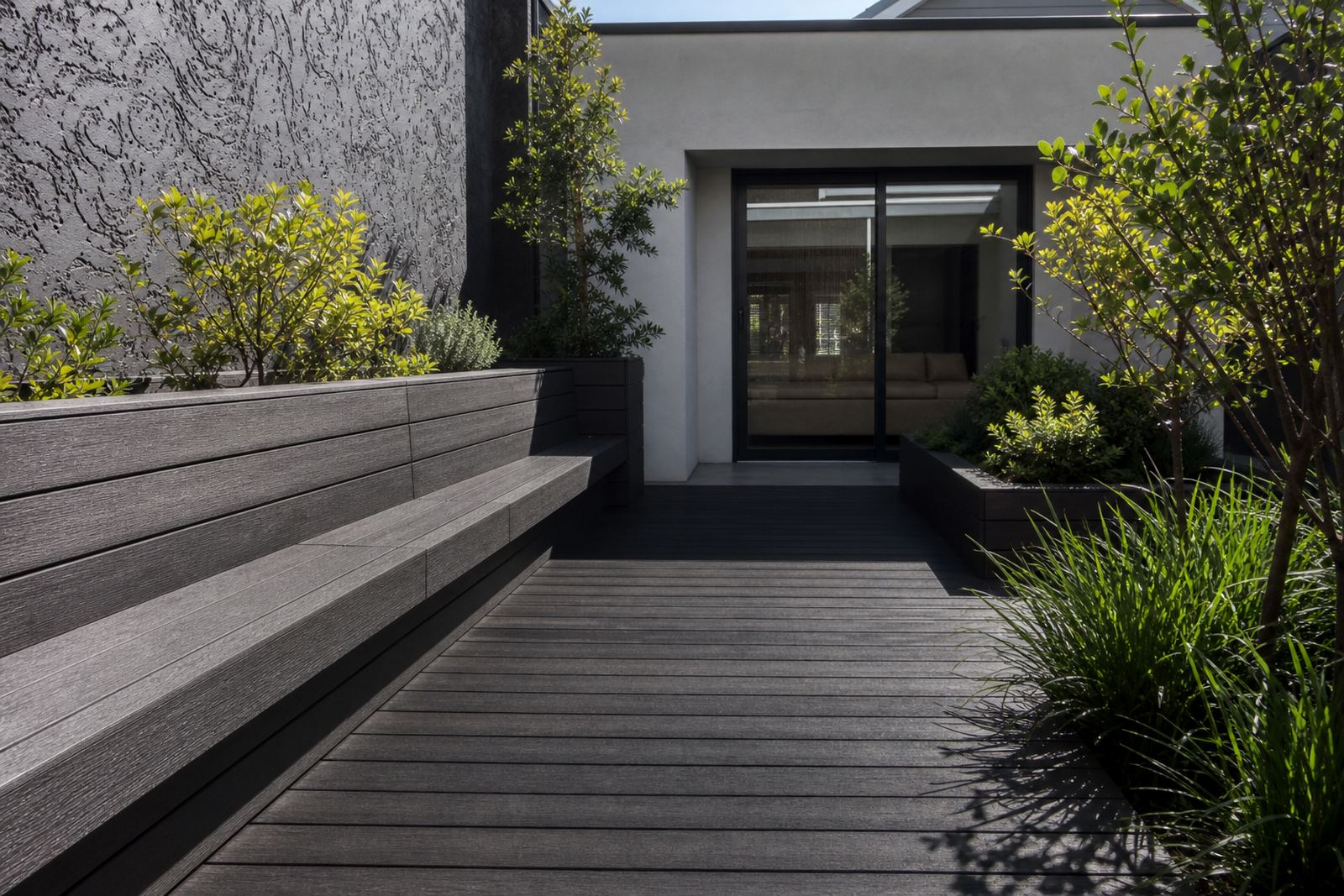
In an estate, benches are part of the daily rhythm. Residents use them for morning coffee, children stop for a break after cycling, older residents rest on the way to the gate, and visitors wait while security checks them in. A well placed bench makes these small moments easier without taking over the space.
For body corporates and managing agents, the value is practical. Benches help define paths, encourage people to use common areas properly, and make gardens feel cared for. They also give an estate a more settled look, especially where the landscaping is still maturing. In coastal areas like Cape Town, Somerset West and George, the right material matters because salt air, strong sun and damp winters can wear out timber quickly if it is not maintained.
Recycled plastic lumber suits estate conditions
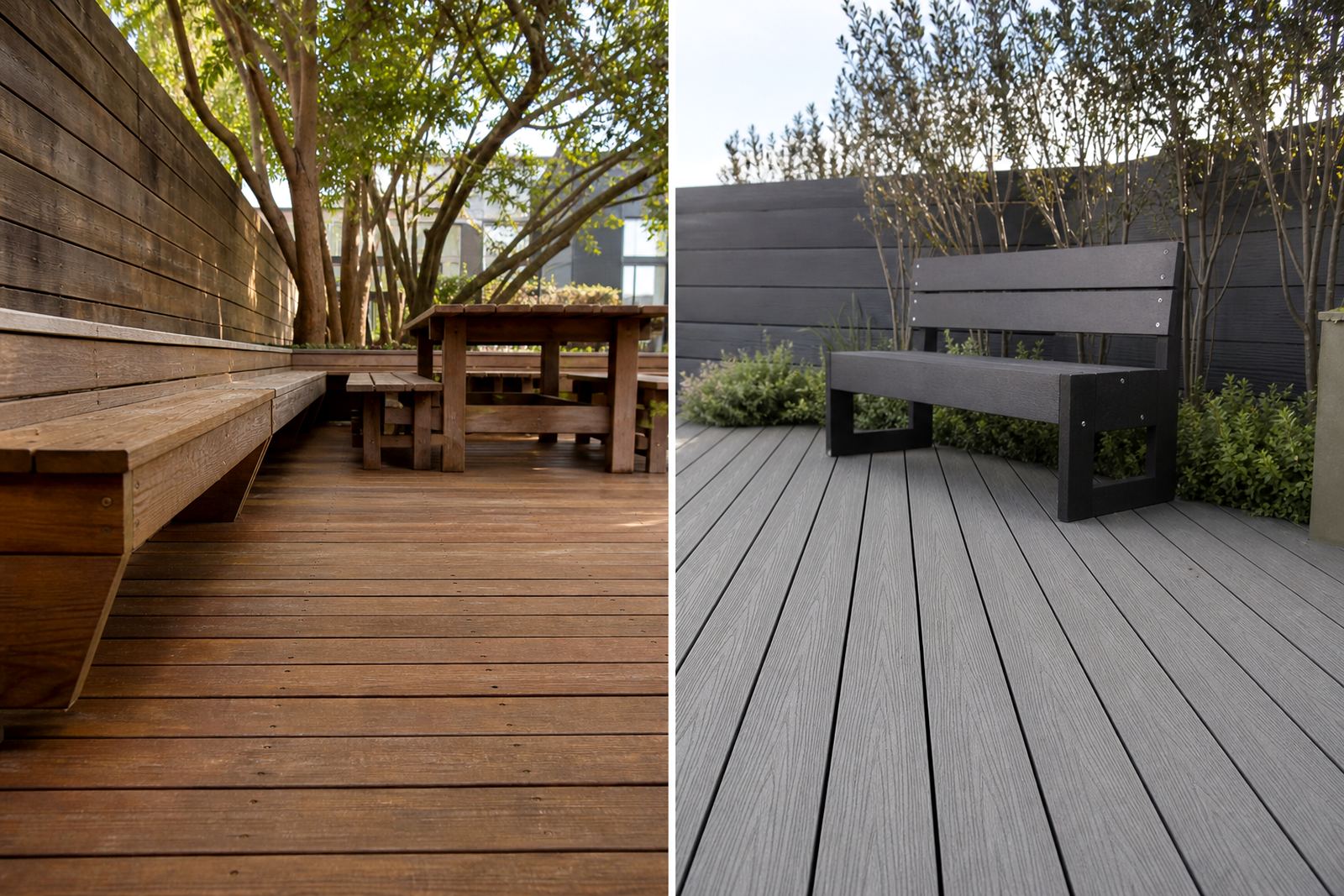
Recycled plastic lumber is a useful option for outdoor benches because it is made for weather exposure. It does not splinter like some timber, and it does not need regular sealing or painting to stay serviceable. That makes it a practical choice where maintenance teams are already busy with irrigation, lighting, paving and security repairs.
It is also helpful in places that see heavy foot traffic. Benches near entrances, clubhouses, lapas and parks need to cope with daily use and occasional rough handling. Recycled plastic lumber holds up well in wet conditions and is less likely to warp when temperatures shift through the seasons. For estates with load-shedding, that matters too because maintenance windows are often short and work has to be done efficiently.
- Suitable for exposed walkways and garden edges
- Useful in coastal and inland estates with different weather conditions
- Low upkeep compared with many timber alternatives
- Easy to wipe down after dust, mud or bird droppings
Where benches work best on an estate
Good placement is just as important as the bench itself. A bench in the wrong spot can block movement, create litter issues or sit unused. The best approach is to place seating where people naturally pause, but not where it interferes with access for gardeners, cleaners or emergency vehicles.
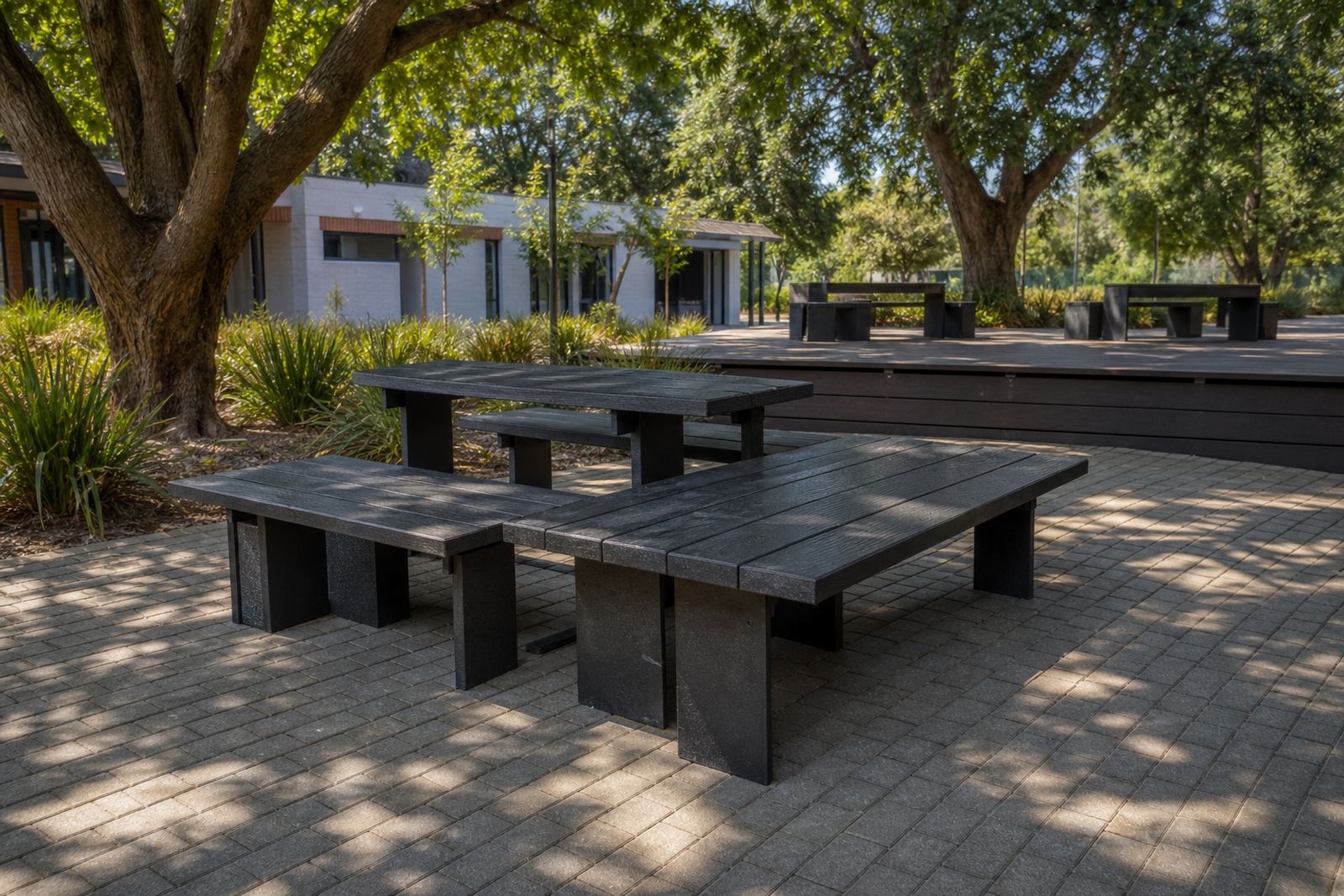
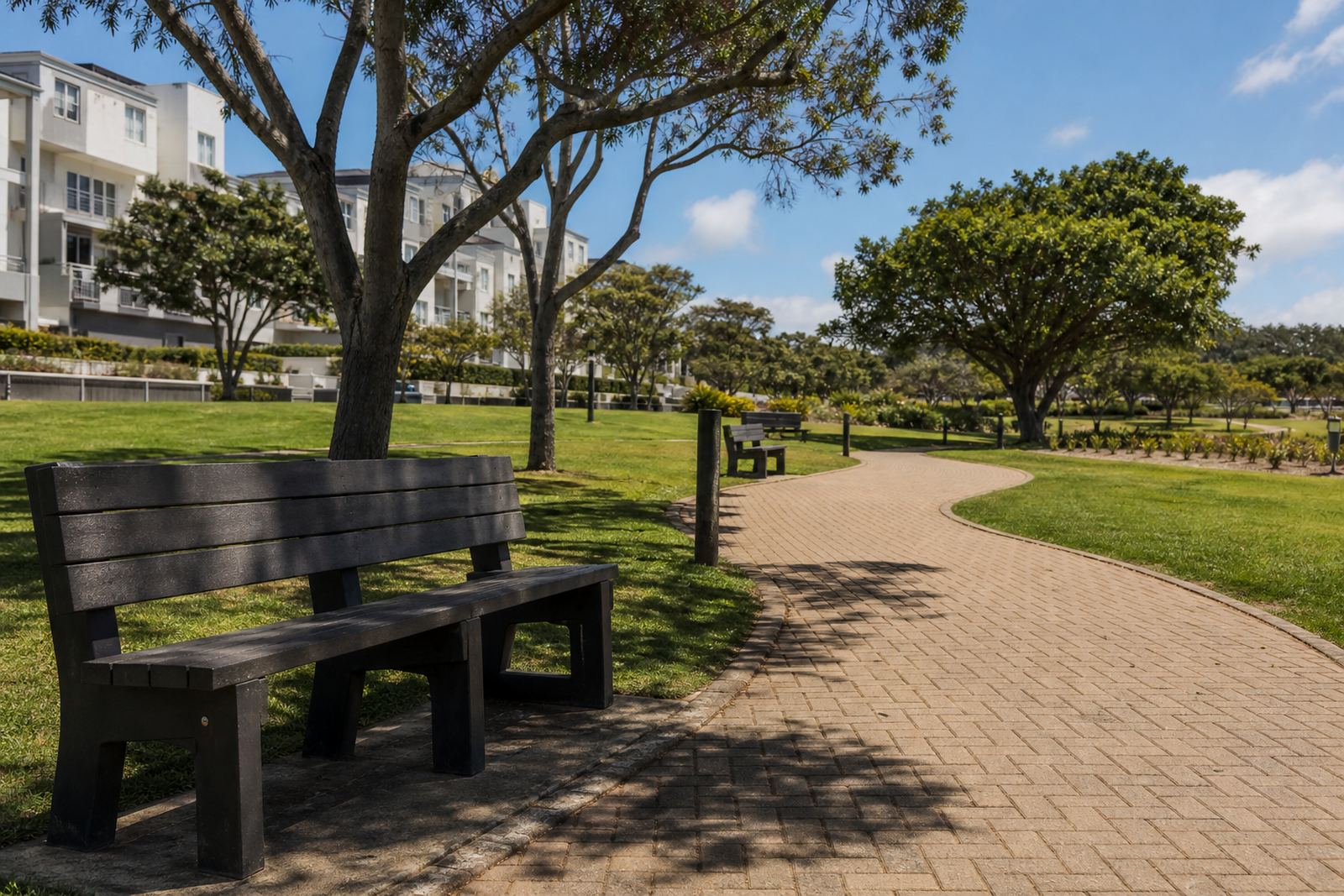
Common locations include shaded garden nodes, play areas, pool edges, walking loops, clubhouse entrances and quiet corners near water features. In larger estates around Johannesburg, Durban and Paarl, benches can also help connect longer paths by giving residents a resting point between blocks. In estates with strict rules, benches should be positioned so they do not obstruct sightlines for security patrols or interfere with municipal access to service areas.
- Near play areas for parents and carers
- Along walking routes for older residents
- At clubhouse entries for waiting and meeting
- In shaded spots where people naturally gather
Design choices that keep seating practical
Estate benches should look tidy, but they also need to be comfortable and easy to manage. Backrests can help where people may sit for longer periods, while backless options work well in open parks or narrow paths. Seat height, length and spacing should suit the area and the type of user, whether it is a small private estate or a large mixed-use development.
Finishes matter too. Smooth edges, solid fixings and clean joins make a big difference in daily use. In coastal towns, exposed fasteners and fittings should be checked regularly because salt and moisture can affect hardware over time. If the estate includes public facing spaces or shared parks, it is worth planning benches together with bins, paving and planting so the area feels orderly and easy to maintain.
What estate managers should ask before ordering
Before ordering benches, it helps to settle the practical details first. That saves time on site and reduces avoidable changes once installation starts. A quick site measure and layout plan can show whether the space needs one long bench, several smaller units, or a mix of seating zones. It can also highlight sloping ground, drainage lines or nearby sprinkler heads that should be avoided.
Managers should also think about maintenance access. Bench placement should allow gardeners to mow, edge and clean around the seat without awkward gaps or trip hazards. In estates where service roads are tight or access is limited, delivery coordination becomes important so materials arrive when the site can receive them. Small details matter, and they often decide how well a seating area works after the first month.
- Measure the area before choosing bench lengths
- Check access for installation and future maintenance
- Allow for shade, movement and visibility
- Plan around sprinklers, paving joints and drainage
A practical example for Cape Town estates
In Paarden Eiland and across Cape Town, many estates are balancing neat public spaces with low maintenance demands. A bench near a garden path, for example, can turn an unused corner into a place where residents pause and talk, without adding much to the grounds team’s workload. If the same estate also has a pool deck or clubhouse terrace, the seating can be repeated in matching layouts so the whole property feels considered.
This approach also works well in Stellenbosch, Bellville and Somerset West, where family estates often have mixed use outdoor areas. A bench should be part of the wider space, not an afterthought. When that is done properly, the estate feels more welcoming and the seating gets used instead of ignored.
Keeping estate benches in good order over time
Even low-maintenance seating benefits from basic care. A regular wash-down removes dust and grime, while routine checks catch loose fixings, vandalism or movement after heavy rain. If a component is damaged, it is usually easier to replace that part early than to wait until the full bench needs attention.
For estate committees and managing agents, this is where trade support is useful. Clear care advice, planned refurbishment and sensible replacement of worn components help extend the life of the seating without unnecessary cost or disruption. When benches are chosen and installed with the site in mind, they keep doing their job quietly for years. That is exactly what most estates need.