Why seating layout matters in a school yard
A good bench layout changes how pupils move between classes, where they gather at break time, and how easy it is for staff to supervise the grounds. In a school setting, seating is not only about comfort. It is also about flow, visibility and keeping busy areas from turning into bottlenecks.
Recycled plastic lumber benches suit this kind of use because they hold up well in wet weather, coastal air and regular washing down. They do not splinter like timber and they suit sites where maintenance time is limited. For schools in Cape Town, George, Durban and other coastal or high-rainfall areas, that practical side matters year after year.
When planning layouts, start with the daily pattern. Where do learners enter, where do they queue, and where do they naturally pause? A bench can support that movement or block it, so the placement should be based on how the school actually operates, not just where there is empty space.
Map the break zones before placing a single bench
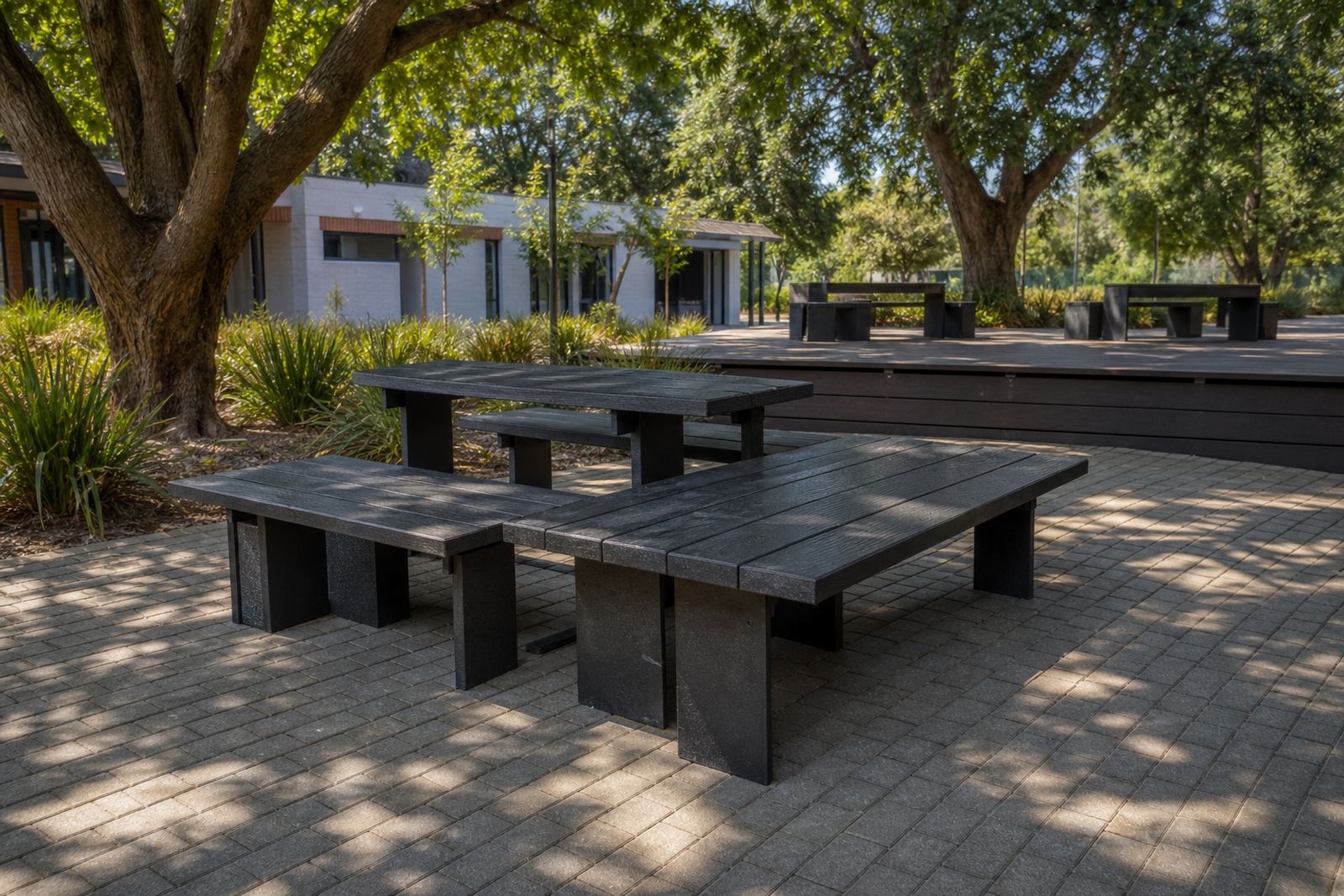
Most schools need more than one seating type. A junior break area may work best with short rows of benches near the tuckshop or play field, while senior learners often prefer longer runs of seating near shade and open courtyards. Staff and visitors may need a separate waiting area near reception or a hall entrance.
It helps to divide the site into zones before ordering materials. Look at the areas below and decide what each one must do:
- Break-time seating near the canteen or tuckshop
- Quiet seating for reading, counselling or supervision
- Waiting benches near admin, security or the front gate
- Assembly overflow seating for events and speech days
- Walkway pause points along long campus routes
Once the zones are clear, the bench count and spacing become easier to plan. A school in Stellenbosch with several courtyards may need small clusters, while a larger campus in Johannesburg might need longer lines of seating to manage movement between blocks.
Keep pathways open and supervision clear
School seating should never create blind corners or block the routes learners use most. Leave enough clear space for movement around each bench, especially where pupils walk in groups between lessons. In narrow passages, one badly placed bench can slow the entire flow and create crowding at changeover time.
Supervision is just as important. Staff need clear sight lines across seating areas, entrances and play spaces. Benches placed too close to walls, planters or high screens can make it harder to monitor behaviour. In many schools, it works better to arrange seating in shallow arcs or straight lines facing open ground so that adults can see what is happening from a distance.
Where load-shedding affects lights or security systems, simple layouts are often better than complicated ones. Clear routes and visible gathering points make the site easier to manage after dark or during early morning arrivals.
Choose layouts that fit weather, shade and cleaning routines
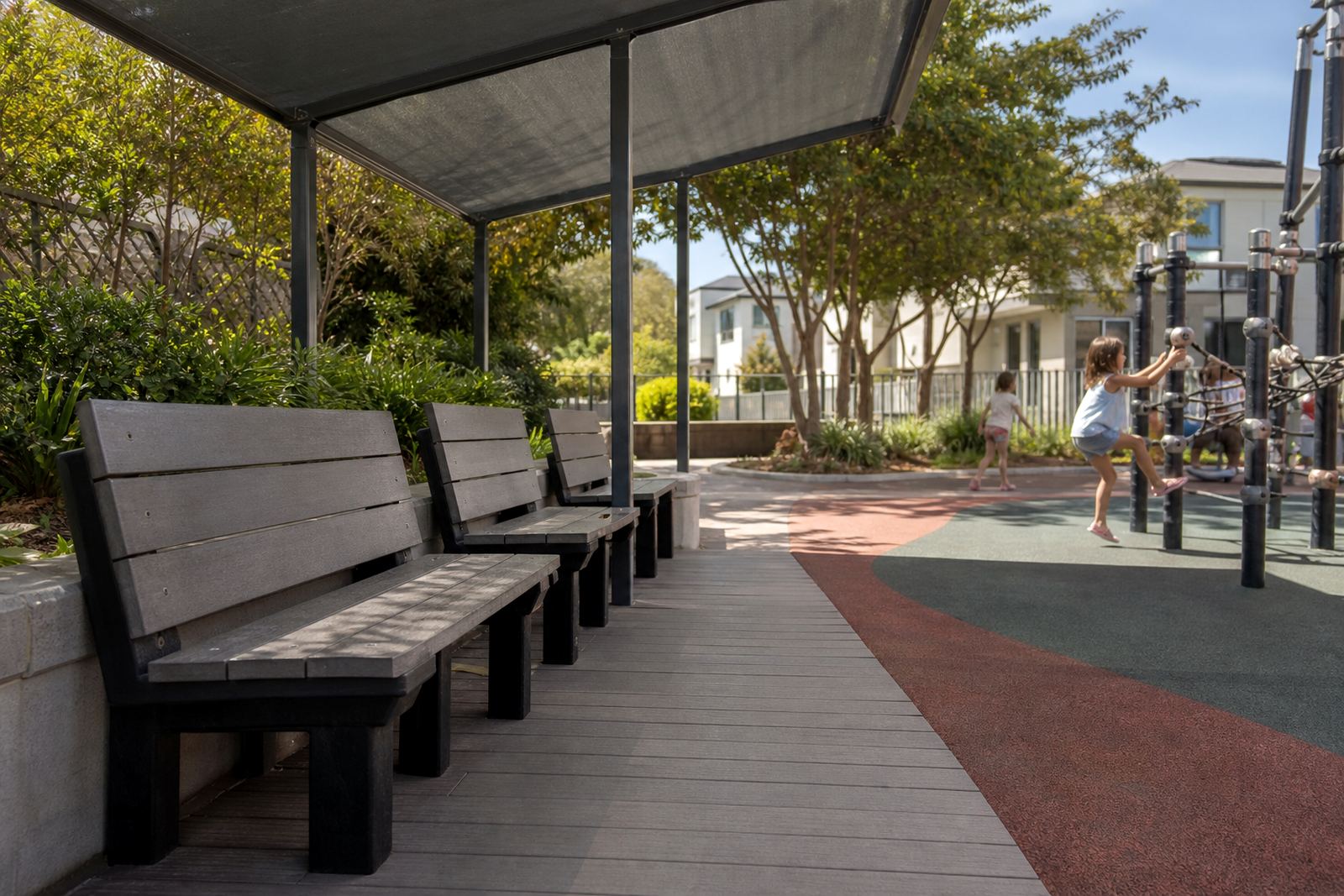
Bench placement should follow the climate as much as the floor plan. In hot inland areas, position seating under shade trees, covered walkways or roofed edges where possible. In coastal towns, choose spots where salt air and wind will not keep the area damp for too long. In rainy places, avoid low points where water collects after storms.
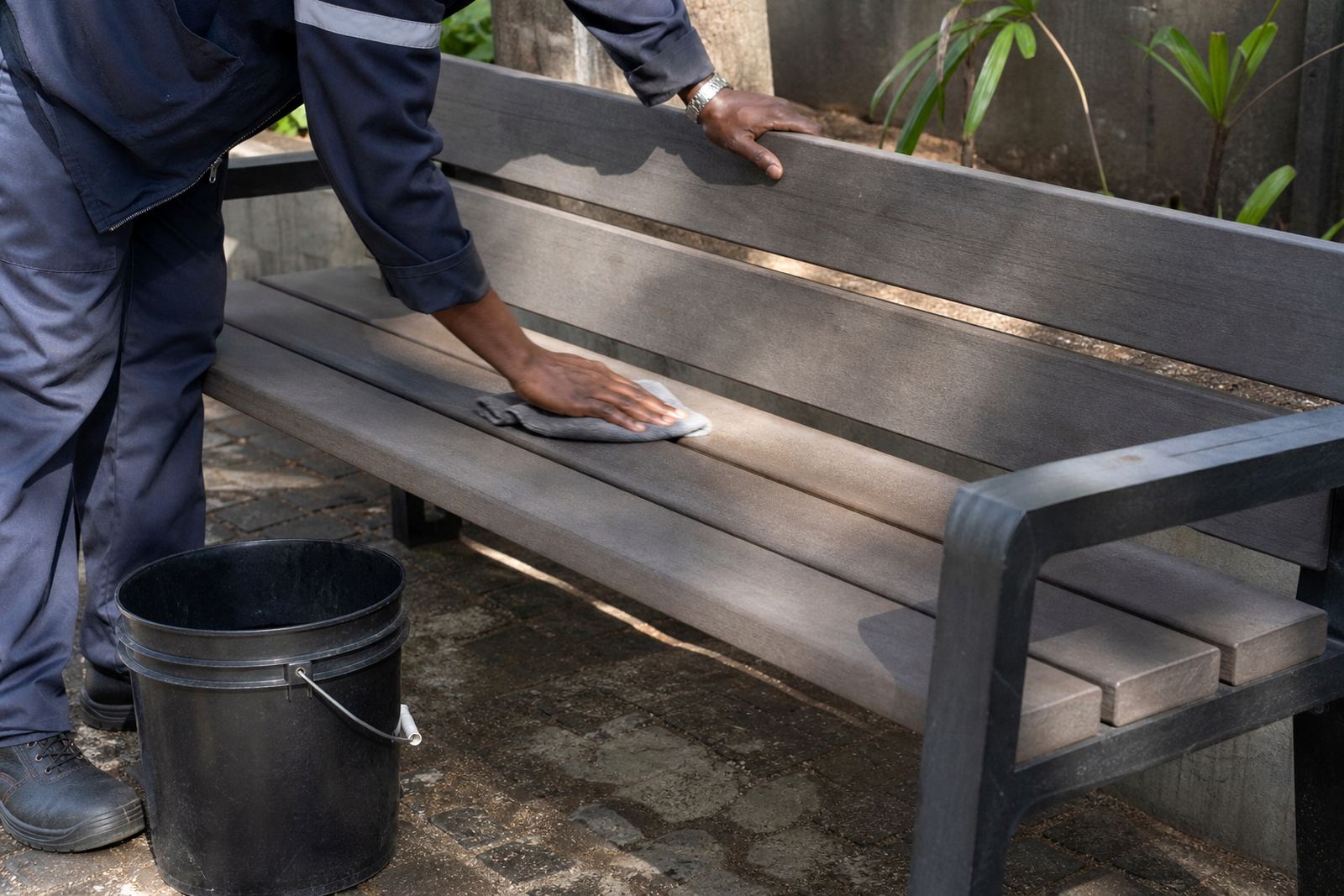
Recycled plastic lumber is useful because it handles regular exposure without the same upkeep as timber. That makes it a practical option for schools that need surfaces they can wash down without worrying about warping or rot. It also suits areas near gardens, sports fields and canteens where spills and mud are common.
- Place benches on level ground so they stay steady and safe
- Keep them away from puddling areas and blocked drains
- Use shade where learners must wait for longer periods
- Allow access for sweeping, mopping and hose cleaning
In places such as Paarl and Somerset West, where heat and sun can be strong, shaded seating can be used more often through the day. In Durban and George, drainage and moisture are usually the first things to check before final placement.
A local example from a busy Cape school campus
Consider a school in Cape Town with a main courtyard, a tuckshop, and two long corridors leading to sports grounds. The school wants benches for break time, but it also needs to keep the central walkways open between periods. A practical layout would place shorter bench runs along the courtyard edges, leave the centre clear, and add a small waiting area near the admin entrance for parents and visitors.
That kind of setup reduces crowding in the middle of the campus and gives learners space to sit without blocking movement. It also makes supervision easier because staff can see seated groups from several directions. For larger gatherings, the same benches can support event seating without needing to be moved every time.
Schools in Bellville or Stellenbosch often have older buildings and tighter courtyards, so the layout has to work around existing walls, steps and trees. In those cases, measured placement matters more than adding extra seating everywhere. A few well-placed benches can do more for order than a larger number scattered without a plan.
Bench installation, finishing and future changes
Once a layout is approved, the next step is making sure the benches are fixed or positioned correctly for daily use. On school sites, that often means checking ground levels, edge clearances and how the seating meets paving, lawns or covered areas. A neat finish matters because pupils use the same paths every day and uneven edges can become wear points quickly.
Schools should also think ahead. Seating needs may change as enrolment grows, classrooms shift, or new gates are added. That is why modular planning helps. If the layout is designed well, benches can be added, repaired or moved without starting over. Refurbishment and component replacement are useful where a site wants to extend the life of existing seating instead of replacing everything at once.
For campuses in Johannesburg, Durban and Cape Town, trade support is often most valuable when the school needs one supplier to handle site measures, delivery coordination and installation planning. It keeps the process straightforward and helps avoid delays during term time.