
Start with the way people will use the space
A picnic area is not just a place to put a bench and call it done. People arrive in groups, children run ahead, staff need somewhere to sit on break, and maintenance teams need clear access for cleaning. Good planning starts with the route people take from parking, paths, ablution blocks, or event lawns to the seating itself.
In Cape Town, for example, a coastal site in Paarden Eiland or Milnerton may need seating that stays tidy through salt air and wind, while an inland property in Johannesburg may be more concerned with sun exposure and dust. The same material can work in both places, but the layout should change to suit the site. Benches placed too close together can feel cramped, and a deck that is too small becomes a bottleneck during lunch breaks or weekend visitors.
- Allow clear walkways around each seating cluster
- Keep sightlines open for safety and supervision
- Place tables and benches where shade is available, or where future shade can be added
- Leave enough space for cleaning, sweeping and waste removal
Why recycled plastic lumber suits outdoor seating
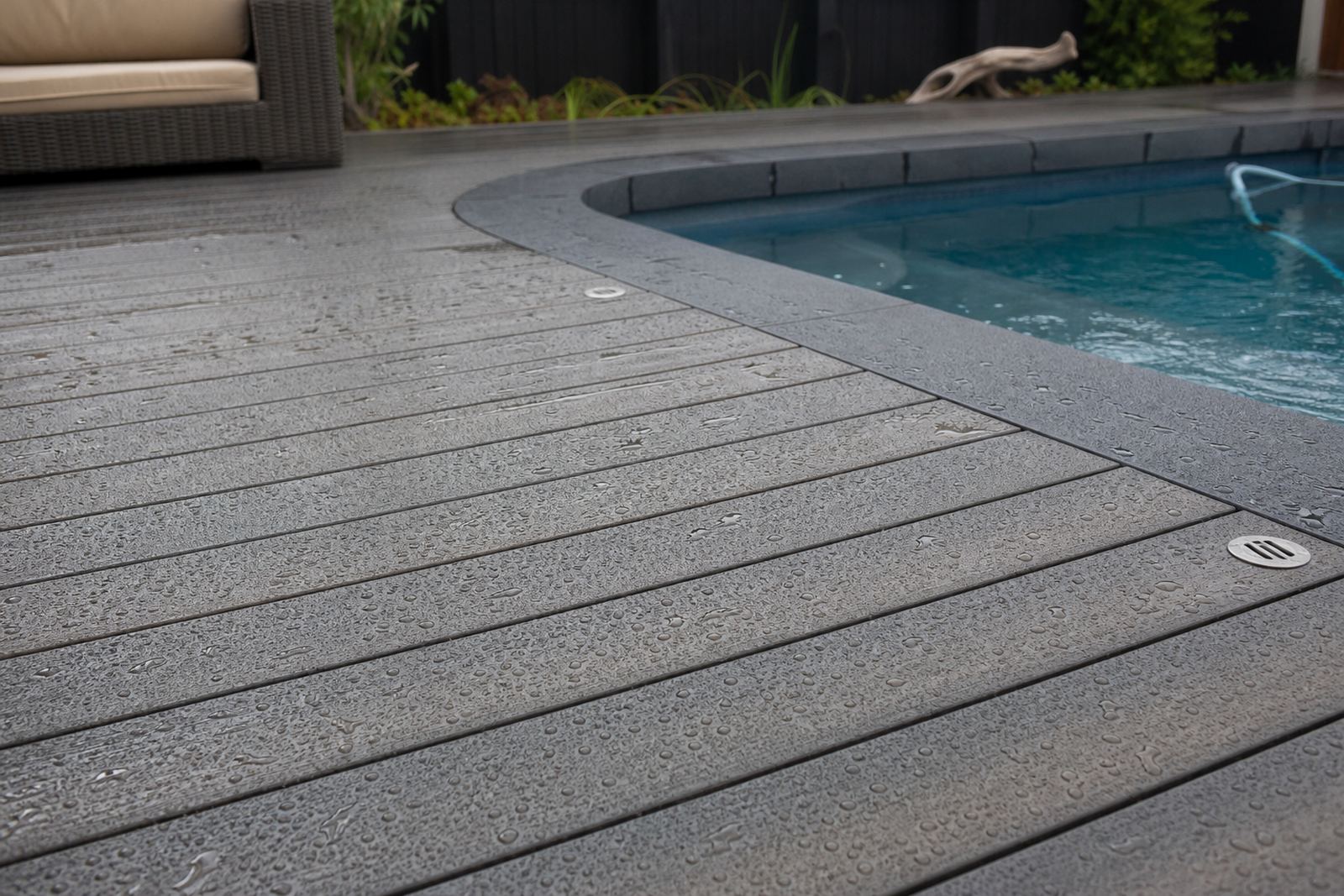
Recycled plastic lumber is widely used for decking and benches because it handles moisture, sun and frequent use without the same upkeep needs as timber. It does not splinter like untreated wood, and it is well suited to places where people sit in wet clothes after swimming, or where sprinklers and rain keep the ground damp. That makes it a practical choice for picnic zones near coastal promenades, school grounds, visitor areas and municipal parks.
It also helps where maintenance teams have limited time. Traditional timber can need sanding, sealing, repainting or replacement of worn pieces. Recycled plastic lumber usually needs basic cleaning and regular checks on fixings. For busy facilities that is a big advantage, especially when load-shedding or staff shortages already make routine upkeep harder than it should be.
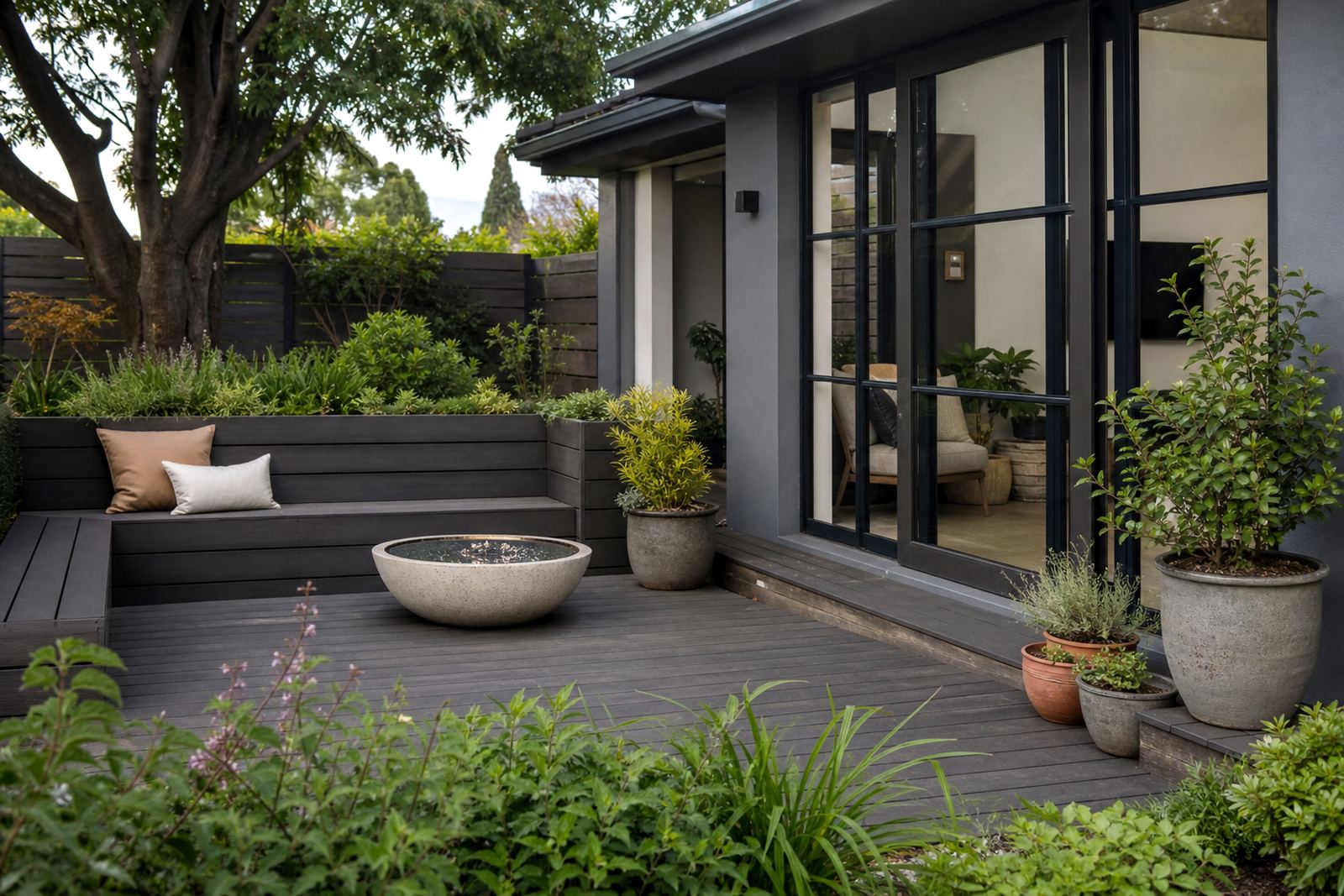
For commercial users, the visual finish matters too. Benches and decking should look neat and stay that way through daily use. A well planned layout with consistent edge finishing gives the area a calmer, more orderly feel, which is useful in hospitality spaces and public rest zones alike.
Planning for Cape Town weather and coastal conditions
Outdoor seating in Cape Town must cope with strong sun, salt in the air and gusty conditions in open areas. In places like Paarden Eiland, Somerset West, Bellville or Stellenbosch, the main challenge is usually to choose materials and fixings that hold up over time while still looking clean. Recycled plastic lumber is a sensible fit where you want a low-maintenance solution for a picnic area, canteen yard, or shared break space.
Bench placement matters just as much as the material. A bench against a wall can trap heat. A bench facing the prevailing wind can be uncomfortable. In many cases it is better to create small clusters with some shelter, rather than one large exposed area. If the site has drains or slopes, the deck should be planned so water runs away properly and puddles do not form after rain.
- Choose locations that are level or can be made level with proper substructure work
- Keep the deck above wet ground where possible
- Use spacing that allows airflow under the seating and deck surface
- Plan for cleaning access after windblown sand, leaves or food litter
A layout that works for schools, estates and public parks
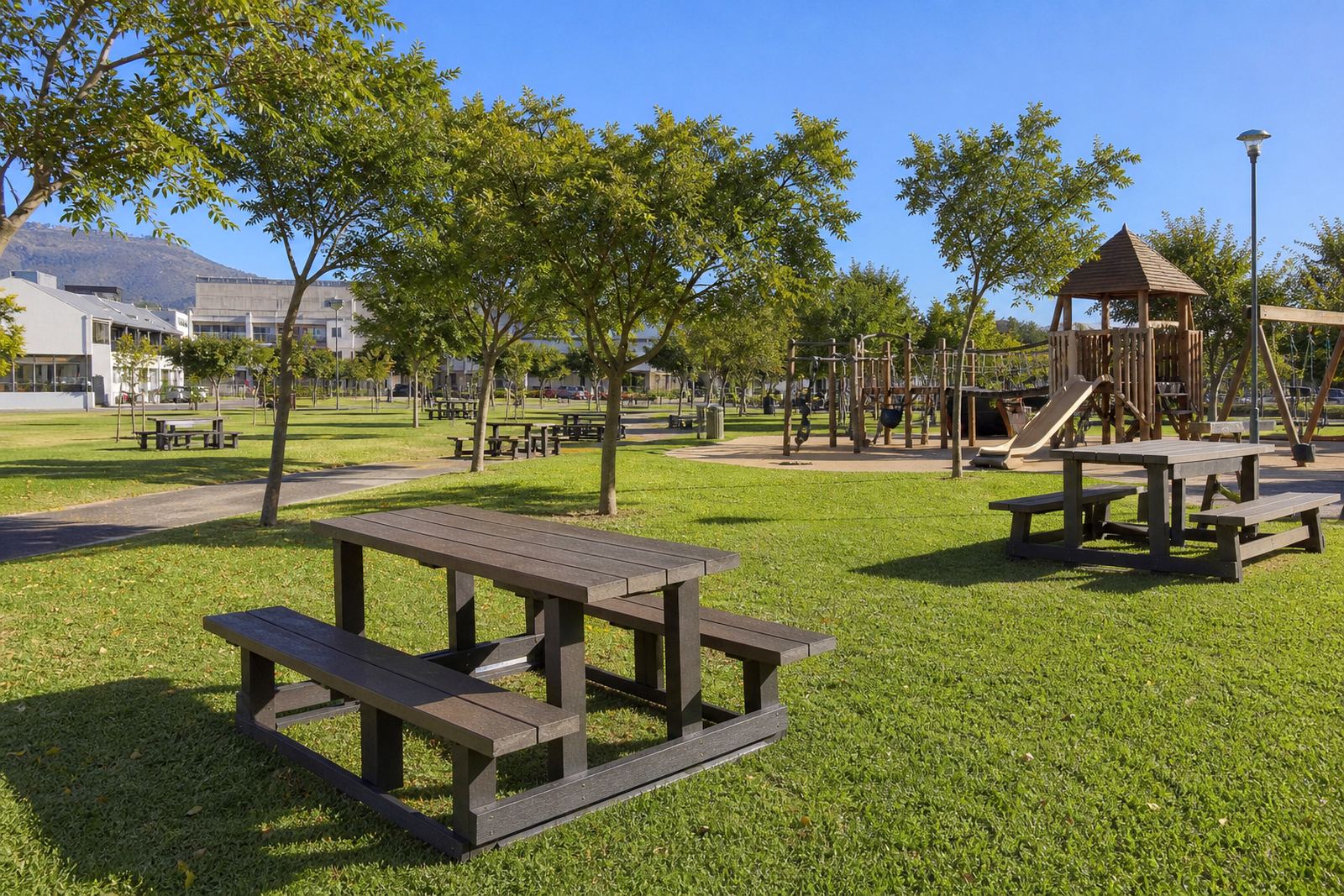
Different users need different seating layouts. A school picnic point may need easy supervision and quick cleaning. A lifestyle estate may want attractive rest zones beside walking routes. A municipal park may need durable benches that can handle higher foot traffic and occasional rough use. The point is to design for the actual setting, not just the idea of a picnic area.
In George and Durban, where rain and humidity can be part of daily life, drainage and air movement become important. In Johannesburg, direct sun and dry conditions may push you to include more shade structures and more comfortable spacing. The seating itself should feel practical from the first day of use, not just on the handover date.
When the site is large, think in zones. One area can serve lunch breaks, another can be for family picnics, and a third can be a quiet rest point for older visitors. That gives the space more value and reduces crowding.
What to include in a proper site plan
A good seating plan is more than a sketch. It should show where people walk, where deliveries arrive, where cleaning takes place, and where the deck or benches will sit in relation to trees, walls and services. If the ground slopes or the soil is soft, the substructure needs to be planned carefully before any installation starts. That is where a proper site measure and layout plan saves time later.
For trade clients and property managers, the most useful projects are the ones that are simple to maintain. It helps to choose bench sizes that suit the number of users, and deck finishes that are easy to hose down or sweep. Small details like edge finishing, safe corners and easy access for repairs make a real difference in daily use.
- Confirm site levels and access routes before ordering materials
- Plan for bins, lighting, shade and nearby services
- Allow for replacement of individual components if a section is damaged
- Build in enough space for future changes, such as more benches or a larger seating zone
Local example: a rest zone for a mixed-use site
Take a mixed-use site in Somerset West as an example. Staff need a place to sit at lunch, visitors need a tidy waiting area, and the owner wants the area to look presentable without constant maintenance. A compact deck with two or three bench groupings can solve that, provided the layout leaves room for movement and cleaning. If the site is near landscaped areas, recycled plastic lumber helps keep the space practical when watering and weather make the ground damp.
In a case like that, the best result usually comes from a simple structure, a careful measure, and a clear delivery plan. If the seating is installed near a busy entrance, the finishing should be neat and the edges should not catch shoes or trolley wheels. A good setup should feel calm and easy to use, not overcrowded.
This kind of planning also works for George, Paarl and Durban sites where visitor flow can change from weekday to weekend. The aim is always the same: create a place where people can sit comfortably and the site team can keep it in order without extra fuss.
Keeping benches and decking in good condition
Once the seating is installed, the real value comes from straightforward upkeep. Recycled plastic lumber does not need the same paint cycles as timber, but it still benefits from regular washing, inspection of fixings and prompt replacement of any worn parts. If a bench slat or deck component gets damaged, it is better to replace that piece early rather than wait for the whole section to look tired.
For busy sites, care advice should be part of the handover. Staff should know what cleaning products to avoid, how often to check fixings, and who to call when something needs attention. That keeps the picnic area looking decent through summer heat, winter rain and the odd rough weekend crowd.
When picnic and rest zones are planned properly, they become part of the daily rhythm of the site. People use them without thinking, and that is usually the sign that the layout has been done well.