
Why Low-Water Planting Needs the Right Hard Edges
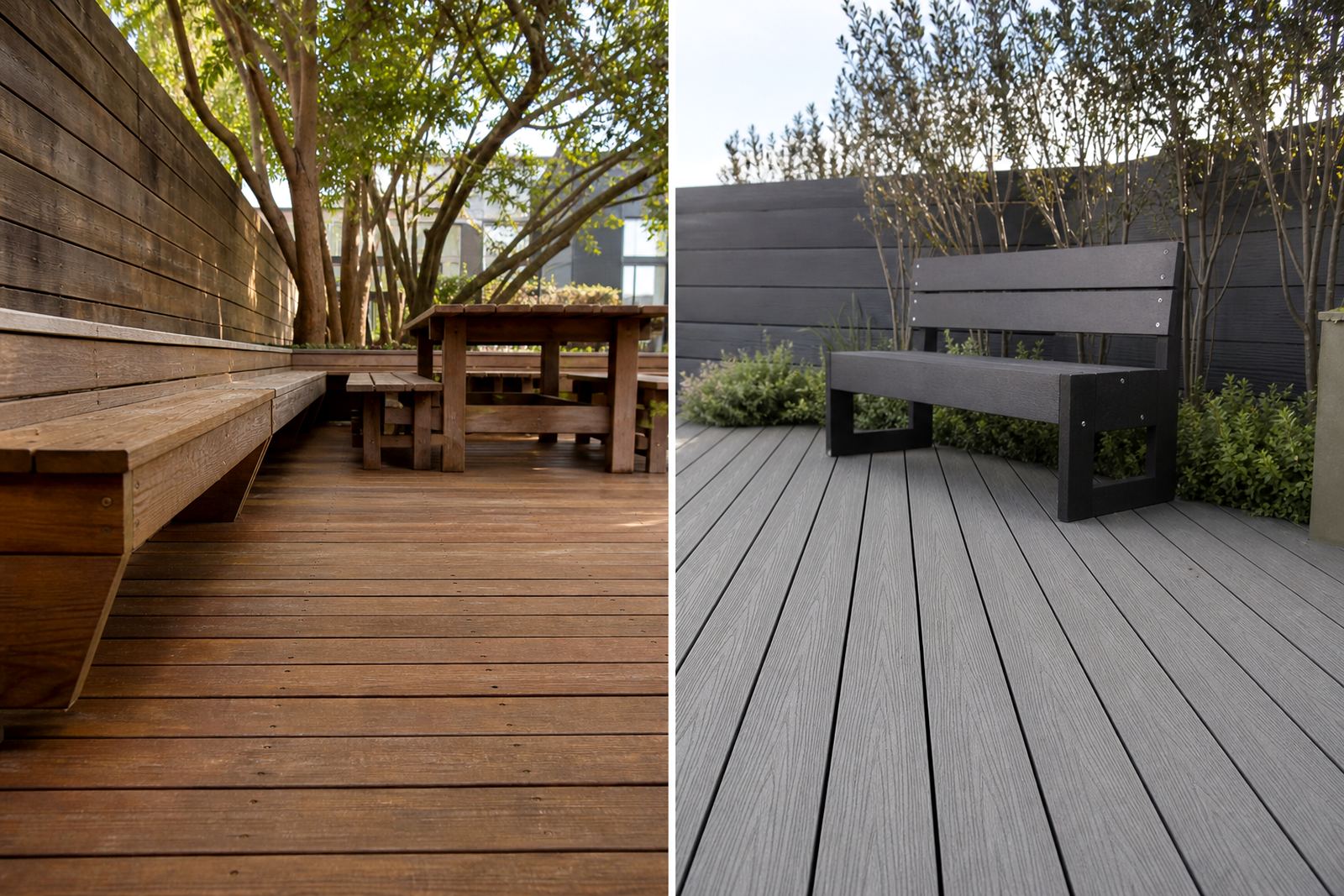
Waterwise planting often gets all the attention, but the hard edges around it matter just as much. If a planting bed runs up against a deck, bench base or walkway, the materials used there should cope with splashing, sun, coastal air and everyday cleaning. Recycled plastic lumber is a sensible fit because it does not absorb water like timber, so it is less likely to swell, split or cup after wet winters or repeated washing.
In South African conditions, that matters from Paarden Eiland to George and Durban. Salt air, summer heat and municipal watering restrictions all influence how often a space gets attention. A planting scheme with succulents, aloes, restios or indigenous grasses can stay looking orderly when paired with decking and seating that hold their shape and do not need sanding, sealing or staining every season. It keeps the focus on the planting, not on repairs.
Pairing Bench Seating With Drought-Tolerant Planting Beds
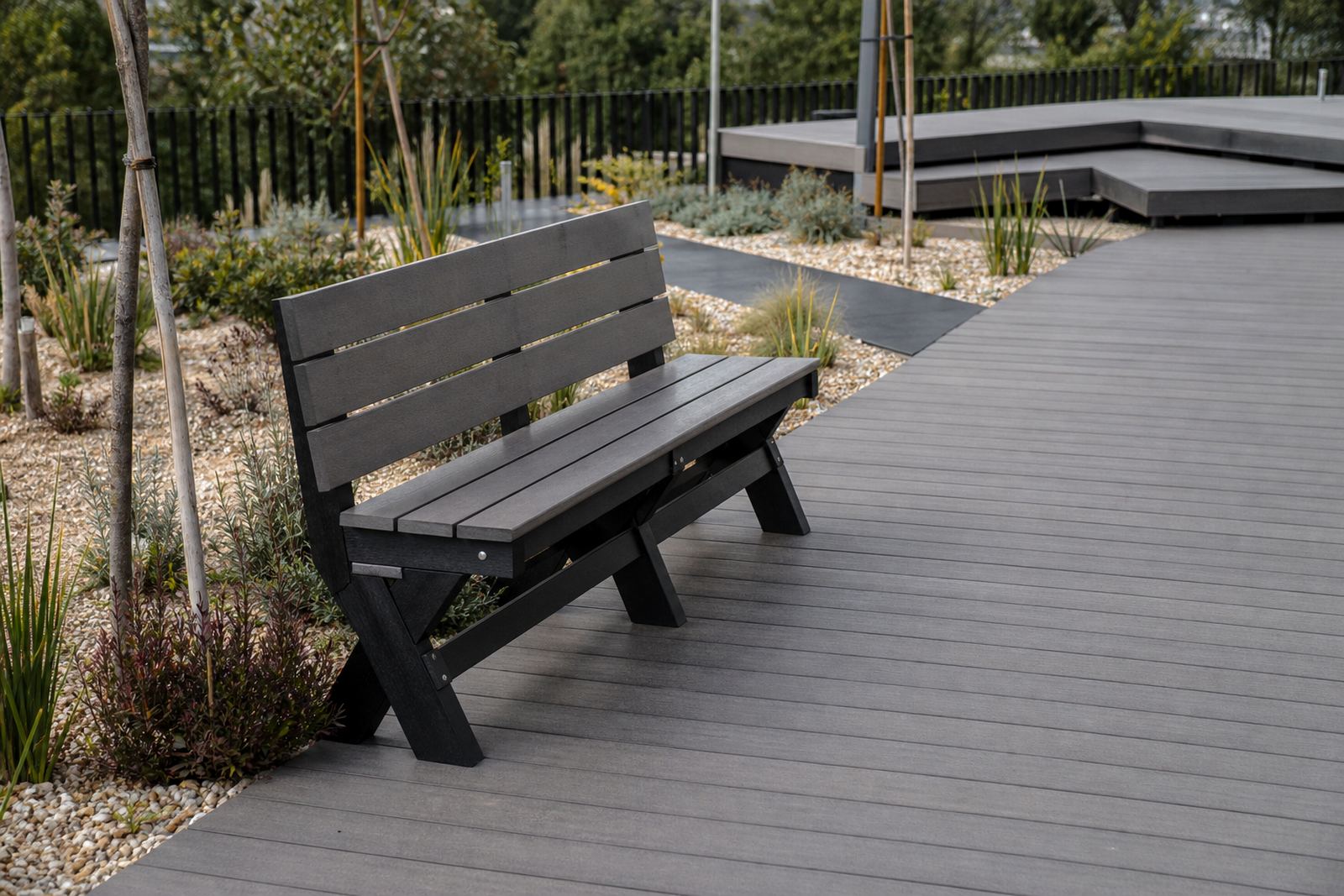
Benches make a planting area usable. A path on its own is just a route, but a bench creates a place to pause, chat, or wait for a child after sport. Recycled plastic benches work especially well beside low-water beds because the material can handle damp ground, irrigation overspray and regular cleaning in public or private settings. That makes them suitable for courtyards, school grounds, retail forecourts and apartment gardens.
When planning bench placement, think about shade, line of sight and how people move through the space. A bench should not sit where it blocks maintenance access to drippers, mulch or inspection covers. In a small Cape Town courtyard, for example, a bench can be set against a wall near a gravel bed planted with spekboom and dwarf clivia, giving people a place to sit without trampling the planting. That simple choice can reduce wear on the whole area.
- Place benches on level, well-drained ground to avoid shifting after rain.
- Leave enough space for wheelbarrows, mowers or access to irrigation valves.
- Use planting that tolerates reflected heat near paving and walls.
- Keep bench ends clear of dense shrubs so cleaning is easier.
Decking That Works Beside Gravel, Mulch and Indigenous Plants
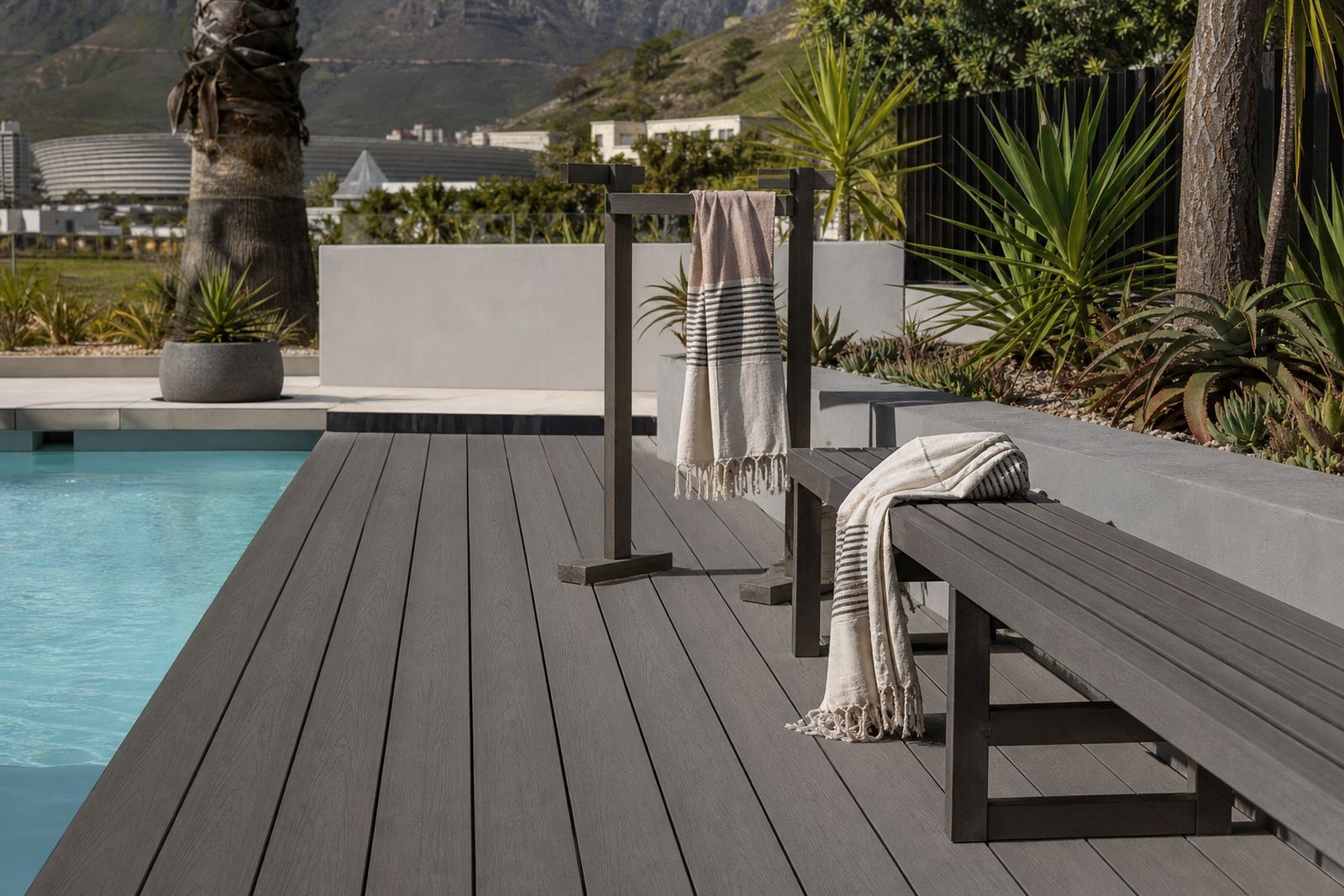
Recycled plastic lumber decking gives a neat transition between planted areas and circulation zones. It can be used for raised walkways, small terraces, pool surrounds or garden platforms where timber would normally need more upkeep. Because the material is moisture resistant, it suits spaces that get morning dew, mist from coastal weather or frequent hose-downs. That makes it practical for Stellenbosch wine estates, Durban family homes and rooftop areas in Johannesburg where maintenance teams want fewer callouts.
For waterwise landscapes, decking is strongest when it supports the planting rather than competing with it. Warm-toned mulch, grey gravel and green foliage all sit well next to a clean deck edge. A narrow strip of decking can also help keep soil from washing into pathways during heavy summer storms. If the layout includes sloped ground, the detail work matters, including the fixing points, edge finishing and how water runs off at the perimeter.
- Use deck levels to separate soft planting from high-traffic areas.
- Match board direction with the main movement line for a cleaner look.
- Allow drainage gaps so water does not pool beside the planting bed.
- Finish edges neatly where the deck meets lawn, stone or gravel.
Local Plant Choices That Sit Well With Plastic Lumber
The best planting partners for recycled plastic decking and benches are species that cope with heat, wind and lower water use. That includes many indigenous and hardy Mediterranean-type plants that suit South African gardens. In coastal suburbs, choose plants that tolerate salt spray and occasional wind burn. Inland, focus on species that can handle hotter days and longer dry spells. The point is to build a space that looks good with less intervention, not one that needs constant rescue.
Good planting also keeps the hard materials looking better for longer. Groundcover around a bench base reduces dust splash. Clumps of grasses soften the edge of a deck and make the space feel more settled. Succulents can be used near steps or borders where irrigation is limited. In Paarden Eiland and Bellville, where commercial spaces often need both presentation and practicality, this kind of pairing keeps upkeep under control and avoids the tired look that can come from thirsty lawns and weathered timber together.
- Choose plants that suit the local rainfall pattern rather than forcing extra watering.
- Use mulch to retain moisture and reduce weeds around seating areas.
- Keep irrigation lines simple so repairs are easier after load shedding interruptions or pump issues.
- Plant in clusters for a fuller look with less surface area to water.
A Practical Cape Town Example From Coastal Conditions
On the Atlantic side of Cape Town, a small shared courtyard might need a seating area, a raised deck and planting that can manage salty air and drying summer winds. A sensible layout could use recycled plastic lumber for a compact deck off the living area, with a bench set near a low bed of coastal-friendly planting. The deck gives a clean standing surface, while the planting softens the space and reduces glare from paving. With the right layout, the courtyard feels calmer and easier to maintain.
For a body corporate or a homeowner in Somerset West, the same approach can work around a braai patio or pool edge. For a school in George, it might be a reading nook beside a planted verge. The material stays consistent, but the arrangement changes to suit the site. Because the team handles site measures, layout planning, delivery coordination and installation, the finished result can be matched to the space instead of forcing a one-size-fits-all solution. That is where practical detail saves time later on.
Keeping the Space Neat Over Time
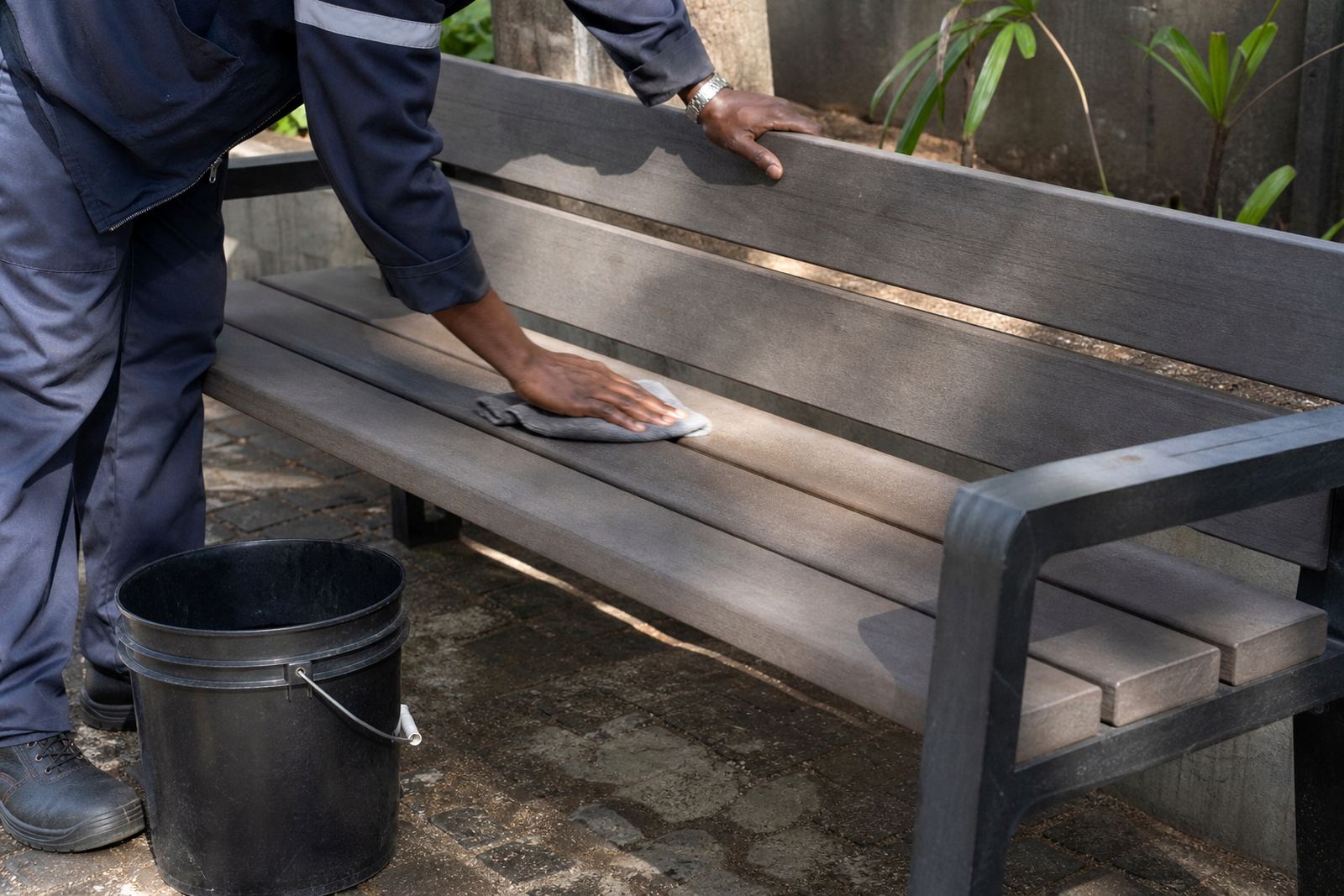
Waterwise landscaping is not just about saving water on day one. It is about keeping the area orderly through winter rain, summer heat and ordinary wear. Recycled plastic products help because they are designed for long service and minimal routine care. A quick wash, an occasional check on fixings and sensible edge finishing usually go further than regular sanding or repainting. That means the garden can stay focused on the planting plan, not on constant maintenance jobs.
For properties across Cape Town, Stellenbosch, George, Johannesburg and Durban, this can make a real difference in shared spaces where maintenance budgets are tight. Trade support matters too, especially when a project needs component replacement, refurbishment or advice on care after installation. The aim is straightforward: keep the planting low-water, keep the hard surfaces durable, and make the whole space easier to live with year after year. When that balance is right, the garden works harder and asks for less.