
Why Low-Maintenance Matters in South African Outdoor Spaces
Outdoor areas in South Africa take a fair amount of punishment. In Cape Town you get salt air and strong wind off the coast, while inland sites deal with harsh sun, dust and wide temperature swings. Add weekend use, children, pets and the odd spillage, and a surface that needs constant sanding, sealing or repainting quickly becomes a burden.
That is why many property owners now look for materials that stay steady with basic cleaning rather than frequent treatment. Recycled plastic lumber suits this approach well because it is made for outdoor use and does not rely on the same upkeep cycle as traditional timber. It is a practical choice for decks, seating and walkways where appearance matters, but so does day-to-day convenience.
For sectional title schemes, guest properties, schools and commercial yards, lower maintenance also helps with planning. Fewer touch-ups mean less downtime, less disruption and less pressure on caretakers who already juggle a long list of jobs.
What Recycled Plastic Lumber Offers on Decks and Benches
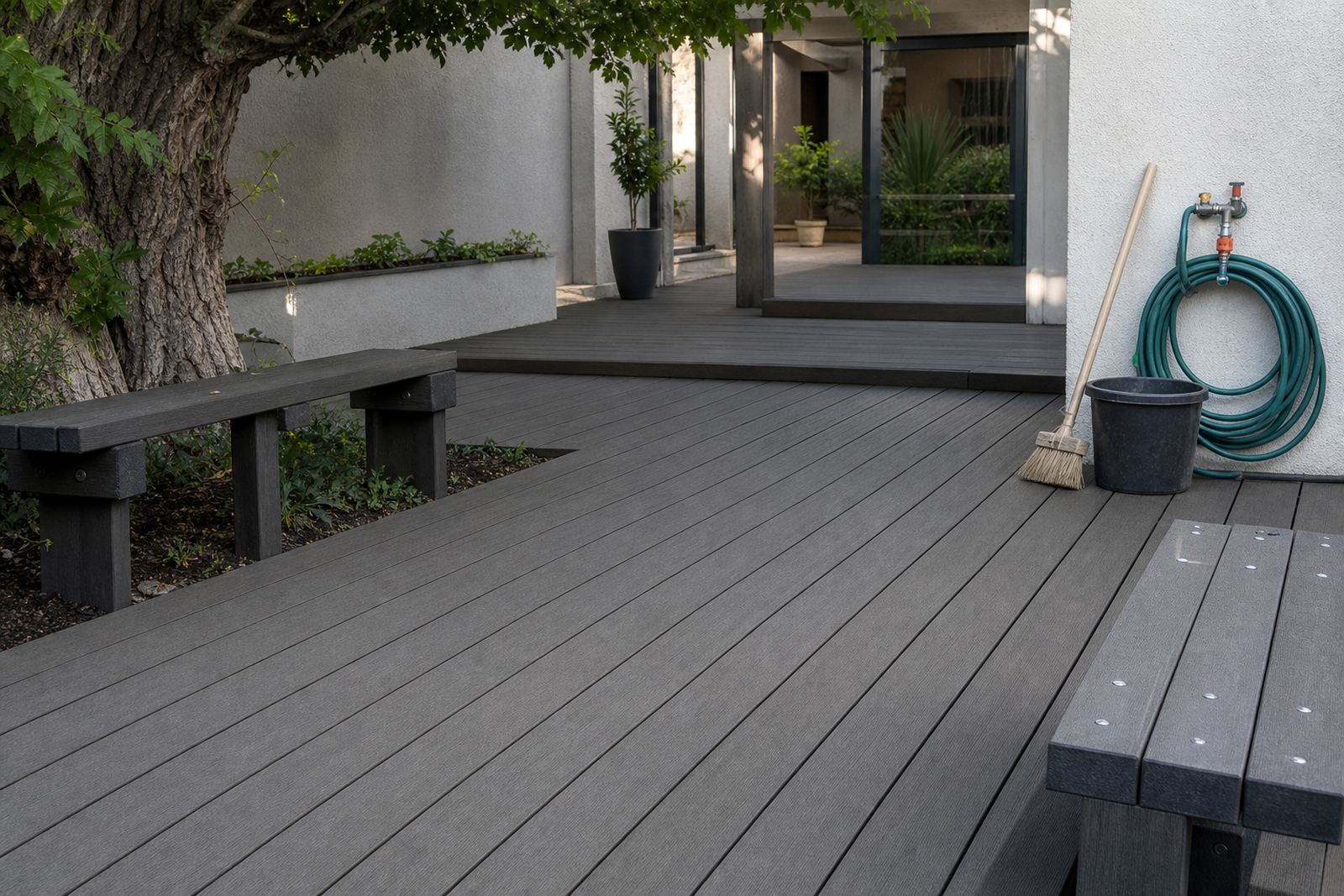
Recycled plastic lumber is used for outdoor decking and benches because it handles moisture and routine wear without the same issues found in natural wood. It does not need regular painting to remain serviceable, and it is well suited to places where cleaning with water and mild detergent is part of the normal routine. In coastal towns like Stellenbosch, Somerset West and George, that matters a lot, especially where humidity and damp mornings can affect timber over time.
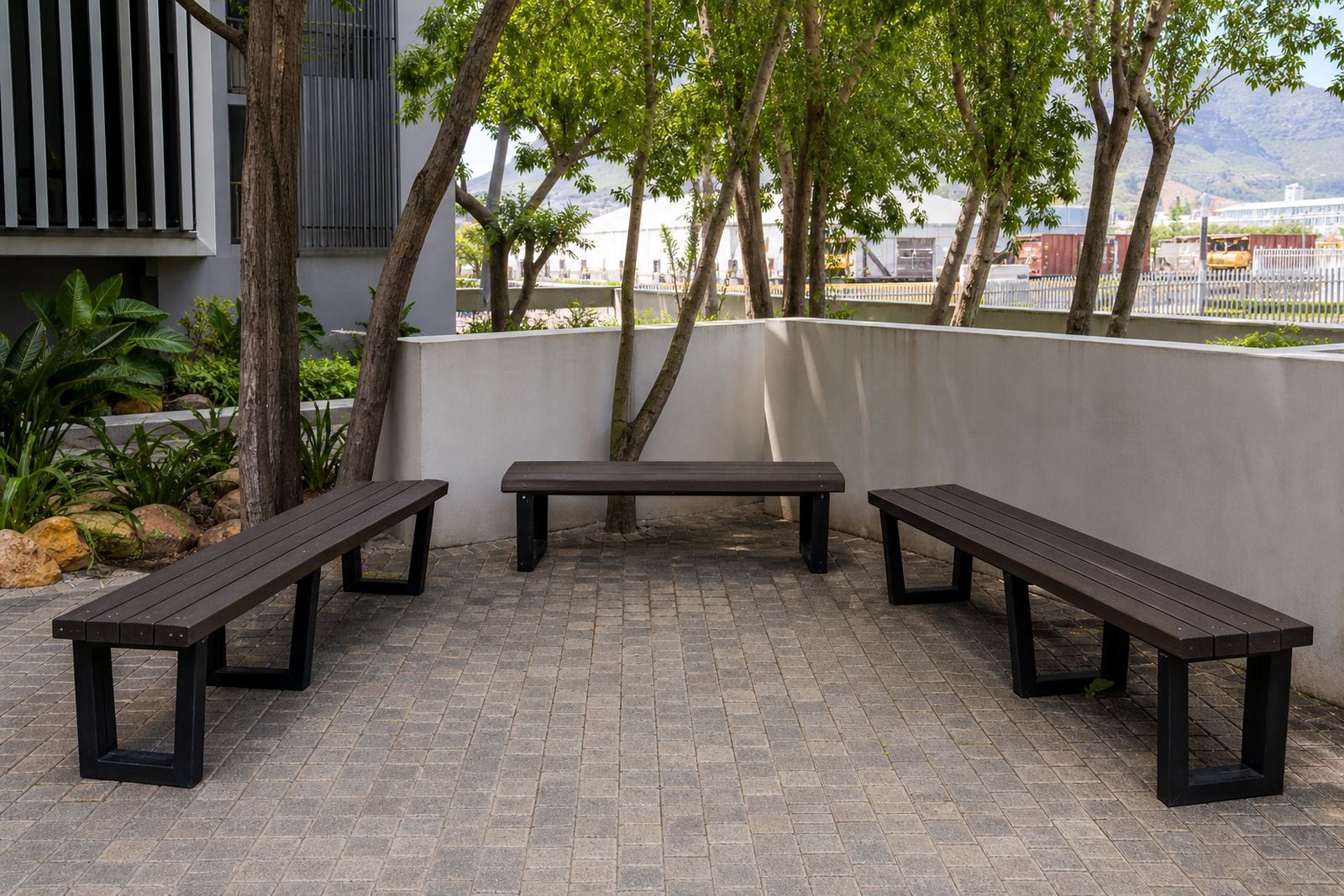
It is also useful where appearances need to stay neat with minimal effort. Boards can be cut and fixed in layouts for patios, entertainment areas, walkways and pool surrounds. Benches made from the same material give a consistent look across the site, whether the project is a private courtyard in Paarl or a public space in Durban.
- Suitable for outdoor exposure with simple cleaning
- Useful in residential, commercial and public settings
- Works well where moisture and coastal conditions are a concern
- Supports a tidy finish without regular coating schedules
Care Routines That Keep Outdoor Areas Looking Tidy
The main advantage of a low-maintenance outdoor area is not that it needs no attention at all, but that the attention is simple. A basic routine keeps decks and benches in good order and avoids small issues becoming larger ones. For most sites, that means sweeping off sand and leaves, washing down dirt, checking fixings and clearing drainage points after heavy rain.
It also helps to set a rhythm for seasonal checks. Before winter in Cape Town, for example, it makes sense to inspect joints, edges and any shaded areas where debris collects. In hotter inland areas, checking for movement after long dry spells is just as important. A quick once-over every few months can save a lot of trouble later, and it does not require specialist treatment products.
- Sweep regularly to remove grit and organic matter
- Wash with water and a mild cleaning solution when needed
- Check edge finishes and fixings after heavy use
- Keep drainage clear so surfaces dry properly
Planning for Sites That Need Practical Access and Seating
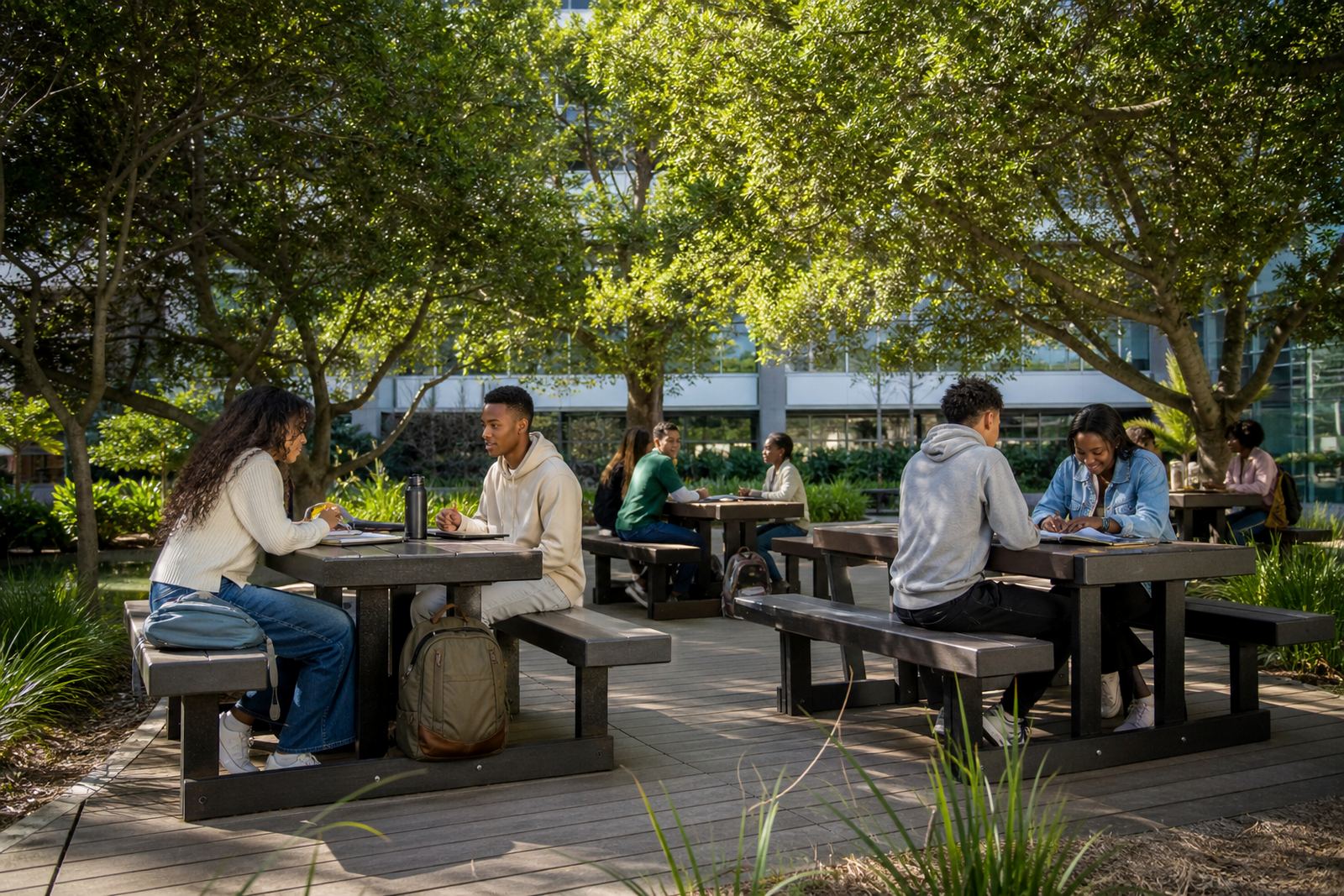
Good outdoor planning starts with how people will move through the space. A deck by a braai area needs different detailing to a boardwalk at a commercial property, and a bench at a school entrance needs different placement to one in a garden setting. Site measures and layout planning help make sure the finished area is safe, usable and suited to local conditions.
In places where municipal rules or body corporate requirements matter, it is worth thinking about access, edges, fall protection and how the area will be cleaned. Benches should not block pathways, and decking should allow for sensible drainage and maintenance access. That applies whether the project is in Bellville, George or Johannesburg.
Trade support is especially useful when several teams are involved on one site. A clear layout, material quoting and delivery coordination reduce delays and help the work move in order, which matters on projects with tight time frames or limited access hours.
A Local Example: Coastal Courtyard in Cape Town
Take a small coastal courtyard in Paarden Eiland as an example. The owner wants an outdoor seating area that can cope with sea air, occasional windblown sand and regular use by staff and visitors. Traditional timber would need repeated sealing and closer upkeep, while a low-maintenance recycled plastic lumber finish gives the space a more practical setup.
With careful layout planning, the deck can be kept clear of splash zones and fitted with easy-to-clean edges. A matching bench gives people a place to sit without adding another item that needs varnishing or repainting. After installation, the routine is simple: sweep, wash down, check the fittings and keep the drainage open. That is enough for most everyday conditions.
This kind of approach works just as well for townhouse complexes in Somerset West, offices in Bellville and hospitality sites in Stellenbosch. The details change, but the aim stays the same. Make the outdoor area useful, keep the care routine manageable and avoid materials that demand constant attention.
How Plastimber Supports Residential and Trade Projects
Plastimber works from Paarden Eiland in Cape Town and serves clients across South Africa, including Cape Town, Stellenbosch, George, Johannesburg, Durban, Paarl, Somerset West and Bellville. Since 2009, the focus has been on practical outdoor solutions that suit local conditions and everyday use. The team handles site measures, material quoting, delivery coordination, deck installation, bench installation, edge finishing, refurbishment, component replacement and care advice.
For trade clients, that support can make planning easier from the start. The production supervisor, logistics planner and installation manager help keep the sequence in order, while the customer support team and sales consultant assist with enquiries through the contact form. Whether the job is a new deck or a refurbishment of an older seating area, the aim is to keep the process straightforward and the result easy to maintain.
- Site measures and layout planning for accurate preparation
- Delivery coordination across major South African centres
- Installation and refurbishment support for decks and benches
- Care advice for long-term use in local weather conditions