
Why a backrest changes how a bench gets used
A backrest does more than add comfort. It changes how long people will sit, how they position themselves, and where the bench belongs in the space. In a park, school, apartment courtyard or office forecourt, that matters because the same bench can be used for a quick break, a proper pause, or a social spot where people stay awhile.
Recycled plastic lumber benches hold up well in South African weather, including coastal humidity in places like Cape Town and Durban. A backrest can improve support without adding much maintenance, which is helpful where timber would normally need sanding, sealing or replacement. The main question is not whether a backrest is nice, but whether the seating needs it for the way the area is used.
When a backrest is the better choice
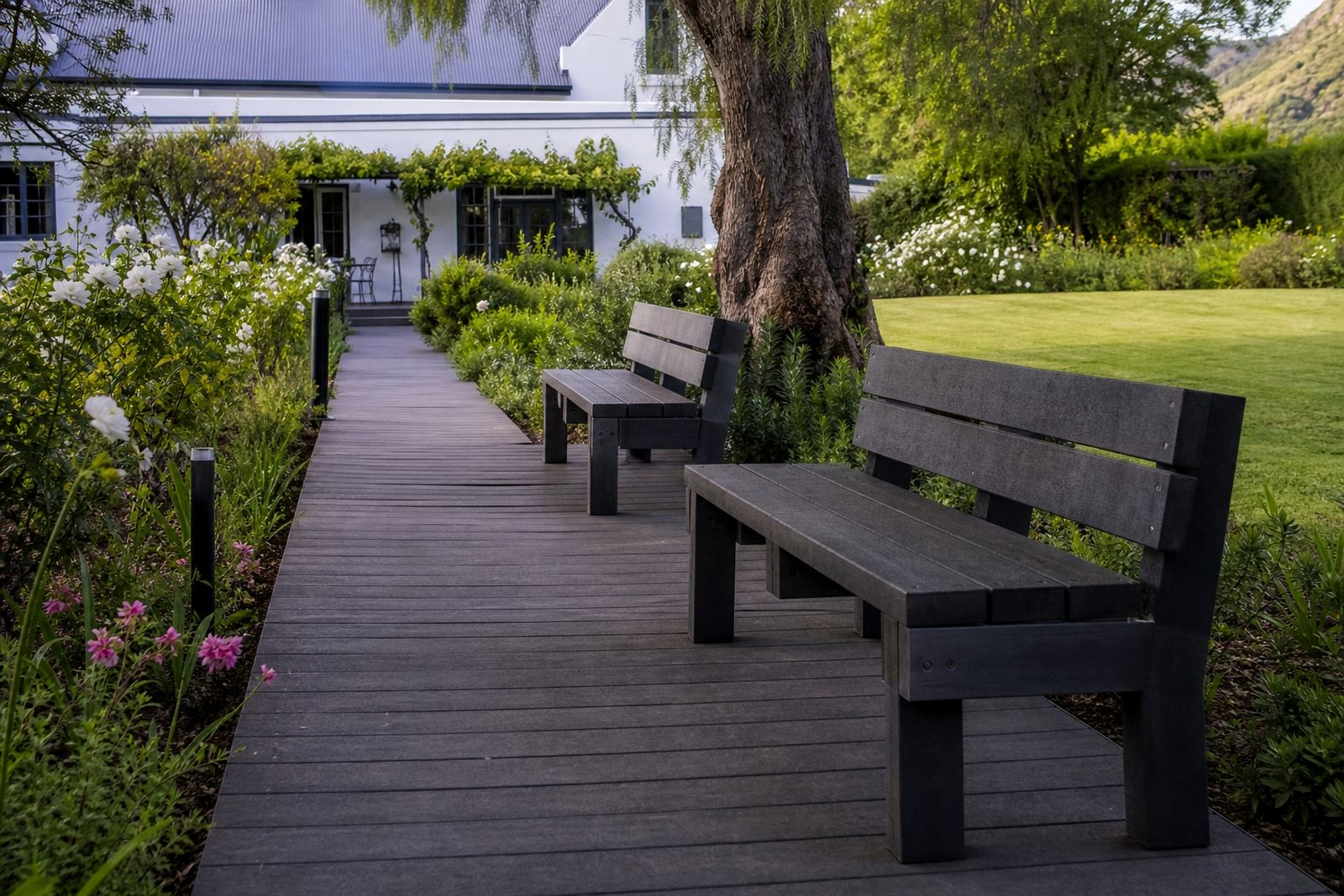
If people are expected to sit for longer periods, a backrest usually makes sense. This is common in public waiting areas, school drop-off zones, retirement complexes, body corporate gardens and retail courtyards. A supported seat is also easier for older users and for anyone who may find it hard to sit upright on a flat bench for too long.
Backrests are often worth adding when the bench sits in a fixed spot with a clear view or purpose. For example, a walkway near a building entrance in Stellenbosch or a shaded pause point in George can feel more welcoming with a simple supported seat. The backrest helps define the place, and it also encourages people to stay without crowding the edge of the seat.
- Choose a backrest when users will sit for 10 minutes or longer
- Use it in waiting areas, garden paths, schools and shared residential spaces
- Pick it where comfort matters more than quick turnover
- Consider it for older users or mixed-age seating areas
Where backless benches work better
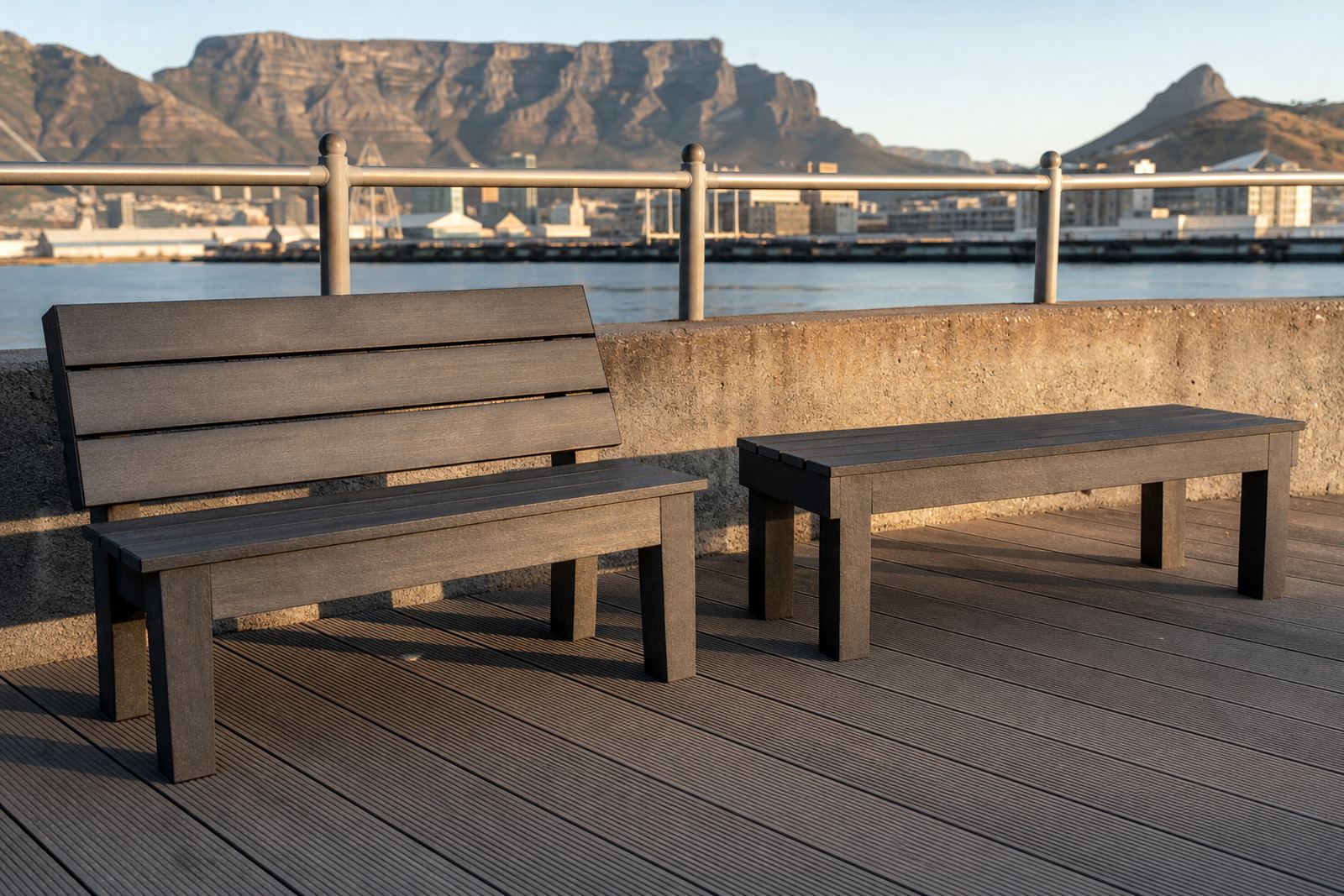
Backless seating is practical when the bench must serve more than one purpose. It can be easier to move, simpler to place around trees or planters, and less visually heavy in smaller courtyards. In open public areas, people often use backless benches as a brief stop rather than a long stay point, which can suit pathways, transport waiting areas and shared outdoor spaces.
Backless benches are also useful where access needs to work from both sides. In narrow sites or along walls, a backrest can limit how people approach the bench. A backless unit lets users sit facing either direction and can be neater where space is tight. That makes it a strong choice for some municipal or commercial areas where every square metre counts.
- Good for narrow walkways and compact courtyards
- Useful where people may sit from either side
- Often suited to quick rest points and circulation areas
- Can fit better around planters, trees or open event spaces
What recycled plastic lumber changes in the decision
Material choice affects how much value you get from either option. Recycled plastic lumber is suited to outdoor use because it does not behave like untreated timber. It handles moisture better, does not splinter in the same way, and is easier to keep clean after dust, rain or coastal air. For a bench, that matters as much as the shape.
With this kind of material, the choice between backrest and backless is mostly about comfort, layout and use. You are not trying to avoid rot or regular resealing in the same way as wood. That means the design brief can focus on people, placement and maintenance over the long term. In load-bearing terms, any bench still needs proper fixing and sensible use, so the installation method matters just as much as the seat style.
For sites in Johannesburg, Paarl or Bellville, where sun and dry conditions can be hard on many finishes, the material keeps the upkeep simple. For coastal jobs in Somerset West or Durban, the lower maintenance helps as well, especially where salt air and wet seasons can wear down ordinary fittings.
Layout details that affect comfort and access
A bench can look fine on paper and still be awkward in practice if the backrest height, seat depth or placement is wrong. That is why site measures and layout planning matter before ordering. A backrest should not block circulation, interfere with doors or create a tight corner where people cannot pass comfortably. The bench also needs enough clearance behind it for cleaning and general use.
On busy sites, small details make a big difference. A bench placed under a shaded tree can need more cleaning, while one placed against a wall may trap dampness after rain. In some municipal spaces, it helps to keep furniture clear of access routes and emergency paths. A good layout keeps the bench useful without turning it into an obstacle.
- Check clearances for foot traffic, wheelchairs and cleaning access
- Avoid placing benches where doors, gates or service routes swing into them
- Allow for shade, drainage and easy maintenance access
- Think about how the bench will be used at peak times and quiet times
A practical Cape Town example
A small courtyard in Paarden Eiland may need seating for staff breaks, visitor waiting and short meetings outdoors. If the space is tight and movement is constant, a backless bench could work better near the edge of the area. It gives people a place to sit without taking over the whole courtyard, and it can be positioned to suit different uses through the day.
If the same site includes a sheltered smoking area or a longer rest point, a backrest becomes more useful. People will sit longer, lean back, and stay put while waiting for deliveries or meeting someone. In that case, the bench should be placed with enough space behind it and enough room around it for bins, walkways and general access. That small change in design can make the area feel calmer and more organised.
The same thinking applies in Stellenbosch schools, George business parks, or Durban coastal developments. The answer is rarely one style for everything. It is usually the right seat in the right place.
How to decide before you place an order
The quickest way to choose is to ask how long people will sit, who will use the bench, and what the site can handle. If the bench is for short stops, backless may be enough. If people are expected to wait, chat or rest properly, a backrest is usually worth adding. You should also think about refurbishment later on, because a well-made bench can often be refreshed with component replacement or edge finishing instead of replaced outright.
For trade buyers, the practical steps are the same on most projects: confirm measurements, agree the layout, check delivery access and decide whether installation is needed. If the project is in Cape Town, Johannesburg, Durban or a smaller branch area like Paarl or Somerset West, the aim is still the same, get the seating right first time so the space works properly for years.
A bench should suit the people using it, not just the drawing. Once that is clear, the backrest choice becomes much easier.