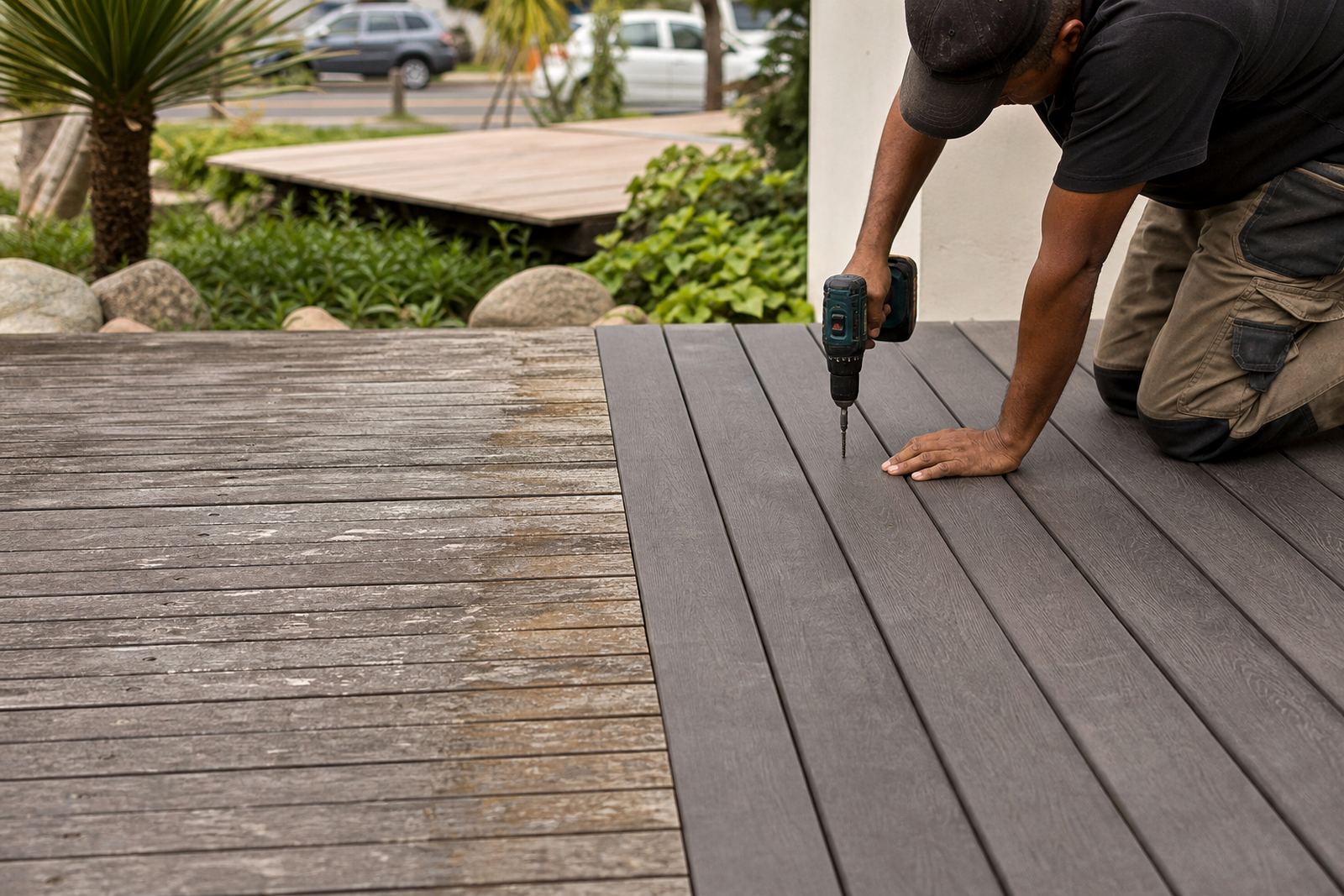
What a Deck Refurbishment Covers
Deck refurbishment is for outdoor areas that have started to look tired, feel uneven, or show movement at the joints. On recycled plastic lumber decks, the main issues are usually surface scuffing, loose fixings, boards that have shifted after weather exposure, and edge details that no longer sit neat against walls, posts or steps. We correct those problems one section at a time so the deck can keep serving the space without unnecessary replacement.
The work is suited to homes, guesthouses, retail courtyards, schools, hospitality venues and body corporate areas where the deck gets regular foot traffic. In coastal areas like Cape Town, Somerset West and George, salt air and moisture can make fittings and support points work harder. Inland, sun and heat can dry out surrounding structures and affect alignment over time. A refurbishment gets the deck back into better order with less disruption than a full rebuild.
Typical Refurbishment Tasks On Site
Every deck is inspected first, then we decide what can be repaired, what should be replaced, and where finish corrections will make the biggest difference. Recycled plastic lumber behaves differently from timber, so the repair method is chosen to suit the board profile, substructure and existing fastener layout. We do not take shortcuts that can cause movement or uneven spacing later.
- Replacement of damaged or badly worn deck boards
- Correction of lifted, loose or uneven board sections
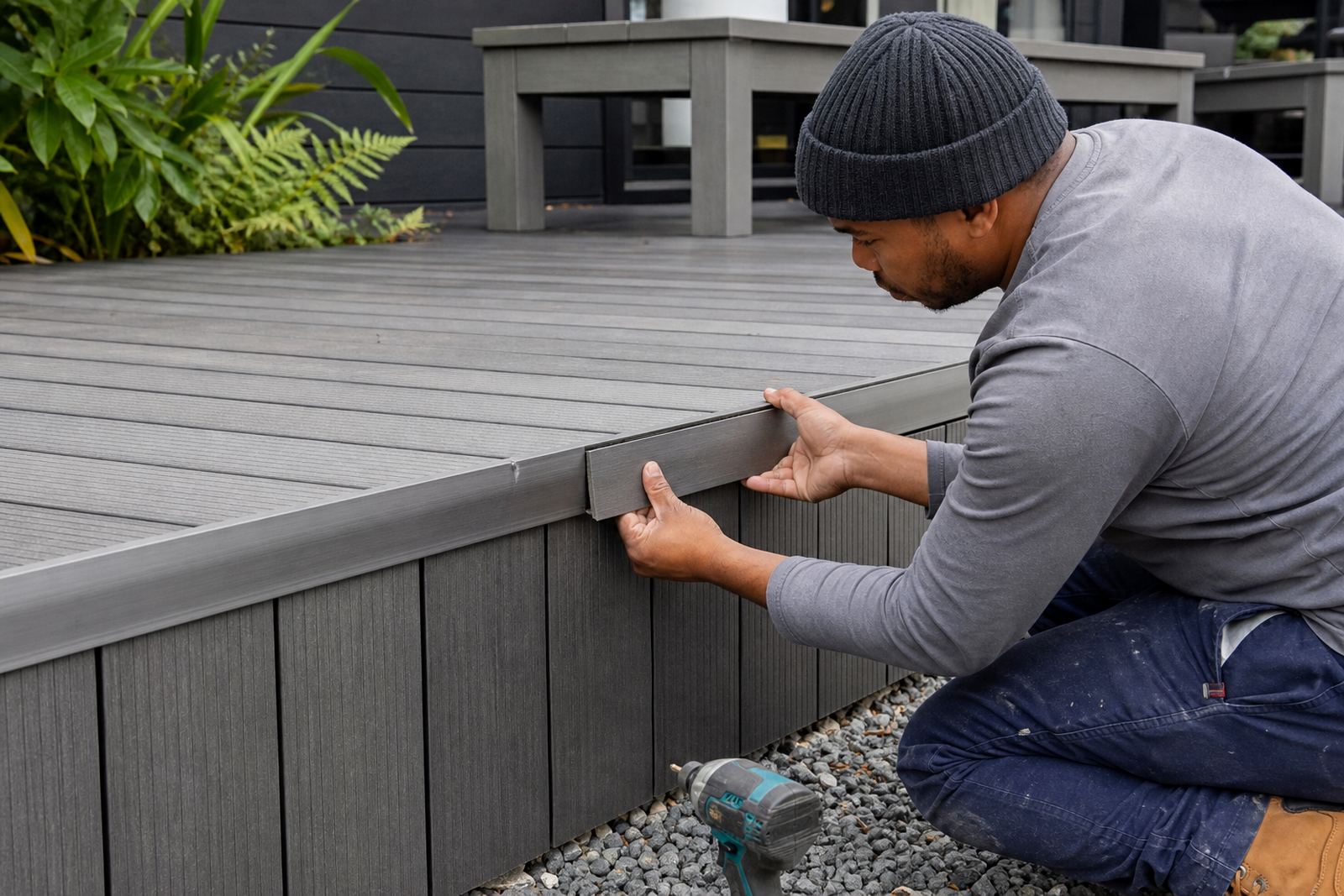
- Edge finishing around steps, skirting, walls and corners
- Fastener replacement where fixings have corroded or worked loose
- Minor alignment work on joins and board spacing
- Surface clean-up and practical care advice after the repair
If the deck has been in place for a few seasons, we also check for hidden causes such as poor drainage, standing water, or support points that have shifted. That kind of follow-up is important in places with heavy summer rain or where gardens get frequent washing down. A neat surface means little if the structure under it is not sorted too, so we deal with both where needed.
Our Refurbishment Process From Measure to Handover
We keep the process clear so owners, facilities teams and contractors know what is happening at each step. The first stage is a site measure and visual check. We confirm the board type, the extent of wear, the condition of the supporting frame and any access issues. After that, we prepare a material quote and outline what is included in the refurbishment scope.
- Site measure and inspection of the existing deck
- Assessment of wear, movement and damaged sections
- Material quoting and scope approval
- Scheduling, delivery coordination and site access planning
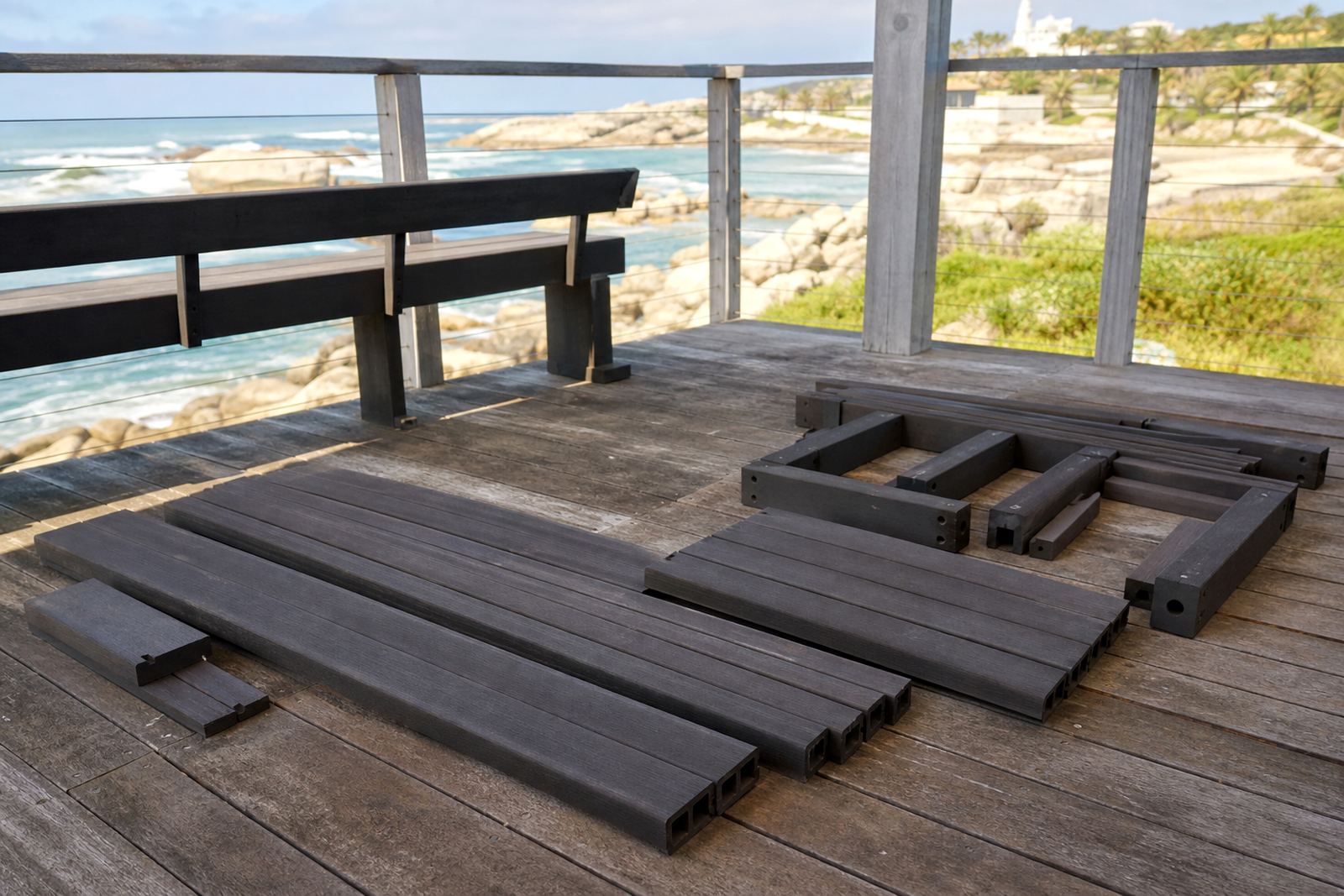
- Removal of faulty sections and replacement work
- Edge finishing, clean-down and final check
For larger commercial areas in Johannesburg, Durban or Cape Town, we can plan work in stages so the space stays partly usable. That helps where the deck fronts a reception, restaurant, showroom or shared outdoor area. We also keep an eye on noise, access and working hours so the job fits the site rather than forcing the site to fit the job.
Turnaround, Access And Site Conditions
Turnaround depends on the size of the deck, the amount of replacement required and how easy the site is to access. A small domestic repair may be completed quickly once materials are on hand, while a larger refurbishment with multiple damaged areas will need more time for measuring, cutting, fitting and finishing. If components have to be matched to existing profiles, we allow for that in the programme.
Access matters just as much as the repair itself. Tight courtyards, rooftop areas, steep steps and busy trade sites need more planning. We also work around load shedding where power is needed for certain tools, and we account for coastal humidity because some jobs need an extra pause for surfaces to settle properly after cleaning or rain. On sites in Paarl, Bellville and Somerset West, sun exposure can make surface temperature a factor too, especially during summer.
We will tell you upfront if the deck should be left clear for a period after the work is done. That depends on the exact repair method and the amount of finishing carried out. The point is to return the deck to service with the least fuss, not rush it and leave the area needing attention again in a few weeks.
How We Approach Pricing
Pricing is based on what the deck actually needs, not on a broad guess. We look at the board count, replacement lengths, edge detail, fixing condition, access and the amount of labour involved. If the site needs multiple visits or staged work, that is built into the quotation so there are no surprises later.
- Material quantity and board profile required
- Extent of board replacement versus repair
- Site access, height and working space
- Condition of the existing substructure
- Delivery and coordination needs for the area
Because recycled plastic lumber is used for the replacement work, the quote also reflects the specific components required to match the existing deck as closely as possible. Where a refurbishment can be done without changing the whole deck, it usually makes better sense than starting over. That said, if the frame is no longer sound, we will say so straight away rather than patching over a deeper problem.
Maintenance Intervals After Refurbishment
After a refurbishment, the deck should be checked on a sensible routine rather than left until the next big problem shows up. In general, we recommend a visual inspection every 6 months for busy sites and at least once a year for lower-traffic residential decks. The aim is to spot loose fixings, drainage issues, dirt build-up and movement before they become bigger repairs.
Regular washing is usually enough for day-to-day care. Avoid using harsh methods that can damage surrounding finishes or force water into joints where it is not needed. In coastal towns like Durban or George, where air moisture stays high, more frequent checks make sense. In dry inland areas, the focus is often on heat movement and dust around the deck perimeter.
If you need ongoing support, we can advise on care intervals, component replacement and refurbishment planning for the next cycle. That is especially useful for body corporates, hospitality venues and trade clients with several outdoor areas to manage at once.
Key facts
| Material type | Recycled plastic lumber |
|---|---|
| Service area | Paarden Eiland, Cape Town and nationwide delivery |
| Common locations | Cape Town, Stellenbosch, George, Johannesburg, Durban, Paarl, Somerset West, Bellville |
| Work included | Board replacement, edge finishing, fastener correction and care advice |
| Typical usage | Residential, commercial and shared outdoor areas |
| Planning inputs | Site measure, layout review and material quoting |