What our care advice covers for decking and benches
Care advice is the starting point for keeping recycled plastic lumber in good shape over time. We look at how the product is used, where it is installed, and what kind of exposure it gets from sun, salt air, damp conditions, foot traffic and general public use. A deck at a coastal home in Durban does not need the same attention as a private courtyard in Stellenbosch, and a bench in a schoolyard will need a different routine again.
We guide clients on what to clean, when to inspect, and how to deal with marks before they become a bigger job. That includes advice on dirt build-up, leaf stain, bird droppings, mould spotting in shaded areas, sand abrasion near the coast and the effects of standing water. The aim is simple: protect the finish, keep the surface safe underfoot, and reduce avoidable repair work later.
- Routine cleaning plans for decks and benches
- Seasonal checks after heavy rain, wind or high heat
- Advice for coastal, inland and high-traffic sites
- Support for owners, site managers and trade teams
Cleaning routines that suit local conditions
Most upkeep starts with regular sweeping and a wash-down. Loose dust, sand and leaves should be removed before they grind into the surface. In many areas, a soft-bristle broom and clean water are enough for weekly upkeep. Where there is more grime, mild soap and a soft cloth or mop can help without marking the surface. Pressure washers can be used with care, but the nozzle must be kept at a sensible distance and never used to force water into joints or fittings.
We also advise clients on the right cleaning rhythm for their site. In Cape Town and Paarden Eiland, salt and wind can leave a fine film on exposed areas. In Johannesburg, dust from traffic and dry weather can build up quickly. In George, George's damp season can mean more algae on shaded decks. Simple routines stop the surface looking tired and make the whole area easier to manage.
- Weekly sweep for dust, sand and leaves
- Monthly wash for most residential and light commercial sites
- More frequent checks for coastal or shaded areas
- Spot clean spills as soon as possible
How we handle marks, wear and small repairs
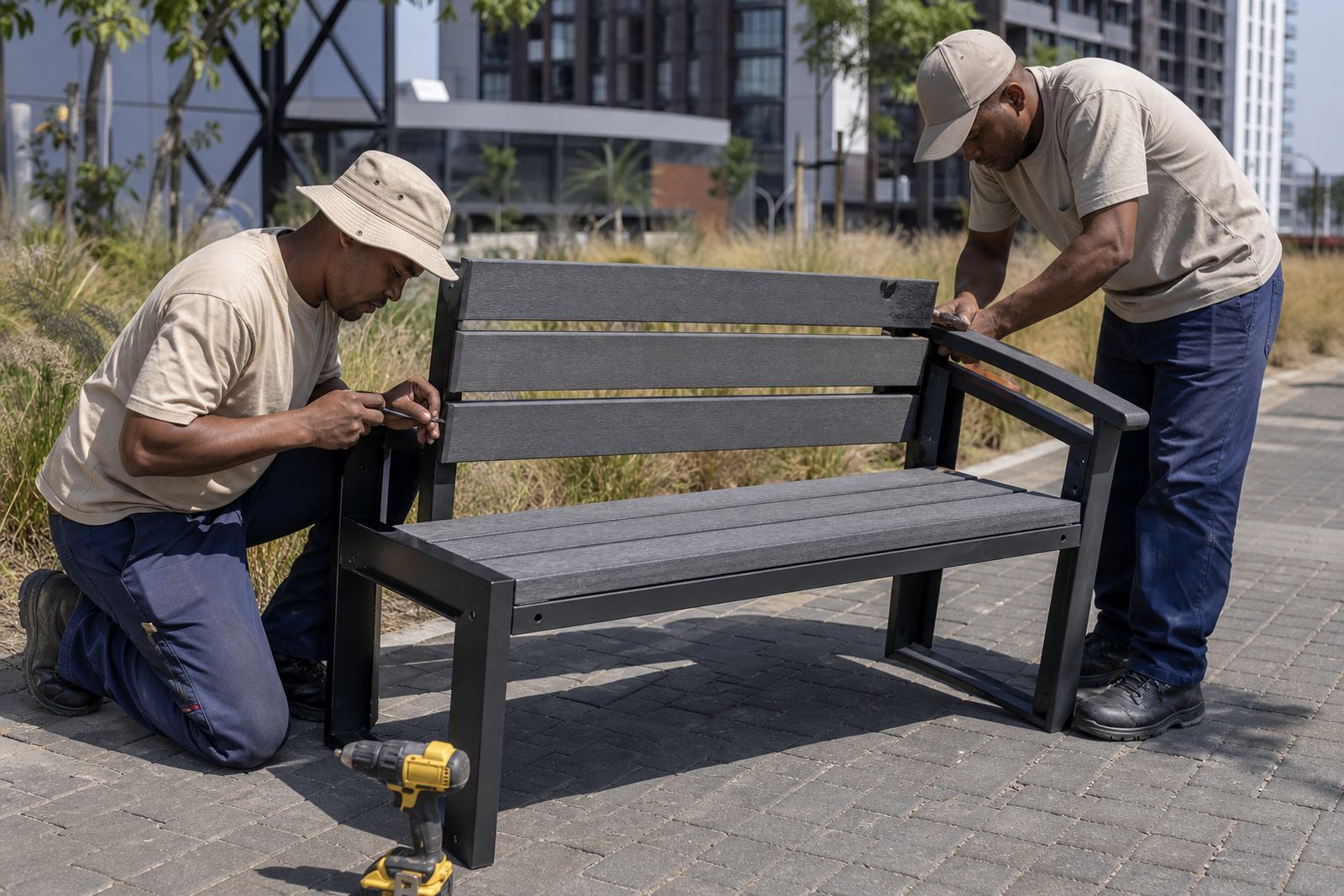
Marks should be dealt with early. Food spills, grease, sunscreen and drink stains are easier to lift when they are fresh. We advise on gentle cleaners first, then on safe ways to remove stubborn residue. Scratches from dragging furniture, scuffs from shoes and minor surface wear can often be managed with the right approach rather than a full replacement. For benches and deck boards that have taken a knock, component replacement may be the better route if the damage is localised.
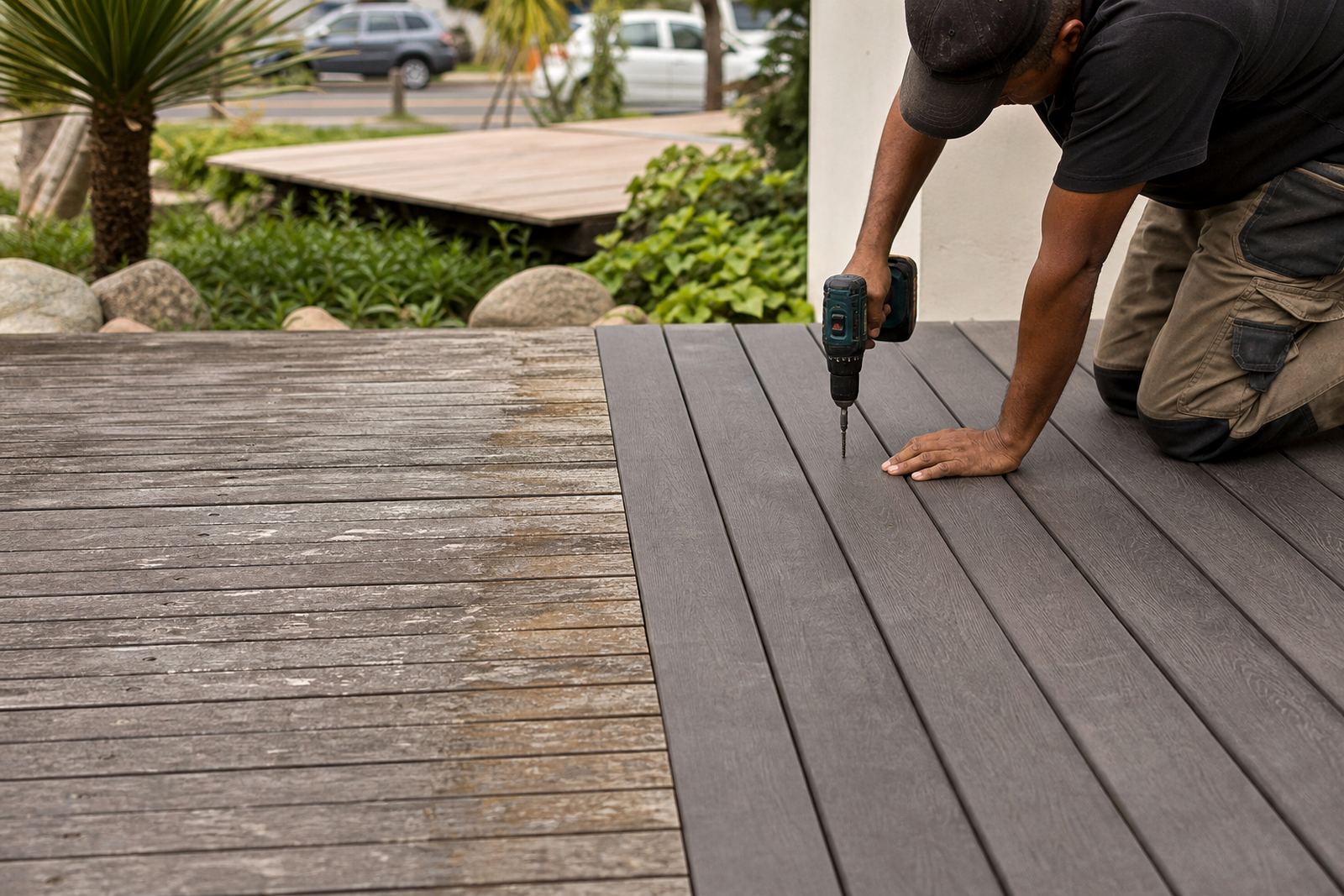
Our team also helps with practical wear issues that come from day-to-day use. That includes loose fixings, movement at joins, edge damage and areas where dirt collects around fittings. If there is a change in colour from long-term sun exposure, we explain what is normal and what needs attention. The product is designed for outdoor use, but it still pays to keep an eye on the small things, especially on public sites and busy family spaces.
- Fresh spills treated with water and mild soap
- Scuffs checked before they become deeper wear
- Loose fittings inspected during routine visits
- Localised component replacement where practical
Maintenance intervals that work in South Africa
There is no single interval that fits every site, so we set maintenance guidance according to use and exposure. A low-traffic domestic deck may only need a proper check every few months, while a commercial or hospitality area may need monthly attention. Coastal properties often need closer monitoring because salt air, moisture and windblown grit can change the cleaning pattern. Inland areas may need more attention after dust storms, pollen season or heavy use over school holidays.
A practical schedule keeps things steady. We often suggest a weekly light clean, a monthly review of fixings and edges, and a seasonal inspection after the first heavy rains or before summer outdoor use. This is especially helpful in places like Somerset West, Bellville and Paarl where outdoor areas are used throughout the year, and in Durban where humidity can encourage grime in shaded corners if the deck is left unattended.
Our process from site check to upkeep plan
We start with a site discussion or a review of the installation and then look at the type of use, local weather and access for cleaning. From there we prepare practical advice for the site, whether it is a private residence, a hospitality venue, a retail frontage or a school. If the area needs attention beyond routine cleaning, we can include refurbishment recommendations for worn boards, benches or edge details.
Clients also use our care advice to plan work around operations. That matters for businesses that cannot shut down a courtyard or walkway for long periods. We keep the advice direct and practical, with clear steps for cleaning, inspection and minor repair. When needed, our logistics and trade support teams help coordinate materials and timing so the site can stay in use with minimal interruption.
- Initial review of product type and site conditions
- Practical upkeep plan for the client or contractor
- Advice on cleaning tools, access and safe methods
- Follow-up support where refurbishment is required
Pricing approach and turnaround for care support
Care advice is quoted according to the size of the area, the level of detail needed and whether the request is for a simple maintenance guide or a site-specific support visit. If a client needs advice alongside site measures, refurbishment planning or component replacement, we look at the full scope before quoting. That keeps the process clear and avoids guesswork.
Turnaround depends on the location and the type of support needed. In most cases, a straightforward care recommendation can be handled quickly once the site details are confirmed. Larger commercial spaces, estates or multi-unit properties may need a little more time because access, cleaning windows and maintenance schedules have to be considered. We keep the approach practical and straightforward, with no inflated extras.
Why recycled plastic lumber needs a different upkeep mindset
Recycled plastic lumber does not behave like timber. It does not need sanding, sealing or regular painting in the same way. That makes upkeep simpler, but it still benefits from sensible care. The main focus is cleanliness, inspection and keeping fittings in order. If a bench sits under a tree or a deck borders a garden bed, a little more attention will help prevent dirt build-up and staining.
For many clients, that difference is the value. The material can handle everyday outdoor use with less routine work than natural wood, but it still needs a proper cleaning plan and occasional checks. We share that knowledge so the product stays neat and serviceable for longer, whether it is installed in Cape Town, George, Johannesburg or Durban.
Key facts
| Service area | Cape Town, Stellenbosch, George, Johannesburg, Durban, Paarl, Somerset West and Bellville |
|---|---|
| Base | Paarden Eiland, Cape Town |
| Main focus | Cleaning routines, upkeep intervals and minor repair guidance |
| Product types | Recycled plastic lumber decking and benches |
| Support options | Site measures, maintenance planning, refurbishment advice and trade support |
| Typical upkeep rhythm | Weekly sweep, monthly wash and seasonal inspection, depending on exposure |