
What the site measure covers
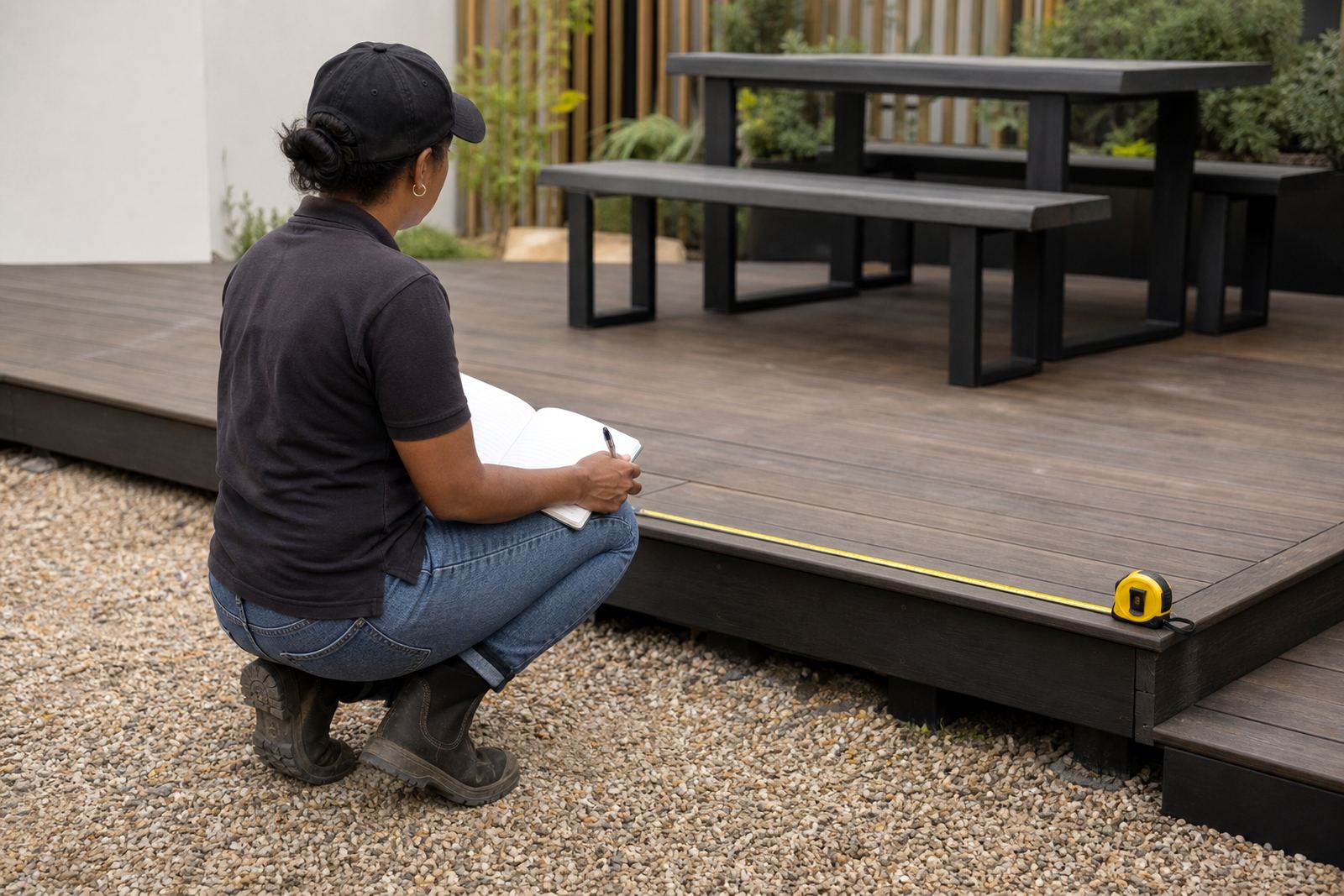
Our site measure service is there to confirm the real conditions on the ground before materials are quoted or scheduled. We check the length and width of the area, changes in level, access routes, fixings, edges, falls and any features that affect a clean install. This is useful for homes, body corporates, schools, hospitality spaces and commercial yards in Cape Town, Stellenbosch, George, Johannesburg and Durban.
For recycled plastic lumber decking and benches, the site visit helps avoid guesswork. We look at where water collects, where direct sun will hit hardest, and whether the area needs extra attention for coastal humidity, salty air or regular cleaning. In places like Paarden Eiland, Somerset West and Bellville, access and loading can matter just as much as the material itself.
- Confirm area dimensions and layout
- Check levels, falls and edge conditions
- Note access for delivery and installation
- Record any trimming, joins or terminations needed
- Identify practical maintenance points for the owner or facilities team
How we measure recycled plastic lumber projects
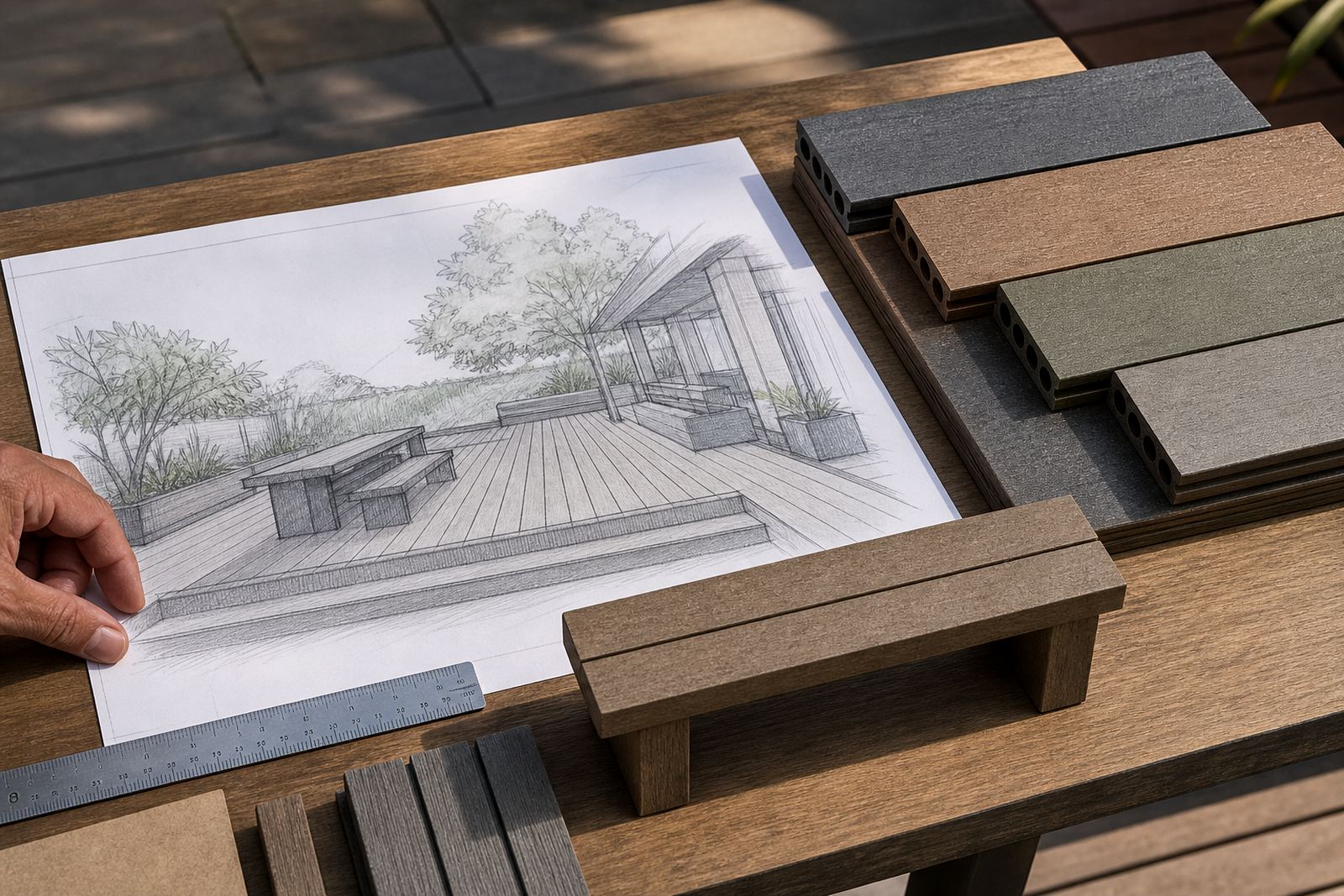
We measure with the final layout in mind, not just the opening size. That means checking the full run of the deck or bench area, confirming where posts, supports or fixing points can sit, and allowing for movement, drainage and clean finishes. If the space includes steps, corners, curved edges or built-in seating, those details are recorded so the material list matches the site.
Recycled plastic lumber behaves differently from timber, so the measure includes practical notes for cut lengths, edge finishing and joint placement. It is especially helpful where there is strong sun, salt air or regular wash-downs. In Durban and George, for example, we often pay close attention to moisture, while in Johannesburg the focus may be on access, dust and traffic flow.
- Decking runs, board direction and border detail
- Bench length, seat height and placement
- Substructure or support conditions where visible
- Drainage and water run-off points
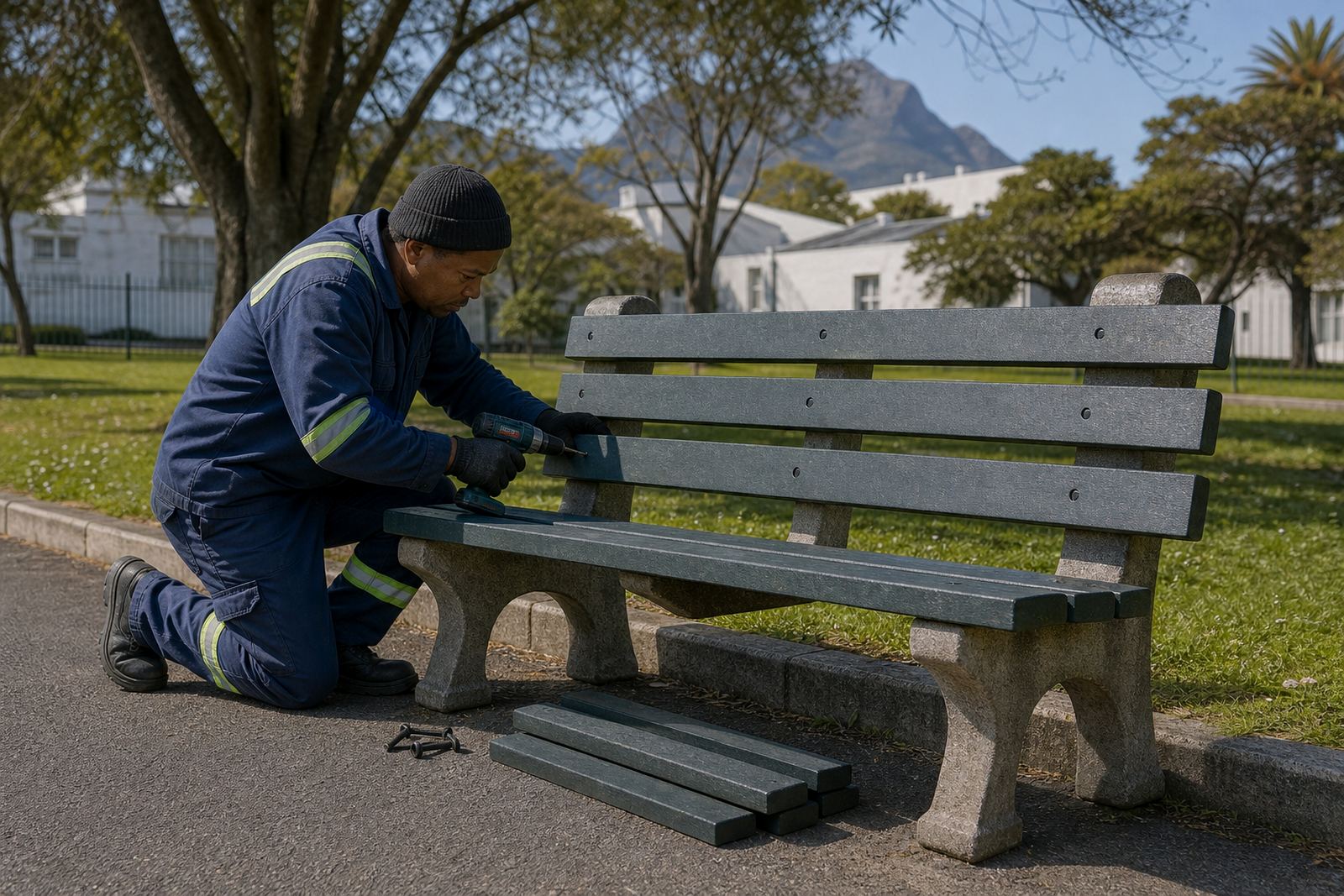
- Any refurbishment, replacement or repairs needed
Step by step from enquiry to measured scope
Clients get in touch through the enquiry form on our contact page and tell us where the work is, what type of structure is needed and whether the job is new or a refurbishment. From there, we plan the site visit, arrange access and confirm what will be measured. If the project is in Paarl, Stellenbosch or Somerset West, we try to coordinate efficiently with the rest of the schedule. For further out areas like George or Durban, lead times can be shaped by travel and site access.
After the measure, we prepare the practical scope for quoting and planning. If the site has unusual levels, cramped access or existing structures that need to be worked around, that is reflected in the measurements and notes. The aim is to keep the job straightforward before delivery, installation and finishing begin.
- Receive enquiry and basic project details
- Arrange site visit and access requirements
- Measure area, note conditions and take layout notes
- Prepare material quantities and installation notes
- Confirm next steps for quotation and scheduling
Turnaround and scheduling
Turnaround depends on where the site is, how complex the layout is and how quickly access can be arranged. A simple deck edge or bench run can be measured quickly, while a larger commercial area may need more than one pass to confirm levels and practical details. We plan around local conditions too, such as load-shedding windows at certain premises, business hours, municipal access rules and building access controls.
For projects in Cape Town and nearby branches and service areas like Bellville, Paarden Eiland and Somerset West, scheduling can often move faster. For Johannesburg, Durban and George, we keep the communication clear so that the measure, quote and delivery steps line up without delays. Small slips on site can become expensive later, so we would rather measure properly once than rush the process.
- Smaller residential measures are usually quicker to schedule
- Complex commercial or multi-level sites take longer
- Access restrictions can affect timing
- Refurbishment work may need a second check for hidden fixes
Pricing approach for site measures
Site measures are priced according to the size of the area, the complexity of the layout and the travel involved. A straightforward suburban deck is different from a raised platform, a long bench run or a busy trade site with limited access. We do not treat every job the same because the measuring time, planning detail and follow-up work are not the same.
The quote process also takes into account whether the measure is for new installation, refurbishment or component replacement. If the site requires extra layout planning, edge finishing detail or coordination with other trades, that is reflected in the scope. The benefit is that the material quote and installation plan are based on real site conditions, not assumptions.
- Based on area size and layout complexity
- Travel and access are factored in
- New work and refurbishment are priced differently
- Additional planning needs are allowed for in the scope
Specs and practical details we confirm
Every site measure has a practical checklist. For recycled plastic lumber decking and benches, we confirm board or component orientation, visible fixing approach, edge treatments, support spacing as relevant to the layout and any transitions to paving, walls or stair points. Where clients want a low-maintenance finish, we also note cleaning access and how the finished area will be used day to day.
This matters in South African conditions. Coastal humidity in Cape Town or Durban can affect surface care routines, while strong sun in many inland towns can influence placement and comfort. If a site is in a business park, school, hospitality venue or municipal space, we also keep an eye on movement flow and the likely wear points over time.
- Deck length, width and level changes
- Bench length, placement and user flow
- Edge finishing and termination points
- Access for delivery, handling and installation
- Drainage, shade and exposure notes
- Maintenance access and cleaning considerations
Maintenance intervals after installation
Once the deck or benches are installed, the maintenance plan is simple but it still helps to stay regular. We advise owners to inspect the area after heavy rain, seasonal wind and periods of high use. In coastal areas, a rinse may be needed more often. In dusty inland areas, the cleaning interval may be different. The point is to keep joints, edges and surfaces clear so the installation stays tidy and functional.
For refurbished areas, we also suggest an early follow-up check after the first few weeks of use. That allows any minor settling, movement or adjustment to be spotted before it becomes a problem. If the site is used by the public or by staff every day, a planned care routine is worth keeping in place.
- Routine visual checks after heavy weather
- Regular cleaning based on site conditions
- Early follow-up after refurbishment work
- Periodic inspection of edges, joins and fixings
Key facts
| Service | On-site measuring for decking and bench projects |
|---|---|
| Material type | Recycled plastic lumber |
| Project types | New installation, refurbishment, replacement and trade support |
| Coverage | Paarden Eiland, Cape Town and delivery across South Africa |
| Measure outputs | Dimensions, levels, layout notes and practical installation details |
| Typical use cases | Residential, commercial, hospitality, school and body corporate sites |