
Coastal Pool Surround Brief In Durban
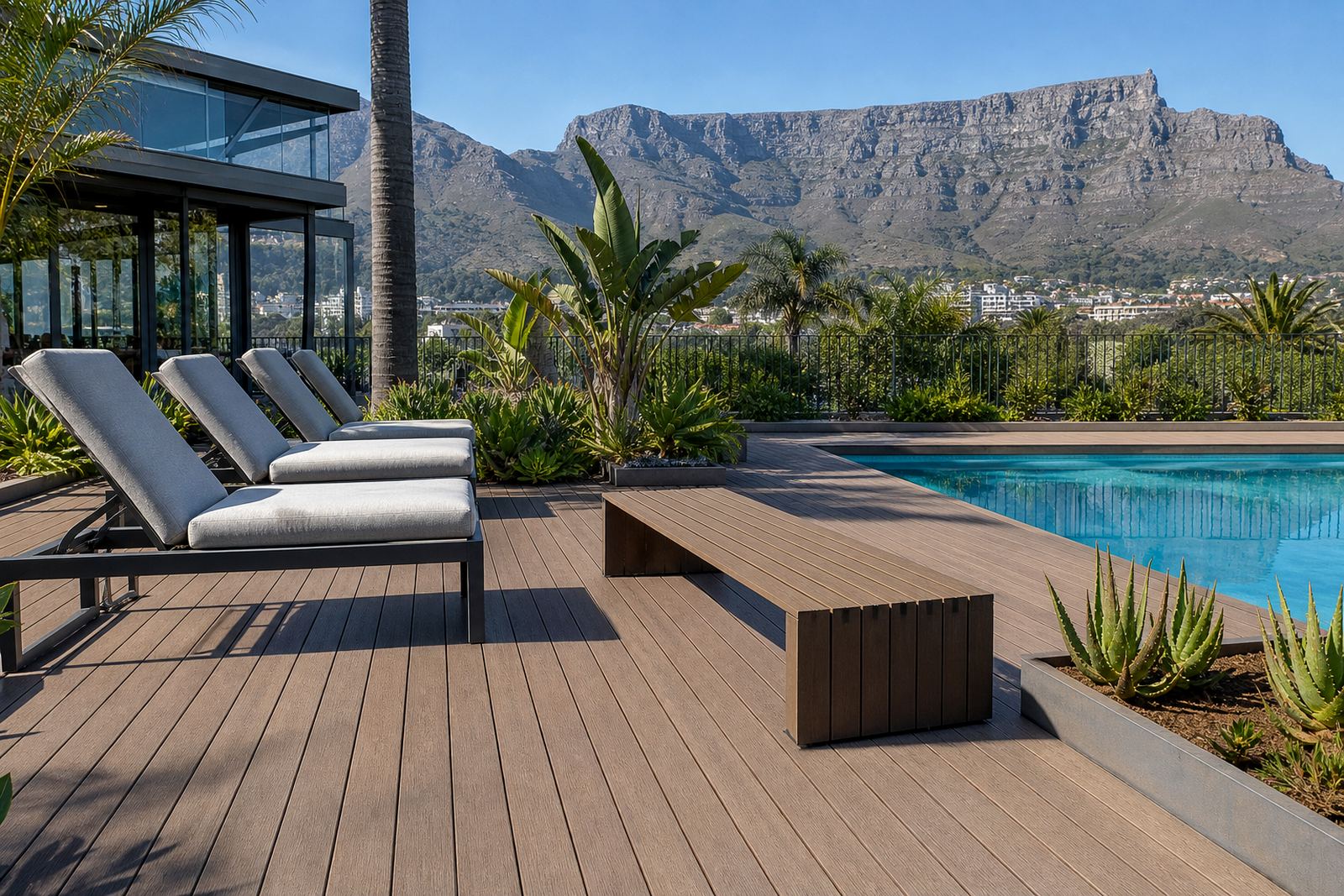
The client was a hospitality property in Durban looking for a safer and longer lasting pool surround than timber. The brief was straightforward: keep the area neat under constant foot traffic, reduce maintenance around splashing water, and use a material that would cope better with coastal humidity and sun exposure. The deck also had to suit guests moving between loungers, showers and the pool edge, without splintering or becoming awkward to clean.
Because the site sits close to the coast, the team wanted a surface that would not keep demanding sanding, sealing or painting. That matters on a busy property where housekeeping already has enough to manage. The design had to be practical for daily service, look tidy from every angle, and work with existing pool coping and drainage lines.
- Project type: pool surround decking
- Location: Durban, KwaZulu-Natal
- Client type: coastal hospitality property
- Key need: low maintenance surface for wet conditions
Why Recycled Plastic Lumber Was Chosen
For this job we supplied recycled plastic lumber decking, selected for its suitability in damp, high-use areas. It is a solid option where timber can swell, stain or split over time. Around a pool, that matters because water exposure is constant and the surface needs to stay serviceable with minimal intervention.
The material does not absorb moisture in the same way as natural wood, so it holds its form well in coastal conditions. It is also easier to keep clean after sunscreen, spilled drinks and normal foot traffic. The client was after a practical finish rather than something that would need constant attention, so this was a strong fit.
- Suitable for coastal humidity and regular splashing
- No sanding, sealing or repainting routine required
- More predictable performance than many timber options
- Good for hospitality settings with daily use
Site Measures, Layout Planning And Material Quoting
We started with site measures and layout planning to make sure the deck aligned properly with the pool edge, coping details and surrounding circulation space. On a pool project, a few millimetres out can create visual issues, loose ends or awkward transitions at steps and corners, so careful measuring is essential.
From there we prepared the material quote and checked the fixing approach against the intended load and use pattern. The deck layout had to allow for drainage, easy rinsing and sensible movement around the pool. We also planned edge finishing so there would be no rough ends or exposed sections that could catch feet or cleaning gear.
- Measured pool perimeter and access points
- Mapped deck runs to suit existing surrounds
- Allowed for drainage flow and cleaning access
- Set out edge details for a tidy finish
Supply And Installation On A Working Coastal Site
Once the materials were confirmed, we arranged delivery and installation to suit the property’s operating schedule. Working on a hospitality site means planning around guests, cleaning teams and quiet hours, so the sequence had to be managed with care. The installation team laid the decking in sections and kept access routes clear where possible.
Installation included support preparation, fixing of the deck boards, edge finishing and final checks for alignment. The team made sure the transitions were smooth around the pool perimeter and any changes in level were handled cleanly. It was important that the surface felt stable underfoot and looked consistent from the main seating areas.
The project ran over 3 weeks from final measure to handover. That included ordering, delivery coordination, installation and a final tidy-up. No unnecessary delays, just practical scheduling and steady work on site.
What The Finished Pool Deck Delivered
The completed pool surround gave the property a cleaner and more manageable outdoor area. The client wanted something that would stay presentable without heavy maintenance, and the recycled plastic lumber did that job well. It also gave the pool area a more finished look, which matters for a hospitality setting where guests notice details immediately.
There was also a comfort benefit. Around a pool, surfaces need to feel safer and more predictable when wet, and the installed deck was chosen with that in mind. For the client, the main gain was reduced upkeep and less worry about timber movement or surface deterioration after rain, sun and regular cleaning.
- Cleaner appearance around the pool edge
- Lower upkeep than traditional timber decking
- Consistent surface for guest movement
- Better suited to coastal weather conditions
What We Would Repeat On A Similar Durban Job
If we were doing the same kind of project again in Durban, we would follow the same approach: accurate measures, clear access planning and careful edge detailing from the start. On coastal hospitality work, it pays to treat drainage, cleaning access and daily traffic as part of the design, not as an afterthought.
We would also use recycled plastic lumber again for a pool surround in a humid coastal area where maintenance must stay manageable. The material choice, combined with proper installation and practical finishing, gives a result that suits busy outdoor use. For this sort of property, that balance is what counts.
- Measure first, then finalise board runs
- Allow for cleaning access and water movement
- Keep edges neat around steps and corners
- Choose materials that suit salt air and frequent use
Key facts
| Project | Durban pool deck |
|---|---|
| Location | Durban, KwaZulu-Natal |
| Client type | Coastal hospitality property |
| Material | Recycled plastic lumber decking |
| Scope | Supply and installation for pool surround use |
| Timeline | 3 weeks from measure to handover |