
Estate paths needed seating that could take daily use
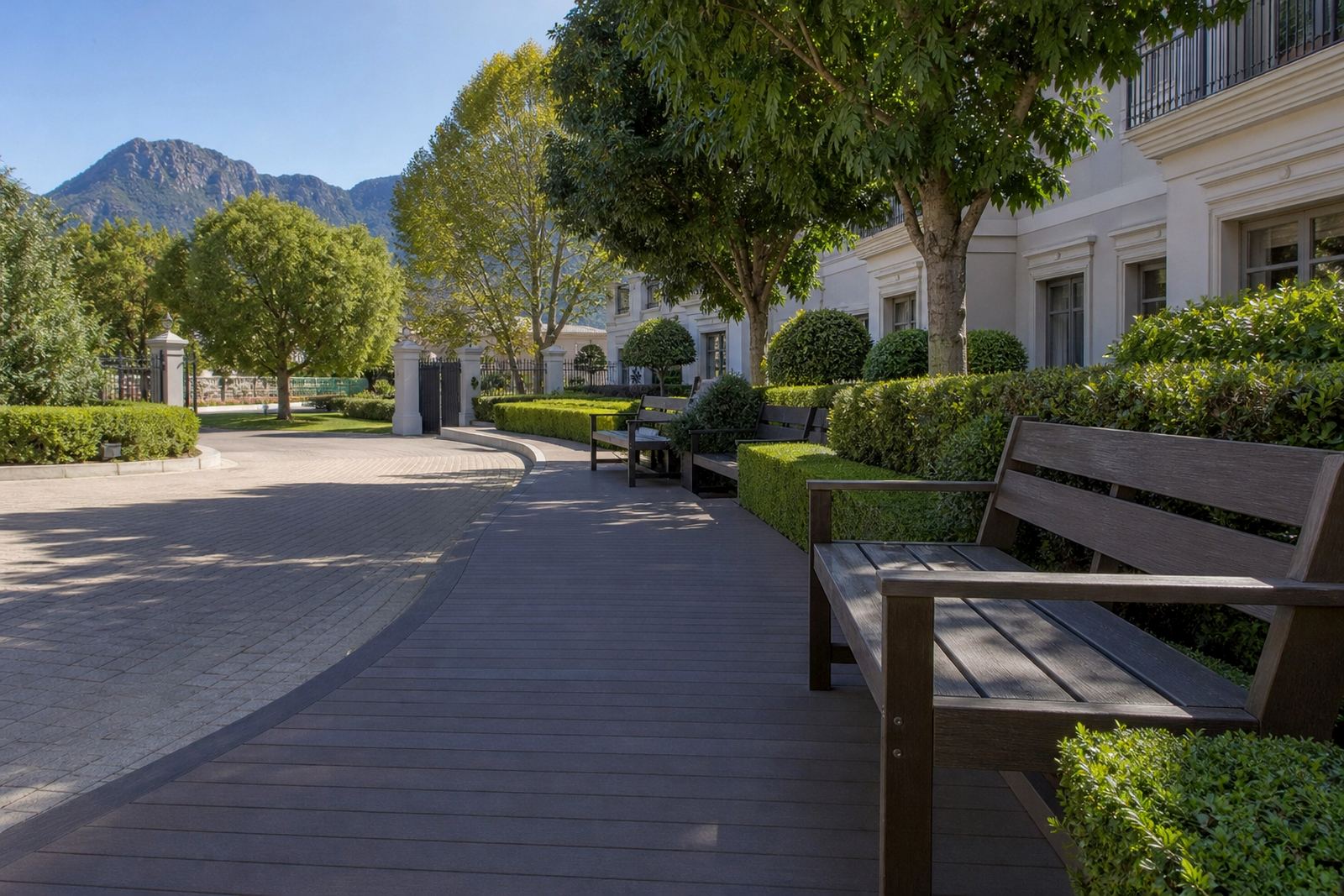
The estate body wanted shared benches for walkways used by residents, visitors and maintenance staff, with enough seating at rest points but without crowding the landscaped paths. The site in Somerset West has planted edges, paved sections and exposed sunny stretches, so the seating had to look tidy and cope with coastal weather, garden irrigation and steady foot traffic.
The main concern was keeping upkeep low. Timber benches can need regular sanding, sealing and replacement after moisture and UV exposure, while recycled plastic lumber is less affected by rot, splitting and insect damage. That made it a practical choice for an estate that wanted predictable maintenance and a clean finish year after year.
What the brief called for and the site constraints
The client asked for benches that suited a residential setting, were comfortable enough for short stops and matched the landscaping rather than standing out too much. The installation had to work around footpaths, planter beds and access for grounds teams, and it needed to be completed with minimal disruption to residents. It also had to fit within the estate rules for shared open areas.
- Low maintenance seating for shared outdoor paths
- Material suited to sun, rain and coastal humidity
- Clean layout that respected landscaping and pedestrian flow
- Installation planned around resident access and estate access control
- Finish that would suit a residential setting rather than an industrial one
Recycled plastic lumber benches supplied for the paths
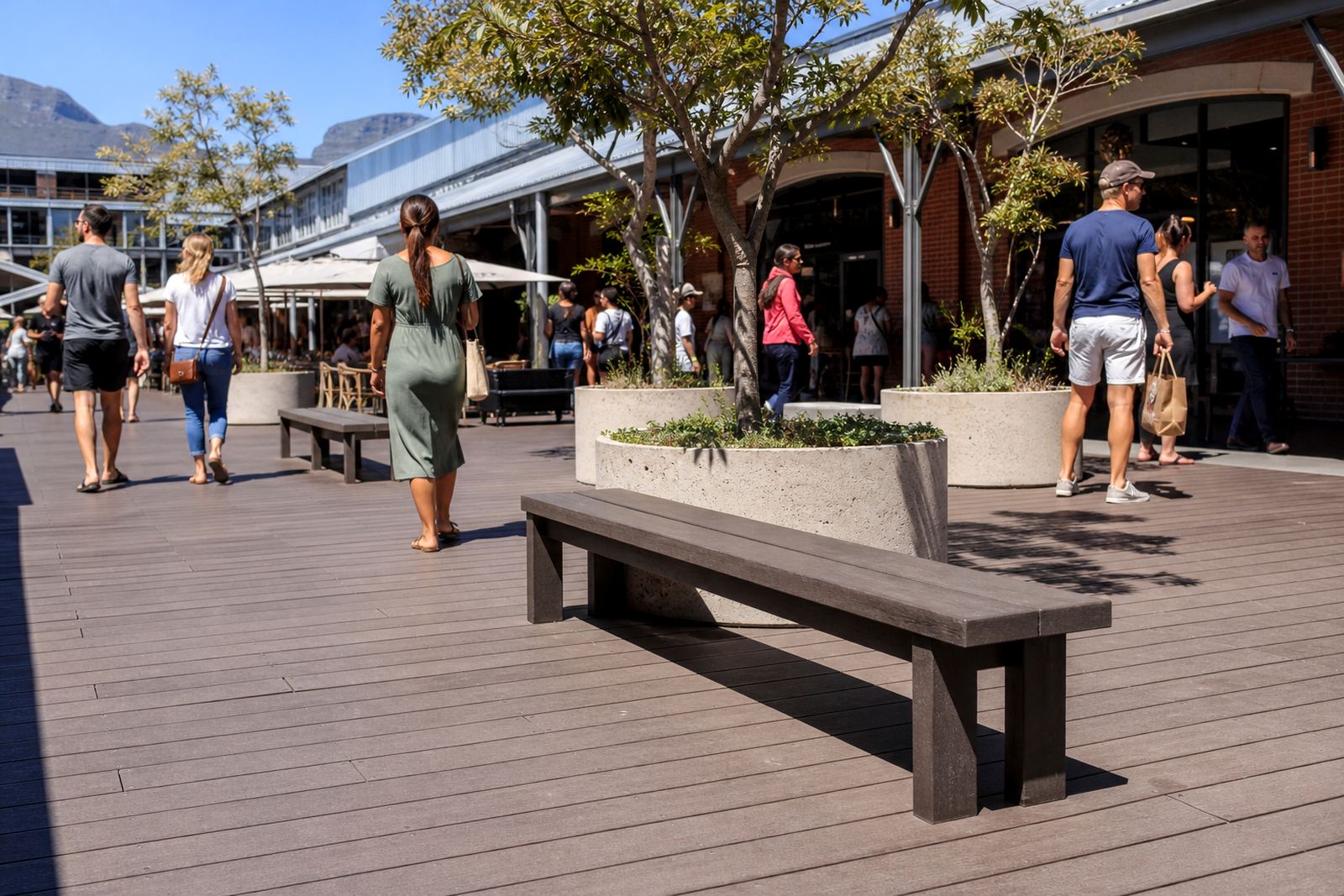
We supplied recycled plastic lumber benches with solid seating members, corrosion-resistant fixings and a finish suited to outdoor use. The material is commonly chosen for public and semi-private spaces because it does not need painting and is easier to keep clean than untreated timber. It also holds up well where irrigation overspray and damp patches are part of the daily routine.
For this project we also checked the way each bench would sit in relation to the paving so the seating felt stable and visually neat. The goal was a simple outcome: give residents a place to pause along the path, with benches that would not require much attention beyond normal washing down and routine checks.
- Bench components supplied in recycled plastic lumber
- Outdoor fixings selected for corrosion resistance
- Edges finished to suit a residential estate setting
- Layout kept clear of planting and drainage points
Four week programme from measure up to final fit-off
The project ran over four weeks from initial site measure to final installation. Week one covered the site measure and layout planning, including checking path widths, seating positions and access points. Week two was material quoting and sign-off, followed by production coordination and delivery planning. Week three covered delivery to site and preparation for install, and week four was the bench installation and final snagging.
That sequence helped keep the job orderly and reduced the chance of benches landing in the wrong positions or interfering with walkways. It also gave the estate team time to review placement before anything was fixed down, which is usually the easiest way to avoid later changes.
- Week 1: site measures and layout planning
- Week 2: material quoting and approval
- Week 3: delivery coordination and site preparation
- Week 4: installation, edge finishing and final checks
Installation details that kept the finish neat
Jason Petersen and the installation team handled the fit-off, with support from Bianca Fourie on project coordination and Sibusiso Dlamini on logistics. The benches were positioned so users could sit comfortably without blocking movement on the path, and the fixing points were kept tidy to avoid snagging or uneven edges. Thabo Molefe oversaw production checks before dispatch, so the delivered parts matched the installation plan.
Because the estate is in a part of Somerset West that sees both summer heat and wet winter weather, the team paid attention to fixing stability and alignment on the finished paving. A good bench install is not just about the seat itself, it is also about keeping water off key contact points and making sure the unit remains level as the ground settles over time. A small misalignment can show up fast once people start using it.
- Stable positioning on paved and landscaped areas
- Tidy fixings and clean edge treatment
- Co-ordination with estate access times and resident movement
- Checks completed before handover
Result for residents and the estate team
The finished benches gave the estate practical seating points along the landscaped paths without adding maintenance headaches for the grounds crew. Residents gained places to rest, wait or chat, and the estate team got a product suited to regular outdoor use in a busy residential setting. The overall look stayed calm and ordered, which mattered because the benches sit inside shared open space rather than a dedicated recreation area.
For us, the outcome confirmed what works well in these projects: use a material that suits the climate, keep the layout simple, and make sure the install is planned properly from the start. If we were doing this one again, we would follow the same approach, especially the early site measure and the final placement review before fixing everything down.
Plastimber, based in Paarden Eiland, Cape Town, has been working with recycled plastic lumber solutions since 2009, and this Somerset West estate project is a good fit for the kind of work we do across Cape Town and the rest of South Africa.
Key facts
| Project type | Shared outdoor benches for a residential estate |
|---|---|
| Town | Somerset West, Cape Town |
| Product | Recycled plastic lumber benches |
| Scope | Site Measures, Layout Planning, Delivery Coordination, Bench Installation, Edge Finishing |
| Timeline | 4 weeks |
| Service area | Delivered and installed for estates and commercial sites across South Africa |