
A Working Farm Needed Visitor Areas That Could Keep Up
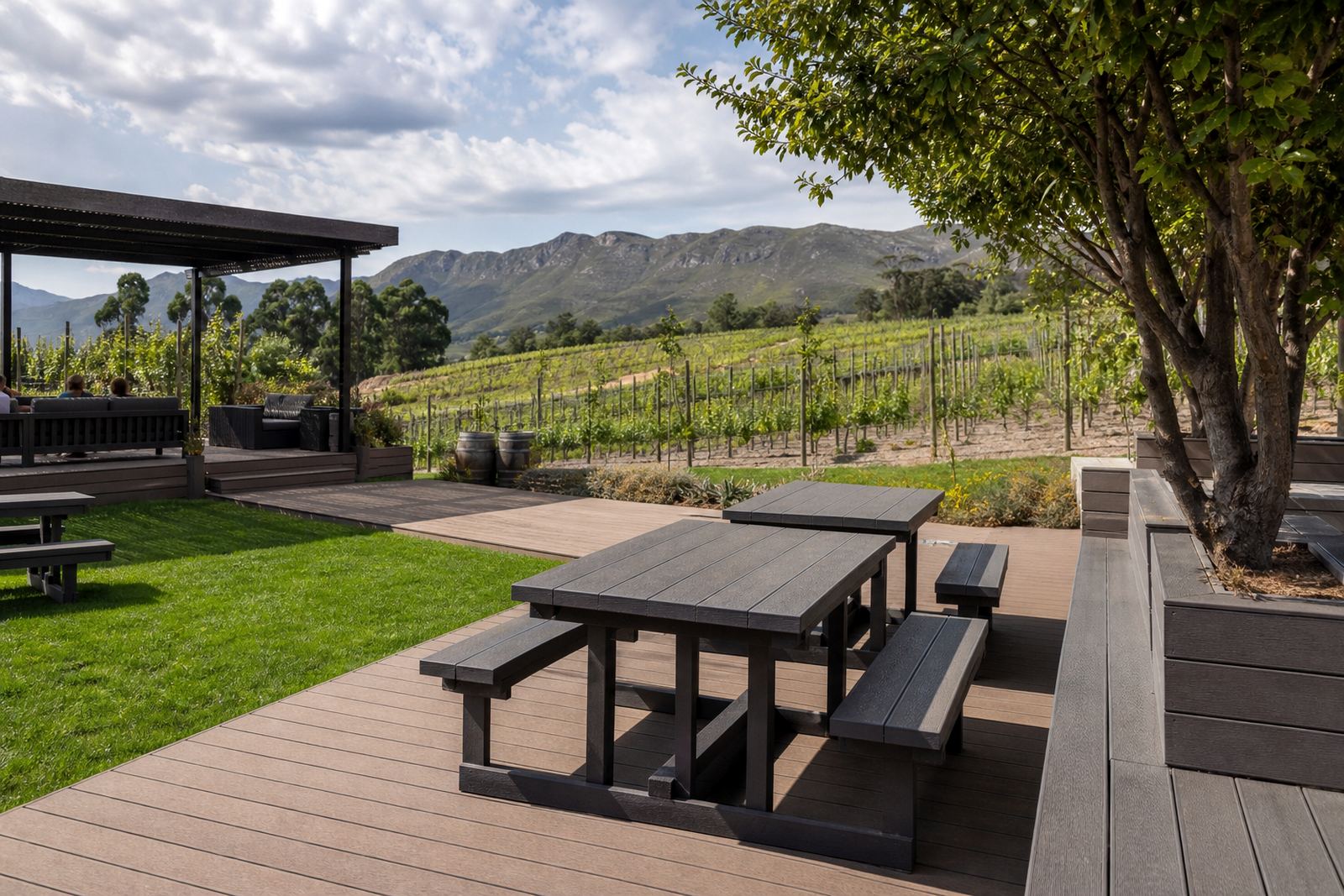
The project came from a wine farm in Paarl that wanted to improve how visitors moved between the tasting area, lawn spaces and picnic spots. The existing timber surfaces were looking tired, and the seating was not coping well with regular use, cleaning and seasonal weather shifts. They needed a cleaner finish with less upkeep, and they wanted the new work to fit a working farm rather than a formal hotel setting.
We were asked to supply recycled plastic lumber decking and benches for a visitor seating upgrade, with enough structure to handle shoes, damp mornings and a fair amount of dust. The farm also wanted materials that would not need constant sanding, sealing or repainting. That made recycled plastic lumber a practical choice for the brief.
- Client type: working wine farm
- Town: Paarl, Western Cape
- Use: visitor seating and decked picnic zones
- Main requirement: low maintenance and durable finishes
Site Conditions and Design Constraints
The site had a few clear constraints. Parts of the farm get strong sun for most of the day, while shaded areas stay damp after irrigation and winter rain. There were also gradients between some zones, so footing and edge transitions had to be planned properly. On a busy weekend, visitors move through in groups, so the decked areas needed sensible circulation and safe seating layouts.
We also had to work around the practical side of a wine farm. Deliveries needed to happen without blocking operations, and installation had to be organised around farm traffic and visitor periods. Because the area is in the Cape Winelands, the finish had to hold up against occasional moisture and general outdoor wear, not just look good on day one.
- Direct sun exposure in open areas
- Damp patches near irrigated ground and shaded zones
- Visitor flow around tasting and picnic spaces
- Need to avoid disruption to farm operations
What We Supplied and Installed
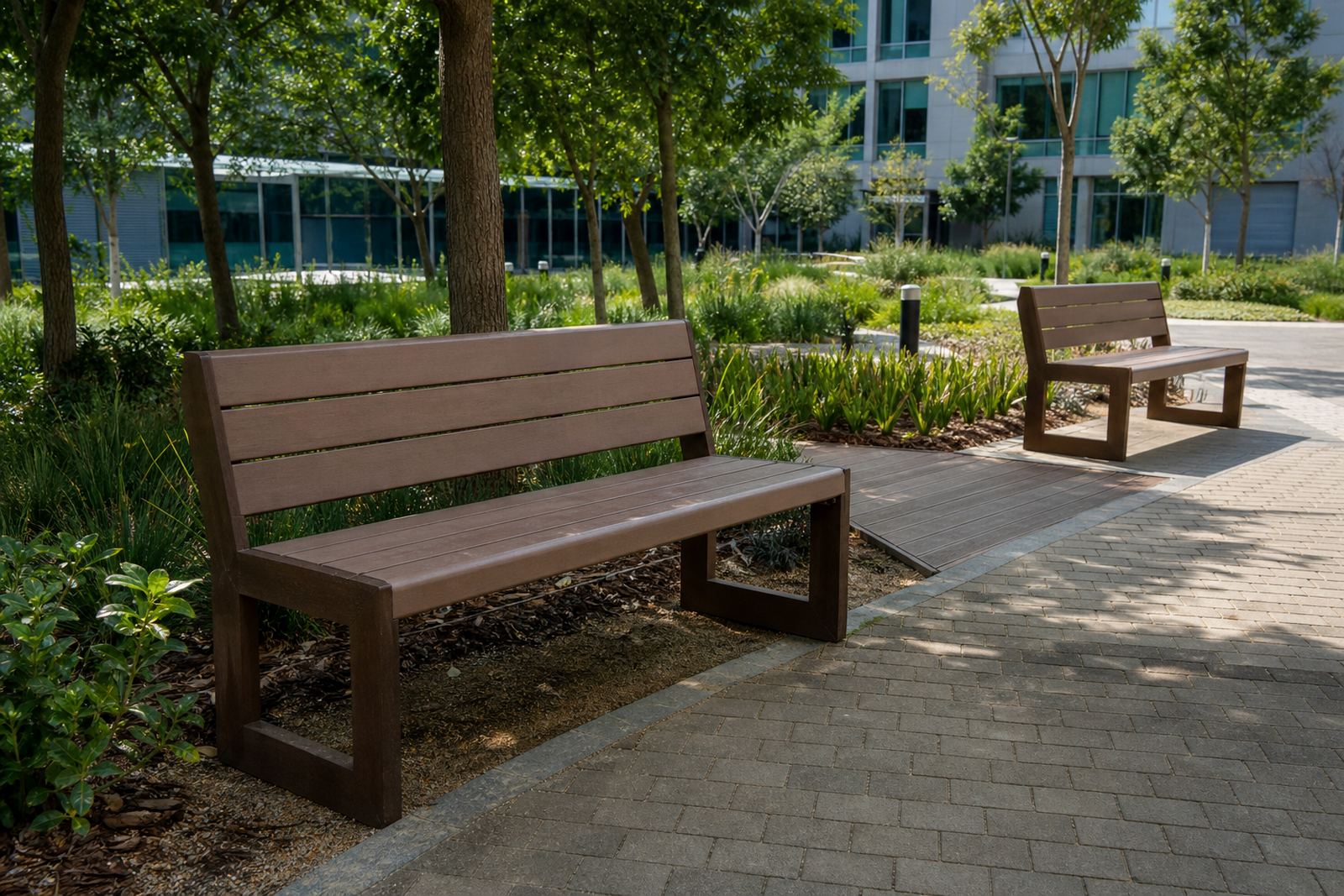
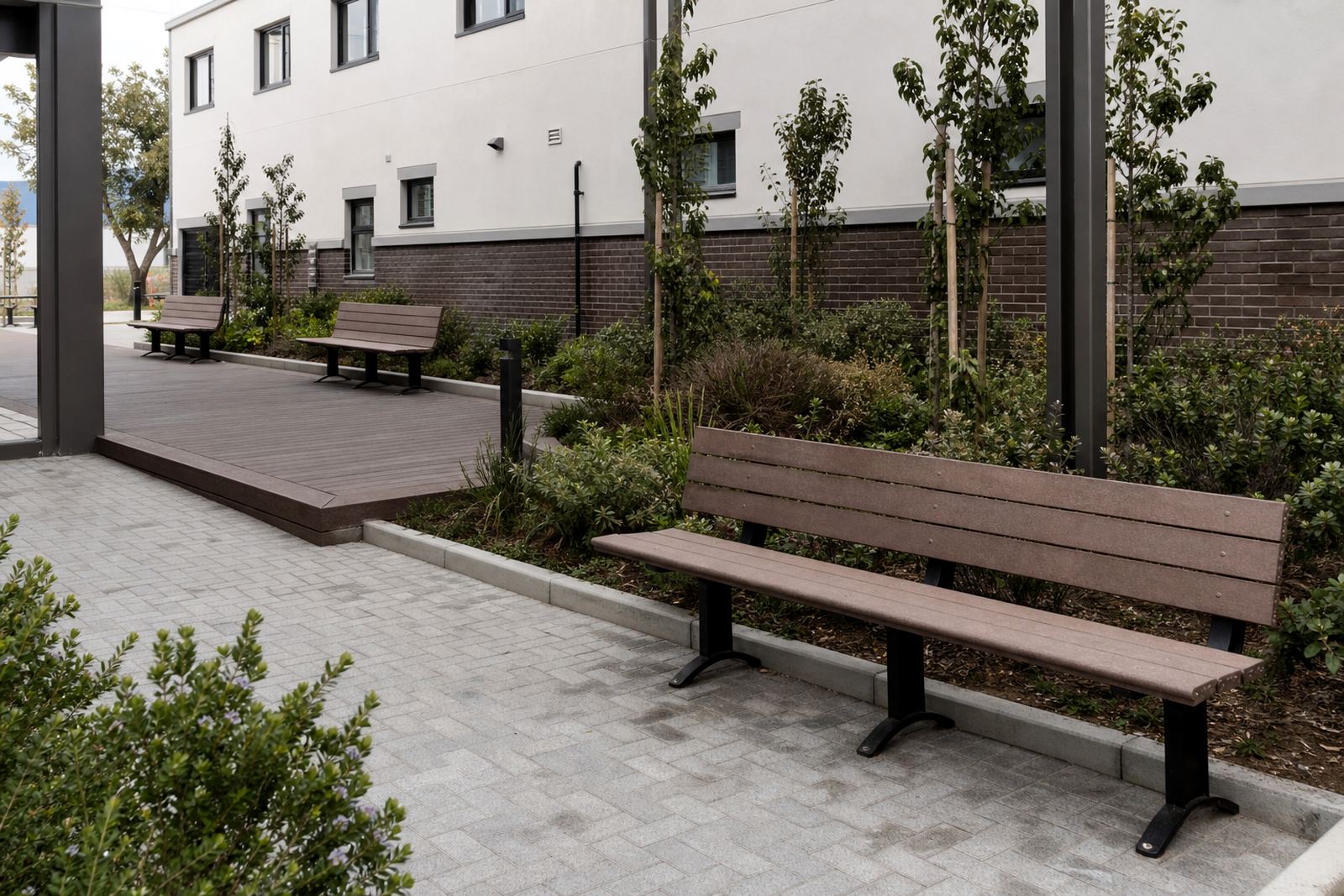
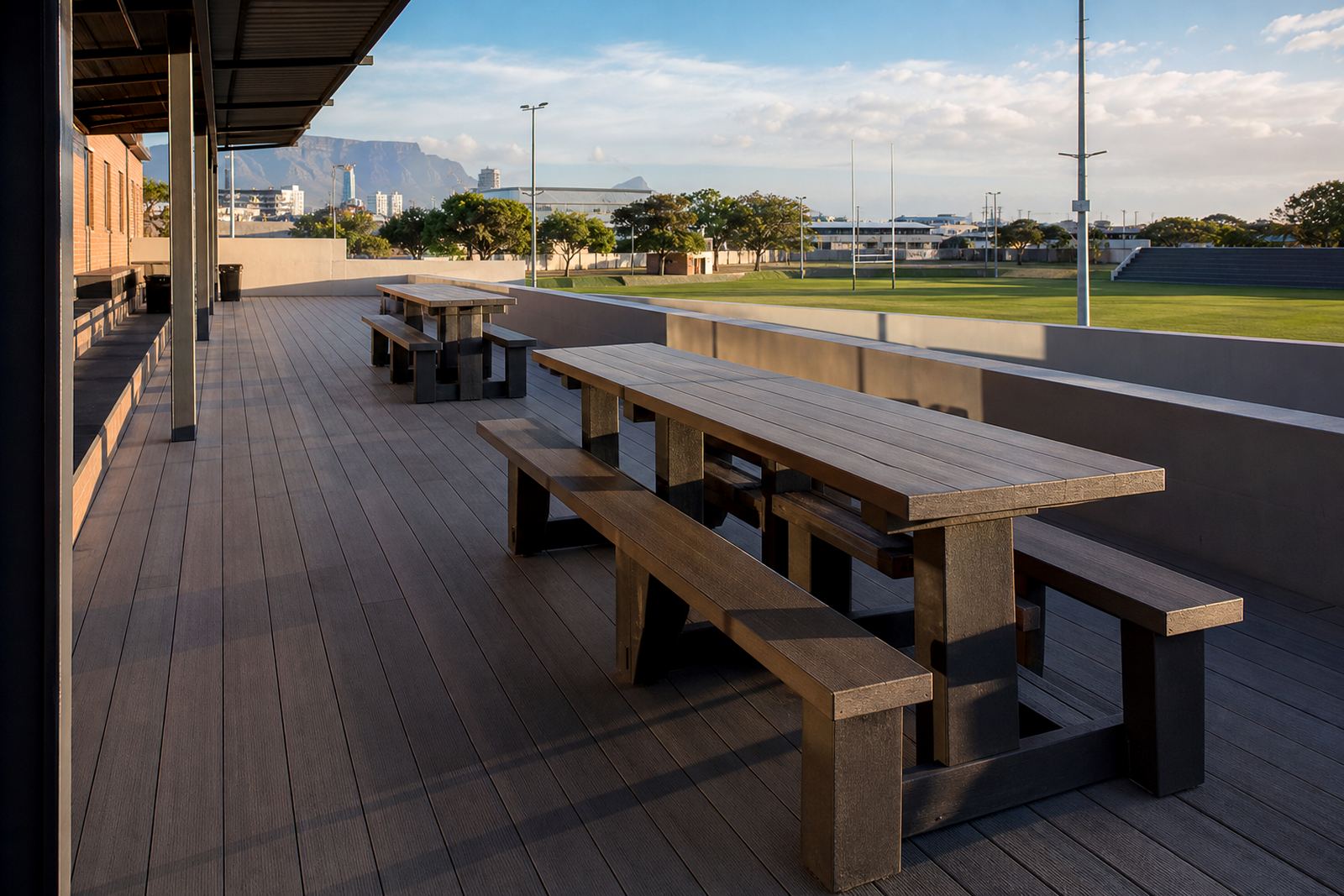
We supplied recycled plastic lumber decking boards and matching benches for the visitor areas, along with the needed components for fixing, edging and assembly. The board profiles were selected for exterior use and for a neat finish on a hospitality site. The bench seating was built to give comfortable rest points without requiring regular touch-ups or re-staining.
Our team handled site measures, layout planning, material quoting, delivery coordination and installation. Where the decked zones met existing surfaces, we carried out edge finishing so the transition looked tidy and reduced trip points. The bench positions were set out to allow easy movement of guests and staff, with enough space for tables, trays and service access.
- Recycled plastic lumber decking for visitor paths and picnic platforms
- Outdoor benches for seating zones and waiting areas
- Edge finishing at joins and perimeter transitions
- Delivery and installation coordinated to suit the farm schedule
Installation Timeline and On-Site Coordination
The work ran over a short project window of three weeks from final site measure to handover. Week one covered measurements, layout confirmation and material quoting. Week two was focused on delivery, preparation and assembly. Week three covered installation completion, finishing touches and a final walk-through with the client.
Because the farm was operating at the same time, our logistics planning mattered. Deliveries were staged to keep movement clear around the working areas, and Jason Petersen coordinated the installation sequence so the most disruptive work happened when the visitor load was lower. That kind of planning saves time, and it keeps things calm on site.
- Week 1: site measures and layout planning
- Week 2: delivery coordination and start of installation
- Week 3: completion, edge finishing and handover
- Work planned around visitor periods and farm activity
Why Recycled Plastic Lumber Suited This Farm
For a wine farm, the value is not only in appearance. Recycled plastic lumber suits outdoor hospitality areas because it does not behave like timber in the same way. It does not need sanding between seasons, and it is easier to keep clean when visitors bring dust, spillages or wet shoes into the space. In a farm setting, that kind of upkeep difference matters.
The material also works well where there is coastal humidity drifting inland or where irrigation keeps the ground damp. It gives a stable, low-maintenance surface for open decks and bench seating, with a practical look that fits a rural setting. The client wanted something durable without making the place feel overdone, and this approach suited that balance just fine.
- Low routine maintenance compared with traditional wood
- Suitable for exterior use in sun and damp conditions
- Useful for hospitality areas that get regular traffic
- Clean appearance without frequent repainting or sealing
Results for Visitors and Farm Staff
The completed seating and decked picnic zones gave the farm a more organised visitor flow and a cleaner place for guests to settle between tastings. The benches were placed to support longer stays, while the deck areas helped define the visitor experience without interfering with the working character of the property. The result was practical, tidy and easy to manage.
For staff, the biggest benefit was reduced maintenance. There is less concern about rot, flaking coatings or constant patch repairs, so the areas can be cleaned and used with less fuss. That helps the farm keep the spaces looking respectable through busy weekends and seasonal peaks, which is exactly what they needed.
- Improved visitor seating and circulation
- Cleaner picnic zones with a defined finish
- Less maintenance pressure for the farm team
- Suitable for regular use through the season
What We Would Do Again on Similar Farm Projects
On a similar project, we would again start with careful site measures and a practical layout discussion before any material is committed. Farm sites can look simple from a distance, but small changes in level, drainage and visitor movement affect the result quite a bit. Getting those details right early saves rework later.
We would also keep the delivery and installation sequence tightly planned, especially where the property is open to visitors or has daily operations running in the background. A good outcome on a wine farm comes from practical materials, clear coordination and a finish that can handle real use, not just a neat photograph.
- Measure first, then finalise layout and material volumes
- Plan around drainage, slopes and visitor movement
- Schedule delivery to avoid busy trading periods
- Choose finishes that are easy to clean and maintain
Key facts
| Project type | Visitor seating and decked picnic zones |
|---|---|
| Client location | Paarl, Western Cape |
| Material | Recycled plastic lumber decking and benches |
| Timeline | 3 weeks from measure to handover |
| Services used | Site Measures, Layout Planning, Delivery Coordination, Deck Installation, Bench Installation, Edge Finishing |
| Base | Paarden Eiland, Cape Town |