
Project brief for a busy coastal promenade
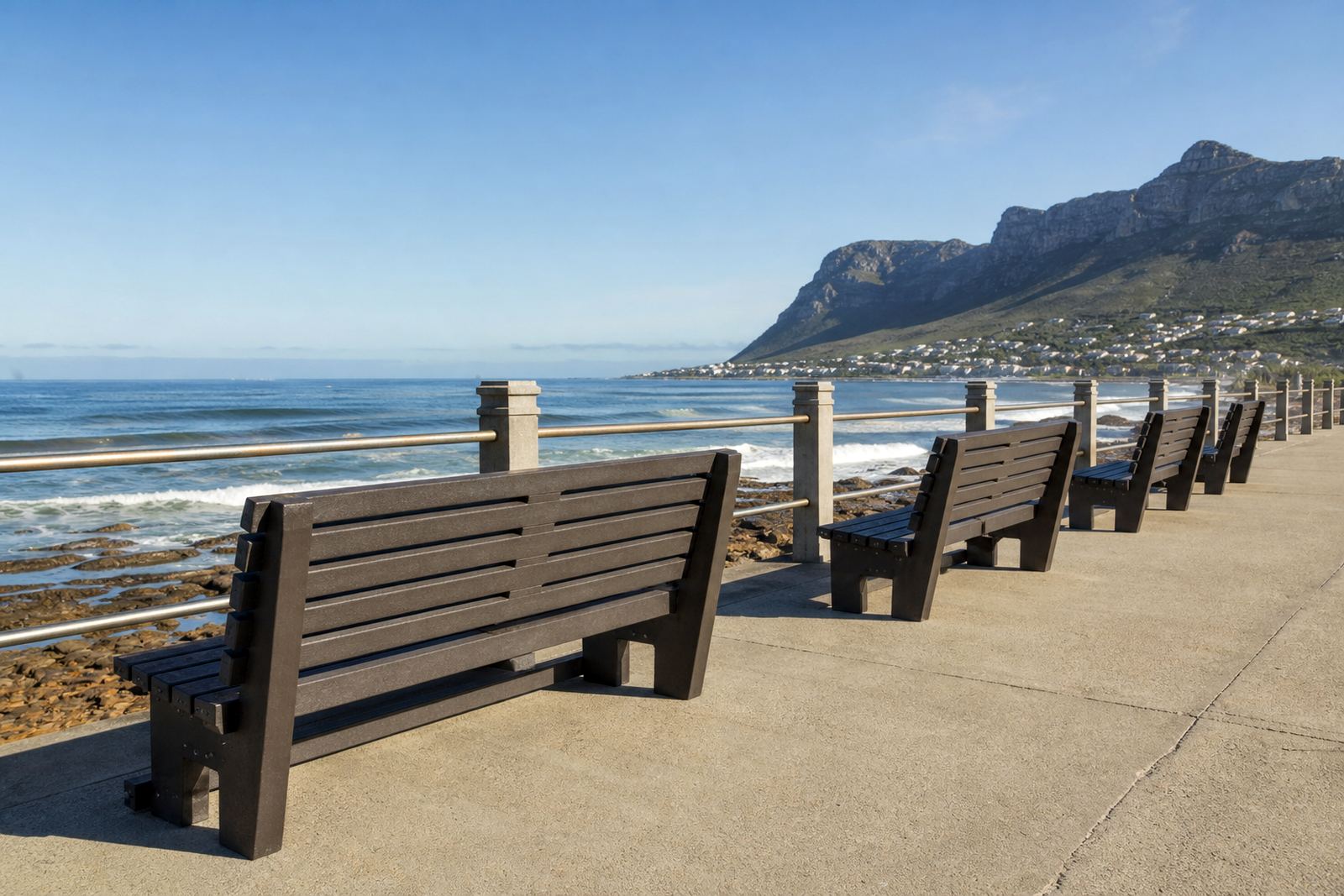
The client was a public sector team in Cape Town responsible for improving a well used promenade section in Sea Point. The aim was to add seating that felt solid, looked clean against the coastal setting, and could hold up under constant use from walkers, joggers, families, and early morning visitors. The seating had to suit a public route where bins, surf spray, sand and regular washing all form part of the daily picture.
Recycled plastic lumber was the practical choice. It offers the look and feel of a timber style finish without the same level of rot risk, splintering, or water uptake. In a coastal area like Sea Point, that matters. Salt in the air, moisture from mist and rain, and repeated cleaning can shorten the life of untreated timber and make upkeep more expensive over time.
- Project location: Sea Point, Cape Town
- Project type: public promenade seating supply
- Main goal: durable seating with low maintenance
- Exposure: coastal wind, salt air, sand and regular cleaning
What the site needed and what we checked
Before supply, the route was assessed with layout in mind. Seating on a promenade has to work with pedestrian flow, views, access paths and cleaning access. It also needs to be placed where it will not create a trip point or narrow the walkway. We worked to the available footprint and the practical service needs of the site rather than forcing standard pieces into awkward positions.
Our team handled site measures, layout planning and material quoting, then confirmed the seating component sizes and fixing approach. Because the route is open to weather all year, edge treatment and stable fixing points were important. The client needed a result that would stay in place, stay neat and remain easy to maintain, even when exposed to winter rain and strong summer sun.
- Checked available footprint and pedestrian clearance
- Allowed for cleaning access around the seating
- Matched seating positions to views and walk flow
- Selected materials suited to coastal exposure
Materials supplied and the seating specification
We supplied recycled plastic lumber components for the seating elements, cut and prepared for the project layout. The material was selected for its resistance to moisture and its ability to keep a tidy appearance in a public setting. It is also a sensible option where maintenance teams need fewer repairs and less frequent surface treatment than timber alternatives.
The pieces were prepared with clean edges and consistent sizing for straightforward installation on site. Where bench faces, seat slats and support pieces were required, the material was supplied to suit that arrangement. Fixings and the final assembly method were planned to suit the exposure and expected use, without unnecessary complication.
- Recycled plastic lumber seating components
- Prepared for a public boardwalk style setting
- Suitable for coastal moisture and salt air
- Low upkeep compared with traditional timber seating
Delivery and installation on a live public route
Getting the material to site needed careful timing. Promenade work has to respect public access, weather windows and municipal rules around safe working space. Our logistics planning covered delivery coordination so the components arrived in sequence and did not sit exposed on site longer than needed. The installation team worked in stages so the route could remain manageable for the people using it.
The installation was completed over a short programme measured in weeks, with the work planned around the site conditions and access windows. Jason Petersen managed installation, while Sibusiso Dlamini coordinated logistics so the project could move without delays. The team kept the work area orderly, which matters on a busy walkway where pedestrians, cyclists and maintenance crews may all be moving through.
- Delivery coordinated to suit site access windows
- Installation completed in stages over a short weeks-based programme
- Work area kept orderly for public safety
- Components installed with care around existing finishes
Results that suit Sea Point conditions
The finished seating elements fit the route cleanly and gave the promenade the practical seating it needed without adding heavy upkeep. For a coastal public project, the value sits in day to day use. The client gained seating that is easier to wash down, less likely to splinter, and better suited to damp air than conventional timber in the same position. That is a real advantage on a sea-facing route where weather and public use never really stop.
From a visual point of view, the seating sits comfortably within a public walkway setting. From a maintenance point of view, it is simpler to look after. Small repairs can be managed component by component, which helps where municipal teams need practical options instead of full replacement each time a surface starts to age.
- Improved public seating along the promenade route
- Cleaner long term maintenance profile
- Better suited to salt air and moisture than timber
- Component based repairs possible if needed later
What we would repeat on the next promenade job
If we were doing the same type of project again, we would use the same approach: start with a clear site measure, plan the layout around pedestrian movement, and match the material choice to the local conditions from the outset. That approach saves time later and keeps the installation practical for the people who must maintain it.
For coastal public seating, the key is not just supplying a product, it is making sure the pieces suit the route, the weather, and the maintenance reality. Sea Point is a good example of where recycled plastic lumber makes sense. It gives the client a durable result that is fit for purpose, and it does so without the regular sanding, sealing or rot issues that usually come with timber seating in exposed places.
- Start with site measures and pedestrian flow
- Plan for coastal cleaning and weather exposure
- Use materials that reduce maintenance pressure
- Keep fixing and replacement details simple for later upkeep
Key facts
| Project | Sea Point Promenade seating supply |
|---|---|
| Location | Sea Point, Cape Town |
| Client type | Public sector route upgrade team |
| Main material | Recycled plastic lumber |
| Scope | Boardwalk seating elements, delivery and installation support |
| Programme | Completed over a short weeks-based timeline |