
What a Backless Bench Is and Why It Works
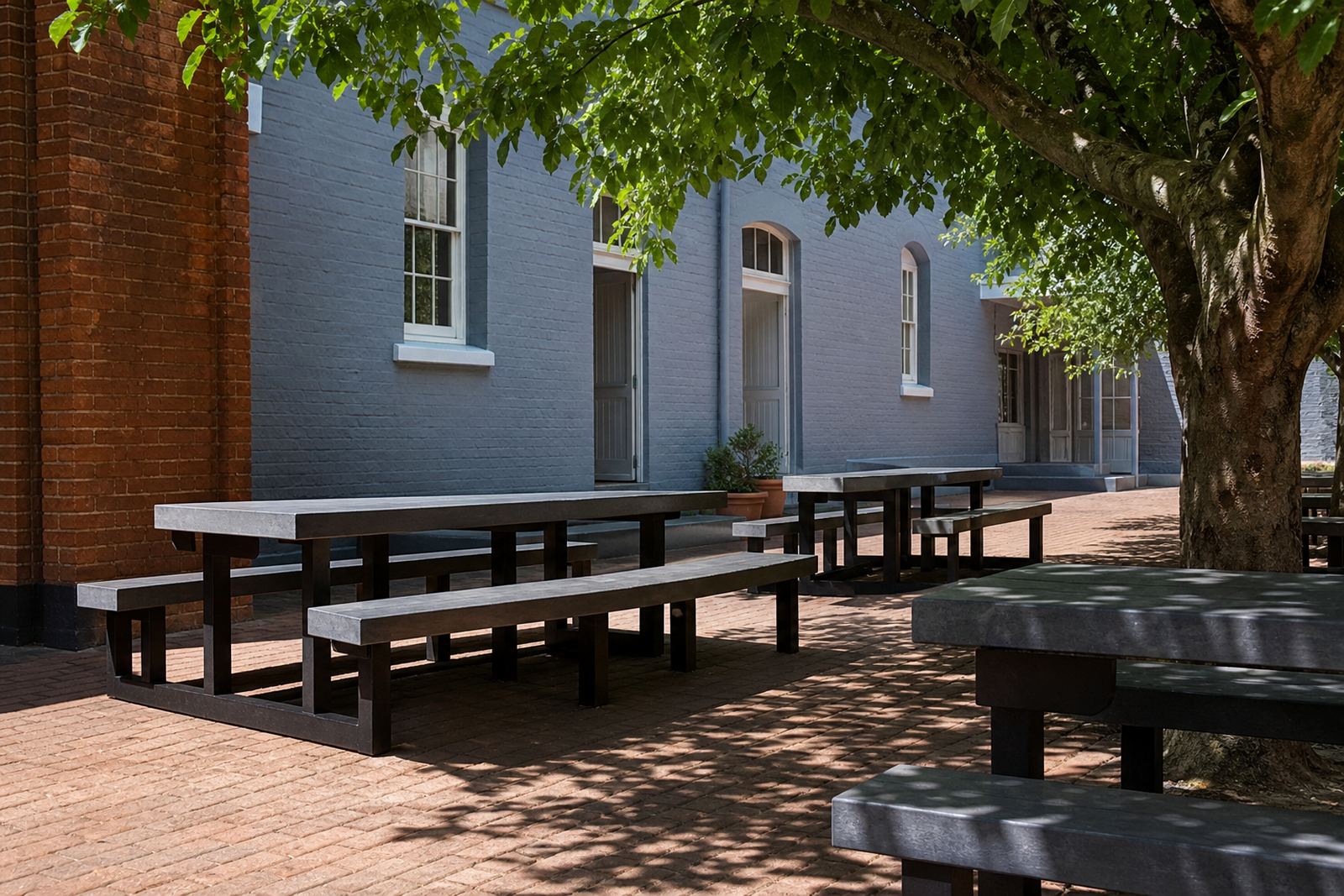
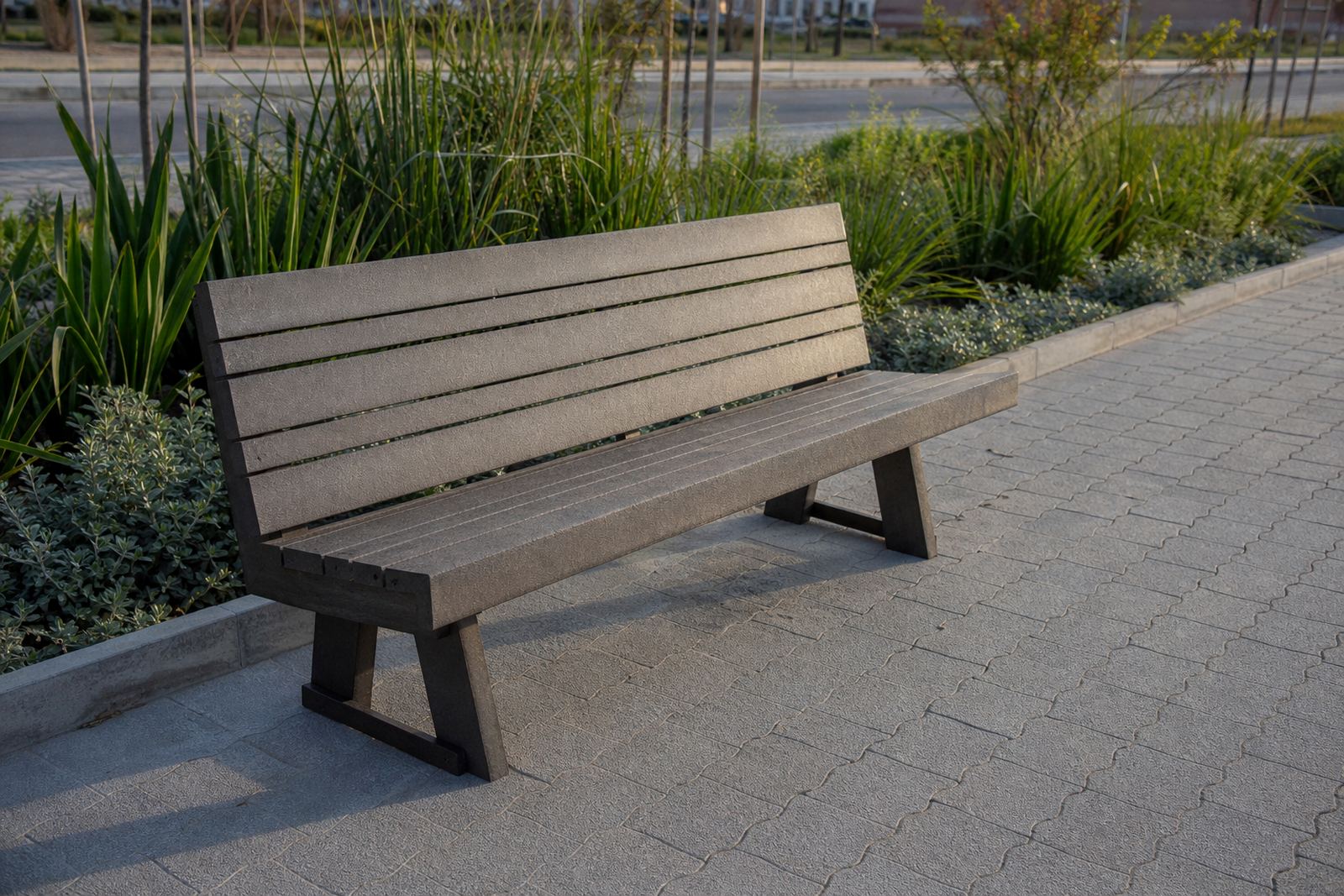
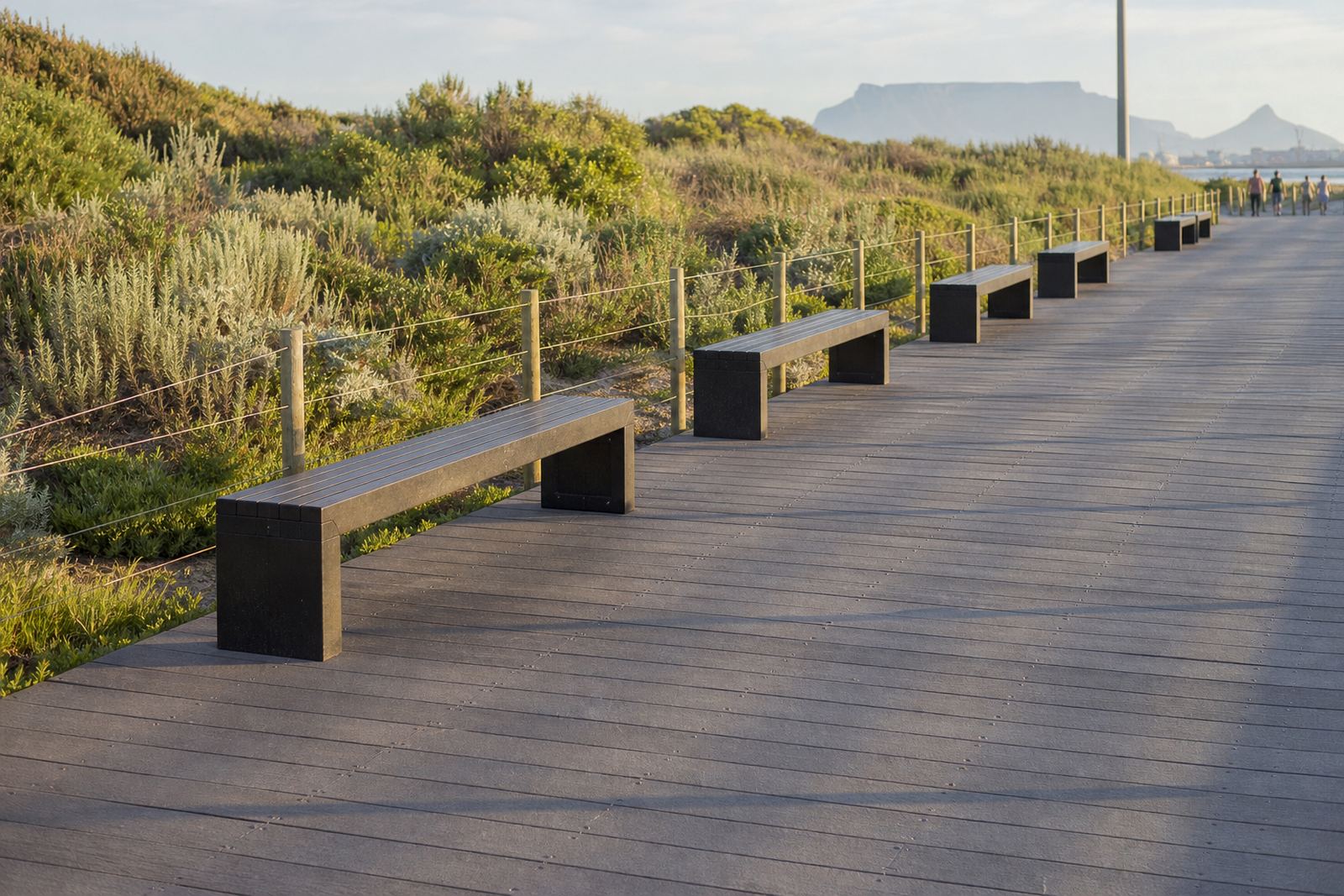
A backless bench is a fixed or movable seating unit without a backrest, usually made from recycled plastic lumber slats on a supporting frame. The format keeps the profile low and neat, so it suits narrow walkways, pool edges, garden paths, school courtyards and public waiting areas where people need quick, practical seating. It also makes access easier from both sides, which helps in places with steady foot traffic.
Recycled plastic lumber is commonly chosen because it handles rain, coastal humidity and regular cleaning better than untreated wood. It does not need painting or sealing, and it is well suited to Cape Town coastal areas, Stellenbosch estates, George gardens, Johannesburg business parks and Durban outdoor spaces. For many sites it is a sensible option where maintenance windows are tight and replacement timber becomes costly over time.
- Clean, simple seating for indoor-outdoor use
- Suitable for residential, commercial and public spaces
- Can be used as loose furniture or fixed in place
Sizes, Slat Options and Finish Choices
Backless benches can be made in a range of lengths and seating styles depending on the site. Common choices include short benches for two people, longer benches for shared seating and continuous bench runs for entrance areas or pedestrian routes. Width and height can also be adjusted to suit the application, whether it is a private patio or a busy municipal waiting zone.
The slats are usually arranged with small gaps for drainage and drying, which helps after rain or cleaning. Surface finish can be smooth or lightly textured, depending on the look and grip required. On some projects, clients prefer rounded edges for comfort and safer handling, especially where children or older users are involved. Colour choices are generally limited to practical tones that sit well with the material and location.
- Lengths can be tailored to the site plan
- Slat spacing can improve drainage and cleaning
- Edge detailing can be softened for comfort
Where Backless Benches Suit Best
These benches suit places where people pause briefly, wait in small groups or need informal seating that does not block views. They work well along paths, at the side of decks, in gardens, outside retail entries, on apartment walkways and in public waiting areas. Because there is no backrest, the bench can be approached from either side and placed more freely against walls, planters or railing lines.
For commercial and public spaces, backless benches are often selected where layout flexibility matters. They can sit under covered walkways, near lifts, at transport nodes or in communal spaces where users come and go during the day. In coastal towns like Somerset West and Durban, recycled plastic lumber is useful because it holds up better than many timber options in humid conditions, though good drainage is still important. If the bench will be near sand, sprinklers or salt spray, that should be noted before ordering.
- Paths, decks and promenade seating
- Schools, clinics and waiting areas
- Apartment, lodge and hospitality outdoor spaces
Installation, Fixing and Power Needs
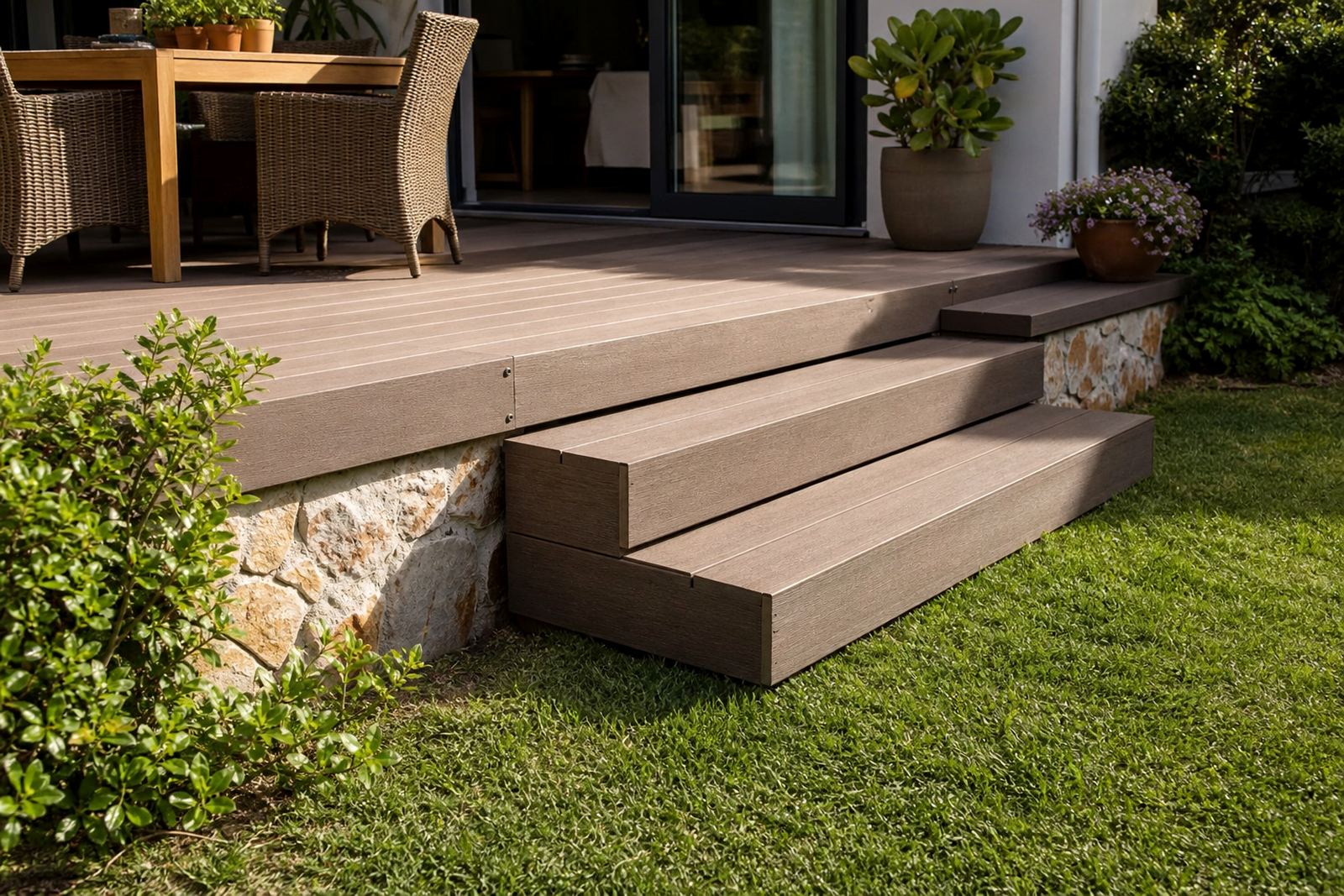
Backless benches do not need gas or electricity. Installation is mainly about correct positioning, level support and proper fixing where the bench must stay in place. On solid concrete, it can be anchored with suitable hardware. On decking or paved areas, the support structure and fixing points must be checked first so the load is carried properly and the surface is not damaged. If the bench is free standing, it still needs a flat base and enough clearance for safe use.
For projects in Cape Town, Johannesburg or Durban, site conditions can change quickly because of weather, access limits and municipal rules. It helps to confirm whether the bench must be removable, bolted down or aligned with other site furniture. Deck installation, edge finishing and component replacement can be arranged where the bench forms part of a wider outdoor upgrade. One small site check before fabrication often saves a lot of rework later.
- No power or gas connection required
- Can be fixed down or left free standing
- Site levels and support points must be confirmed first
Care, Cleaning and Long-Term Servicing
Recycled plastic lumber benches are generally straightforward to care for. Routine cleaning with water and a mild detergent is usually enough to remove dust, bird droppings and everyday marks. In exposed areas, especially close to the coast, regular washing helps keep the finish neat and reduces salt build-up. Unlike timber, the material does not need sanding, staining or sealing, which keeps maintenance schedules simpler for estates, schools and commercial sites.
If the bench is used hard, small service tasks may still be needed over time, such as checking fasteners, replacing worn support pieces or adjusting loose components. For larger sites, planned servicing is useful after storms, heavy use or refurbishment of the surrounding deck. Care advice and trade support can be given with the order so the people managing the space know what to check and when.
- Wash down with water and mild detergent
- Check fasteners and support points regularly
- Useful for low maintenance outdoor programmes
What to Confirm Before You Order
Before ordering, it helps to confirm how many people the bench must seat, where it will stand and whether it must be fixed to the floor. Measure the available length carefully and check whether there is enough room for foot traffic, door swing, wheelchair movement or cleaning access. If the bench will be used in a public area, think about the edge finish, anchoring method and whether the site needs extra safety clearance.
You should also confirm the location, because delivery to Cape Town, Stellenbosch, George, Johannesburg, Durban, Paarl, Somerset West and Bellville may need different lead times and site access arrangements. If the bench is part of a larger deck or waiting area, material quoting, layout planning and delivery coordination can be handled together. Founded in 2009, Plastimber works from Paarden Eiland, Cape Town with trade support for residential and commercial projects across South Africa.
- Seat length and expected user count
- Fixed or free standing installation
- Delivery address, access and site conditions
Key facts
| Product type | Backless bench made with recycled plastic lumber slats |
|---|---|
| Typical use | Paths, decks, gardens, waiting areas and public spaces |
| Installation | Fixed down or free standing, depending on the site |
| Maintenance | Water wash and mild detergent, with periodic hardware checks |
| Power or gas | Not required |
| Supply area | Cape Town, Stellenbosch, George, Johannesburg, Durban and surrounding areas |