What deck steps are used for
Deck steps are separate step components used with raised decks, platforms and outdoor walkways where a safe change in level is needed. They help create a clear route between ground level and the main deck surface, which is useful at homes, guest lodges, schools, shopfronts and entertainment areas in places like Cape Town, Stellenbosch and George.
Recycled plastic lumber is often chosen for this job because it does not split like many timber products and it handles damp air, salt spray and regular cleaning well. In coastal areas such as Paarden Eiland, Somerset West and Durban, that matters when the steps are exposed to morning moisture and summer rain. The finish is practical rather than decorative and that suits most outdoor spaces where function is the main concern.
Sizes, profiles and step component options
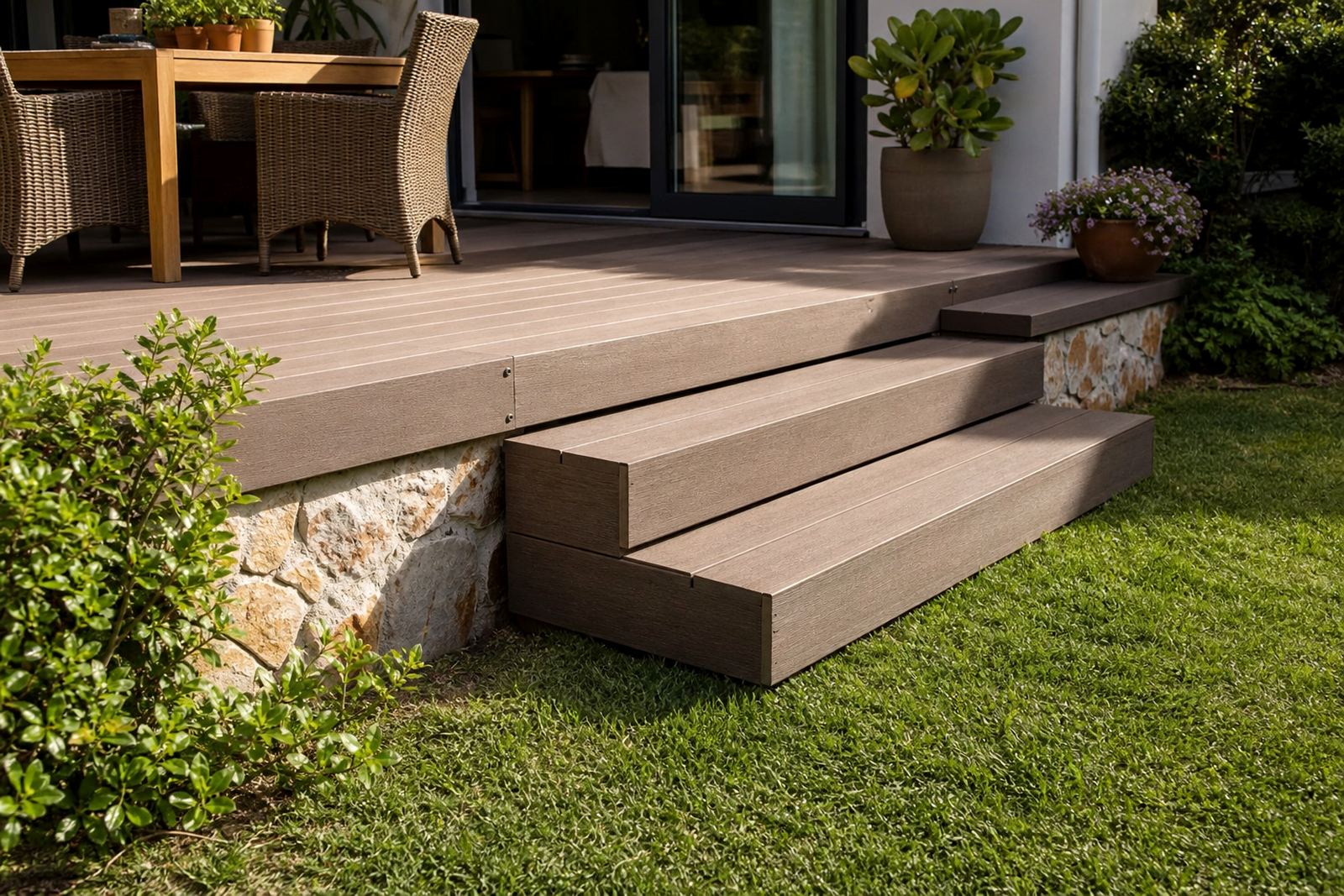
Step components can be made to suit the height of the deck, the depth of the tread and the layout of the surrounding area. Common builds use one, two or more risers depending on the finished deck height. Where space is tight, a compact step with a shorter tread can work, while larger entertaining areas often benefit from deeper steps that feel more comfortable underfoot.
Depending on the project, the following options may be used:
- Single step, double step or multi-step runs for raised decks
- Wide treads for braai areas, pool decks and commercial entrances
- Closed or open side profiles depending on the look required
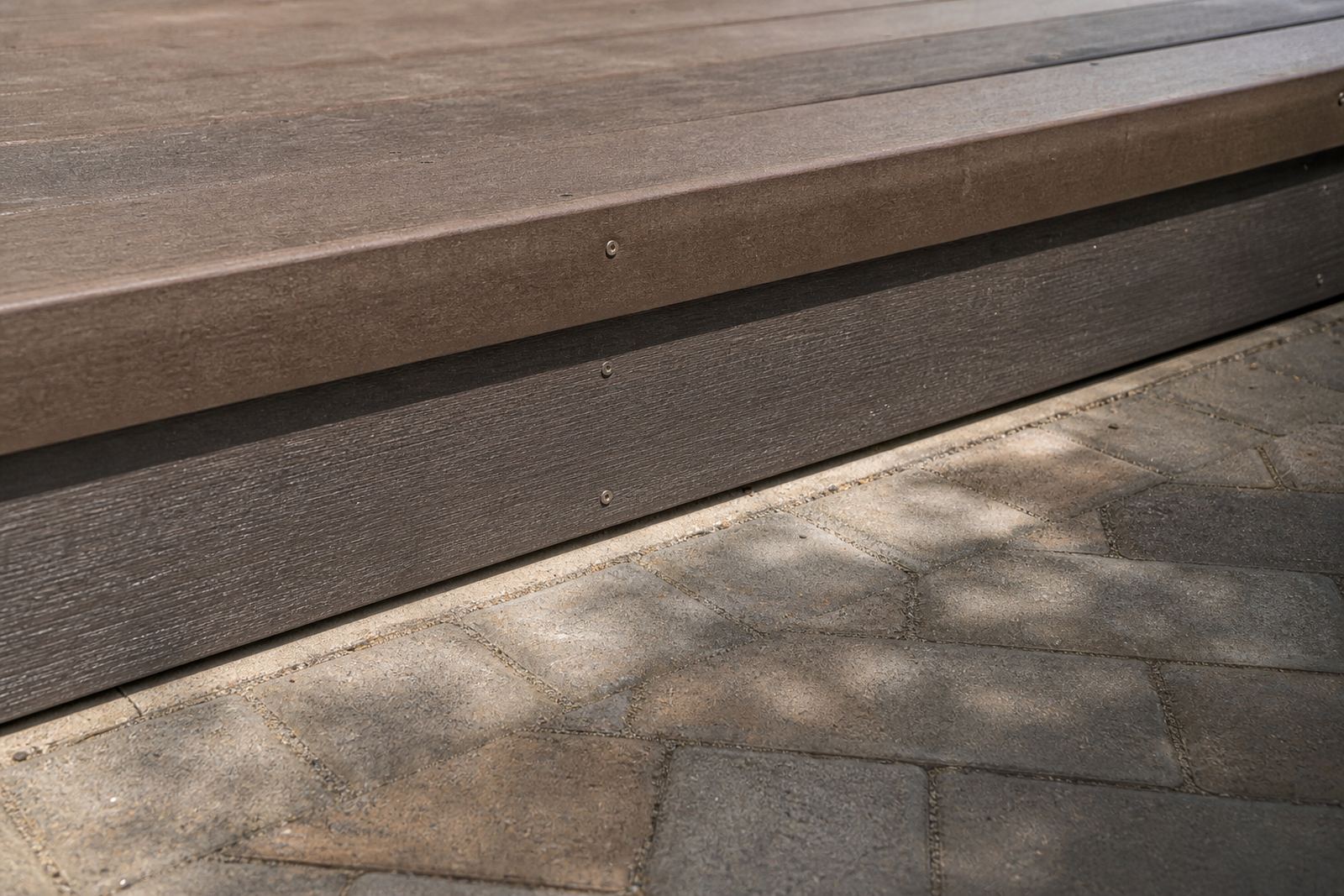
- Matching edge finishing to help the step sit neatly against the deck frame
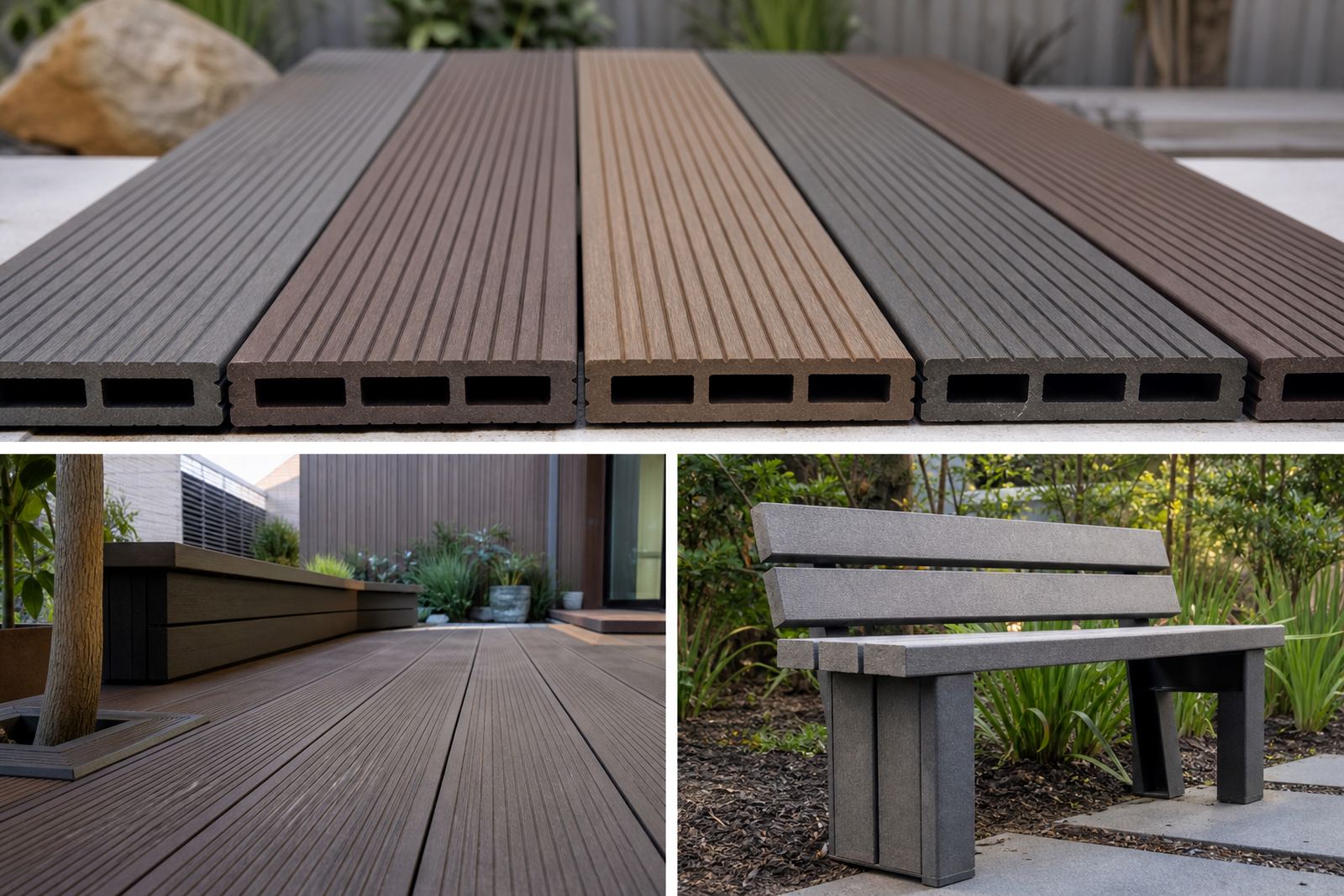
- Options for plain finishes or textured surfaces where extra grip is preferred
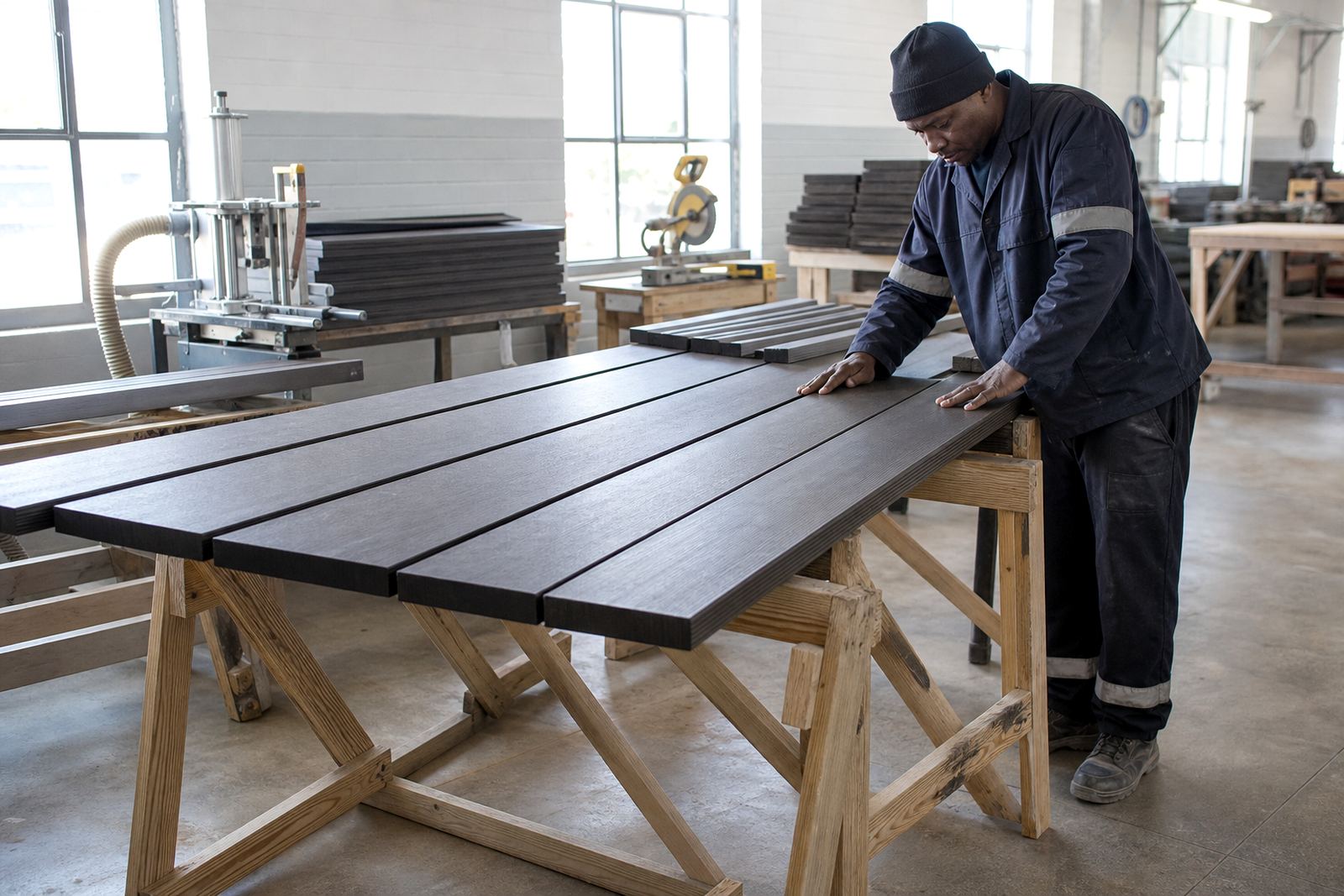
Because every site is different, final dimensions are normally checked on site before the components are cut and fixed. That helps reduce awkward rises, uneven spacing and wasted material.
Where deck steps suit best
These steps suit residential and trade projects where the deck is used often and the surface needs to stay easy to maintain. They are a common fit for pool surrounds, stoep extensions, garden terraces, coastal homes, small hospitality spaces and apartment common areas. In Johannesburg and Bellville, they are also useful where a raised platform needs cleaner access from paving or lawn.
Deck steps are often specified where the owner wants something that can cope with regular foot traffic without needing sanding or sealing. They also work well in spaces with municipal water restrictions, since the material does not need ongoing washing to stay serviceable. For outdoor seating areas, a bench nearby or a small landing at the top of the step can improve the flow of movement, especially where people are carrying trays, bags or pool gear.
- Pool and entertainment decks
- Garden rooms and braai areas
- Commercial entrance platforms
- Schools, crèches and shared outdoor spaces
- Coastal properties with high humidity
Installation notes and site requirements
Step installation is usually done as part of the deck build, using a fixed frame and properly aligned supports. The step components need a level base, correct spacing and secure fixing points so the rise stays even from one tread to the next. Where the deck is being installed on a sloped site, layout planning matters because a small error at the base can leave the step feeling too steep or slightly out of line.
Power and gas are not needed for the deck step itself, though a full installation may use power tools for cutting, drilling and fastening. On active sites in Cape Town or George, access for delivery and storage should also be checked before work begins. If the area is shared with other trades, it helps to mark out the finished height early so that paving, balustrading and drainage all line up properly. A tidy handover is easier when the step is set out correctly from the start, no need for later patching.
- Check the finished deck height before ordering
- Confirm tread depth and riser height on site
- Allow for drainage and ground clearance under the frame
- Plan fixing access if the step will sit tight against a wall
Care, cleaning and servicing over time
Recycled plastic lumber steps are easy to keep in order. A regular sweep and an occasional wash with water and a mild cleaner are usually enough for day to day care. In dusty inland areas, grit can collect on the treads and should be removed so the surface stays comfortable underfoot. In coastal towns, a quick rinse now and then helps clear salt build-up from the edges and fixing points.
If a step is used heavily, it should be checked for movement, loose fasteners or worn edges from time to time. Refurbishment may include re-fixing a component, replacing a damaged section or tidying the edge finish where foot traffic has marked the surface. The material itself is low maintenance, but the supporting structure still needs sensible care. A small issue left too long can turn into a bigger repair, so routine checks are worth it.
What to confirm before you place an order
Before ordering deck steps, it helps to have the deck height, intended use and site conditions ready. That makes the quoting process clearer and reduces the chance of a mismatch between the step and the deck frame. Projects in places like Paarl, Somerset West and Durban often need different fixes because of slope, moisture exposure or available access.
Useful details to confirm include:
- Overall height from ground to finished deck surface
- Number of steps needed and preferred tread width
- Whether the step is for home use or higher traffic commercial use
- Delivery access, especially for narrow driveways or upper level sites
- Any matching work needed such as benches, edge finishing or deck refurbishment
If the order is part of a larger project, site measures, layout planning and delivery coordination can be arranged with the rest of the deck work. That keeps the components aligned and helps the finished installation sit properly in the space.
Key facts
| Material | Recycled plastic lumber |
|---|---|
| Use | Deck access and level changes on outdoor areas |
| Typical build | Single, double or multi-step arrangements |
| Finish | Plain or textured options depending on project need |
| Care | Low maintenance with regular cleaning |
| Service area | Paarden Eiland, Cape Town and delivery across South Africa |