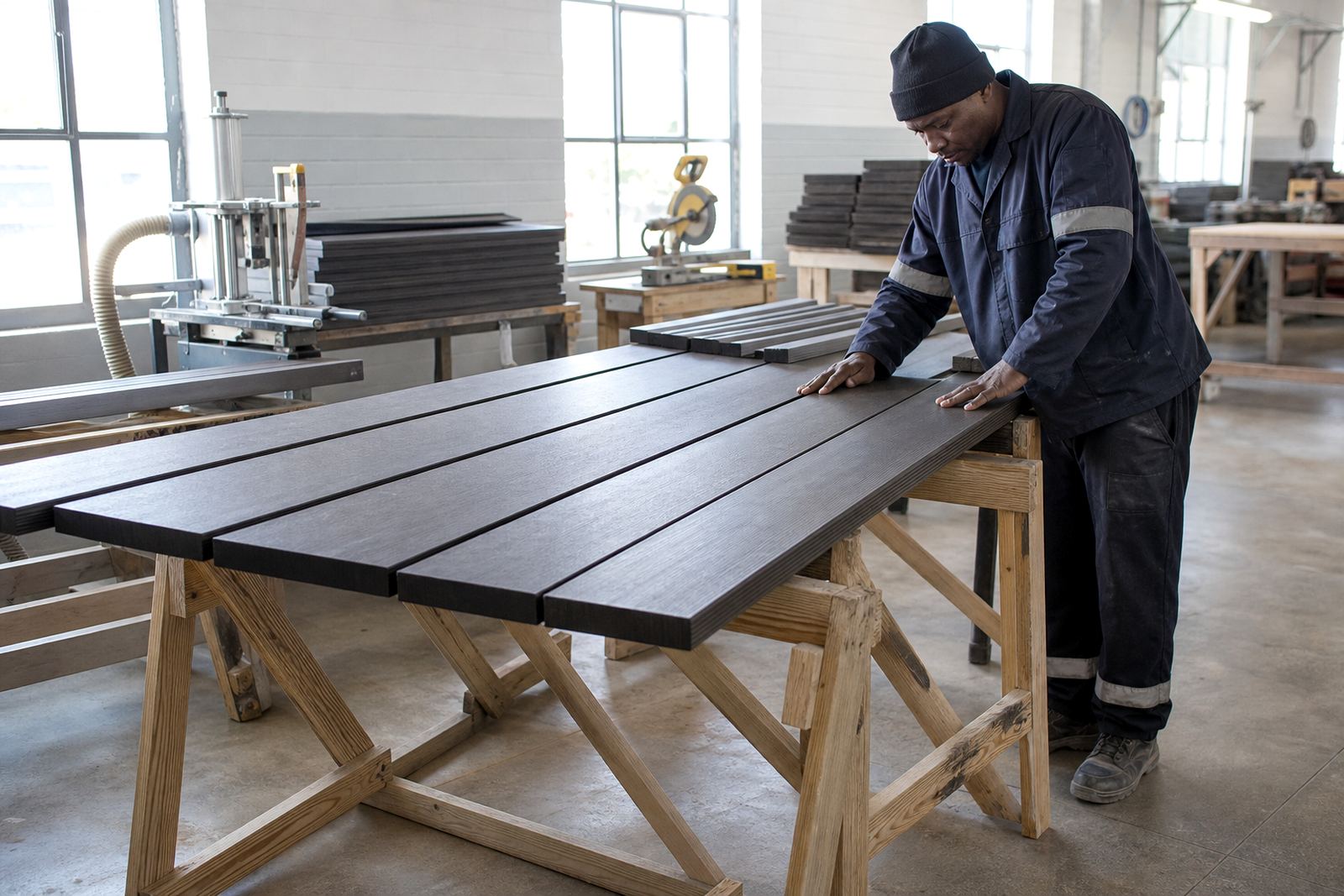
What Smooth Boards are made for
Smooth Boards are a practical decking option for anyone who wants the look of a neat, modern surface without the upkeep that usually comes with timber. They are made from recycled plastic lumber and shaped for outdoor use, so they hold up well in places where rain, coastal air, splashes and regular cleaning are part of normal life. In Cape Town and other coastal towns, that matters because moisture and salt air can be hard on traditional materials.
The smooth finish gives the boards a cleaner visual line than a heavily textured board, which makes them a good fit for contemporary patios, pool surrounds and covered entertainment areas. They are also useful where dust and sand need to be swept off often, since a flatter surface is easier to keep neat. For installers and property owners, that means less sanding, less sealing and fewer maintenance cycles over time.
Sizes, profiles and layout choices
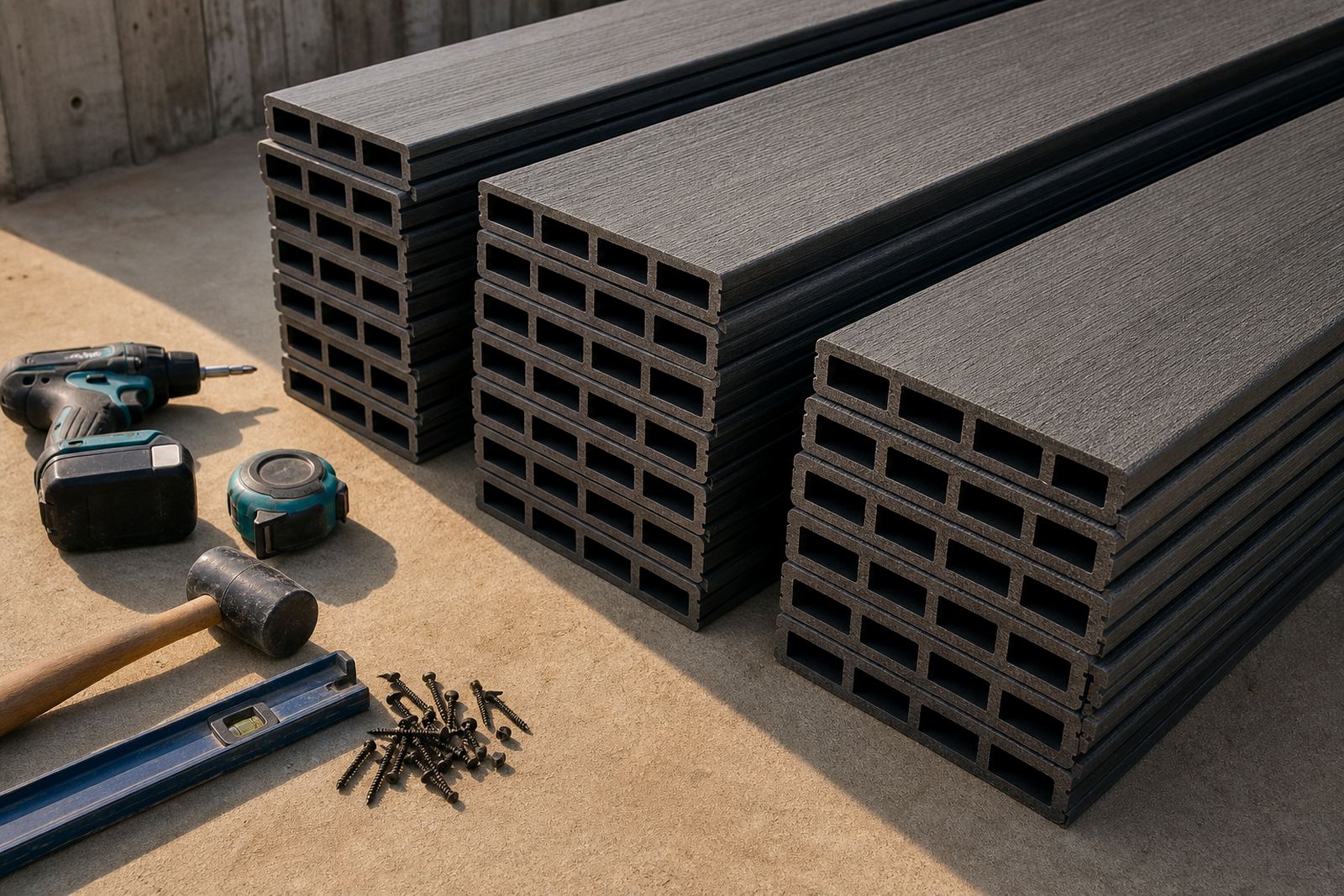
The range is supplied in decking board form with sizes and profiles selected for practical outdoor use. Choice depends on the span, the substructure and how the finished space will be used. Some projects call for a tighter board layout and others need a wider board rhythm for a more open look. The best result comes from matching the board profile to the intended traffic, drainage and edge detail.
- Board lengths can be selected to suit the layout and cutting plan.
- Widths and thicknesses are chosen for the application and support spacing.
- Colour and finish options help match the board to the surrounding brick, plaster, aluminium or paving.
- Edge details can be planned for steps, pool borders and perimeter trims.
- Component replacement is possible later if a section is damaged or altered.
For trade work in Johannesburg, Durban, Stellenbosch or George, it helps to check the exact board profile early so the site measure, ordering and installation sequence stay aligned. A small mismatch at the start can create unnecessary cuts, waste and delay.
Where Smooth Boards suit best
These boards work well in residential and commercial settings where a smooth, low-fuss deck surface is wanted. They are often chosen for patios, balconies, braai areas, roof terraces, courtyard seating zones and shopfront or hospitality outdoor spaces. Because the surface is easy to sweep and hose down, it also suits areas that collect pollen, sand or leaf litter.
They are especially handy near water and in high-use areas. Around pools, the even finish helps create a tidy appearance, while covered walkways and courtyard decks benefit from the material’s ability to cope with weather changes. In places like Paarl, Somerset West and Bellville, where outdoor spaces often need to work hard across hot summers and winter rain, a recycled plastic board can be a sensible option for long term use.
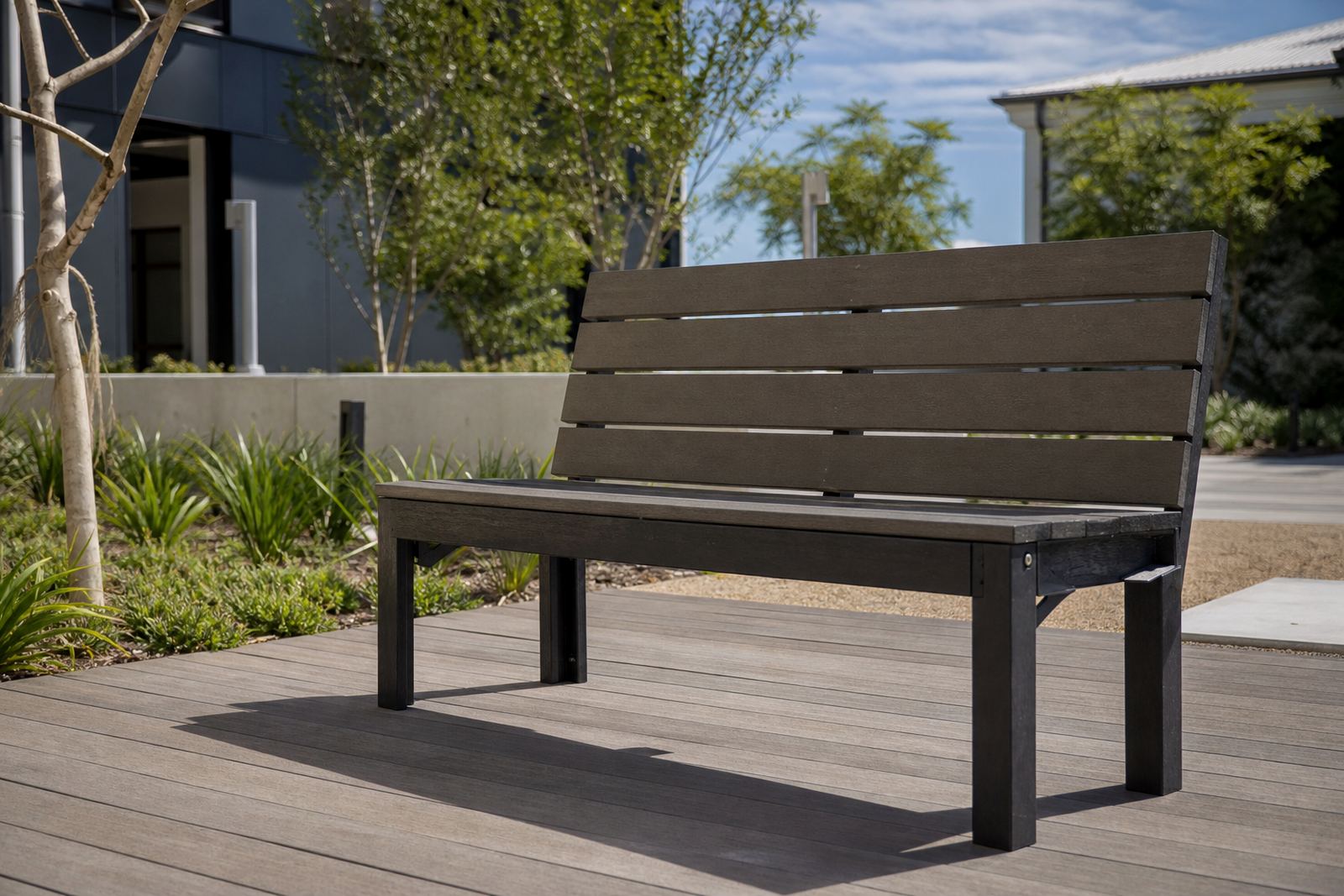
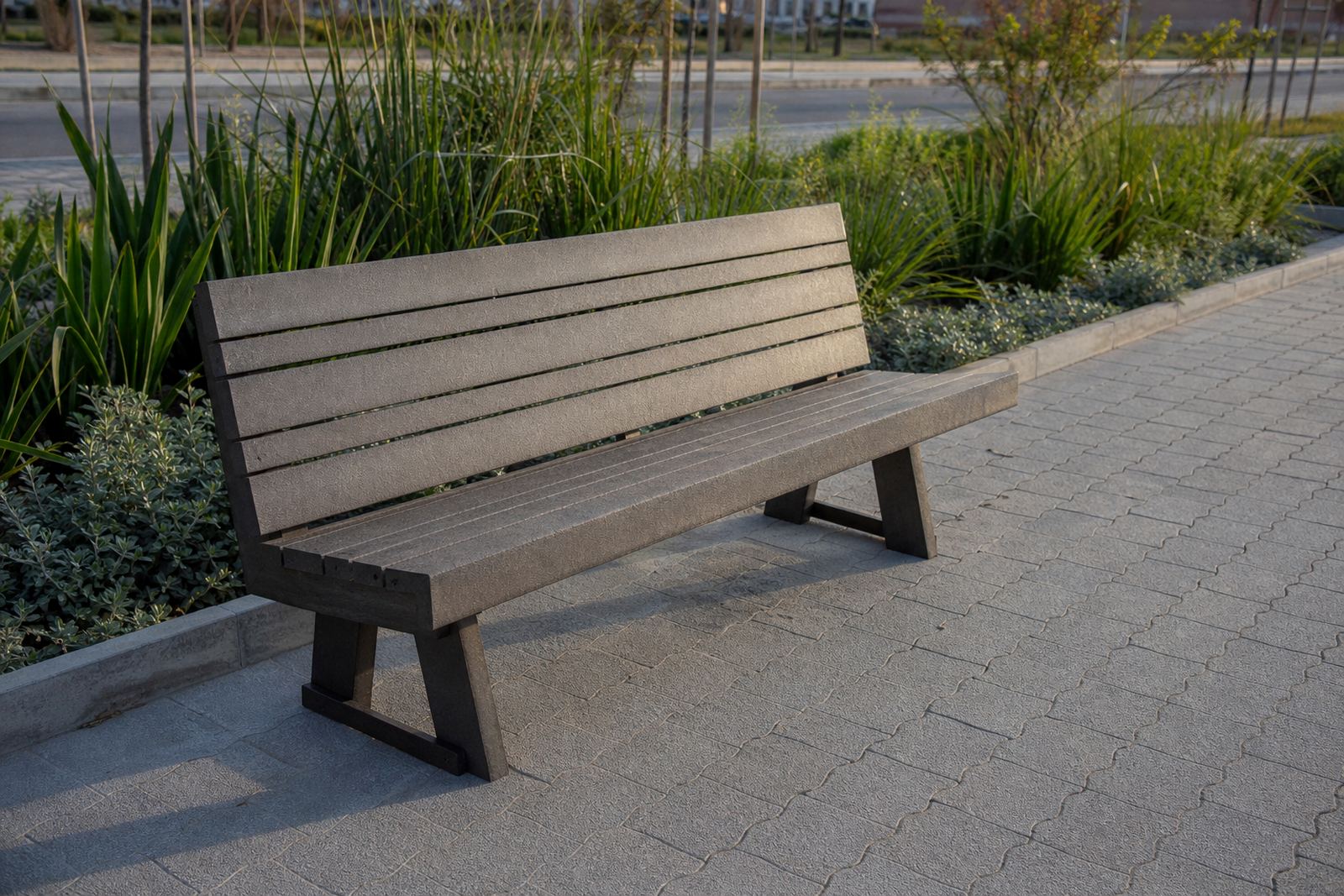
For benches and seating edges, the same material can be used to create a matching look across the whole project. That makes it easier to keep one finish through the deck and the seating area, rather than mixing materials that weather at different rates.
Installing Smooth Boards on site
Installation starts with a proper site measure, layout planning and a check on the supporting structure. The boards need a suitable subframe, correct spacing and the right fixing method for the chosen profile. Good planning matters on coastal sites and in inland areas alike, because the boards should be laid with drainage, movement and access in mind. If the substrate is uneven or the falls are wrong, the final result will never feel right.
No special gas equipment is normally required for standard board installation. Power tools are usually enough for cutting, fixing and finishing, and site access should allow for the usual trade gear, fasteners and measuring tools. Where a project includes edge finishing, stair nosing or bench installation, the sequence should be planned so the trim work is done after the main deck is secure. That keeps lines cleaner and reduces rework.
- Check the substructure is level and sound before boards are fixed.
- Allow for expansion and movement where the layout needs it.
- Plan board direction so water can shed properly.
- Confirm access for delivery, offloading and on-site handling.
- Coordinate installation timing if the site is shared with other trades.
Care, cleaning and refurbishment
One of the main reasons people choose Smooth Boards is the simple care routine. In most cases, regular sweeping and a wash with water and a mild cleaner is enough to keep the surface in good shape. For spaces that see heavy foot traffic or coastal grime, a more frequent rinse may be useful. The smooth finish also makes it easier to remove dust, food spillages and general outdoor dirt without much effort.
Over time, some projects may need minor refurbishment work rather than full replacement. That can include component replacement, edge finishing touch-ups or bench refurbishment where the deck forms part of a larger seating area. If a section becomes marked by moving furniture, building work or impact, it may be possible to replace only the affected pieces instead of redoing the whole area. That keeps disruption down and helps extend the life of the installation.
Care advice should be given at handover so the owner or managing agent knows what to use and what to avoid. Harsh chemicals, sharp scraping tools and rushed pressure cleaning can all cause avoidable damage. A steady, simple routine is usually best, and it keeps the surface looking tidy without extra cost.
What to check before you order
Before ordering, it helps to confirm the dimensions of the area, the intended use and the finish you want to see on completion. A small patio at a home in Somerset West may need a different layout from a commercial courtyard in Durban or a rooftop space in Cape Town. The right ordering details prevent shortfalls, extra joins and awkward offcuts.
- Measure the full deck area, including steps, borders and recesses.
- Decide whether the space needs matching benches or only the decking boards.
- Confirm the support structure, fixing method and edge treatment.
- Ask for material quoting with the chosen board profile and any accessories.
- Plan delivery coordination if the site has access limits or shared loading areas.
- Check whether you need trade support for installation, refurbishment or later replacement work.
Clients in Cape Town, Stellenbosch, George, Johannesburg and Durban can arrange enquiries through the contact form and get the project moving in an orderly way. That is useful for builders, property managers and homeowners who want a clear process from measure through to fitment.
A practical fit for South African projects
Smooth Boards are suited to South African conditions where heat, rain, coastal humidity and busy use can quickly expose weak materials. For projects in Paarden Eiland and beyond, the appeal is straightforward: a neat appearance, simple maintenance and a material that is made for outdoor service. It suits new builds, upgrades and replacement work where a consistent finish is needed across the deck and seating areas.
With site measures, layout planning, deck installation, bench installation and aftercare support, the product can be used in a way that matches the site rather than forcing the site to match the product. That practical approach usually gives the best result and keeps the finished area useful for longer.
Key facts
| Product type | Smooth-finish recycled plastic lumber decking board |
|---|---|
| Material | Recycled plastic lumber for outdoor use |
| Main use | Decking for patios, poolsides, balconies, courtyards and similar spaces |
| Finish | Smooth surface for a cleaner look and easier cleaning |
| Installation support | Site measures, layout planning, delivery coordination and installation |
| Servicing | Care advice, refurbishment support, component replacement and edge finishing |