
What grooved boards are made for
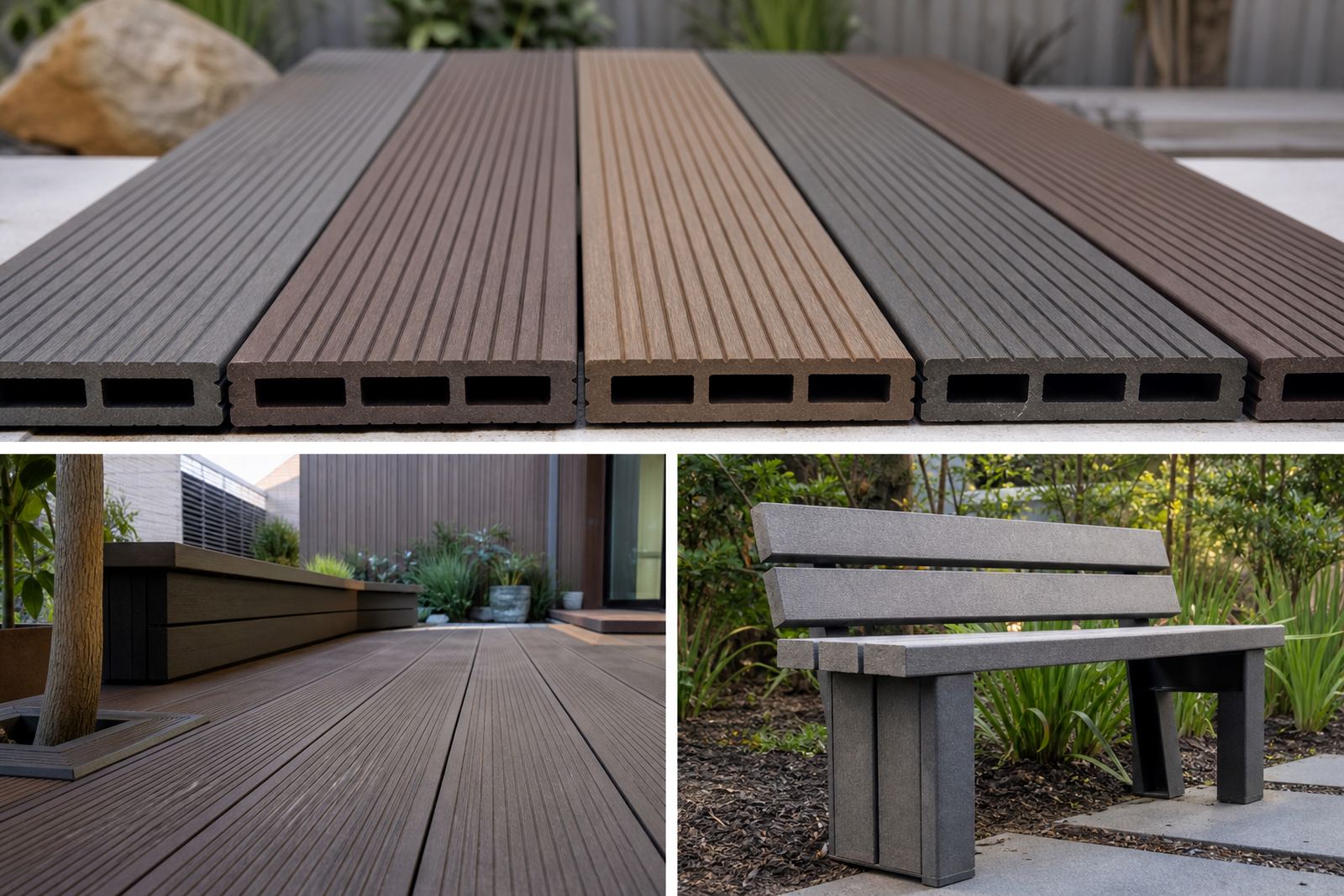
Grooved deck boards are shaped with side grooves that allow compatible hidden-fix clips or spacing systems to sit out of sight. The result is a neater surface with fewer visible fasteners, which is useful where the deck needs a tidy line across the full run. In Paarden Eiland, where we regularly work on compact urban sites and exposed coastal properties, that clean finish is often part of the brief.
Because the boards are made from recycled plastic lumber, they do not behave like timber in the same way. There is no sanding to chase grain lift, and no need to worry about splitting in the same manner as natural wood. They are commonly chosen for balconies, walkways, courtyards, pool surrounds and hospitality spaces where foot traffic and weather both matter.
- Suited to concealed-fix and clip-based installations
- Useful where consistent board gaps are needed
- Designed for outdoor use in wet and sunny conditions
- Common in residential, commercial and light trade work
Sizes, profiles and board options
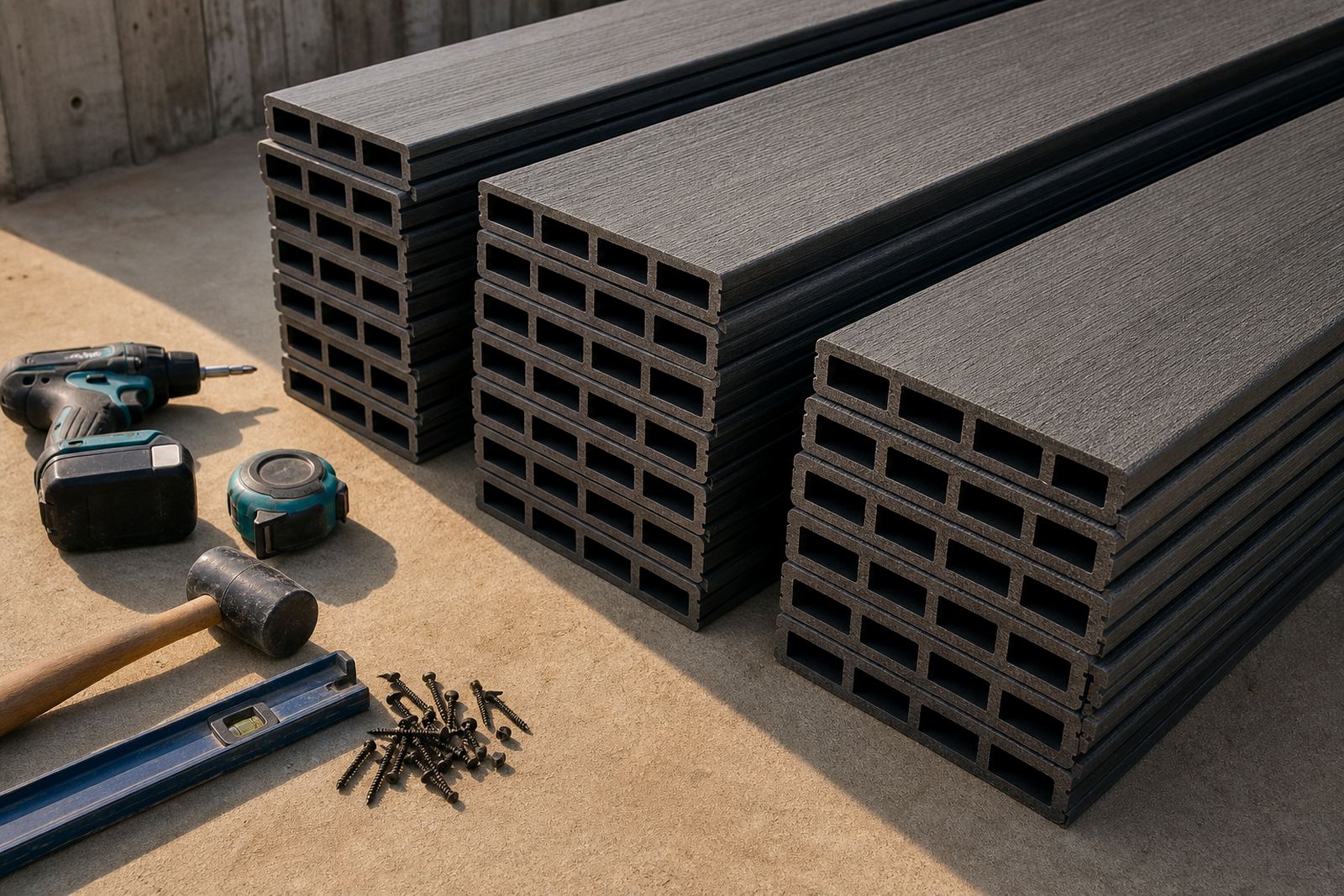
Grooved boards are normally selected by width, thickness and length, depending on the span and the look required. The exact profile can vary, so the ordering process starts with site measures and an understanding of the framing below. Where access is tight, shorter lengths may be easier to carry through stairwells or service passages, while longer runs can reduce joints across open decks.
For accurate planning, check the groove pattern, board face finish, and whether the board is intended for edge or field use. Some projects need a matching board for borders or picture framing, while others use grooved boards across the full deck. A little attention here saves time later, especially on large jobs where a mismatch can delay install.
- Board width and thickness selected to suit the structure below
- Length options depend on project layout and transport access
- Groove pattern must suit the chosen concealed fixing system
- Matching trim and edge details can be planned before delivery
Where grooved decking suits best
These boards work well on residential decks, outside braai areas, apartment common spaces, restaurant terraces and municipal or school projects where maintenance needs to stay manageable. Along the coast, from Durban to George, recycled plastic boards are often considered because humidity, salt air and regular rain can be hard on timber. In hotter inland areas like Johannesburg, the material also avoids some of the movement and upkeep that comes with natural wood.
They are especially useful where regular cleaning is expected and where a neat appearance matters for the long term. That includes pool surrounds, rooftop leisure areas, garden paths and raised decks near plant rooms or service areas. The finish is practical rather than decorative for its own sake, which is often what trade clients want.
- Homes and townhouses
- Guesthouses, restaurants and office courtyards
- Pool areas and water-adjacent walkways
- Commercial sites needing low-maintenance outdoor surfacing
Installing grooved boards on site
Grooved boards are generally installed on a sound frame with proper spacing, drainage and movement allowance below. The exact fixing method depends on the board profile and the project detail, but the aim stays the same: keep the deck level, ventilated and correctly supported. Where concealed-fix clips are used, the groove has to stay clean and aligned, so careful setting out matters from the first row.
Power and gas needs are usually modest for this type of product. Installation normally relies on standard carpentry tools, measuring gear, drilling equipment and saws. On some projects an installer may use cordless tools, which helps when working on sites with load-shedding interruptions or limited power on the day. Gas is not usually a requirement for the board itself, though hot works on surrounding steel or finishing details must still be planned carefully.
- Set out the frame before the first board goes down
- Check drainage so water does not sit under the deck
- Allow for expansion and contraction according to the profile used
- Keep fixings, clips and edge details compatible from start to finish
Care, cleaning and refurbishment
Recycled plastic decking is chosen partly because it is easier to look after than timber. Normal maintenance usually involves sweeping off grit and washing the surface with water and a mild cleaner when needed. In coastal areas, extra rinsing can help remove salt residue, while in dusty inland areas a routine wash keeps the grooves from trapping fine dirt. It is practical stuff, not complicated.
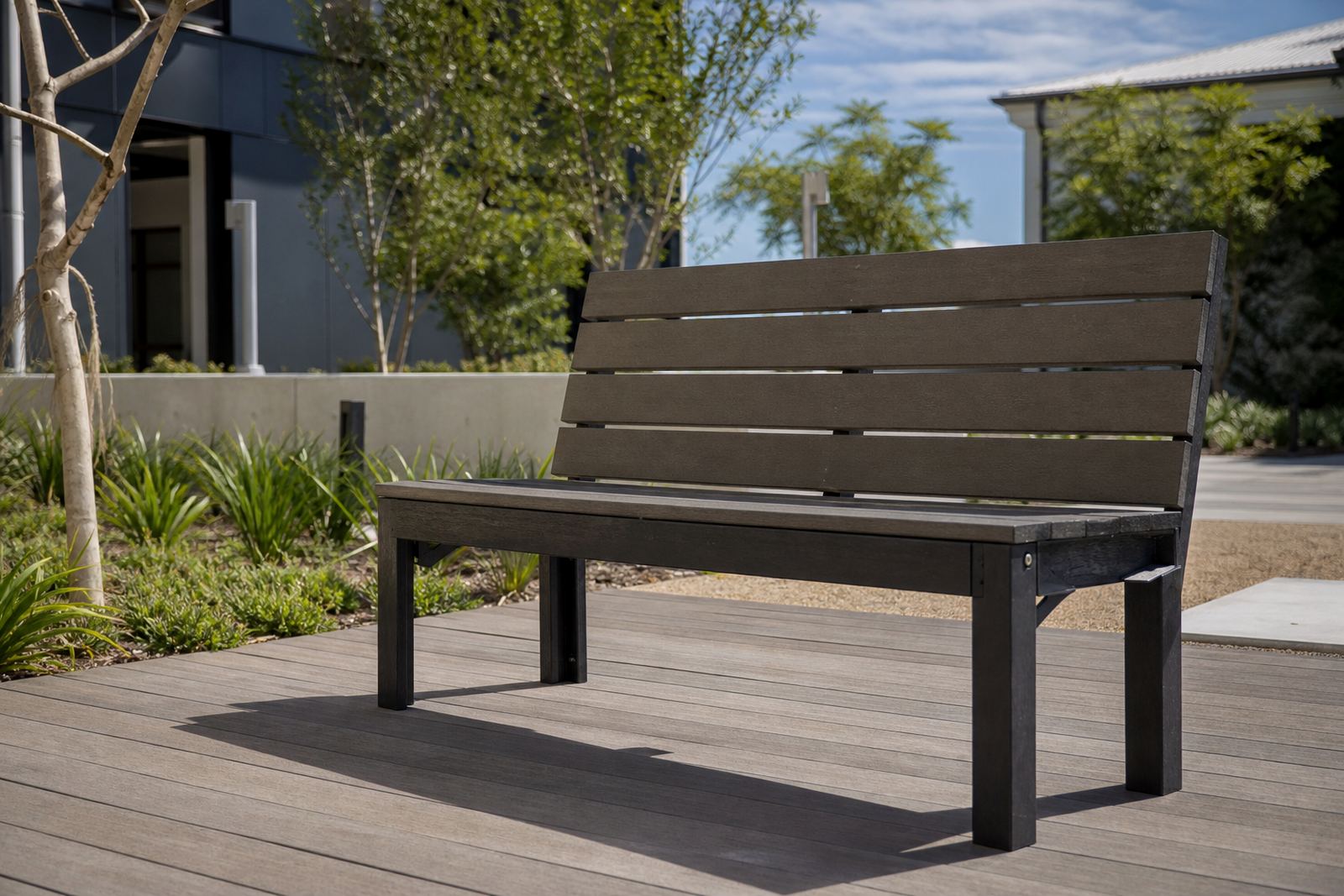
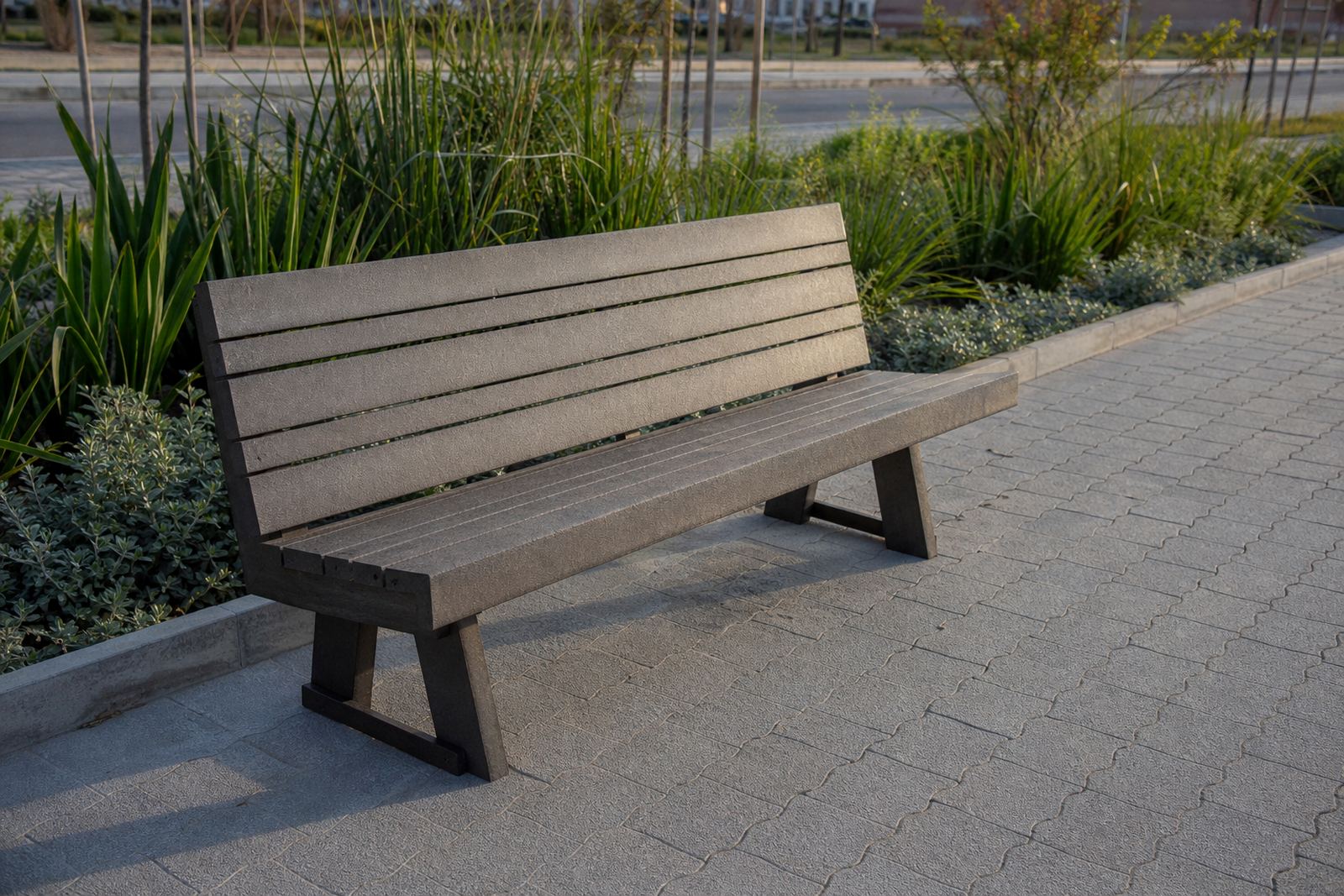
If the deck is already in use and the surface has worn marks or loose sections, refurbishment may include component replacement, edge finishing adjustments or section-by-section reworking. Benches and deck features can be treated in the same way where they form part of one outdoor space. Regular care advice is worth following because it helps the finish last longer and keeps the boards looking even across the full run.
- Sweep regularly to remove grit and leaves
- Wash with mild cleaner and water when needed
- Inspect clips, joints and borders after heavy weather
- Repair damaged sections rather than leaving loose edges in place
What to check before you order
Before ordering grooved boards, confirm the site size, intended board direction and the fixing system to be used. It also helps to know whether the deck will be installed over timber or steel framing, since that affects spacing and support details. For trade clients, clear layout planning saves money by reducing waste and avoiding changes once material is on site.
It is also worth checking access for delivery in places like Bellville, Somerset West or central Johannesburg, where loading and unloading can vary from site to site. If the job includes stairs, a narrow side passage or a roof level landing, let the team know early. A few extra details upfront often stop problems later on, and it means the right length and quantity can be quoted first time.
- Site dimensions and board direction
- Frame type and support spacing
- Edge finish, stairs and trim requirements
- Delivery access and offloading conditions
Order support from Paarden Eiland
Plastimber supplies grooved recycled plastic lumber decking and matching outdoor components from Paarden Eiland, Cape Town, with delivery across South Africa. The team supports measures, layout planning, material quoting, delivery coordination, deck installation, bench installation and refurbishment work for homes, trade customers and commercial sites. For enquiries, use the form on the contact page and include your town, rough measurements and any access details.
With projects across Cape Town, Stellenbosch, George, Johannesburg, Durban, Paarl, Somerset West and Bellville, the focus stays on practical supply and proper site preparation. Whether the job is a small stoep upgrade or a larger public-space deck, the aim is to get the board profile, fixings and finish sorted before installation starts.
- Base in Paarden Eiland, Cape Town
- Delivery available across South Africa
- Trade support for project planning and installs
- Suitable for residential and commercial outdoor spaces
Key facts
| Product type | Grooved recycled plastic lumber deck boards |
|---|---|
| Fixing style | Compatible with concealed-fix and clip-based systems |
| Common use | Decking for homes, hospitality, walkways and pool areas |
| Care level | Low maintenance with regular cleaning |
| Typical planning points | Board width, thickness, length, groove profile and framing |
| Base and delivery | Paarden Eiland, Cape Town with delivery across South Africa |