School seating that handles daily wear
School benches made from recycled plastic lumber are a practical choice where timber tends to split, stain or need regular coating. The material is formed for outdoor use and does not absorb moisture the way untreated wood can, which helps in coastal towns like Cape Town, George and Durban where humidity and salt air can be hard on school furniture. It also stands up well to the stop-start use that happens at assembly points, tuckshop areas and shaded break zones.
For schools, the main benefit is simple upkeep. The benches can be wiped down, hosed off and checked with basic tools, which matters when staff are already busy with grounds care and safety checks. They are also suited to open areas where learners may be moving between classrooms, sports fields and dining spaces, so the seating needs to feel steady and easy to supervise.
- Suitable for junior and senior school grounds
- Works in covered courtyards and open assembly areas
- Useful for waiting areas, staff rest spots and lunch break zones
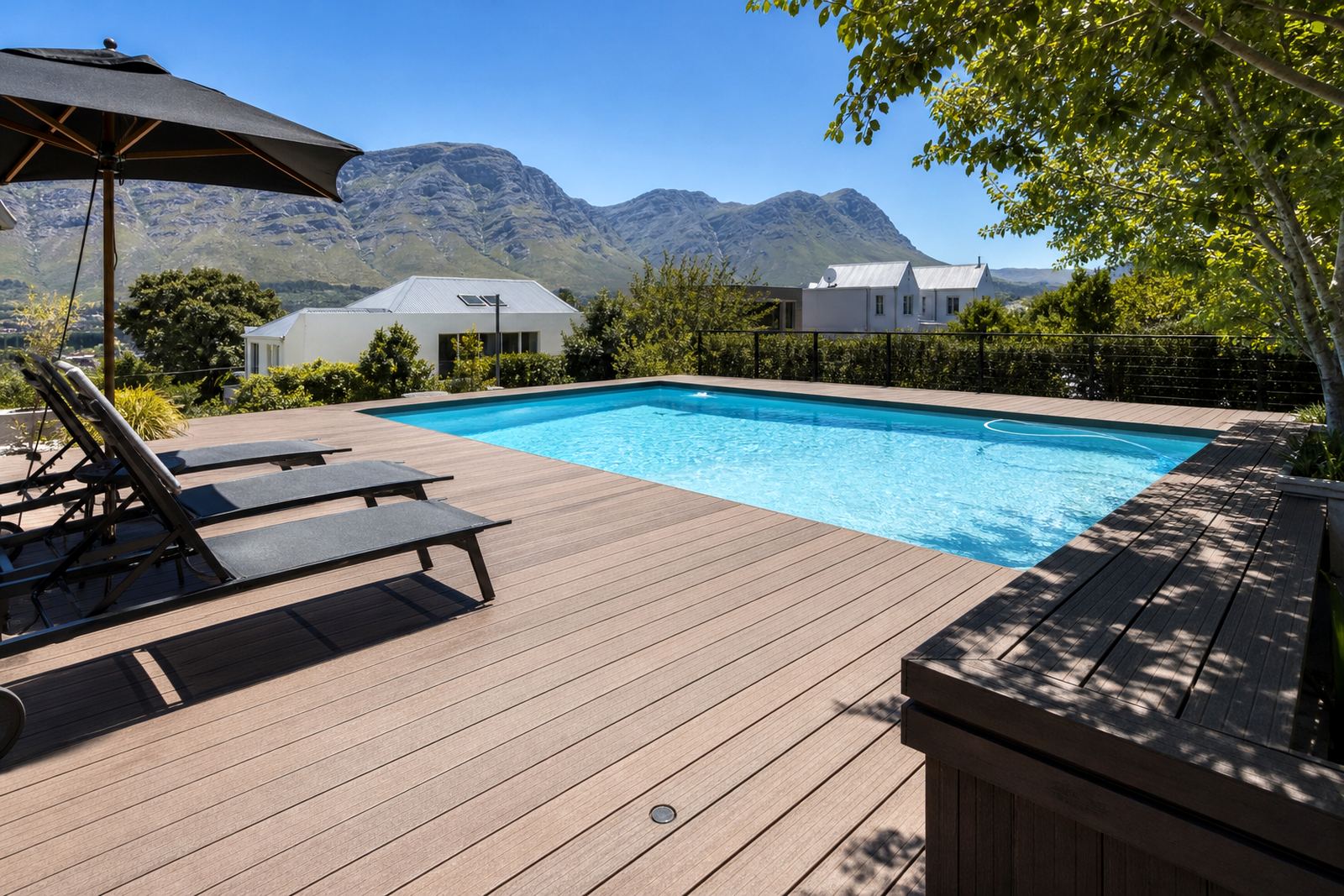
- Can be matched to decked walkways, platforms and outdoor learning spaces
Sizes and layout options for different school spaces
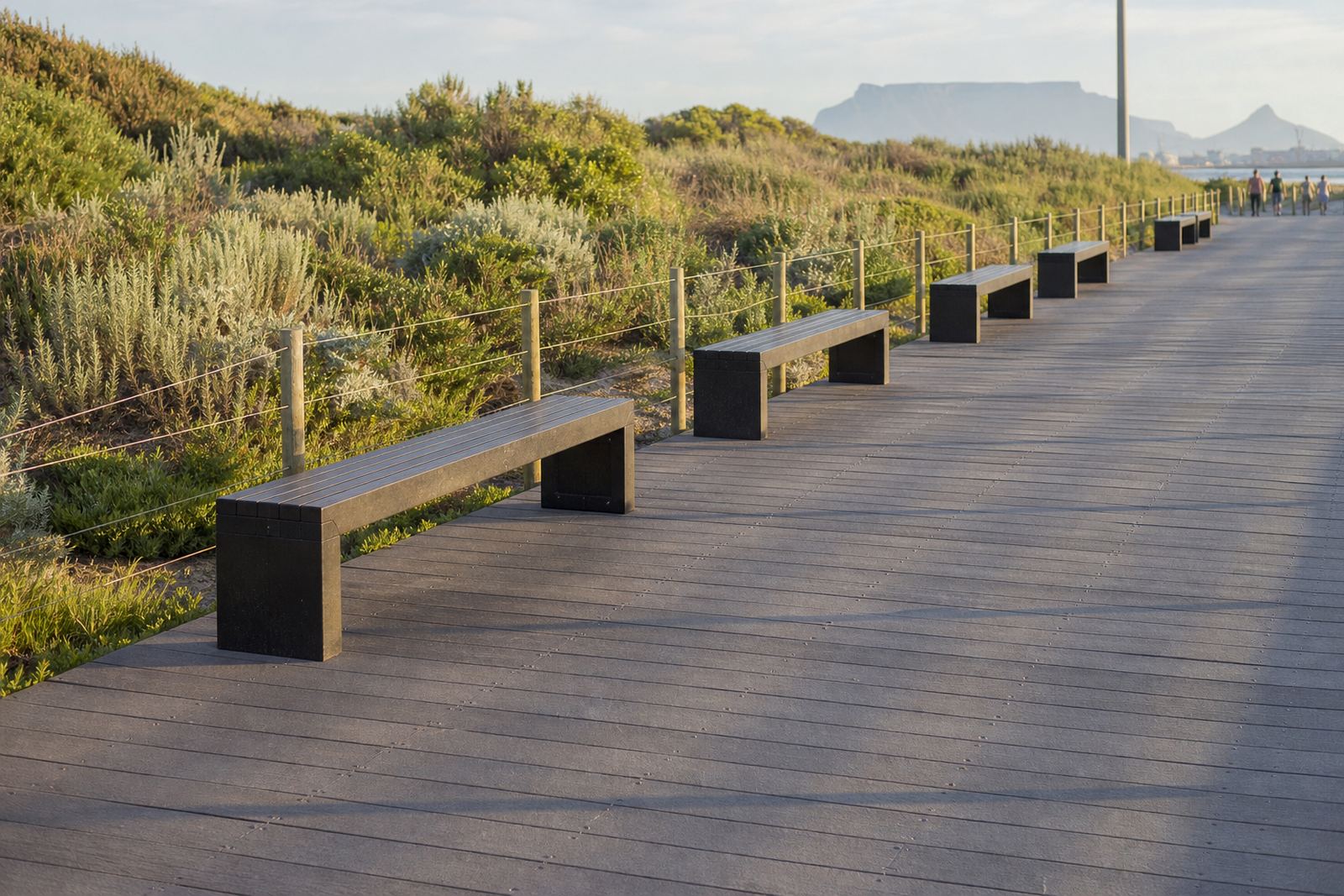
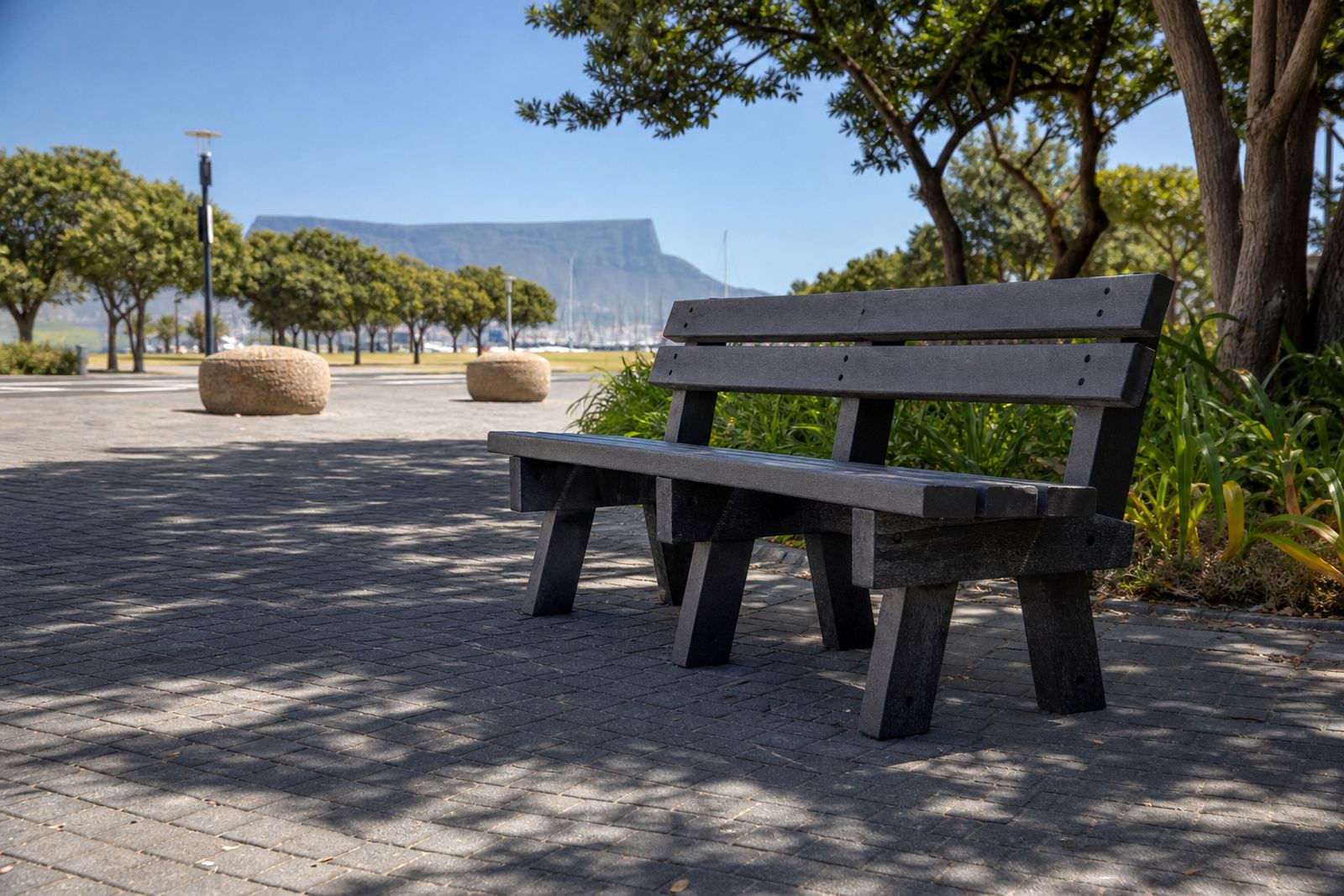
Bench sizes are normally chosen around the space available and how many learners need to sit together. Straight benches suit long runnels beside walkways or along walls, while backless benches keep circulation open in tighter areas. Benches with backs are often preferred where pupils wait for longer periods, such as near admin blocks or transport pick-up zones. Corner placement and fixed layouts can also be planned for quadrangles and sheltered courts.
Common options include shorter benches for small gathering points and longer benches for assembly edges or dining spill-over areas. The exact length, seat height and depth can be set to suit the site plan, and this is useful when different age groups use the same grounds. Where accessibility matters, clear spacing around the bench line should be allowed for wheelchair turning and safe movement. If the school is working with phased upgrades, benches can be added in stages without changing the full layout.
- Backless or backed bench styles
- Single benches or paired seating runs
- Lengths can be set to suit the site
- Can be placed free-standing or fixed to a prepared base
Where school benches suit best
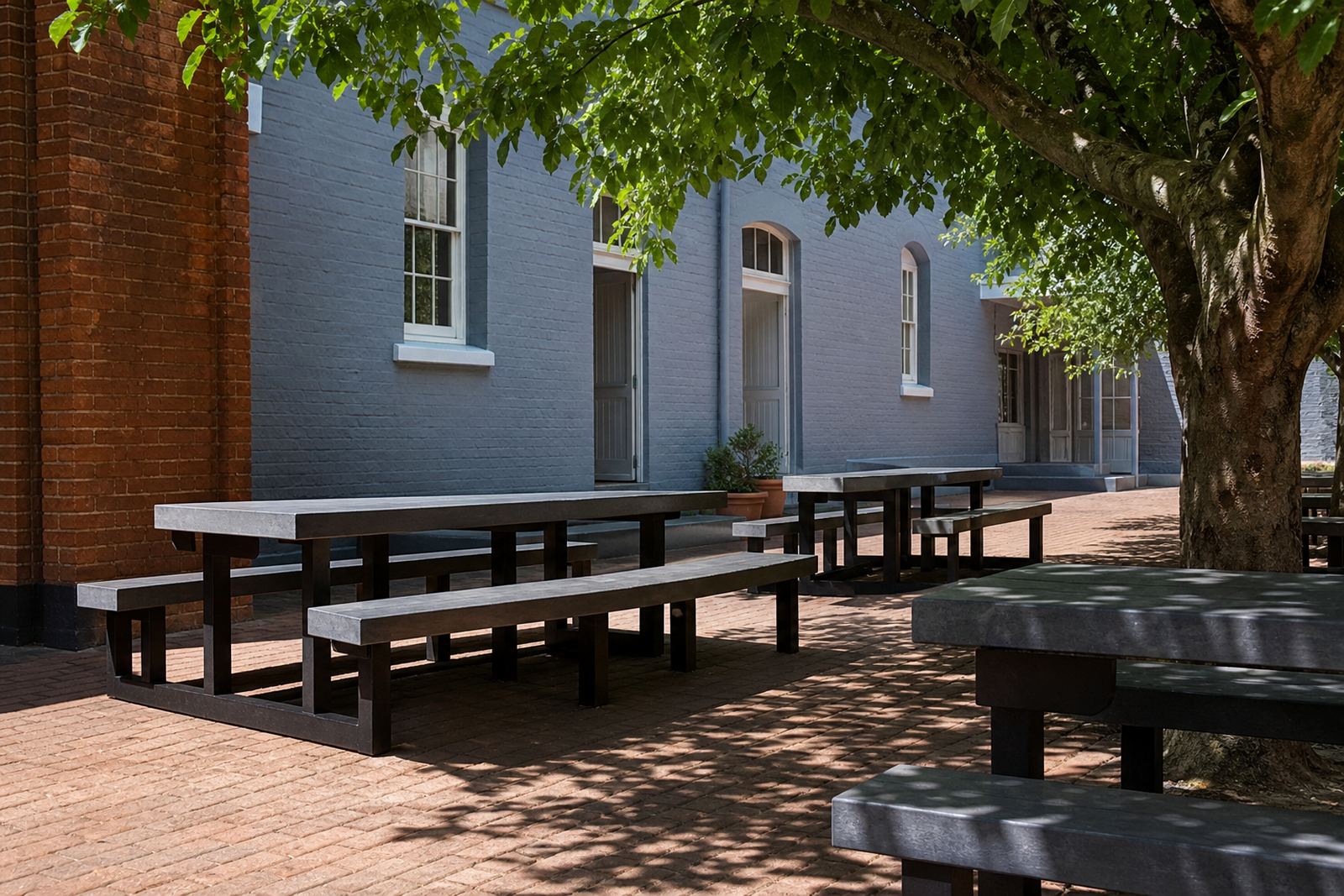
These benches suit schools that need outdoor seating in places with high foot traffic and regular cleaning. They are often used in public and private schools, independent campuses, sports academies and training centres. In Paarl and Somerset West, they work well in sheltered courtyards and covered walkways. In Johannesburg, they suit larger grounds where seating has to be spread across several points. In Durban and other coastal towns, the material is especially useful where timber can move, swell or need frequent upkeep.
They also fit into municipal and institutional settings where simple, durable seating is needed near offices, community halls or learning centres. Because the surfaces are made from recycled plastic lumber, they are less likely to need sanding, sealing or repainting, and that helps in places where maintenance teams are stretched. Schools often use them for:
- Assembly points and morning gathering areas
- Break spaces near tuckshops or dining halls
- Walkway pauses and shaded seating strips
- Outdoor reading, waiting and supervision zones
Installation, fixing and site requirements
Installation depends on whether the bench will be moved often or kept in one place. For school use, fixed benches are common because they help with order and reduce tampering. The base can be set on prepared paving, concrete or another level surface, and the fixing detail should be chosen to suit the ground conditions. On sloped or uneven areas, proper layout planning matters so the bench line sits straight and safe.
No power or gas is needed for the bench itself. If the site is also having decking, edging or access paths installed, power tools may be used during fitting and a normal site handover is enough before work starts. Schools should check access for delivery vehicles, gate widths, off-loading space and whether work needs to happen during holidays or after hours. Jason Petersen and the installation team can coordinate site measures and fixing plans with the school or contractor so the benches arrive ready for the intended position.
- Level base recommended for safe seating
- Fixed or movable installation can be discussed
- No electrical or gas connection required for the product
- Good access needed for delivery and off-loading
Care, servicing and component replacement
One reason schools choose recycled plastic lumber is the lower day-to-day upkeep. The benches can usually be kept clean with water and mild soap, then rinsed off. In dusty inland towns or near sports fields, a simple washdown often does the job. Because the material is not prone to termite damage, rot or paint peeling in the same way as timber, schools do not need to plan for the same level of routine coating or treatment.
If a bench is damaged through heavy use or vandalism, individual components can often be checked and replaced rather than taking the whole unit out of service. That is useful where the school cannot afford long downtime. Refurbishment may include tightening fixings, replacing worn parts, edge finishing or repositioning the bench after a layout change. Regular checks should still be done for loose fasteners, movement on the base and any sharp edges after high traffic periods or storm season.
What to confirm before placing an order
Before ordering, schools should confirm how the benches will be used, how many learners must be seated, and whether the benches need to be fixed down. It is also worth checking the available footprint, the surface type and whether the seating must line up with existing paths, shade structures or stage areas. If the project is part of a larger upgrade, such as decking or outdoor classroom work, the bench layout should be planned with the other elements so there is enough circulation space.
It helps to have the site dimensions, photos and any access notes ready when requesting a quote. The team can then advise on sizes, placement and delivery coordination for Cape Town, Stellenbosch, George, Johannesburg, Durban, Paarl, Somerset West and Bellville. For schools that need trade support, Bianca Fourie can coordinate the paperwork, Leanne Naidoo can assist with customer queries and Thabo Molefe can help confirm production details before manufacture starts.
- Number of learners or users expected
- Desired bench length, height and style
- Whether fixing points are needed
- Ground surface, access route and delivery timing
Key facts
| Material | Recycled plastic lumber suitable for outdoor use |
|---|---|
| Use | School grounds, assembly points, break areas and waiting zones |
| Style options | Backless or backed bench layouts |
| Installation | Free-standing or fixed to a prepared base |
| Maintenance | Washdown cleaning, regular fastener checks, refurbishment available |
| Service area | Paarden Eiland, Cape Town and delivered across South Africa |