What recycled plastic park benches are made for
Park benches built from recycled plastic lumber are designed for outdoor seating where people gather, wait, rest or move through a shared space. The material is formed into solid profiles that are cut and assembled into bench slats, legs, armrests and backrests, then fixed with suitable fasteners for outdoor use. It gives a clean, practical finish for public areas where timber can warp, split or need regular sealing.
These benches suit councils, schools, estates, churches, resorts, office parks and hospitality spaces that want seating which holds up in sun, damp air and regular foot traffic. In coastal places like Cape Town, Somerset West and George, the material is a useful option where salt air and moisture can be hard on traditional wood. It also helps in busy inland sites like Johannesburg where benches get constant daily use and need simple upkeep.
We supply park benches for new builds, upgrades and replacement work. Orders are handled through our enquiry form, with support from site measures, layout planning and material quoting through to delivery coordination and installation.
Sizes, formats and finish choices
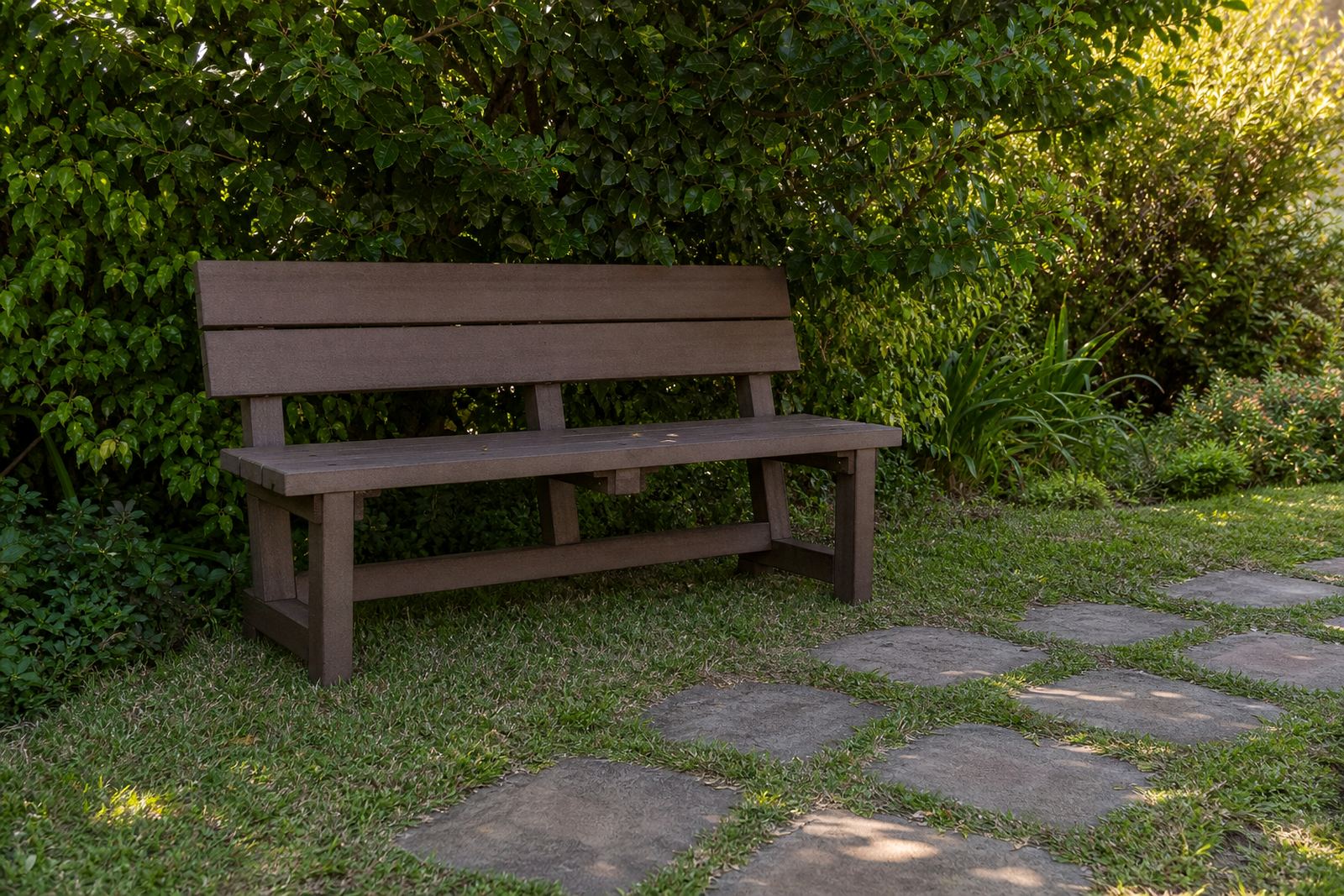
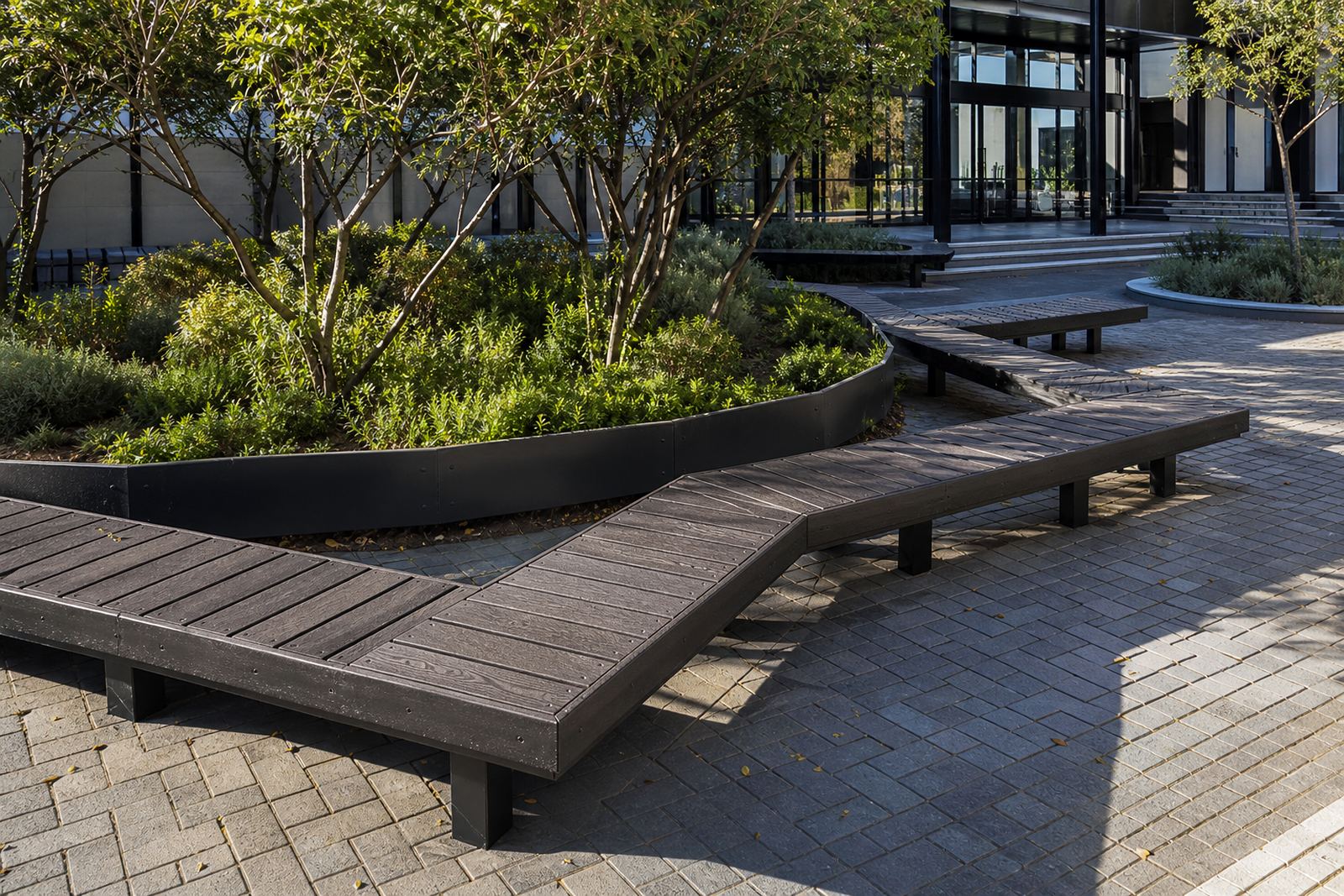
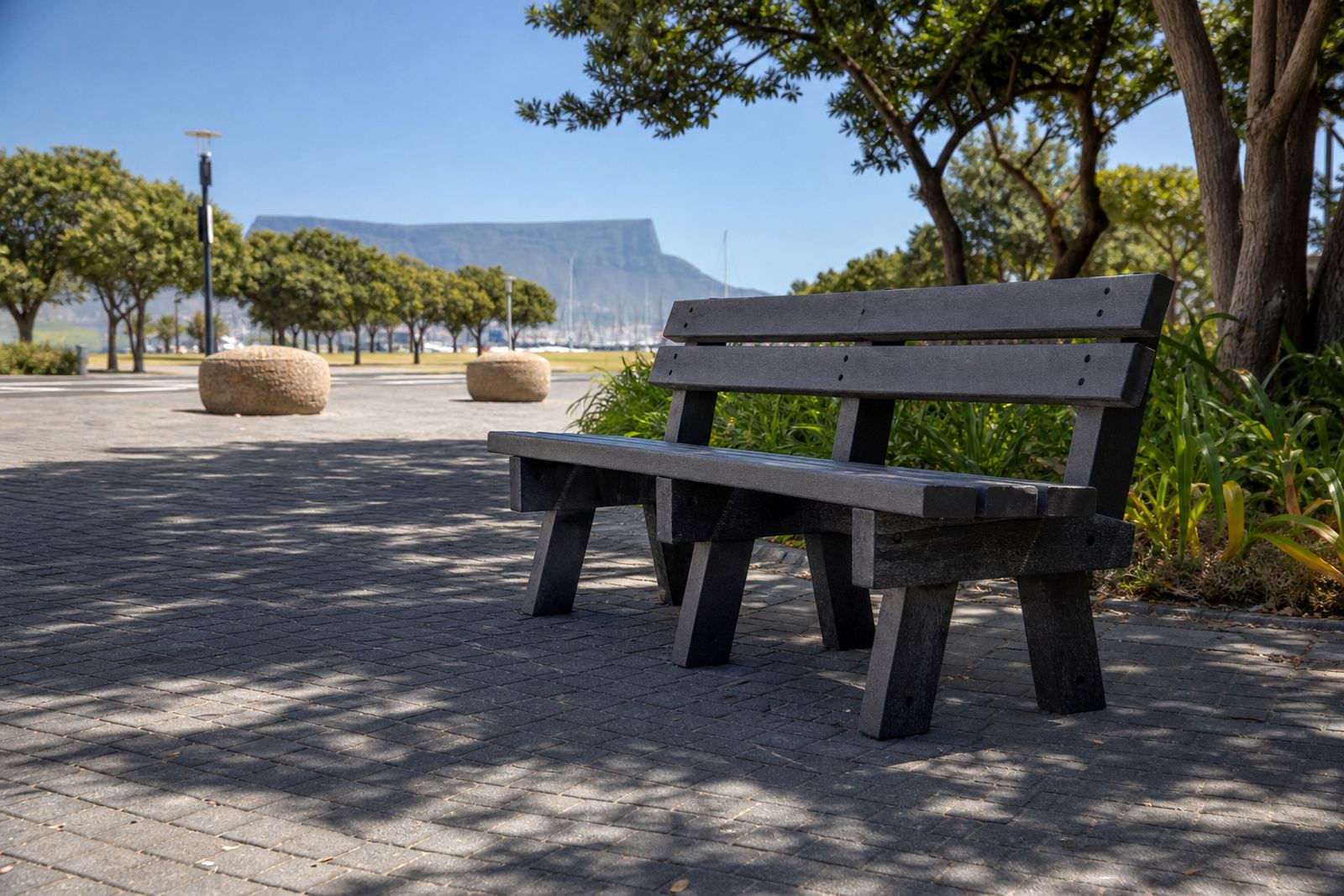
Park benches can be made in a few common formats depending on the space and the way people use it. A backrest gives support for longer stays, while backless benches suit pathways, open plazas and casual rest points. Armrests can help with sitting and standing, and also guide the seating position in public areas.
- Typical lengths are often set to suit two, three or more users, depending on the layout
- Seat height and back height can be matched to the intended setting and user comfort
- Slat widths and spacing can be adjusted for appearance and drainage
- Options may include backrest, armrests, end profiles and ground fixing details
- Surface finish can be selected for a neat, natural looking outdoor result
Because recycled plastic lumber is machined much like timber, benches can be planned for compact courtyards or larger civic areas. The material is colour-stable in many outdoor settings, though the exact tone can change slightly over time as the bench weathers. That is normal with exterior use and does not affect day to day function.
Where park benches work best
These benches are suitable anywhere people need a place to sit without high maintenance demands. They work well along walkways, in garden areas, at playground edges, near sports fields and in shaded public squares. They are also a practical choice for retirement estates, school grounds, transport stops and business parks where regular cleaning and care need to stay simple.
In Durban and other humid coastal areas, recycled plastic lumber is often chosen because it is not affected by moisture in the same way as untreated timber. In dry inland regions, it offers a stable option where hot sun can cause movement and surface checking in wood. For projects in Paarl, Bellville and Stellenbosch, it is often used where the bench must look tidy and stay serviceable with limited maintenance budgets.
- Parks and municipal walkways
- Schools, campuses and sports grounds
- Estates, gardens and shared residential areas
- Retail centres and public waiting zones
- Guesthouses, lodges and hospitality courtyards
Installation, fixing and site requirements
Park benches can be delivered as assembled units or in components, depending on the project and access on site. Installation usually involves setting the bench on a level surface and securing it where required, especially in public areas where movement, theft risk or high use may be a concern. If ground anchoring is needed, the fixing method should be planned for the surface type, whether that is concrete, paving or a prepared plinth.
No gas or electrical connection is needed for the benches themselves. That makes them straightforward to place in new spaces and upgrade areas where utilities are already busy or load-shedding affects other parts of the site. The main practical requirement is a level, stable base and enough clearance around the bench for safe use and cleaning. Where benches are installed as part of a larger outdoor project, we can coordinate with deck installation, edge finishing and related site works.
For public sites, it helps to check access routes for delivery, turning space for vehicles and whether the bench needs to be fixed before opening to users. Some locations also need municipal approval for placement in public space, so it is worth checking the local rules early in the process.
Care, cleaning and long term servicing
One of the main advantages of recycled plastic lumber benches is the low maintenance routine. They do not need sanding, staining or sealing in the way timber often does. Regular cleaning with water and a mild detergent is usually enough for general upkeep, with a soft brush or cloth used to remove dust, bird droppings and surface marks. In busy public areas, a basic cleaning schedule helps the bench stay neat.
Because the material is used outdoors, fittings and joints should still be checked from time to time. Fasteners can loosen with repeated use and temperature change, so periodic inspection is sensible especially in high traffic sites. We also assist with bench refurbishment, component replacement and care advice where an older unit needs attention rather than full replacement.
- Wash off dirt before it builds up on joints and edges
- Check fixings after heavy use or storms
- Remove standing water or debris around the base where possible
- Use non abrasive cleaners only
- Plan seasonal checks in coastal or high traffic areas
What to confirm before you order
Before placing an order, it helps to confirm how the bench will be used, where it will sit and what space is available. A bench for a school yard may need a different layout from one beside a walkway in a business park. The more detail you share at the enquiry stage, the easier it is to match the size and fixing method to the site.
Useful details include the number of benches needed, whether backrests or armrests are preferred, and if the bench should be portable or fixed in place. It also helps to confirm the surface it will stand on, such as paving, concrete or compacted ground. If the site is near the coast, in strong sun or in a public area with heavy use, say so early because that can affect the practical choice of finish and installation method.
- Site location and access for delivery
- Bench length, seating capacity and layout
- Backrest, armrest and fixing requirements
- Surface type and whether anchoring is needed
- Any maintenance or refurbishment support needed later
Our team in Paarden Eiland supports projects across Cape Town, Stellenbosch, George, Johannesburg, Durban, Paarl, Somerset West and Bellville. For trade support, layout planning and delivery coordination, use the enquiry form on our contact page and we will take it from there.
Key facts
| Material | Recycled plastic lumber |
|---|---|
| Primary use | Outdoor park and public seating |
| Common formats | Backed or backless bench options |
| Installation | Freestanding or fixed to prepared surfaces |
| Maintenance | Simple wash-down cleaning and periodic fixings checks |
| Service areas | Cape Town, Stellenbosch, George, Johannesburg, Durban and surrounding areas |