What Balcony Decking Is Made For
Balcony decking is a finished walking surface for apartments, townhouses, offices and hospitality spaces where the outdoor area is small but still needs to feel usable. Recycled plastic lumber boards are a practical choice because they do not absorb moisture like timber, and they are easier to keep clean in coastal air, dusty inland towns, or shaded spaces that stay damp after rain.
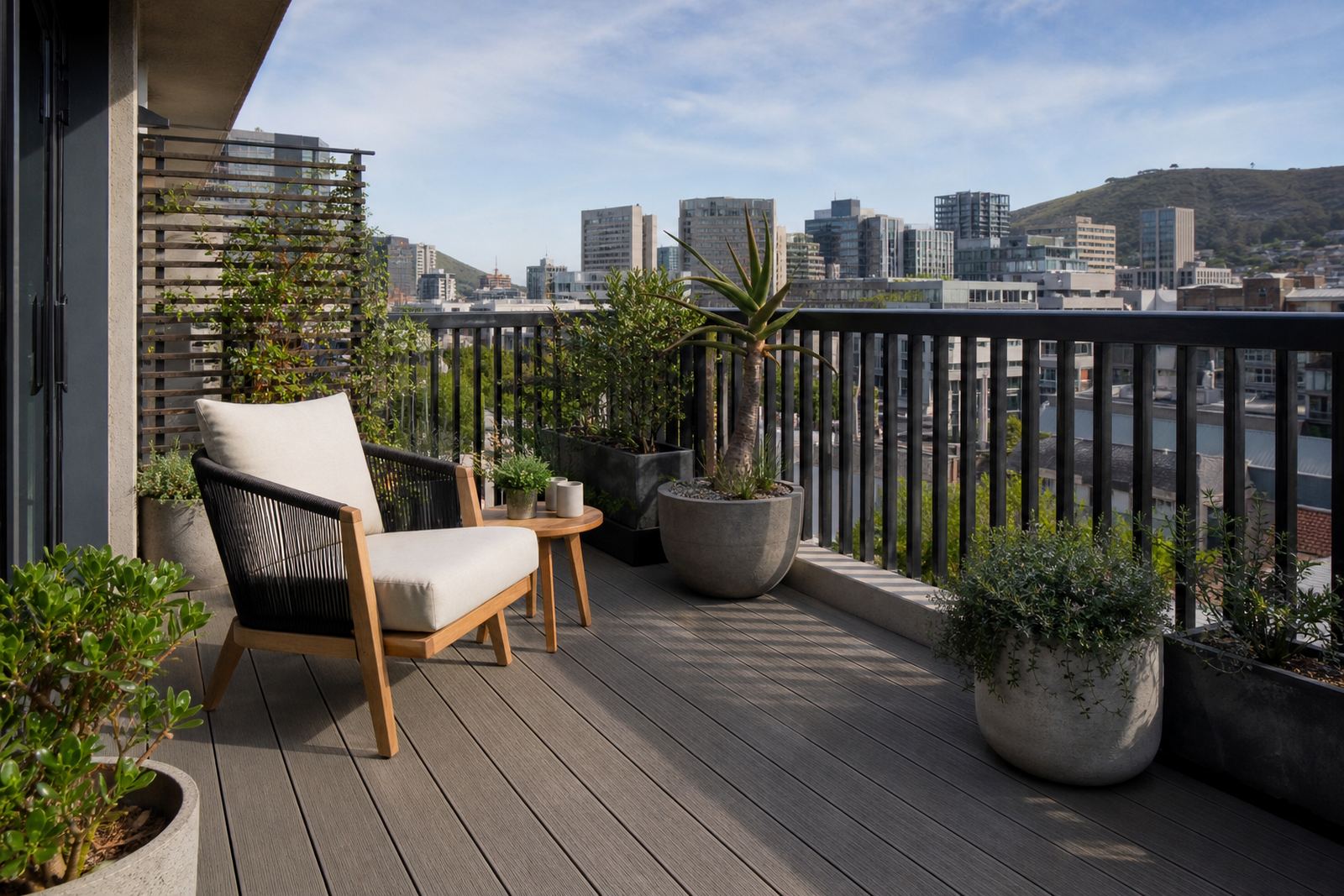
This type of decking suits compact platforms, narrow terraces and raised balcony areas where weight, drainage and clean edges all matter. It gives a neat surface for chairs, planters and light furniture without the splintering or regular sealing that many timber decks need. In places like Cape Town, Somerset West and Durban, that lower maintenance is a real advantage.
Board Sizes, Finishes and Layout Options
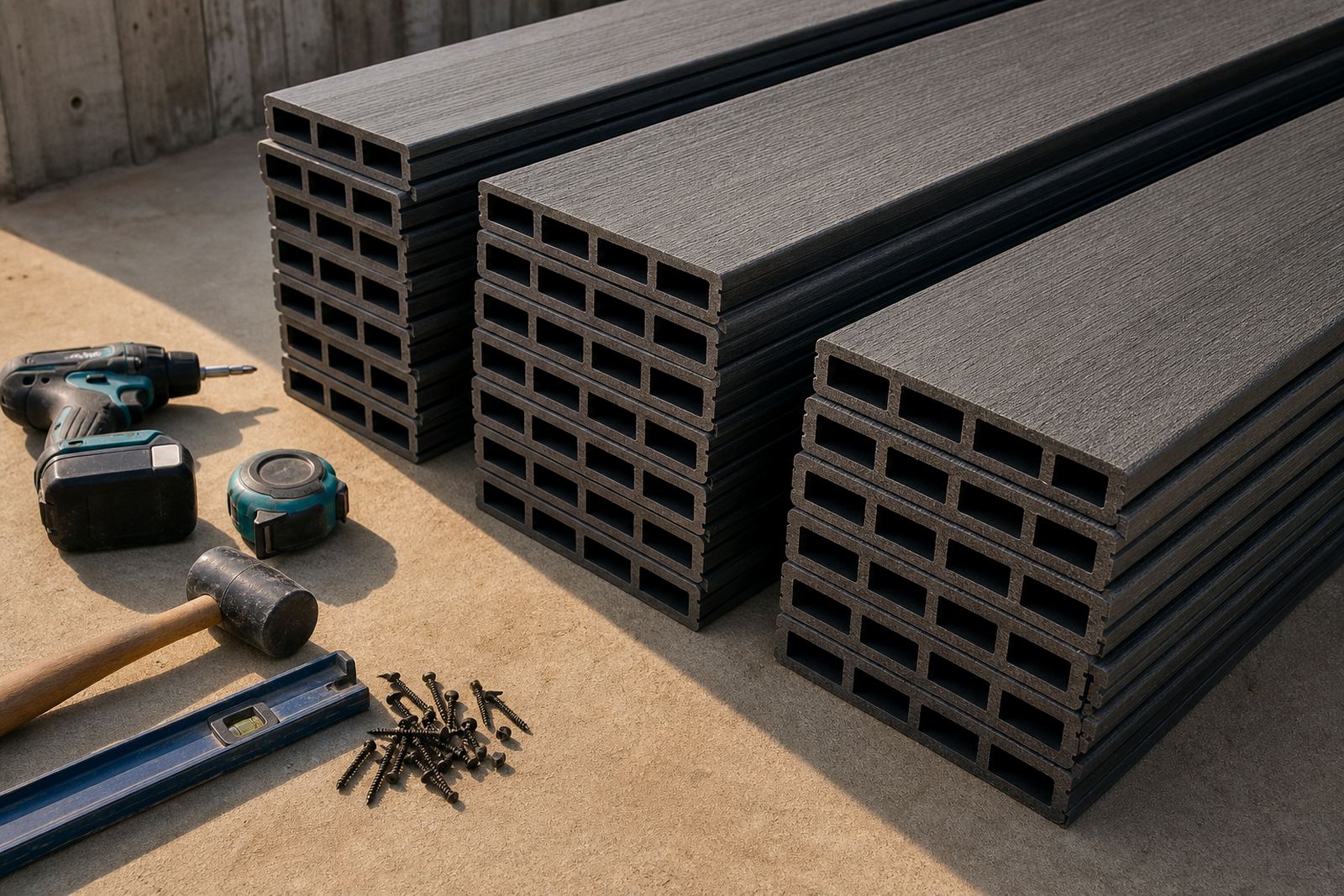
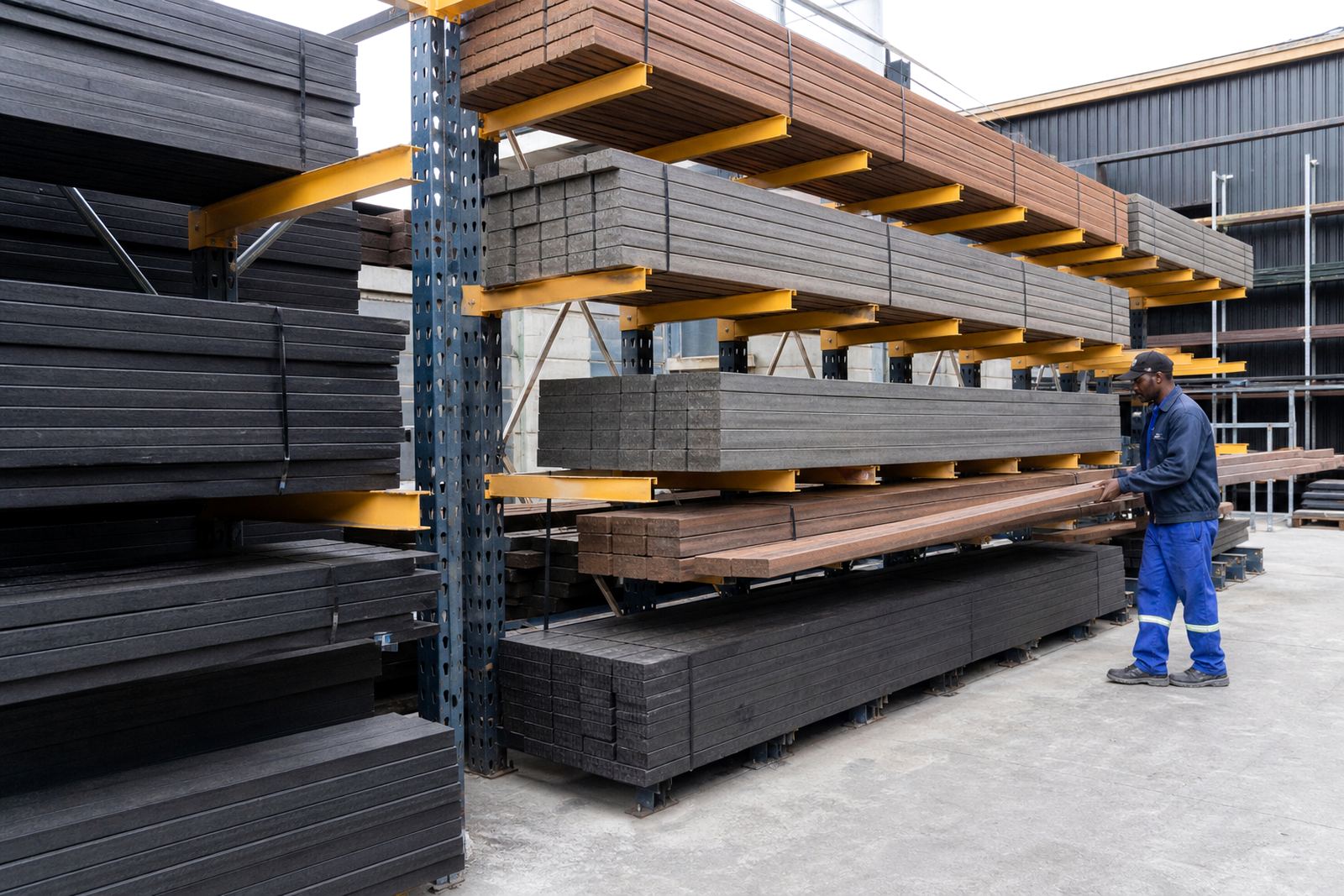
Balcony projects usually use narrower or shorter runs than full-size garden decks, so board choice and layout should be set around the available width and the direction of the joists. Recycled plastic lumber can be supplied in different lengths and profiles depending on the site, and the finish can be kept simple for a clean modern look or patterned for a more defined edge.
- Solid or profiled boards for balcony floors and small landings
- Edge trims and cover pieces for a neat perimeter finish
- Non-slip surface detailing for wetter or shaded positions
- Colour choices suited to apartment blocks, courtyards and mixed-use buildings
- Matching bench components where a built-in seat is needed
For compact areas, layout planning matters as much as the material. Good planning helps reduce off-cuts, keeps joints in sensible positions, and avoids awkward narrow strips at the balcony edge. That makes the finished space look better and usually helps with installation time too.
Where Balcony Decking Works Best
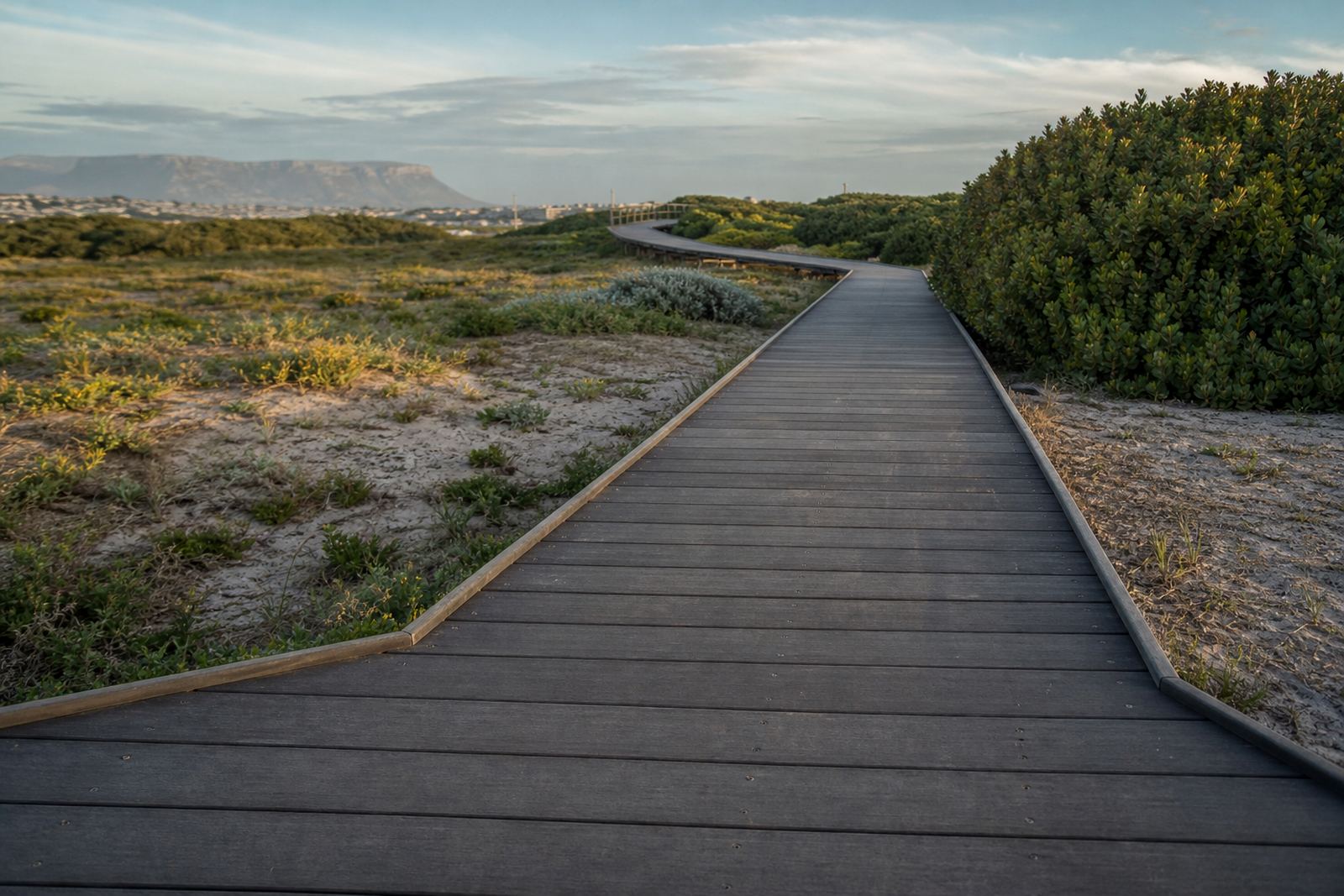
This product is well suited to balconies in apartment blocks, duplex units, rooftop terraces, small office courtyards and hospitality spaces with limited outdoor room. It also works on compact platforms beside braai areas, utility spaces, and townhouse patios where the surface must handle regular use but not heavy vehicle loads.
In coastal towns such as George, Durban and Cape Town, recycled plastic lumber is often chosen because it handles moisture, salt air and frequent cleaning better than untreated timber. Inland, it is useful where strong sun and dry conditions can cause timber to crack or lose shape over time. It is a practical option where a body corporate or property manager wants a surface that stays presentable with less maintenance.
- Apartment balconies and rooftop terraces
- Townhouse patios and upper-level decks
- Commercial pause areas and smoking spaces
- Guesthouse balconies and small hospitality platforms
- Compact entertainment corners where space is tight
Installation, Access and Power Needs
Balcony decking installation needs careful measuring, especially in buildings with lift access, stair carries, or limited working hours. Our team can handle site measures, layout planning, delivery coordination and installation support so the board lengths and fixings suit the site before work begins. In some buildings, there are also municipal or body corporate rules that affect noise, working times and debris control, so it helps to plan that early.
The decking itself does not need power or gas once installed. Installation tools may require normal electrical supply for cutting and fastening, and some projects may need temporary access to site power if the building does not allow portable equipment or generator use. Where access is tight, smaller cuts and staged deliveries are often better than trying to move long sections through narrow passages. A careful install reduces damage and keeps the finish tidy, especially on upper floors.
- Measure the balcony slope and drainage points before ordering
- Check door clearances, threshold heights and waterproofing details
- Confirm access for delivery, lifting and off-loading
- Agree on any working-hour limits with the building manager
- Plan for dust control and waste removal during installation
Care, Cleaning and Refurbishment Support
Recycled plastic lumber needs less day-to-day care than timber, but it still benefits from regular cleaning. A soft brush, water and mild detergent are usually enough for dust, leaf matter and general marks. On balconies near the sea, more frequent rinsing can help reduce salt build-up. In Durban or other humid areas, keeping drainage clear is important so the surface dries properly after rain.
If a board, edge piece or support component gets damaged, replacement can often be handled without lifting the whole deck. Refurbishment services are useful where a balcony has been in service for years and only certain sections need attention. For property managers and owners, that means the space can be kept looking right without a full replacement. Care advice is also important if the balcony gets direct sun all day, because lighter colours and shaded sections can age differently.
What To Check Before You Order
Before placing an order, it helps to check the balcony dimensions, the surface condition underneath, and how the deck must meet walls, doors and drainage points. If the balcony already has waterproofing, that layer should be protected during installation. If there is existing concrete damage or movement, that must be dealt with first or the new finish may not sit correctly.
It is also worth confirming the intended use. A private balcony with a small table has different needs to a shared area in a residential block. The board profile, spacing, edge detail and bench placement should all match the use of the space. When you enquire through the contact page, we can help with material quoting, delivery coordination and trade support for projects in Cape Town, Stellenbosch, George, Johannesburg and Durban, as well as Paarl, Somerset West and Bellville.
- Exact balcony measurements and clear working dimensions
- Existing floor type and waterproofing condition
- Preferred finish, colour and edge detail
- Access route for delivery and installation
- Any body corporate or building manager requirements
Key facts
| Material | Recycled plastic lumber |
|---|---|
| Use | Balcony flooring and compact outdoor platforms |
| Typical applications | Apartments, rooftops, townhouses, small commercial terraces |
| Maintenance | Low maintenance, simple cleaning with water and mild detergent |
| Service support | Site measures, layout planning, delivery, installation, refurbishment |
| Coverage | Paarden Eiland, Cape Town and delivery across South Africa |