
What recycled plastic garden benches are made for
Garden benches built from recycled plastic lumber are made for places that need seating without constant sanding, painting or treatment. The material is dense, moisture resistant and suited to outdoor use in Cape Town, Durban, George and other areas where timber can swell, split or rot over time. It also copes well with salt air, which matters for coastal homes, estates and public spaces near the sea.
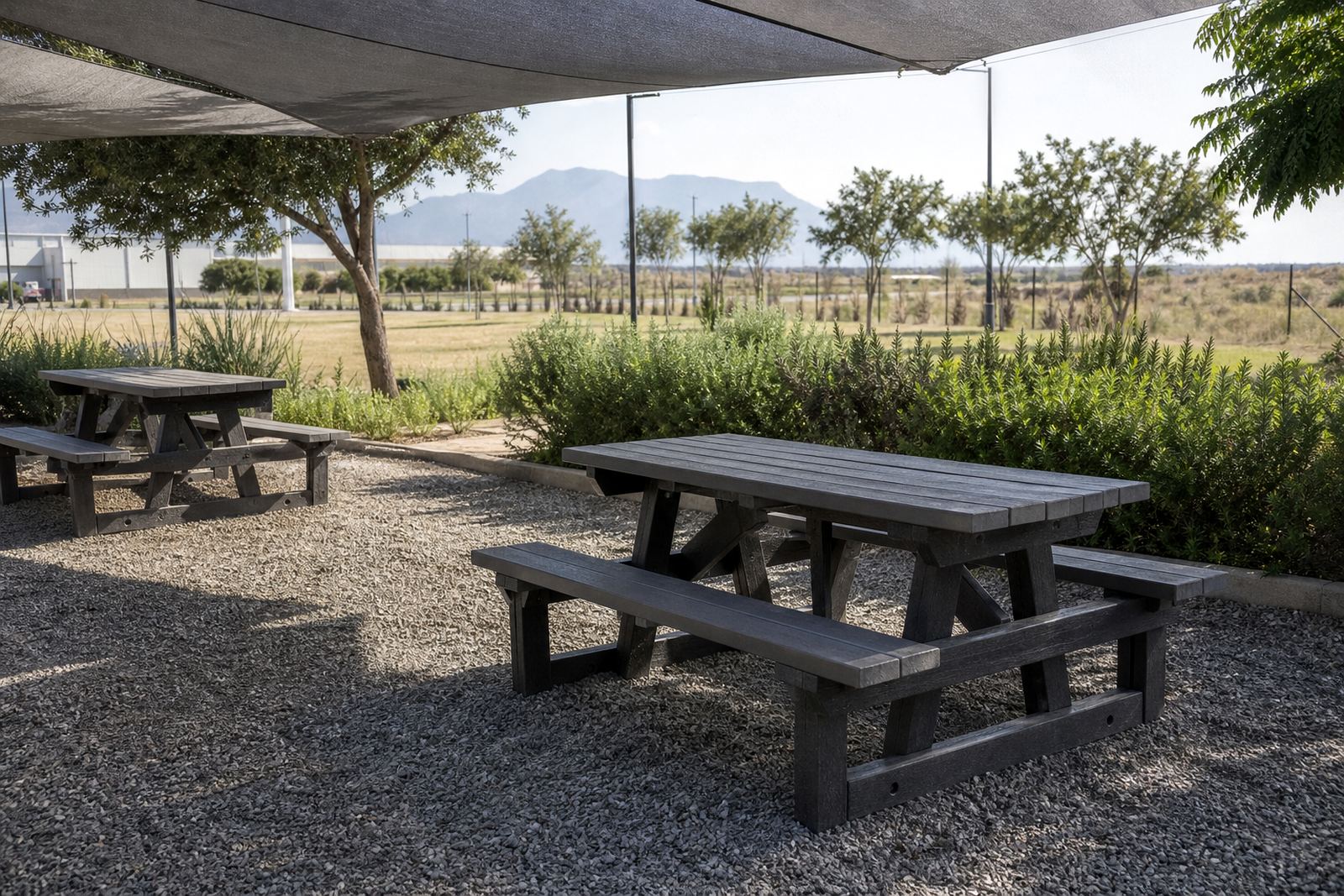
These benches suit front gardens, courtyards, pathways, school grounds, retirement villages, parks, entrance areas and visitor spaces. Because the boards do not rely on surface coatings to stay usable, they are a practical choice where regular upkeep is limited. For busy sites, that means fewer call-backs and less down time, which is helpful for facilities teams and managing agents.
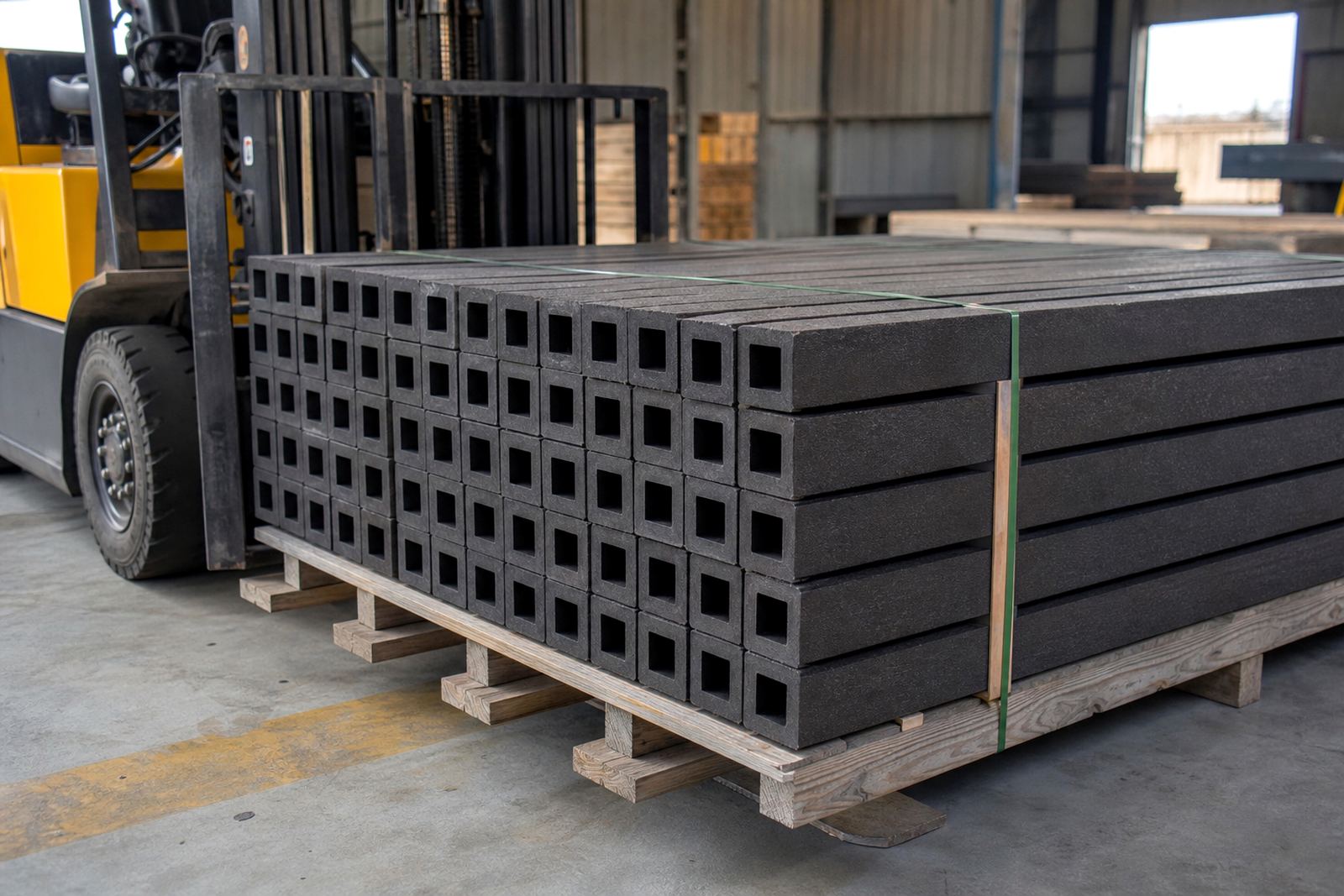
Plastimber works from Paarden Eiland and supports projects in Cape Town, Stellenbosch, Paarl, Somerset West, Bellville, George, Johannesburg and Durban. Clients can send an enquiry through the contact form for material quoting, layout planning and trade support.
Sizes, styles and seating options available
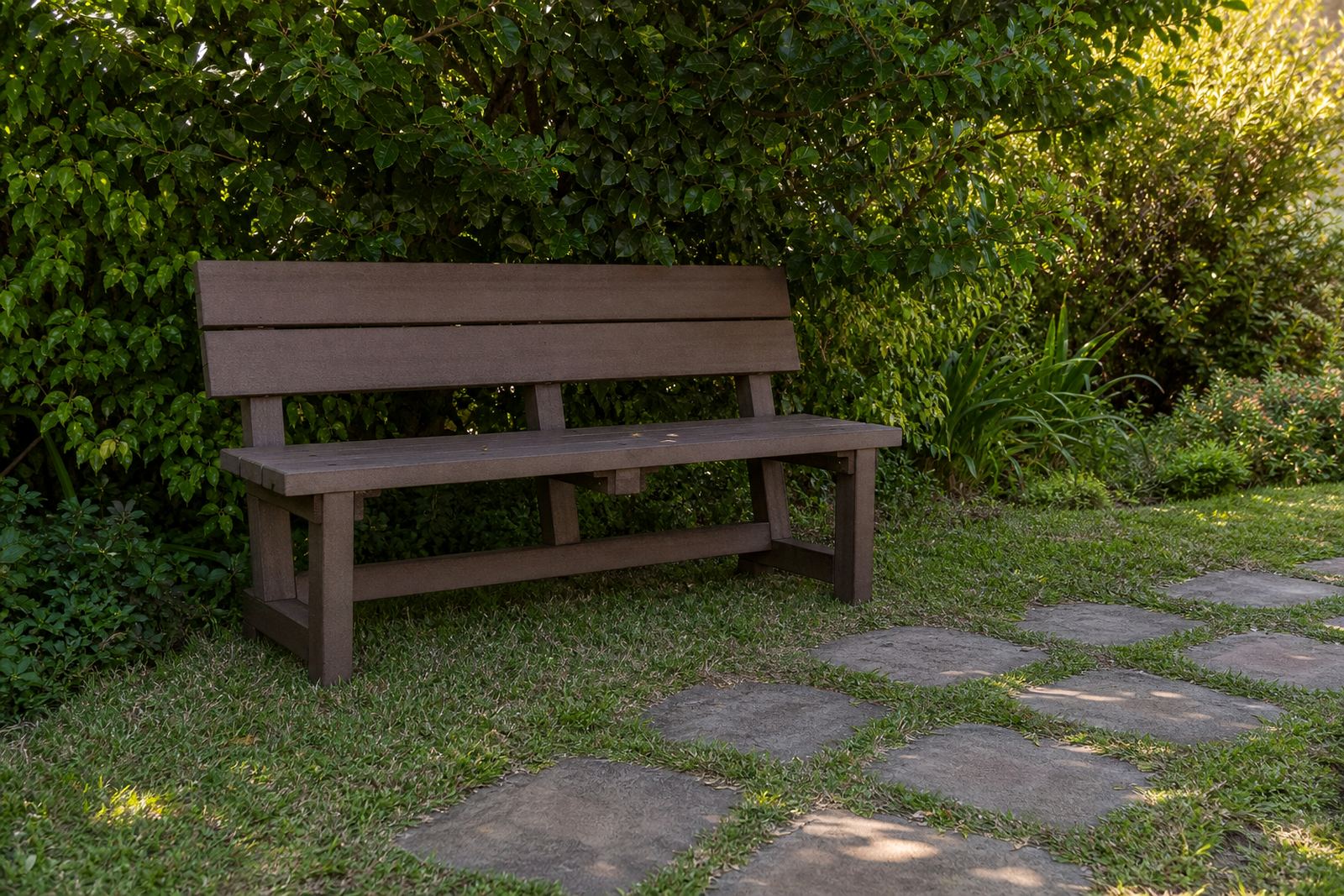
Garden benches are usually supplied in standard lengths with options for backrests, armrests and different slat layouts. Common seating lengths range from compact 1.2 metre units for small courtyards to longer 1.8 metre and 2.4 metre benches for estates, visitor areas and shared gardens. Width and seat height can also be adjusted on some projects, depending on the space and the intended users.
The boards are available in a range of practical profiles and finishes, from clean straight lines to more traditional slatted looks. Fixings can be arranged for freestanding placement or for securing to a paved base. Where a site has strong wind exposure or heavy public use, anchoring may be advisable so the bench stays in place.
- Compact benches for patios, apartment gardens and narrow walkways
- Longer benches for estates, schools and reception gardens
- Backed or backless options for different comfort levels and siting needs
- Optional armrests for easier sitting and standing
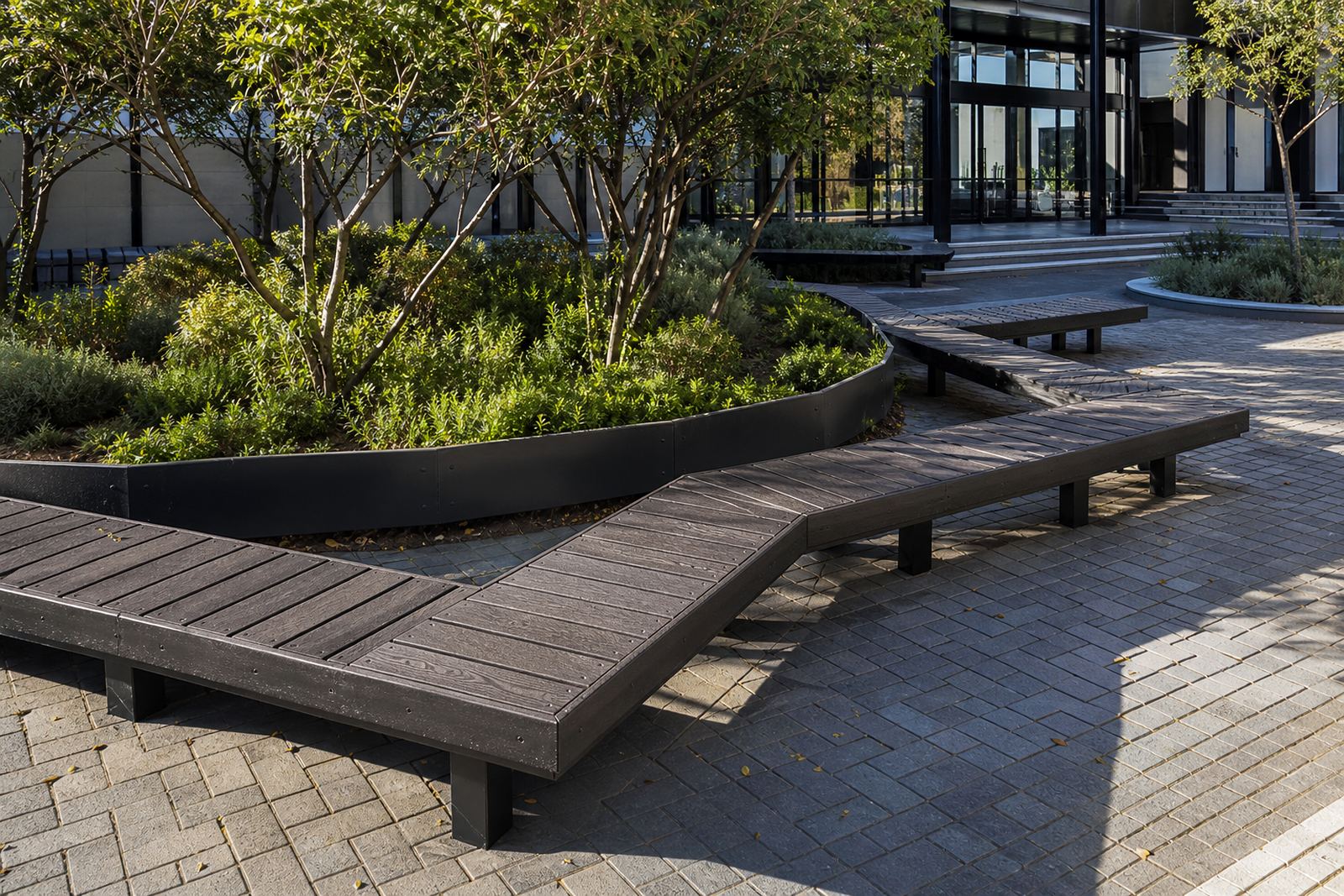
Colour and finish are selected to suit the setting and the overall look of the project. Earth tones and timber-like shades are often chosen for natural spaces, while darker options can work well in modern courtyards or commercial grounds.
Where these benches suit best
These benches are well suited to homes, sectional title complexes, estates, guesthouses, parks, clinic gardens and visitor waiting areas. They are also used near building entrances and along pathways where a simple resting point is needed. In hotter inland towns like Johannesburg and hotter coastal zones like Durban, the material helps reduce the upkeep often needed with painted timber.
For hospitality and public-facing sites, the clean look and easy care can be useful where staff need seating that stays presentable with basic maintenance. On private properties, the bench gives a solid outdoor seating option for braais, pool areas or shaded corners without the regular sealing that timber usually asks for. That said, correct base preparation still matters, especially on uneven paving or older slabs.
- Homes and townhouse gardens
- Estates and shared outdoor areas
- Visitor waiting points and entrance spaces
- School grounds and community spaces
Installation, anchoring and site requirements
Installation is straightforward on level concrete, paving or prepared hardstand areas. Depending on the model and the site, benches can be left freestanding or fixed down with mechanical anchors. For public or estate use, fixed installation is often preferred because it helps prevent movement, tipping or theft. Jason Petersen and the installation team can advise on placement and fixing details where needed.
No power or gas is needed for the bench itself. The work usually involves delivery, positioning, alignment and fixing to the surface if specified. Where the site is exposed to wind, pooling water or irregular paving, a proper check before installation helps avoid later issues. If the bench is being installed near irrigation lines or planter beds, these points should be marked first.
- Level base recommended for best stability
- Anchoring may be used on public, estate or high-traffic sites
- No electrical or gas connection required
- Best placed away from sprinkler overspray where possible
For projects in municipal areas, it is worth checking access routes, delivery times and any site rules before the bench arrives. This is especially useful for estates and managed complexes with controlled entry.
Care, cleaning and longer-term servicing
Garden benches made from recycled plastic lumber need very little care compared with timber. Routine cleaning with water and a mild detergent is usually enough to remove dust, garden marks and general dirt. In most cases, a soft brush or cloth is all that is needed. Pressure washing can be used carefully, though there is no need for aggressive cleaning on a normal maintenance cycle.
Because the material is not dependent on paint or oil to stay serviceable, there is no sanding or resealing schedule to keep up with. That is useful in coastal towns where moisture and salt can shorten the life of traditional wooden seating. If a component is damaged by impact, localised replacement may be possible depending on the construction, which can save time on site.
Bench refurbishment and component replacement are available where a project has older seating that needs attention rather than full replacement. That can include new slats, repaired fixings or refreshed edge finishing. It is a practical option for estates and facilities teams looking to keep seating in use for longer, without replacing everything at once.
What to check before placing an order
Before ordering, check the intended location, the number of users, the available footprint and whether the bench must be fixed down. It helps to know if the bench is for private use, estate use or public access, because that affects the fixing method and the level of wear expected. If the site has a slope, narrow access or existing paving joints, include that in the enquiry so the layout can be planned properly.
Useful details to confirm include seat length, backrest preference, armrests, colour choice and whether the bench should be supplied fully assembled or in components. For trade jobs, it also helps to confirm delivery timing, off-loading access and whether other works are happening on the same day. Anele Mkhize, Bianca Fourie and Leanne Naidoo assist with quotations and customer queries, while Thabo Molefe oversees production and Sibusiso Dlamini handles logistics planning.
- Measure the available space before choosing a length
- Decide whether the bench must be anchored
- Confirm if the site is coastal, shaded or fully exposed
- Share any access limits for delivery and off-loading
For homes and managed properties, it is also worth checking house rules or estate guidelines on outdoor fittings. A little planning at the start can avoid delays later and the bench will sit better in the space.
Key facts
| Product type | Recycled plastic lumber garden bench |
|---|---|
| Typical lengths | About 1.2 m, 1.8 m and 2.4 m |
| Common options | Backrest, armrests, backless, anchored or freestanding |
| Best suited to | Homes, estates, visitor areas, schools and shared gardens |
| Maintenance | Low maintenance, basic wash-down cleaning |
| Supply area | Cape Town, Stellenbosch, George, Johannesburg, Durban and surrounding areas |