
Picnic bench sets for everyday outdoor use
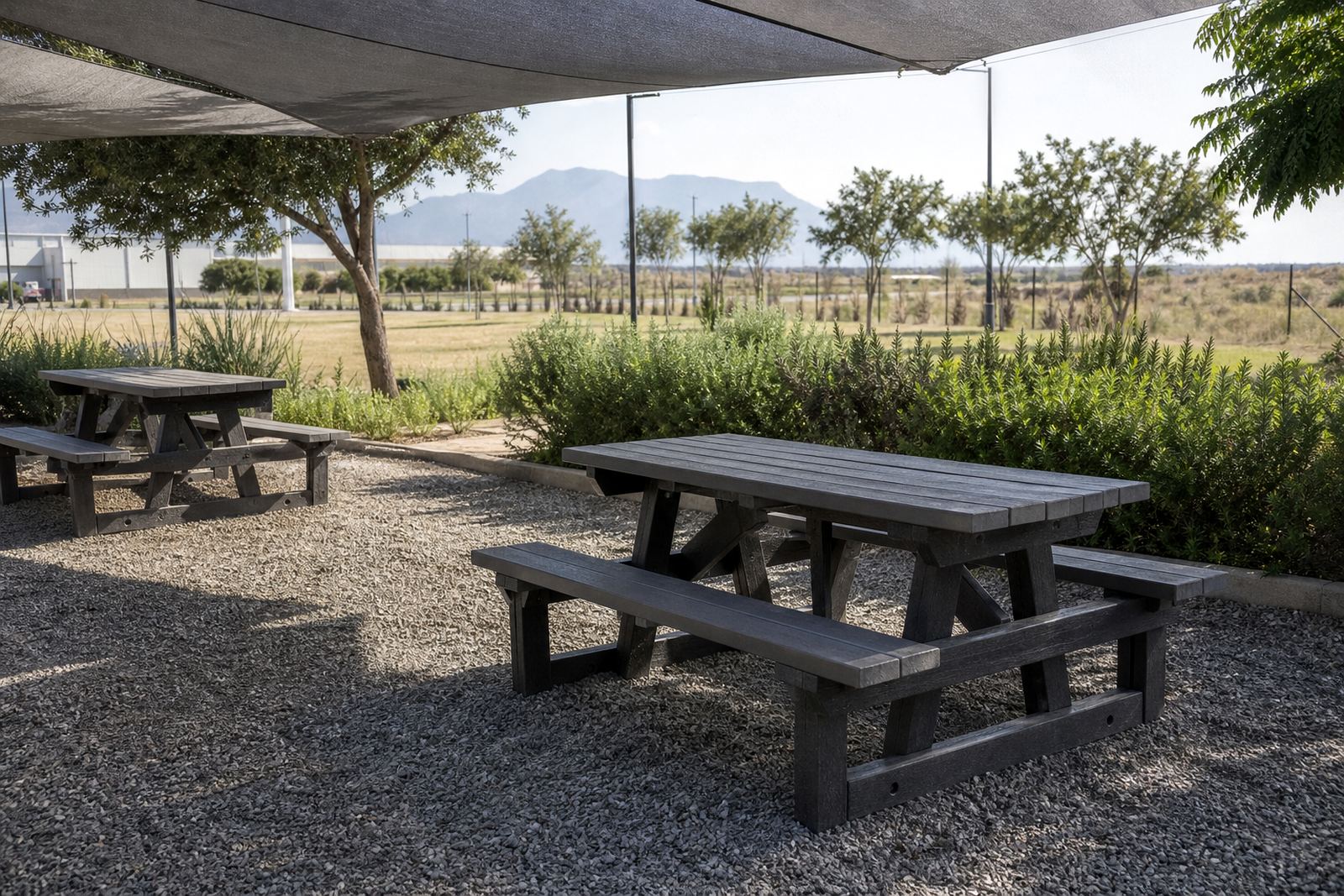
Picnic-style bench sets combine a table and fixed seating in one practical layout, which makes them useful where people need a place to sit, eat, meet or take a break. In recycled plastic lumber, the boards keep the familiar timber look without the usual problems of rot, splintering and frequent sealing. That makes them a good fit for spaces that stay outdoors all year, including school courtyards, apartment common areas, municipal parks and retirement village gardens.
At our base in Paarden Eiland, Cape Town, we supply picnic benches for projects across South Africa, including Stellenbosch, George, Johannesburg and Durban. The material is suited to busy areas because it can handle regular use and damp weather better than untreated timber, provided it is installed on a proper base and checked from time to time. For clients planning multiple units, it is worth matching the bench layout to the walkway space and movement patterns on site so people can get around it without crowding.
Sizes and layout options that suit your space
Picnic benches are usually selected by length, seat height and the width of the tabletop or central board run. Common project choices include compact two to four seater sets for courtyards, and longer six to eight seater sets for recreation areas or shared eating spaces. The exact proportions will depend on how much clearance you have around the unit, how many users it needs to serve, and whether access is needed for trolleys, wheelchairs or service staff.
We can help with site measures and layout planning so the set fits the space properly. That matters in narrow courtyards, around pool areas, and near pathways where municipal access rules or estate rules may affect placement. A bench that is too large can make a space feel cramped, while one that is too small may not serve the foot traffic you expect.
- Shorter sets for courtyards and townhouse common areas
- Standard family sizes for gardens and hospitality spaces
- Longer units for parks, recreation areas and communal seating
- Backless options where access from both sides is needed
- Fixed or movable placement depending on the site and surface
Why recycled plastic lumber works well outdoors
Recycled plastic lumber is chosen for outdoor furniture because it does not absorb moisture in the same way timber does, so it is less likely to swell, split or decay in damp conditions. It is also a practical option in places with strong sun and salty air, especially on the coast. For many clients, the main benefit is simple maintenance: no sanding between seasons, no regular staining and less concern about insect damage.
The surface can still mark or pick up dust over time, so routine cleaning is needed, but the job is usually light. In windy areas and public spaces, the heavier feel of the boards can also help the set stay in place more reliably than very light outdoor furniture. It is a sensible choice where people want a neat, finished look without a long maintenance schedule.
- Suitable for coastal and inland conditions
- Resists rot, termites and moisture related damage
- Does not need yearly sealing like timber usually does
- Useful for busy shared areas and daily use
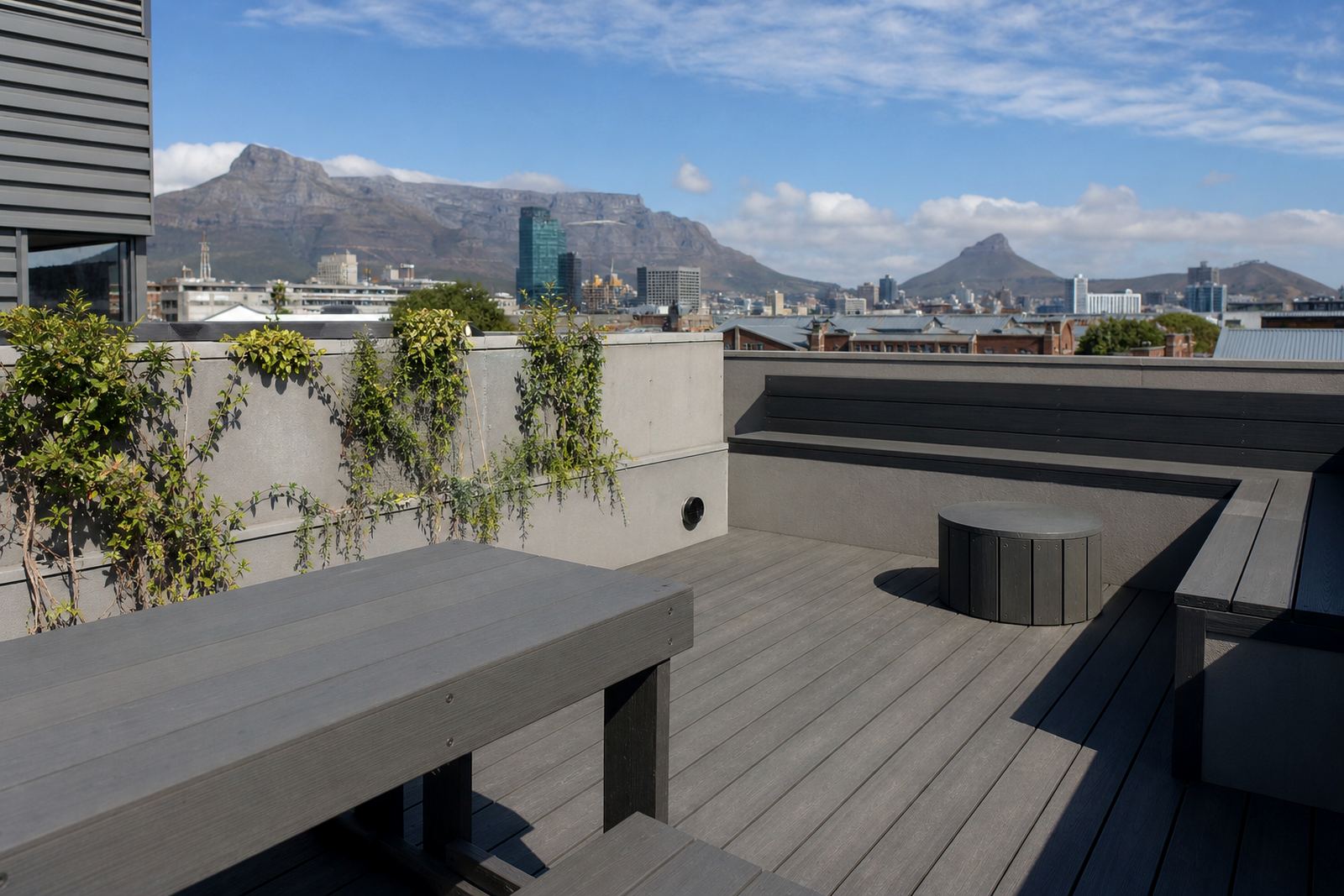
- Can be matched with deck boards and other recycled plastic elements
Installation, fixing and site requirements
Picnic bench sets can be supplied for straightforward placement or for fixed installation, depending on the site. On paved courtyards, slabs or concrete aprons, the set should sit level so the frame does not rock and the seats remain comfortable. Where the bench is installed in a public or commercial space, fixing points may be used to help keep the unit stable and to reduce movement during heavy use.
These benches do not need power or gas. That makes them easier to place in gardens, public rest areas and outdoor eating zones where running services would add cost or complication. The main site checks are ground level, access for delivery, and enough clearance around the unit for cleaning and movement. Jason Petersen handles installation planning where required, while the logistics team coordinates delivery to Cape Town, Paarl, Somerset West, Bellville and other project areas.
Care, cleaning and servicing over time
Routine care is simple. A wash with water and a mild cleaner is usually enough to remove dust, food marks and general outdoor dirt. In high use areas like school grounds or recreation spaces, a regular wipe down helps keep the seating tidy and presentable. If the site is near trees, salt spray or dusty roads, the bench may need cleaning a little more often.
We also support bench refurbishment, component replacement and care advice where a unit has been used for years and needs freshening up. If a board is damaged or a fixing has loosened, it is better to deal with it early rather than waiting for the whole set to wear unevenly. A practical maintenance plan should include checks after heavy rain, strong wind or busy events, and a quick look at the fixing points from time to time.
- Clean with mild detergent and water
- Check fixings after installation and after heavy use
- Inspect for movement on uneven paving or soil bases
- Replace damaged parts instead of leaving loose sections in place
- Keep the area around the set clear for safe access
What to confirm before you order
When ordering picnic benches, it helps to confirm the intended use, the available footprint and whether the unit will be fixed down or left movable. You should also decide if you need one bench set or several matched units for a larger site. For trade and project clients, material quoting is easier when we know the number of sets, the site town, the surface type and whether delivery only or installation support is needed.
It is also useful to note any colour preference, edge finish expectation and whether the bench must suit an existing deck or paved area. If the space is exposed to coastal moisture, direct sun or strong cleaning routines, that should be mentioned at the start. Bianca Fourie and Leanne Naidoo help clients with order details and support, while Thabo Molefe oversees production and Sibusiso Dlamini manages delivery coordination so the right bench reaches site on time.
Built for gathering spaces across South Africa
Picnic benches are one of the more practical outdoor seating choices for South African sites because they serve a clear purpose and keep maintenance low. They work well in residential gardens, commercial courtyards, hospitality break areas and public recreation spaces where people need durable seating that can handle everyday use. From Paarden Eiland to George, Johannesburg and Durban, the aim is the same: a neat, steady seating solution that stays useful without constant upkeep.
Plastimber was established in 2009 and continues to support building, plumbing and acoustics related projects alongside its recycled plastic lumber range. For picnic bench projects, Morne van Zyl and the team work with clients who need measured, practical support from first enquiry through to delivery and installation. If you are planning a new outdoor seating area or replacing worn timber sets, these benches are worth considering for their long service life and simple care.
Key facts
| Material | Recycled plastic lumber |
|---|---|
| Use | Outdoor picnic-style seating for gathering areas |
| Typical configurations | Compact, standard and longer multi-seat sets |
| Installation | Freestanding or fixed on suitable hard surfaces |
| Maintenance | Simple wash down, periodic inspection and component replacement |
| Service area | Cape Town, Stellenbosch, George, Johannesburg, Durban, Paarl, Somerset West, Bellville |