
What Patio Decking Is And Why It Works Outdoors
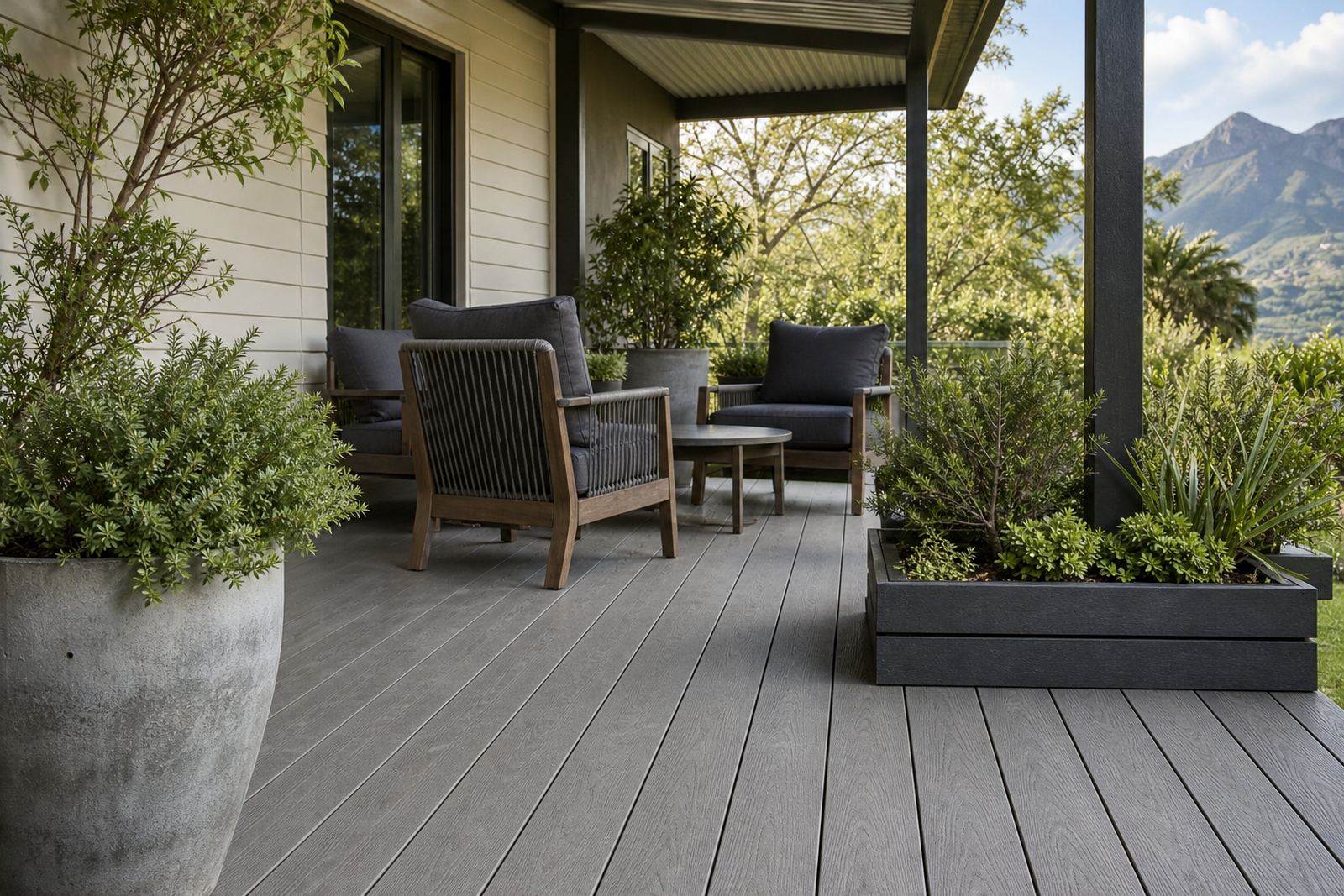
Patio decking is a raised or ground-level walking surface made from recycled plastic lumber boards fixed onto a proper substructure. It is used for entertainment areas, pool surrounds, braai spaces and sheltered terraces where timber can struggle with moisture, insects and constant exposure. Unlike traditional wood, recycled plastic lumber does not need regular sealing or staining to stay serviceable, which makes it a sensible option for busy homes and business premises.
In Cape Town coastal conditions, and in humid places like Durban or George, the material is often chosen because it handles moisture better than many timber alternatives. It is also useful where people want a neater finish without splinters, loose fibres or the constant sanding that wood can need. The look is practical rather than fussy, which suits modern patios, lodges, small courtyards and larger hospitality areas.
Because every project is different, the board profile, fixing method and support spacing should be matched to the site. A patio that gets full afternoon sun, salt air or heavy foot traffic will need a different approach from a shaded courtyard in Stellenbosch or a rooftop terrace in Johannesburg.
Board Sizes, Profiles And Finish Options
Recycled plastic lumber decking is available in a range of board widths and thicknesses, with lengths cut to suit the layout and delivery plan. The right option depends on the span, the visual effect you want and how much traffic the patio will take. Narrower boards can give a more traditional deck look, while wider boards can reduce the number of joints and speed up installation on larger areas.
Typical project decisions include surface texture, edge detail and board colour. Some clients prefer a timber-style grain, while others want a flatter finish that is easy to sweep clean. Colour choices are usually practical tones that work with paving, plaster, aluminium doors and boundary walls. For commercial spaces, a plain finish can make maintenance easier, especially where food spills, sand and dust are part of daily use.
- Board widths chosen to suit compact patios or wide entertainment decks
- Surface texture that improves underfoot grip in everyday use
- Matching edge trims and corner details for a cleaner perimeter
- Options for straight runs, steps, landings and built-in seating surrounds
The final specification should also take joint spacing and movement into account. South African weather can swing hard from hot afternoons to cooler evenings, so correct detailing matters more than just the board itself.
Where Patio Decking Sits Best On A Property
Patio decking suits a wide range of outdoor areas, from a small courtyard at a townhouse in Bellville to a larger family braai zone in Somerset West. It is often used where there is a need to bridge uneven ground, cover older paving, or create a cleaner transition between indoor floors and the garden. In hospitality settings it works well for guesthouse patios, restaurant smoking areas, and covered verandas where guests expect a neat finish underfoot.
It also suits coastal homes where salt air can be tough on fittings and finish materials. Recycled plastic lumber is useful in those settings because it is not prone to the same rot issues as untreated timber, and it handles wet mopping or rain runoff without the same sort of breakdown. On high-traffic sites, it can be a practical choice for front entries, terrace walkways and viewing decks.
- Outdoor living spaces attached to lounges or kitchens
- Braai zones with regular foot traffic and moving furniture
- Pool surrounds where moisture and splash are constant
- Commercial terraces, guesthouses and public seating areas
- Shaded patios that still get rain and morning damp
Installation, Power Needs And Site Planning
Patio decking needs a sound base, proper support, and careful setting out before any boards go down. On many sites the first step is a site measure, followed by layout planning so that levels, falls and access points are correct. Good planning helps with door thresholds, drainage direction and the placement of steps or ramps. It also helps avoid awkward board cuts around posts, drains and existing walls.
Installation usually does not need permanent power on the deck itself, but the overall site may need provision for lighting, outdoor plugs, speakers or a built-in braai area. Where the deck is going near a gas braai or heater, clearances and access for servicing should be thought through from the start. In load-shedding areas, some clients also like to plan for low-energy lighting and safe cable routes so the space still works at night.
For properties under body corporate control or municipal rules, it is worth checking whether the deck will sit above ground level, affect drainage or require approval. A neat structure is one thing, but the site must still allow access for maintenance and not block weep holes, stormwater flow or shared boundaries.
Care, Cleaning And Refurbishment Over Time
One of the main reasons people choose recycled plastic lumber is the low maintenance it offers compared with timber. Routine care normally means sweeping away sand and leaves, washing off dust, and removing spills before they sit for too long. In coastal towns, it helps to rinse salt build-up every so often, especially on exposed patios that get windblown spray.
Heavy grease from a braai, potting soil, tannin stains from leaves and general grime should be cleaned promptly with suitable non-abrasive methods. Sharp scraping tools can mark the surface, so it is better to use the right cleaner and a soft brush where needed. The material is made for practical use, but like any outdoor surface it lasts longer when looked after properly.
- Regular sweeping to stop grit from wearing the surface
- Wash-downs after windy weather, braai use or storms
- Check fixings and joints after the first season of use
- Refurbishment support for worn boards, steps or edge pieces
- Component replacement where isolated sections have been damaged
If the patio is part of a rental property or commercial venue, scheduled servicing can help keep the surface tidy and safe for guests. That is often easier than waiting for damage to spread from one loose board or failed fixings.
What To Check Before You Order Patio Decking
Before placing an order, it helps to have the site dimensions, expected use, access route and finish preference ready. Knowing whether the deck will carry dining furniture, loungers, planters or service traffic will influence the support layout and board choice. It is also useful to decide whether the project needs stairs, skirting, a handrail, or a bench integrated into the edge of the patio.
Clients should also check the delivery route. In some parts of Cape Town and Johannesburg, access is simple. In tighter streets or shared complexes, there may be gate limits, delivery windows or offloading restrictions. Having this sorted early avoids delays on installation day.
When you enquire, it is helpful to mention whether the patio is new, part of a refurbishment, or being built over an existing slab. That lets the team plan for removal of old material, matching levels and any edge finishing needed. A clear brief saves time and helps the final result fit the property properly.
Key facts
| Product type | Recycled plastic lumber patio decking |
|---|---|
| Typical use | Outdoor living spaces, braai zones, terraces and pool surrounds |
| Format | Boarded deck system on a prepared substructure |
| Finish options | Different board profiles, textures and practical colour choices |
| Service areas | Cape Town, Stellenbosch, George, Johannesburg, Durban, Paarl, Somerset West and Bellville |
| Services available | Site measures, layout planning, material quoting, delivery coordination, installation, refurbishment and care advice |