
A courtyard that needed hard wearing seating
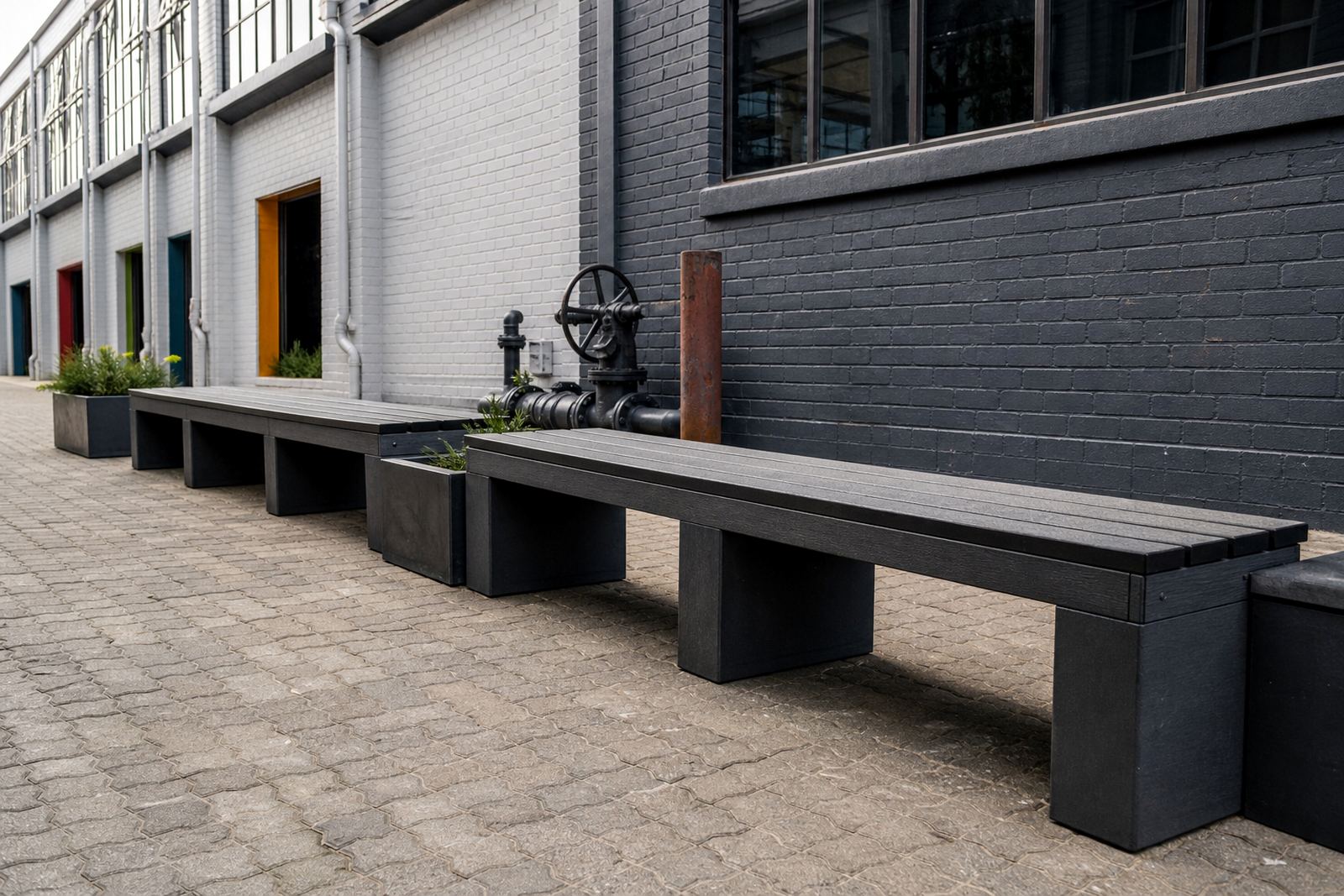
The brief came from an industrial yard in Paarden Eiland, Cape Town where the outdoor area was being used for breaks, quick meetings and waiting space. The client wanted benches that would stand up to coastal humidity, dust, cleaning water and regular movement of people and trolleys. Timber had been considered, but the upkeep and weather exposure made a lower maintenance material the better choice.
The site sat close to busy loading activity, so the seating also had to be practical in a tight footprint. We were asked to keep the layout neat, avoid sharp corners where possible, and make sure the benches felt solid without taking up too much floor area. It had to be suitable for a commercial yard, not a decorative garden setting, and the finish needed to look orderly from day one.
Because this was a working property, access times were limited and the team needed a plan that would not interrupt operations. That meant careful measures, a clear delivery sequence and bench sections that could be installed efficiently on site. The focus was simple: give the courtyard proper seating that lasts, with less sanding, sealing or repainting later on.
What we measured and planned before delivery
Before production, we carried out site measures and layout planning so the bench positions would work around circulation paths, door swings and the loading zone. The client needed seating that did not block movement or create trip points, and the arrangement had to fit the size of the yard without feeling cramped. We also checked the ground levels and the fixing points required for a stable installation.
- Bench spacing planned around existing walkways and access routes
- Clearance allowed for cleaning and daily movement through the courtyard
- Section lengths set to suit transport and on site handling
- Fixing layout prepared for a firm, tidy finish on a hard surface
Our Projects Coordinator and Installation Manager worked through the sequence with the client so the work could happen in stages. That helped avoid unnecessary disruption and meant the yard could stay operational while the benches were being brought in and placed. It also made the final setup cleaner because each section had a defined position before the first delivery arrived.
Recycled plastic lumber benches for daily use
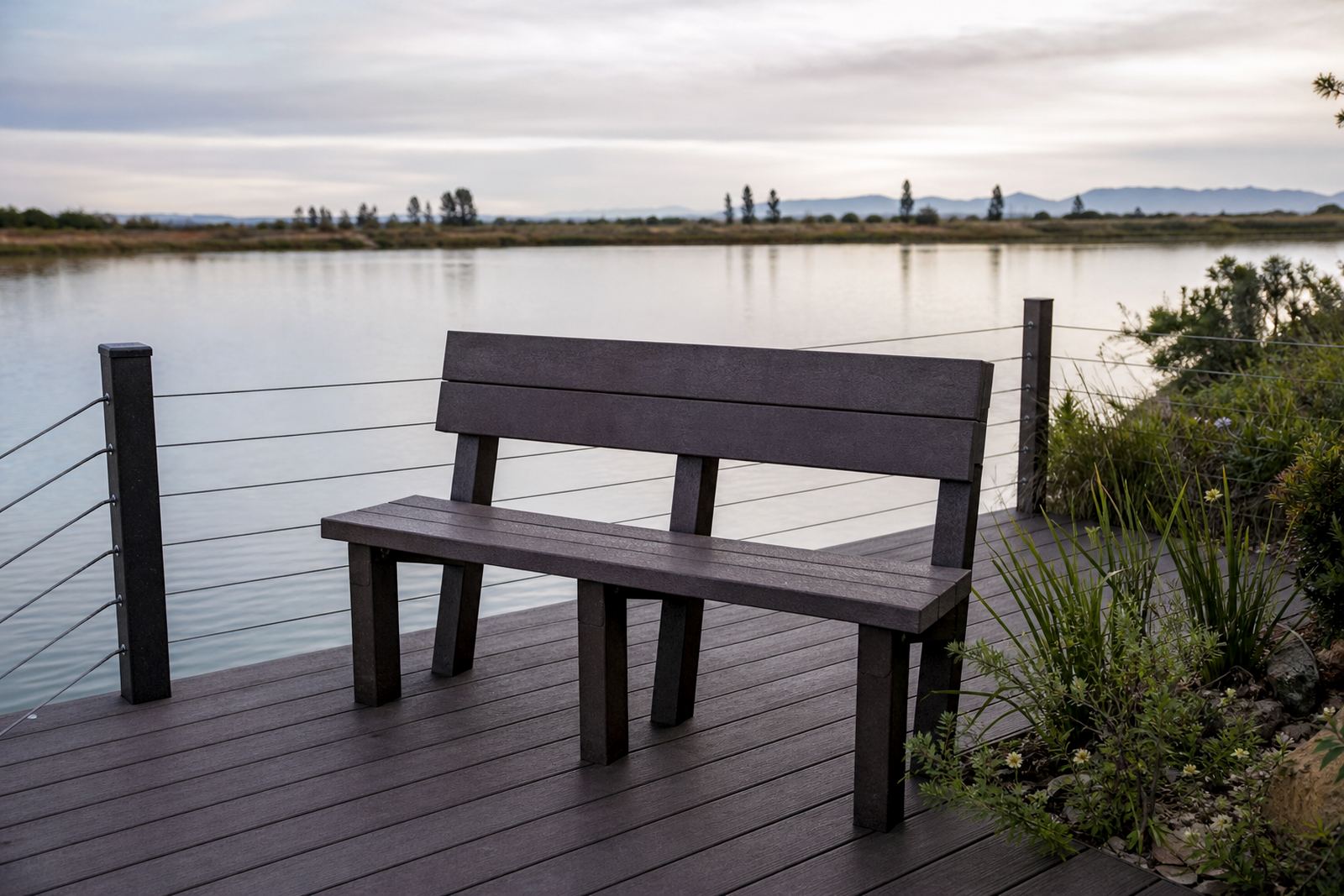
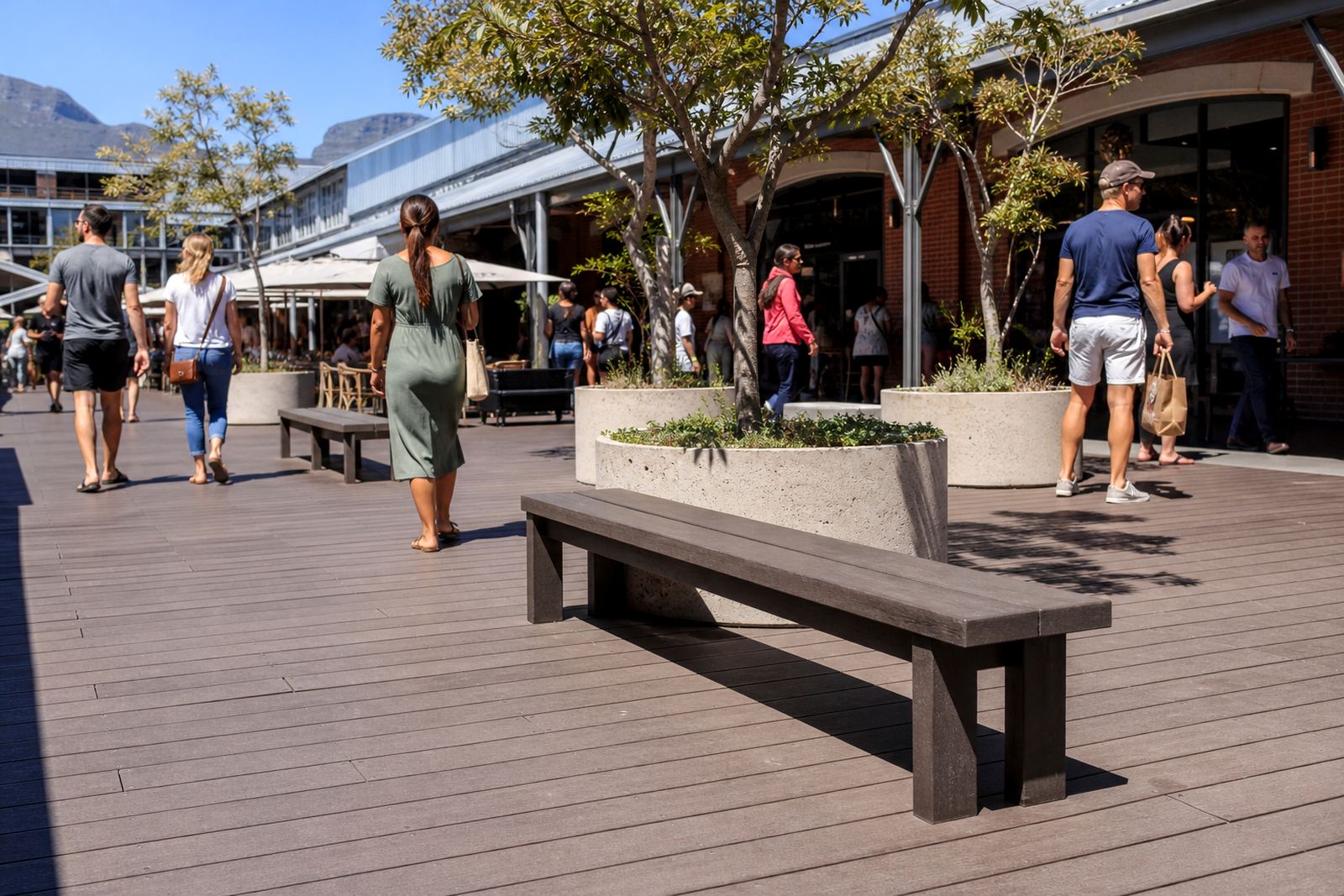
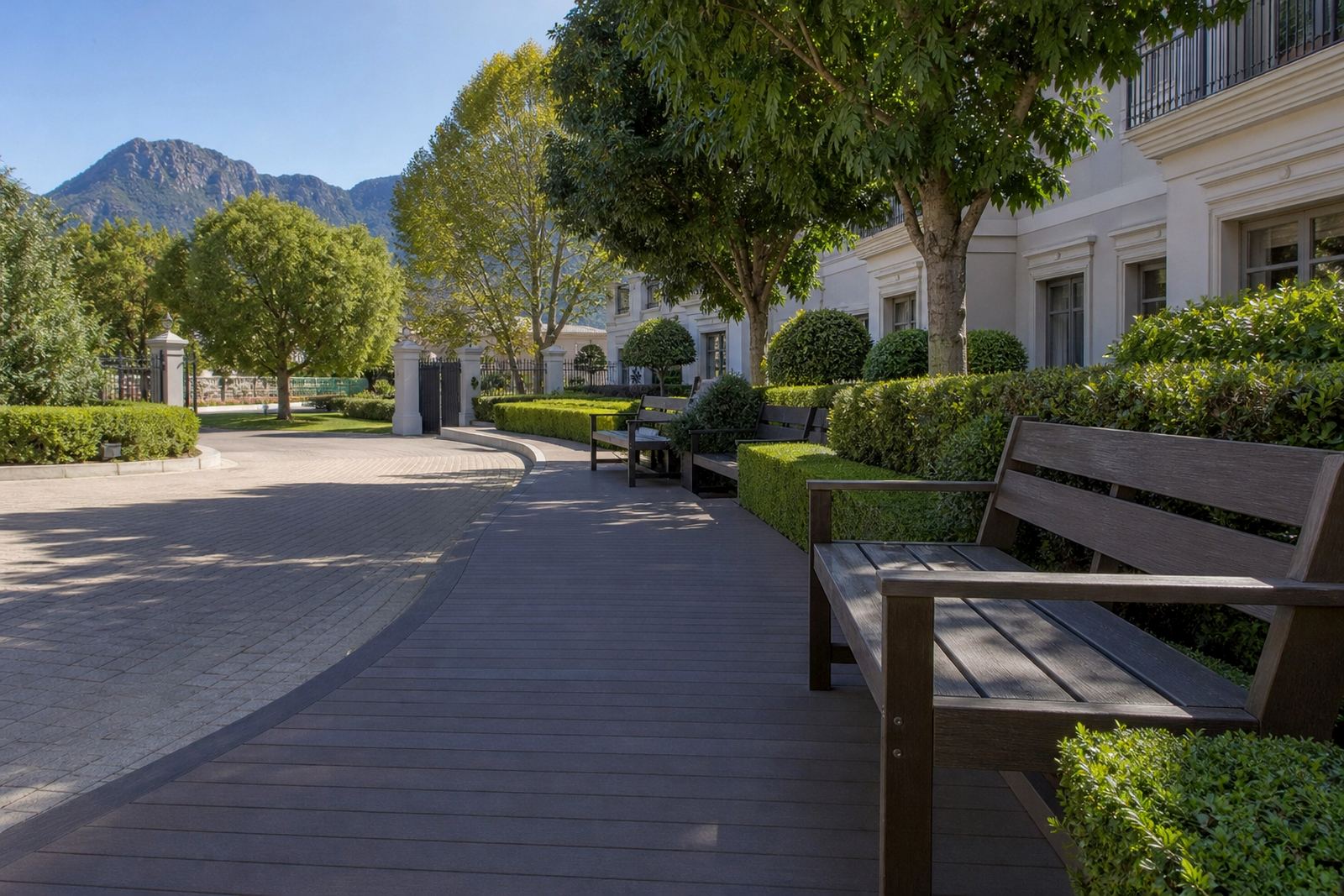
The seating supplied was made from recycled plastic lumber, chosen for its weather resistance and low maintenance profile. In a coastal city like Cape Town, that matters. The material does not absorb moisture like timber, so it is well suited to outdoor courtyards where salt in the air, rain and strong sun can wear down traditional materials over time. It also avoids the routine of sanding, sealing or repainting that many timber benches require.
The bench components were selected for practical use in an industrial environment, with broad seating surfaces and a simple, clean profile. The material is also suitable for areas where cleaning is important because it can be wiped down without special treatment. For a yard that sees regular foot traffic, that makes a real difference over the months and years.
- Recycled plastic lumber construction for outdoor durability
- Suitable for coastal conditions and general commercial use
- Low maintenance finish with no regular painting cycle
- Easy to clean in busy shared spaces
We also looked at the surrounding acoustics of the courtyard. Hard industrial spaces can feel harsh, so the seating layout was kept orderly and balanced rather than overcrowded. The result was a calmer outdoor corner that still fitted the character of the yard. It was a practical decision, not a decorative one, and it worked well for the site.
Installation in a working Paarden Eiland yard
Installation was scheduled to minimise interruptions to the client’s day. The bench sections were delivered to Paarden Eiland and moved into position in a controlled sequence. Our team checked alignment, spacing and level before final fixing, then completed the edge finishing so the benches sat neatly within the courtyard layout. The process was kept efficient because the site could not afford a long shutdown.
The installation phase took place over two weeks from final measure to completion on site. That covered planning, production, delivery coordination and bench fitting. There was some back and forth on the preferred seating arrangement, as is normal on projects like this, but the final layout gave the client the balance they wanted between usable seating and open floor space.
- Delivery coordinated through our logistics planner
- Sections handled to suit the site access and yard activity
- Final adjustments made on site for level and spacing
- Edge finishing completed for a tidy, safer seating line
Our production supervisor also checked that the bench components matched the approved layout before dispatch. That avoided delays on site and kept the project moving. For an industrial yard, this kind of preparation saves time and helps everything fit the first time, which is what the client needed.
Results for staff, visitors and site flow
The finished courtyard now gives the yard proper seating that looks organised and can handle everyday use. Staff have a place to sit during breaks and visitors have a clear waiting area that does not feel improvised. The benches also suit the broader commercial setting because they are neat, practical and easy to maintain.
For the client, one of the biggest gains was reduced upkeep. There is no need to plan around timber maintenance schedules, and that matters in a busy property where maintenance time is already stretched. The recycled plastic lumber benches are also better suited to moisture and salt exposure than untreated wood, which gives the site more consistency over time. In a place like Paarden Eiland, where weather and workload both play a role, that is a useful advantage.
The project also improved the feel of the courtyard without changing the function of the space. It still works as an industrial yard, but the seating now supports staff comfort and visitor order. That is often the difference between a space that gets used properly and one that gets ignored.
What we would do again on a similar job
If we were doing a similar courtyard project again in Cape Town or another coastal town, we would follow the same approach: measure carefully, plan around access, and keep the bench layout practical rather than overcomplicated. That keeps the project moving and makes sure the final seating works with the site instead of against it.
We would also keep the same focus on material choice. Recycled plastic lumber is a strong option for outdoor benches in commercial yards, schools, shared housing, and other spaces where maintenance time is limited. It gives a clean finish, handles wet weather well and does not need the same level of care as many timber alternatives. The result is straightforward and dependable, which is what most sites need.
From our base in Paarden Eiland, Cape Town, we handle delivery and project support across South Africa, including Stellenbosch, George, Johannesburg, Durban, Paarl, Somerset West and Bellville. For this kind of work, the main thing is getting the details right, from the first measure to the final fix. That is what keeps the result practical for the people using the space every day.
Key facts
| Project type | Bench seating upgrade for an industrial courtyard |
|---|---|
| Location | Paarden Eiland, Cape Town |
| Material | Recycled plastic lumber |
| Scope | Site measures, layout planning, delivery coordination and bench installation |
| Timeline | 2 weeks from final measure to installation completion |
| Service areas | Cape Town, Stellenbosch, George, Johannesburg, Durban, Paarl, Somerset West and Bellville |