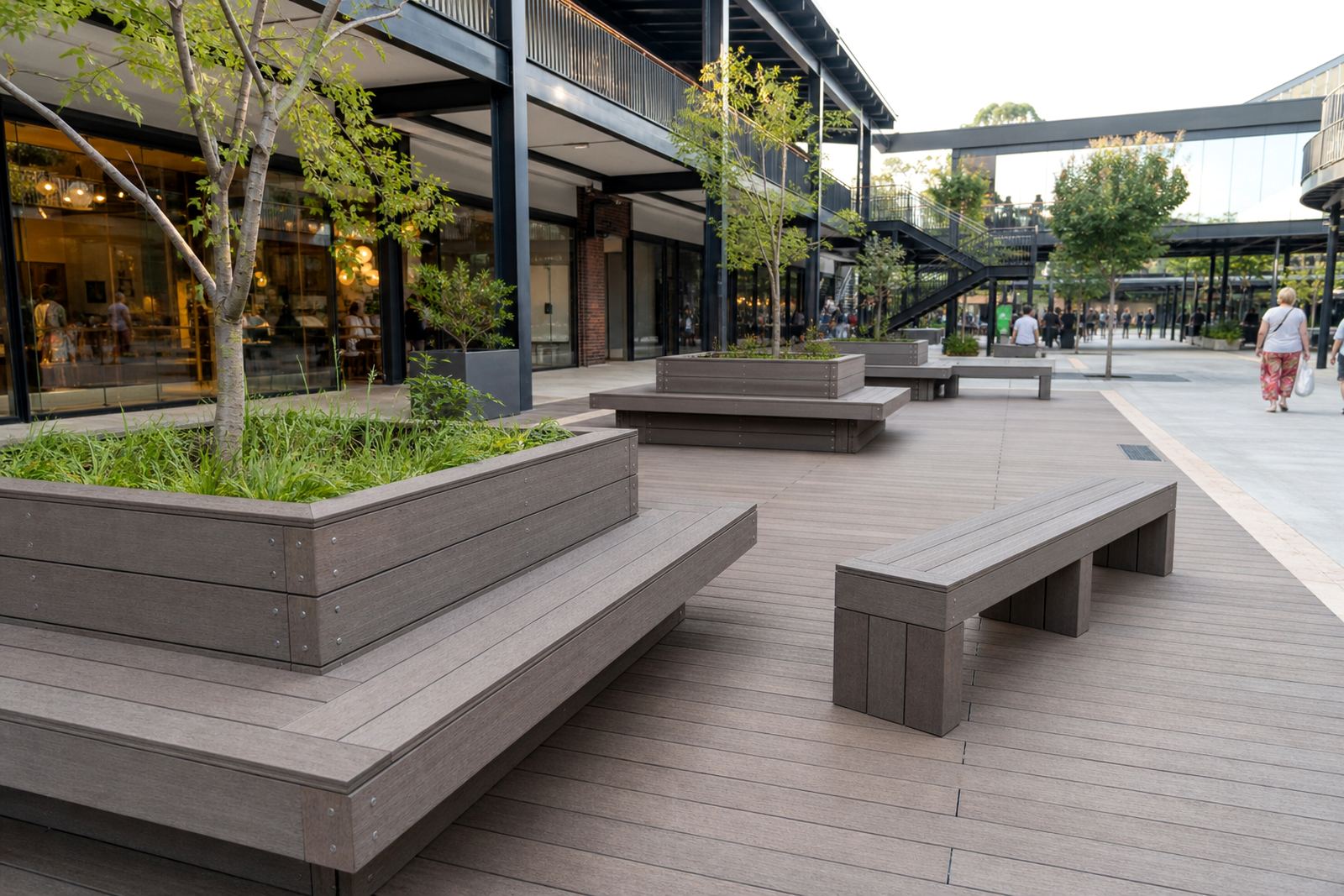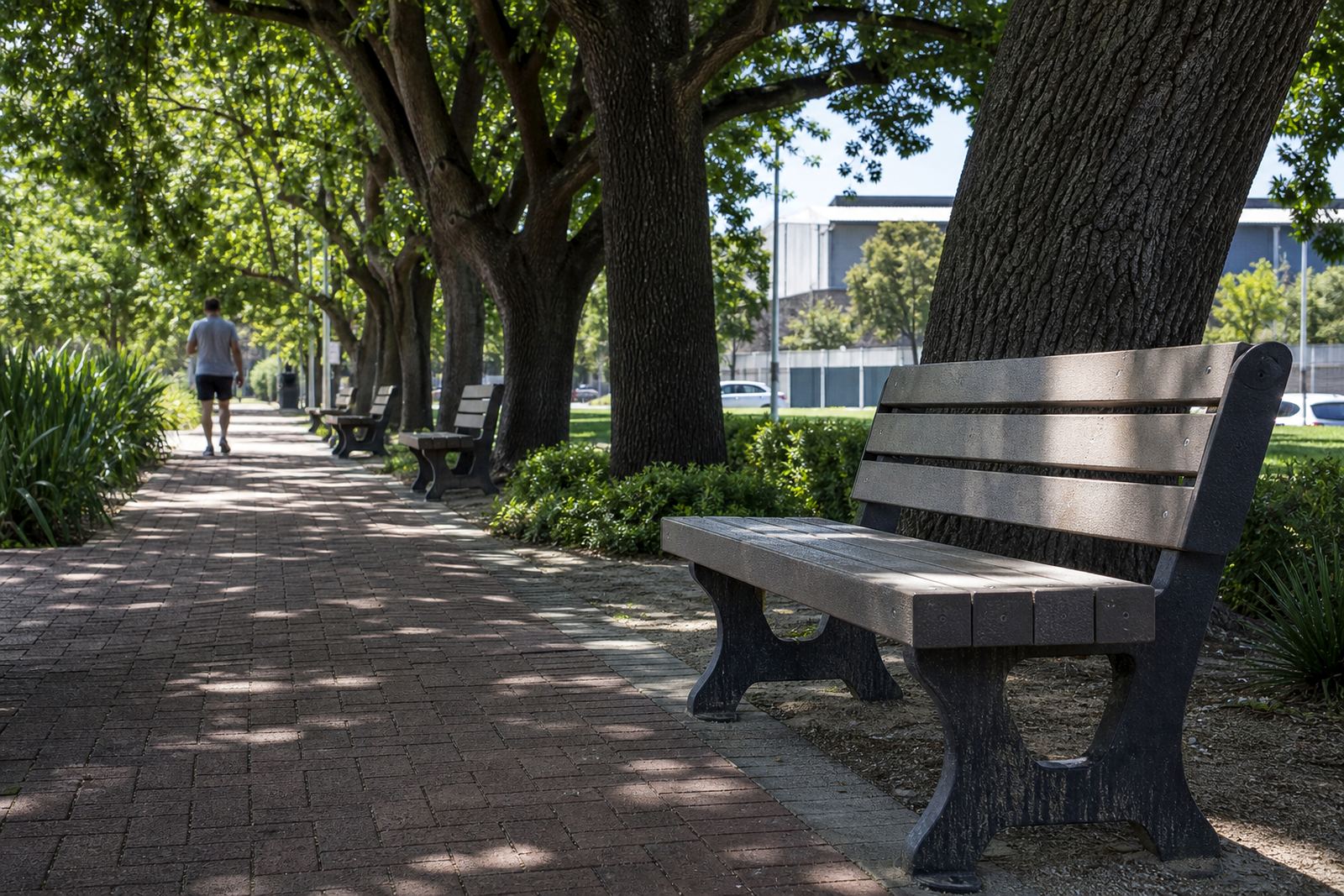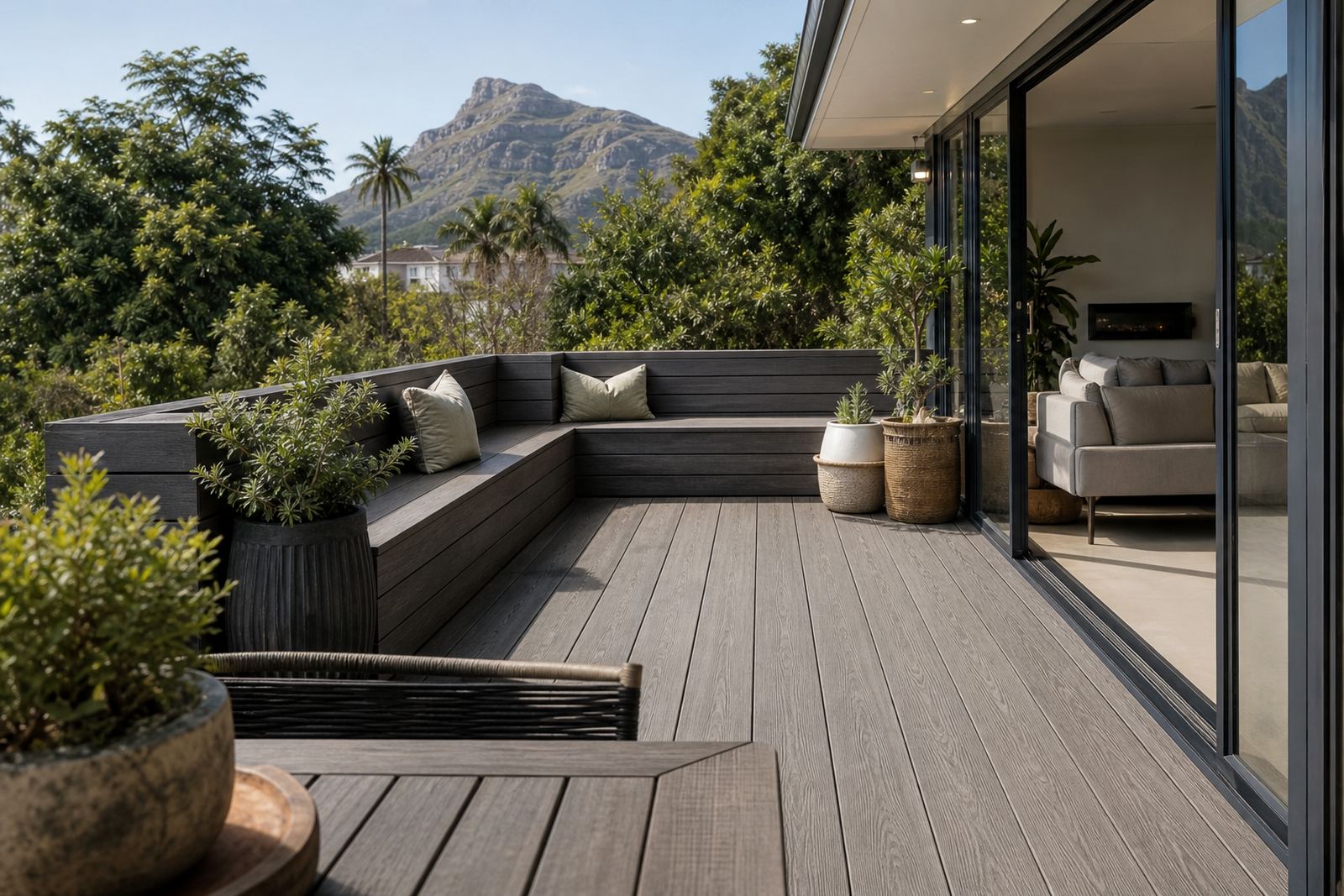

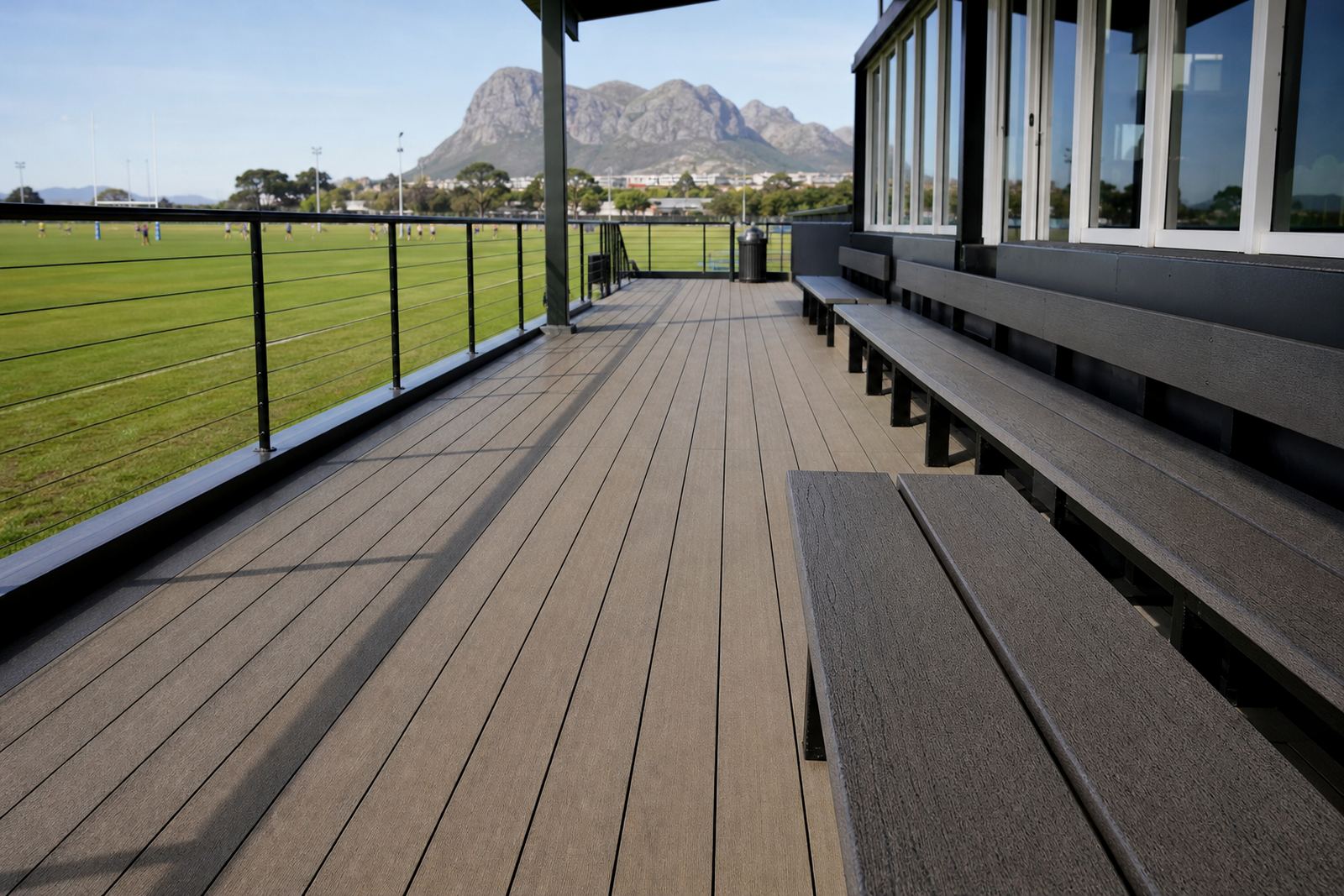
Club spaces that need hard wearing seating and viewing areas
At sports clubs, the pressure on outdoor surfaces is very different from a home patio. Members, parents, coaches and visitors come and go all day, with wet shoes after rain, dusty boots after a dry spell, and plenty of scraping chairs and bags. Recycled plastic lumber decking and benches suit these spaces because they handle regular use without the same maintenance burden as timber.
For clubhouse steps, poolside viewing, tennis court edges, cricket boundary seating and small terrace platforms, the aim is a clean, safe finish that stays serviceable through the season. In coastal places such as Cape Town, Somerset West and George, salt air and moisture can be tough on materials. In hotter inland areas like Johannesburg and Paarl, the focus is more on UV exposure and surface wear. Either way, club committees usually want a solution that keeps the area presentable with less sanding, sealing or repainting.
Plastimber works from Paarden Eiland in Cape Town and supplies clubs, schools and recreational facilities across South Africa, including Stellenbosch, Bellville, Durban and the wider Western Cape. The team can assist with site measures, layout planning, material quoting and delivery coordination so the club gets a clear plan before the first board is fixed.
Typical set-up for a sports club project
A club area usually needs more than one product type. A small spectator deck may need a raised edge, safe access steps and a few fixed benches, while a larger venue might need long seating runs beside a court or around a clubhouse perimeter. Recycled plastic lumber is useful because it can be used for decking boards, seat slats, edging and support details in a consistent finish.
- Decking for covered walkways, viewing platforms and clubhouse thresholds
- Benches for spectators, rest points and changing room surrounds
- Edge finishing to neaten open ends and reduce snagging
- Replacement components for worn boards, seat slats or damaged sections
- Refurbishment of older decked areas where the base is still sound
The layout should allow enough clear walking space, easy cleaning access and sensible movement during match days. If spectators gather at one end of a court or pitch, the deck should not block exits or create tight corners. For clubs with food service or clubhouse doors nearby, good spacing matters even more because queues and foot traffic tend to build up quickly.
Planning advice for courts, clubhouses and spectator zones
Good planning starts with how people actually use the space. A bench that looks fine on paper may be awkward if it faces the wrong angle, sits in full afternoon sun, or interrupts the route to toilets and refreshment counters. Site measures help with this. The team can assess the available area, existing levels and any drainage issues before materials are quoted.
On sloped or uneven ground, it is often better to allow for a level viewing deck with a clear edge than to force seating onto a patchy surface. In coastal towns, drainage and air flow matter because standing water can shorten the life of nearby fittings and make cleaning harder. In municipalities with stricter appearance rules, a tidy, low-maintenance deck can also help keep the property looking orderly without frequent repairs.
When planning a club installation, it helps to check these points early:
- How many people will use the area on a match day
- Whether the deck must carry benches, tables or movable seating
- How close the area sits to sprinklers, drains or boundary walls
- Whether deliveries can reach the site without damaging lawns or paving
- What finish is needed around corners, ramps and door thresholds
Common mistakes clubs make before ordering
One common mistake is treating a club deck like a domestic patio. Sports venues need stronger planning around wear, cleaning and crowd movement. Another mistake is leaving seating until the end of the project, then discovering there is not enough room for safe circulation or that the benches block views from important areas.
Some clubs also underestimate maintenance access. If a deck is built so tightly against a wall or planter that cleaners cannot reach the back edge, dirt collects quickly. Another issue is mixing materials without thinking about expansion, drainage or finish. Recycled plastic lumber behaves differently from timber, so the spacing, fixings and support details must suit the material being used.
A final mistake is delaying component replacement until the whole area looks tired. In many cases, one broken section or a few damaged boards can be replaced before the rest of the area needs work. That keeps the space usable and avoids a larger refurbishment later on.
Budget ranges for sports club decking and benches
Budgets vary widely because club sites differ in size, access and how much preparation is needed. A small bench run or a limited decked viewing strip will sit in a very different range from a full clubhouse terrace with edge finishing and several seating zones. The cost also shifts depending on whether the project is a fresh installation, a refurbishment, or a mix of replacement and repair.
For planning purposes, clubs usually start by separating the job into clear parts: measure, quote, supply, install and finish. That helps committees compare options properly and avoid confusion when the work is staged over time. If the site is in a busy area such as Durban, Johannesburg or central Cape Town, delivery coordination may also need to fit around access windows and match-day schedules.
A practical approach is to ask for a material and installation breakdown before any commitment is made. That way the club can decide whether to complete the full area at once or stage the work in sections according to the available Rand budget.
Delivery and installation across South Africa
Plastimber supplies clubs from Paarden Eiland across South Africa, including Cape Town, Stellenbosch, George, Johannesburg, Durban, Paarl, Somerset West and Bellville. For local and out-of-town jobs, delivery coordination matters because sports sites often have limited access, narrow parking areas or times when the grounds are busiest.
The service range includes deck installation, bench installation, edge finishing, deck refurbishment, bench refurbishment, component replacement, care advice and trade support. For clubs with maintenance teams, this is useful because small repairs can often be planned around training days and match fixtures rather than causing a full shutdown.
Founded in 2009, Plastimber is led by MD Morne van Zyl with support from Anele Mkhize, Bianca Fourie, Thabo Molefe, Leanne Naidoo, Jason Petersen and Sibusiso Dlamini. Enquiries come through the contact page form, which is the easiest way for a club committee, grounds team or project manager to start the process.