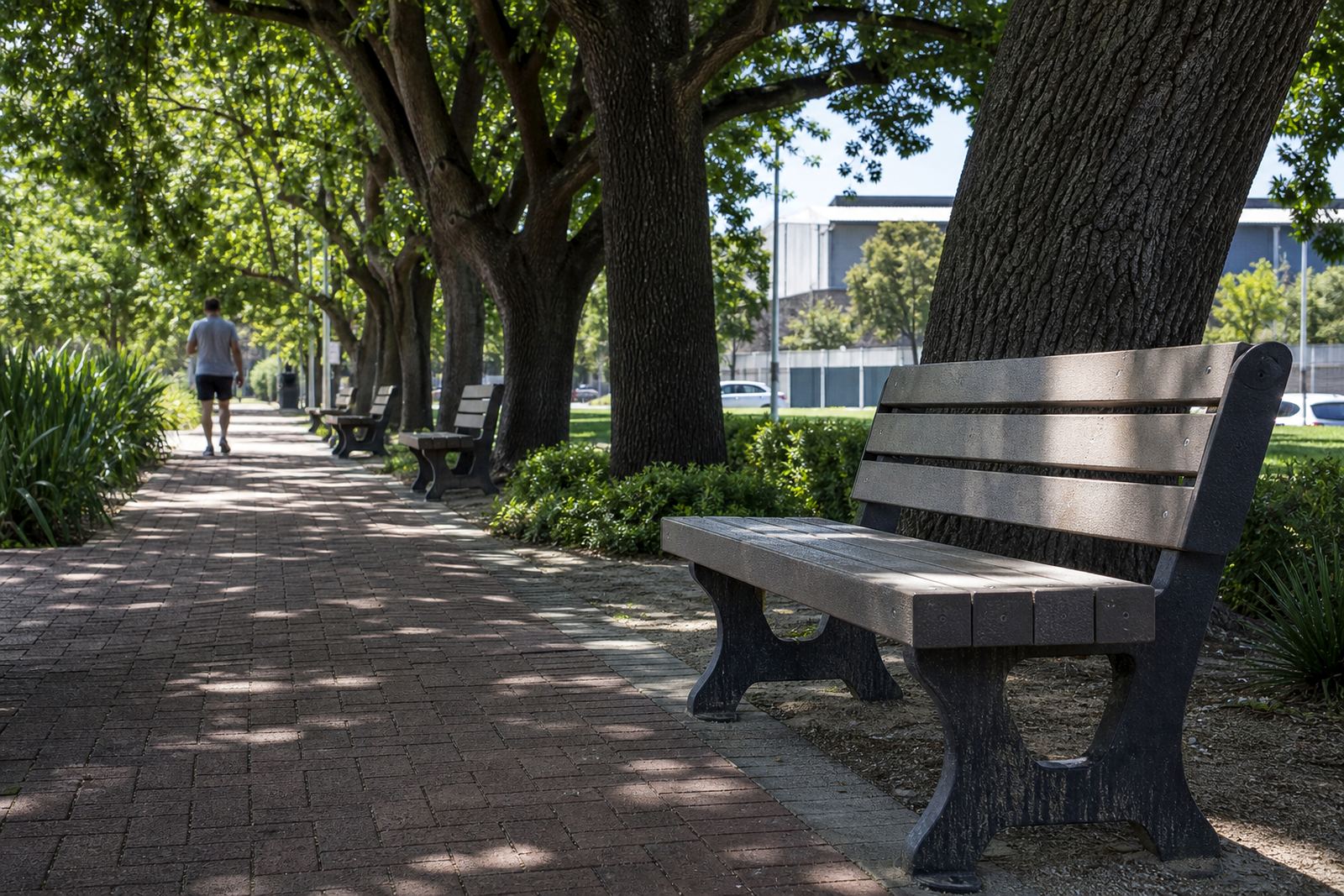
Park Furniture That Handles Daily Use
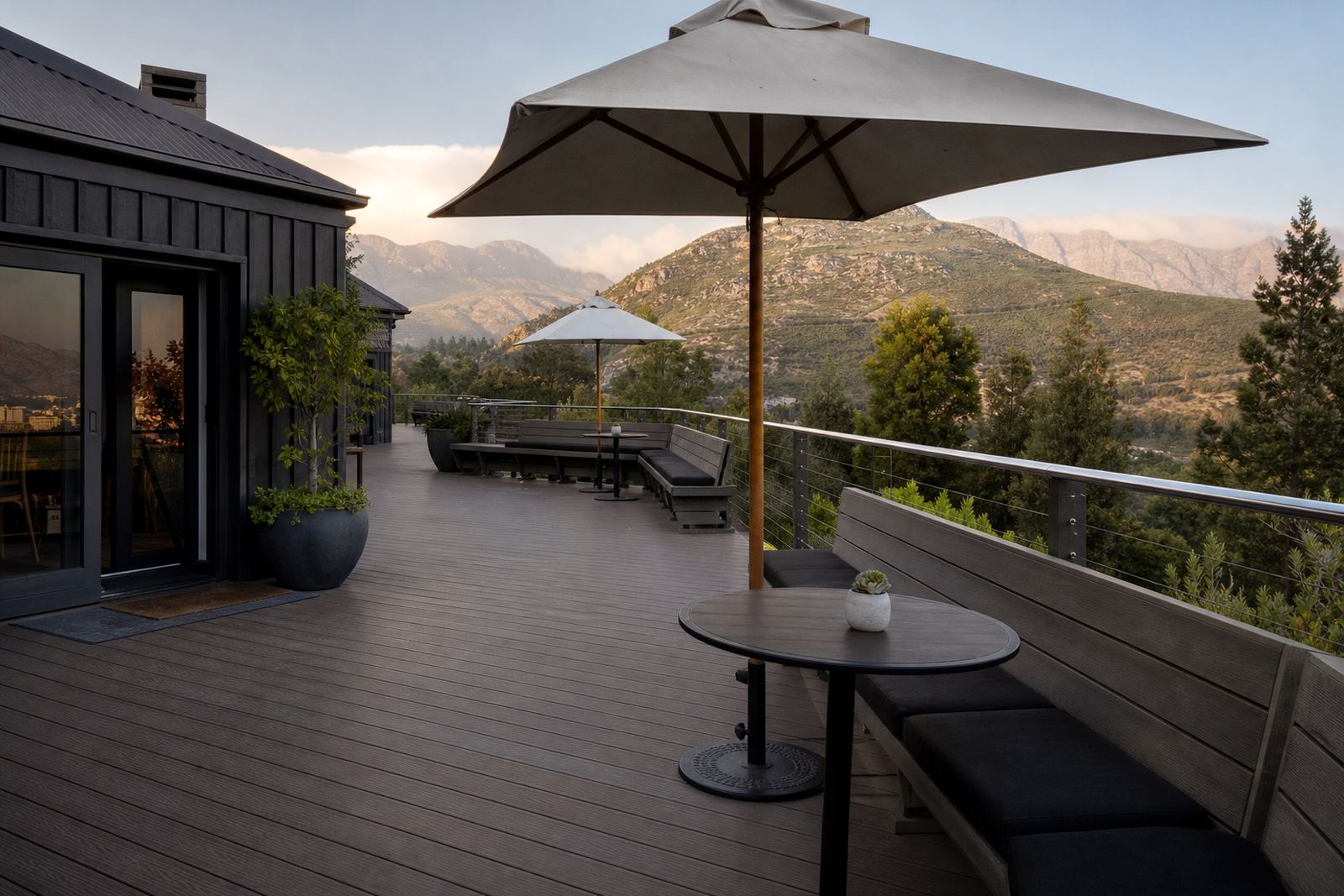
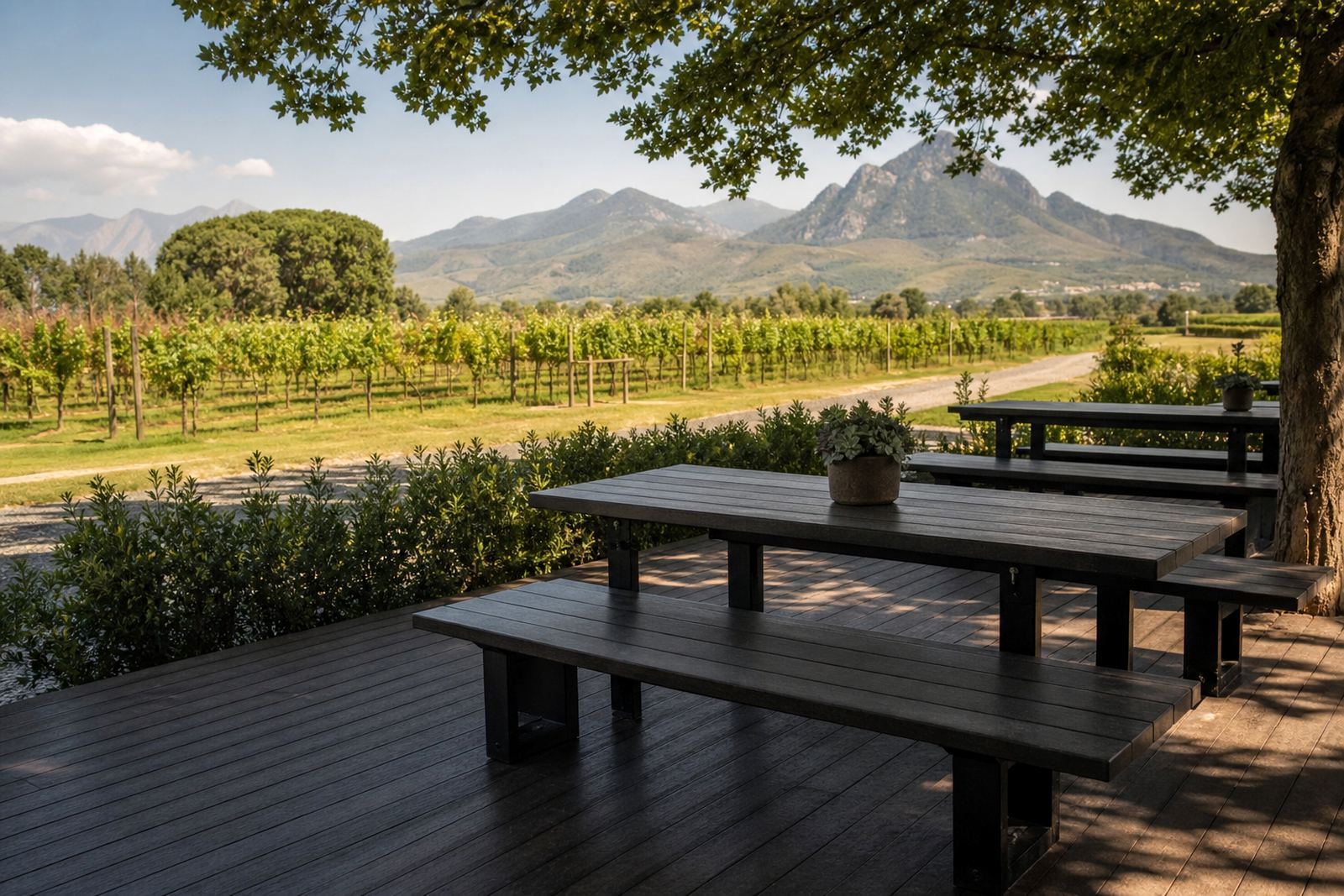
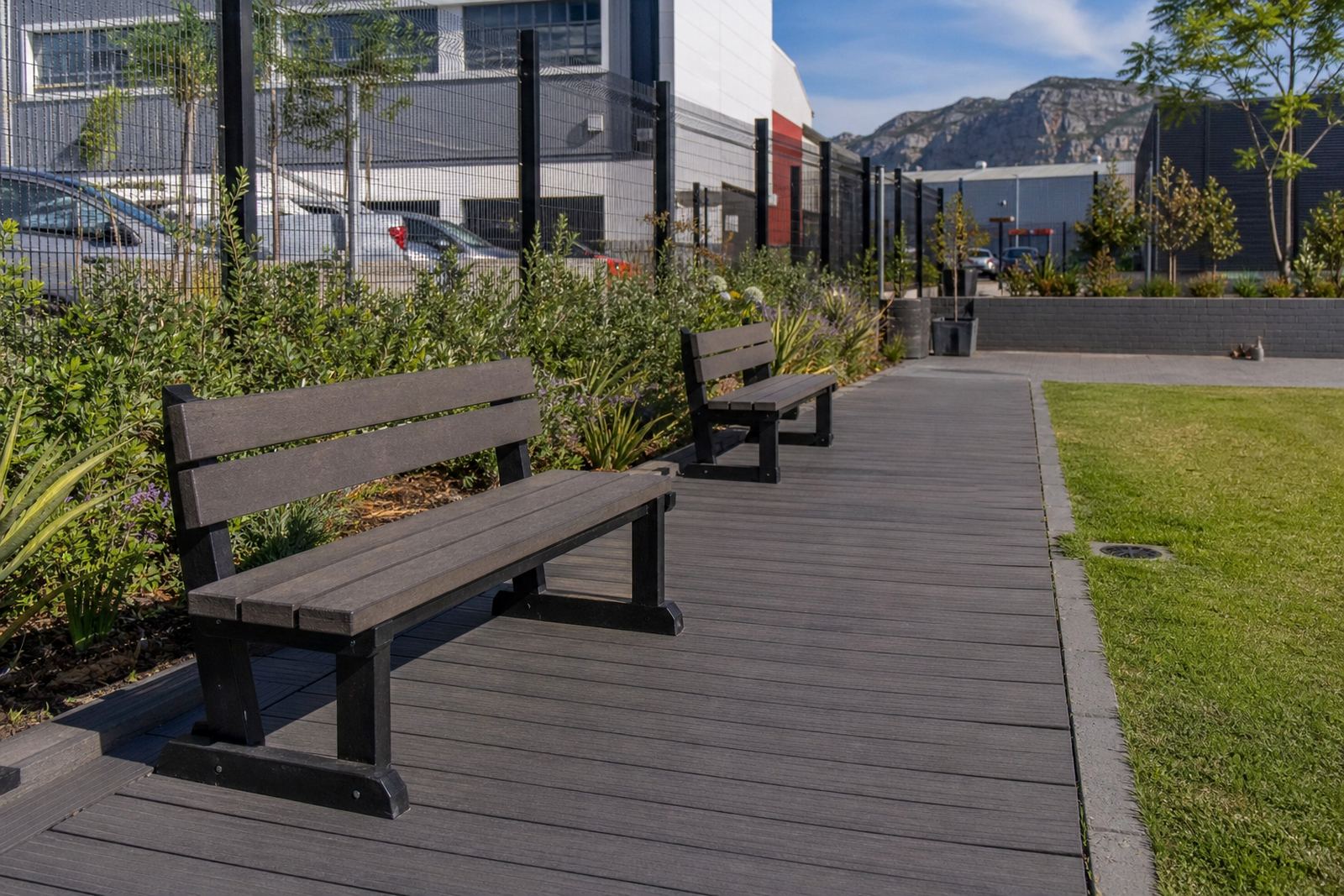
In municipal parks, open green spaces and neighbourhood reserves, the furniture has to cope with constant foot traffic, changing weather and regular cleaning. Recycled plastic lumber benches and decking suit these settings because they do not behave like ordinary timber when exposed to moisture, ground contact or coastal air. They are often used around lawns, paths, play areas and quiet seating spots where people need a clean place to rest.
For public use, the main advantage is simple upkeep. The material does not need painting or sealing, and it is less prone to splintering, rot or insect damage than many timber products. That makes it suitable for parks in Cape Town, Stellenbosch, George, Johannesburg and Durban, where sun, rain and humidity all place different demands on outdoor finishes.
Typical Equipment for a Municipal Park Layout
Public park projects usually call for a mix of seating and walking surfaces rather than one fixed product only. A common set includes bench seats with backrests or backless seating, short deck platforms for viewing or gathering, and edge finishing where a boardwalk or raised area meets paving, soil or grass. The design can be plain and functional, or shaped to suit a landscaped corner or a shaded rest point.
- Bench seating for paths, entrances and children’s play areas
- Short decking runs for walkways, viewing points or shaded rest areas
- Edge trims and finishing pieces to reduce trip points
- Replacement boards or slats for refurbishment work
- Fixings and supports suited to outdoor, public use
Where parks face coastal moisture, drainage and airflow matter just as much as the material choice. A bench set directly in wet ground without proper support can move or collect dirt, so the structure beneath is as important as the seat above.
Planning the Layout Around Foot Traffic and Maintenance
Good park layout starts with how people actually move through the space. Seating should sit where visitors naturally pause, not hidden in a corner that nobody reaches. Walkways should link entrances, play spaces, toilets and shaded areas without forcing people to cut across grass beds. If the park is used for weekend events or school visits, wider circulation points help keep access clear.
Our site measures and layout planning work looks at slopes, drainage, service access and the space needed for cleaning crews and municipal vehicles. On sloping ground, a raised section may need careful edge treatment so water does not sit under the boards. In windy coastal towns, fixing points and the direction of the boards can also help the installation stay steady over time.
Trade support is useful when a project is being phased. A park can be upgraded in stages, first with benches and then with walkways or refurbishment work later on. That helps councils and contractors manage budget approval and keep the site open to the public.
Common Mistakes on Public Park Projects
One common mistake is choosing a seating layout before checking the ground conditions. If the soil is uneven or drainage is poor, benches can settle badly and create gaps or rocking points. Another error is placing too much furniture in one area, which can block access for wheelchairs, prams and maintenance staff. A park should feel open, not crowded.
It is also easy to forget that public seating gets used differently from private garden furniture. Children climb on it, people drag bags across it and cleaners wash it down regularly. That means fixings, spacing and edge finishing need practical thought. In some cases, poor planning leads to sharp corners, exposed ends or narrow walkways that wear unevenly and need repair sooner than expected.
- Do not skip site checks for slope, water run-off and access routes
- Do not place benches where grass maintenance equipment cannot pass
- Do not use a layout that creates hidden corners or tight bottlenecks
- Do not ignore edge finishing where walkways meet paving or soil
Refurbishment is also worth planning early. If a board or slat is damaged, component replacement is easier when the original layout allows access. That small detail can save time later on.
What the Budget Usually Covers in Rand
Public park budgets usually need to cover more than the visible furniture. The total can include site measures, layout planning, material quoting, delivery coordination, installation and any edge finishing required for safety and appearance. If the project is replacing old seating or worn walkways, refurbishment and component replacement may also be part of the cost.
Smaller park seating jobs can be kept relatively focused when only a few benches or short deck sections are needed. Larger municipal spaces, especially those with multiple entrances or long pedestrian routes, naturally need more material and labour. The final Rand amount depends on the number of benches, the size of the decking area, access to the site and whether installation is straightforward or split over several visits. It is better to quote from measured quantities than guess on a park with irregular ground or mixed surfaces.
For budgeting, municipalities and contractors often prefer to separate supply from installation so each part can be reviewed clearly. That makes it easier to compare options and keep the project moving through approvals.
Delivery and Installation Across South Africa
Plastimber works from Paarden Eiland in Cape Town and delivers recycled plastic lumber decking and benches across South Africa, including Cape Town, Stellenbosch, George, Johannesburg, Durban, Paarl, Somerset West and Bellville. For public parks, the delivery plan needs to suit the site and the access rules, especially where vehicles cannot park close to the work area or where municipal hours are limited.
Installation for parks often needs coordination with caretakers, contractors and local authorities. That can include loading access, timing around public use and making sure materials are on site before the crew starts. In hot inland conditions and coastal humidity alike, clean handling and correct fixing matter. Once in place, the furniture is built for practical use, with care advice provided so the park team knows how to keep it looking tidy and functioning well.
If a park is being upgraded in stages, the team can assist with the first measure-up and carry through to final fitting. For municipal spaces, that kind of planning helps keep the job orderly and avoids rework later on.
Getting a Park Project Moving
For new public parks, upgrades to existing green spaces or replacement of old timber seats and walkways, the first step is usually a site visit and a clear list of what the area needs. That might be a few benches near a playground, a short deck path through a landscaped section, or a longer seating run beside a path. Once the dimensions are checked, the right material mix can be quoted and scheduled.
Projects in public spaces often work best when the layout is simple, durable and easy to maintain. Recycled plastic lumber suits that brief because it gives councils and contractors a practical surface for everyday use, with less fuss than timber in wet or high-traffic areas.
If you are planning a park upgrade, it helps to start with measurements, traffic flow and the maintenance routine already in place. From there, the rest is easier to shape.