
Guest areas that stay neat from breakfast to closing time
Guest lodges, cafés, wine farms and visitor rest areas all carry the same pressure: chairs dragging across boards, wet shoes after rain, food spills, and staff needing to clean fast between busy periods. Recycled plastic lumber decking and benches are a practical fit where timber would need regular sealing, sanding or replacement. For hospitality operators in Cape Town, Stellenbosch, George, Johannesburg and Durban, the main benefit is simple upkeep and a steady finish that does not splinter or absorb moisture like untreated wood can.
In coastal towns such as Somerset West, Bellville and along the Garden Route, humidity and salt air can be hard on outdoor furniture and deck surfaces. In inland areas, strong sun and sudden summer storms bring their own wear. A recycled plastic lumber setup helps keep visitor areas looking orderly, and it suits both small patios and larger dining terraces. The material is also useful where there are municipal cleanliness rules or regular inspections, because loose fibres and peeling coatings are less of an issue.
Typical set-up for lodge decks, café patios and visitor stops
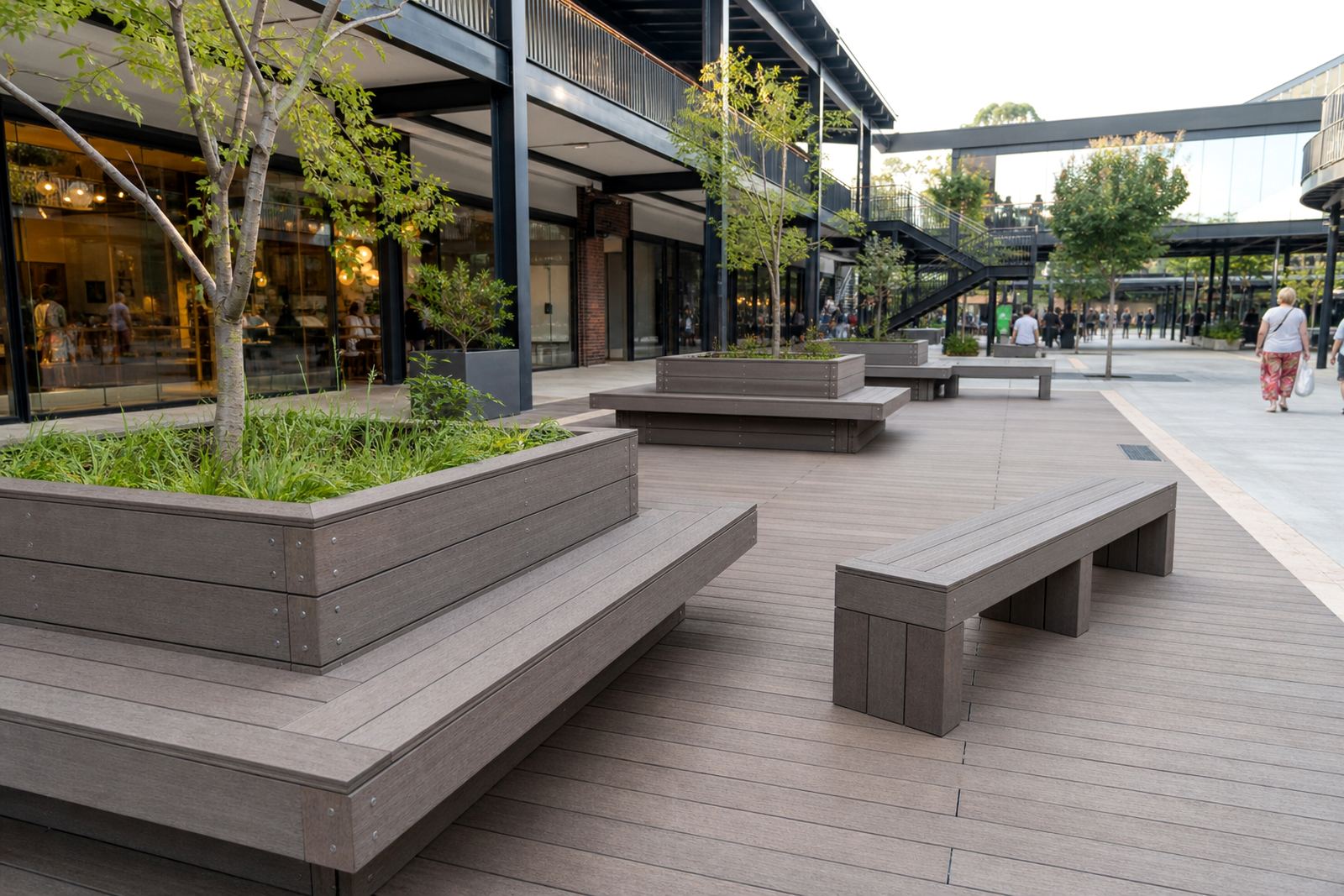
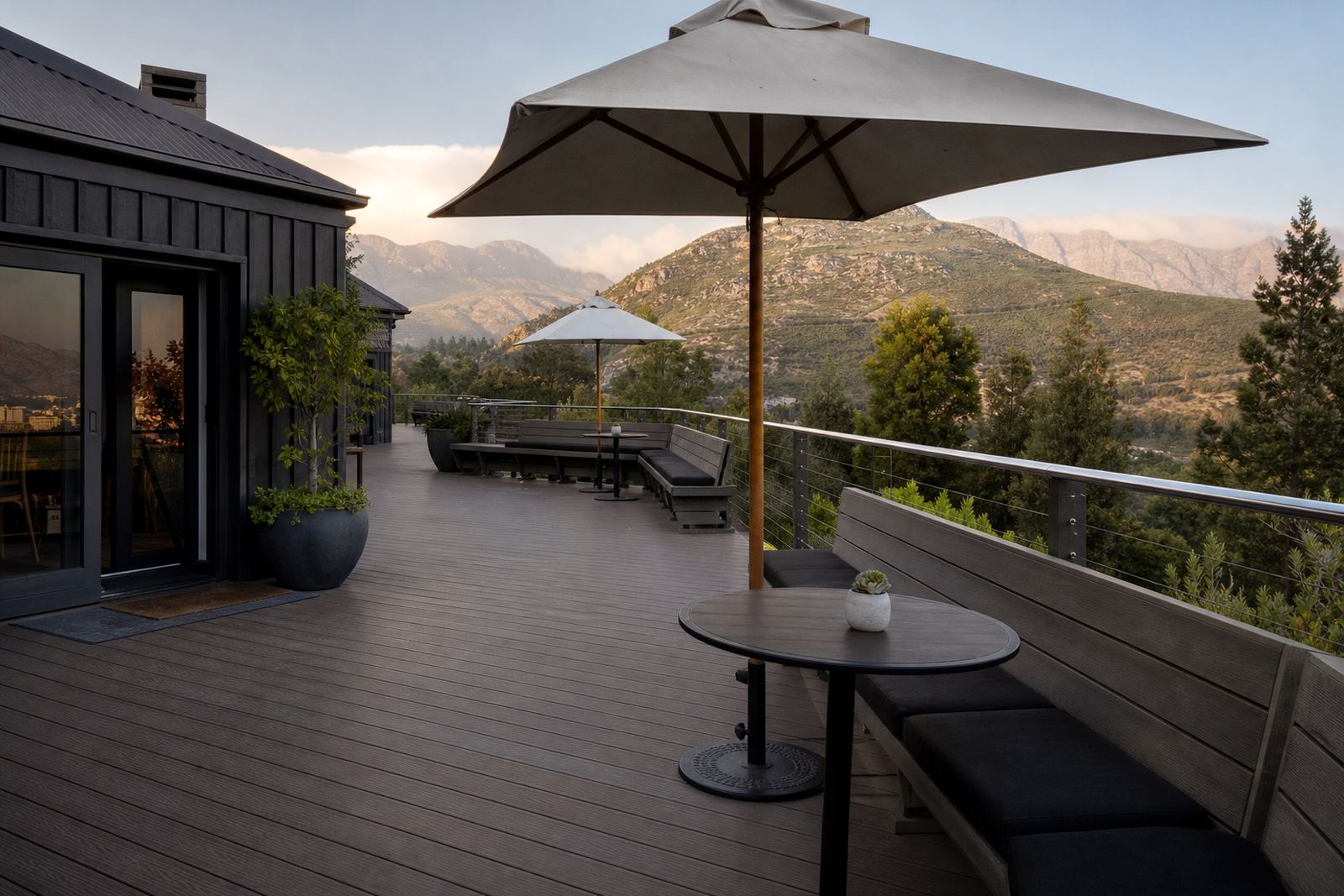
A hospitality project usually needs more than a deck board and a bench. Layout has to work for guests, staff movement, cleaning access and safe circulation around doors, rails and steps. Common components include deck boards, support structure, bench seats, backs where needed, edge trims, replacement slats and finishing pieces around corners and service points. For larger venues, separate seating pockets and waiting areas help keep traffic flowing during peak breakfast or lunch times.
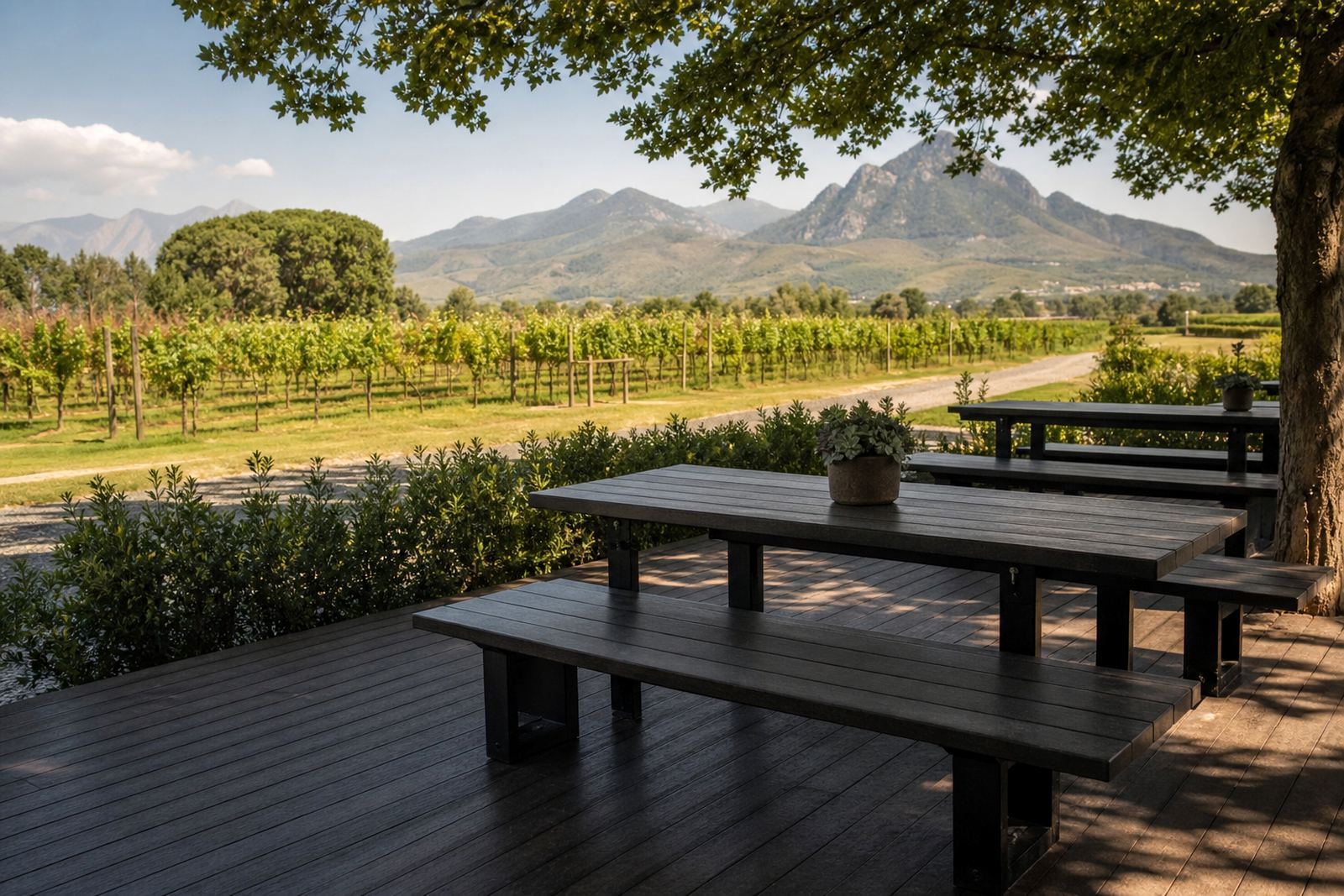
- Decking for outdoor dining areas, courtyards and pool surrounds
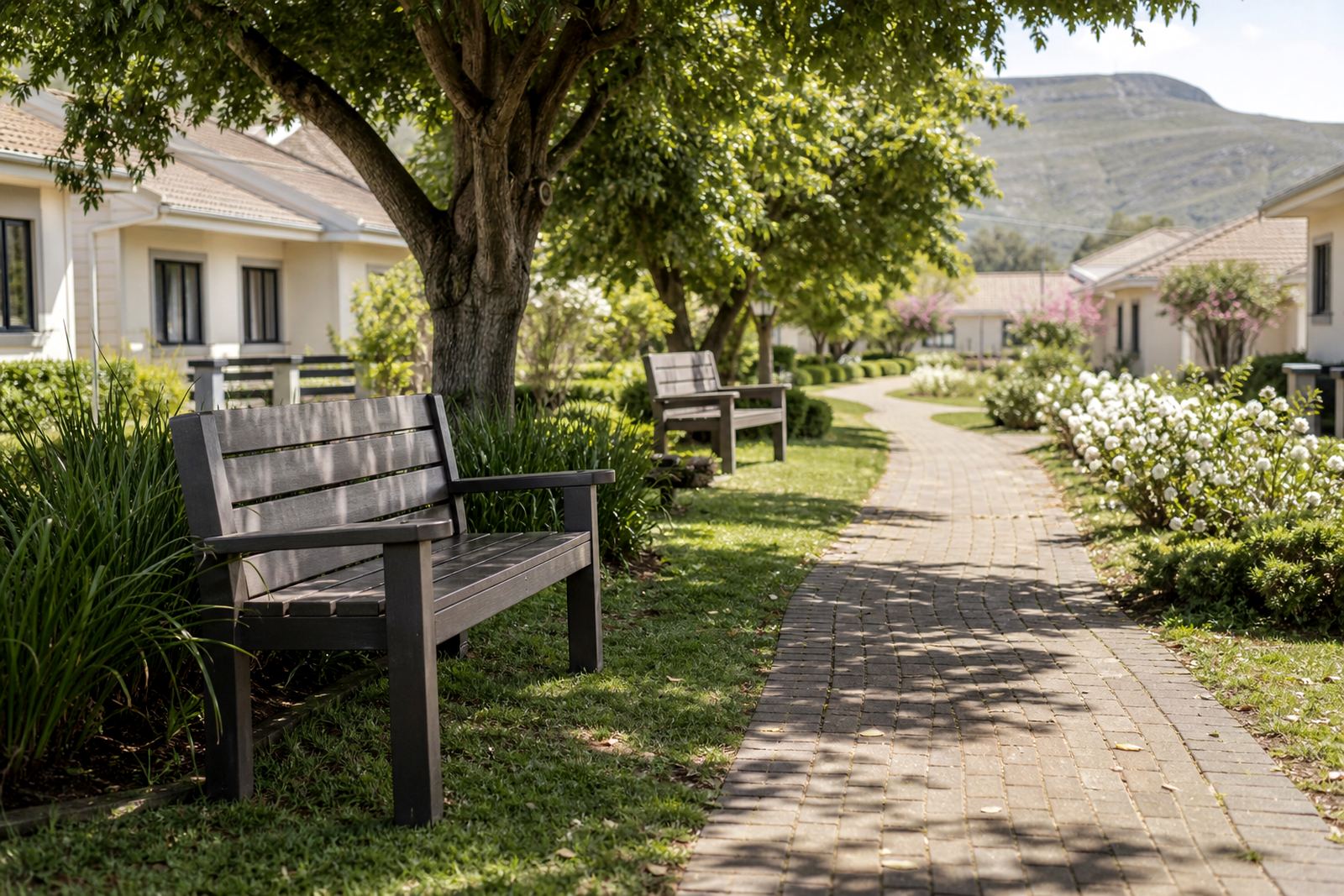
- Benches for viewing areas, queue points and shaded rest spots
- Edge finishing to tidy exposed ends and reduce trip points
- Replacement components for worn sections instead of full removal
In hospitality settings, a clean layout matters as much as the product itself. The spacing between seats, the width of walkways and the position of bins, planters and service routes should be considered before work starts. This helps avoid cramped corners and awkward cleaning paths later.
Planning the space before the first board goes down
Good planning starts with accurate site measures and a clear idea of how guests use the space. A breakfast terrace near the kitchen needs different layout thinking from a quiet viewing deck or a waiting bench near a reception area. Slope, drainage, door swing, shade cover and access for trolleys should all be checked early. On sloped sites, a small mistake in levels can become a daily problem, especially when staff are carrying trays or cleaning after service.
Our team supports material quoting, layout planning and delivery coordination so the project can move in a logical order. That matters on live sites where trade is happening at the same time as guest service. If benches are being installed at the same time as decking, the fixing points and finishes need to be planned together otherwise you end up with extra labour and delays.
- Check where water runs after rain or wash-down
- Allow enough room for chairs, prams and wheelchairs where needed
- Keep access panels and drain points open
- Plan benches where guests will naturally stop, not where they block flow
Common mistakes that cost time and money later
One common mistake is choosing a layout that looks good on paper but leaves no space for staff to clean around it. Another is placing benches too close to walls or planters, which makes maintenance awkward and traps dirt. Some venues also underestimate how much movement happens during service, especially where guests stand up and pull chairs in and out all day. If the deck edge, step and seating line are not tied together properly, small gaps can become a nuisance.
It is also worth avoiding mixed materials that do not age at the same rate. A new seating area can look uneven if one part needs repainting or sealing every season while the rest stays stable. Recycled plastic lumber is often chosen for this reason. It helps keep the area looking consistent, and you are not left managing boards that warp or split after repeated cleaning. That said, correct installation still matters. If the support structure is out of level or fixings are rushed, the finish will show it.
Budget ranges for hospitality projects in Rand
Budgets for hospitality decking and benches vary by size, site access and the amount of finishing required. A small café frontage or a compact visitor rest area may be planned in the lower tens of thousands of Rand, while larger lodge decks, terraced dining spaces or multi-section seating areas can move into a higher range depending on layout and installation needs. Refurbishment and component replacement are often more economical than full removal and replacement when the base structure is still sound.
For planning purposes, it helps to separate the project into material supply, delivery, installation and any edge or finishing work. That makes it easier to compare options and decide where money is best spent. A simple seating area with straightforward access is usually less costly than a raised platform with awkward corners, steps or long delivery distances. If a venue is trading through the work, there may also be phased installation to reduce disruption.
Aftercare for busy venues and trade support across South Africa
Hospitality operators need practical support after installation, not just at the start. Care advice helps staff keep surfaces clean with normal wash-down routines, and refurbishment options are useful when a section has taken more wear than expected. Bench and deck components can sometimes be replaced in stages, which is useful for venues that cannot shut down a whole area at once. That approach suits guest lodges, cafés and outdoor dining spaces that need to keep operating.
From our base in Paarden Eiland, Cape Town, we work with clients across Cape Town, Stellenbosch, George, Johannesburg, Durban, Paarl, Somerset West and Bellville. The service team includes Morne van Zyl, with support from Anele Mkhize, Bianca Fourie, Thabo Molefe, Leanne Naidoo, Jason Petersen and Sibusiso Dlamini. Clients get in touch through the enquiry form on the contact page, then we take the project through measures, planning, quoting, delivery and installation support as needed.
- Site measures for new builds and upgrades
- Deck and bench refurbishment for worn hospitality areas
- Component replacement where only part of the set-up needs attention
- Trade support for phased work and live sites