Why security estates choose recycled plastic lumber
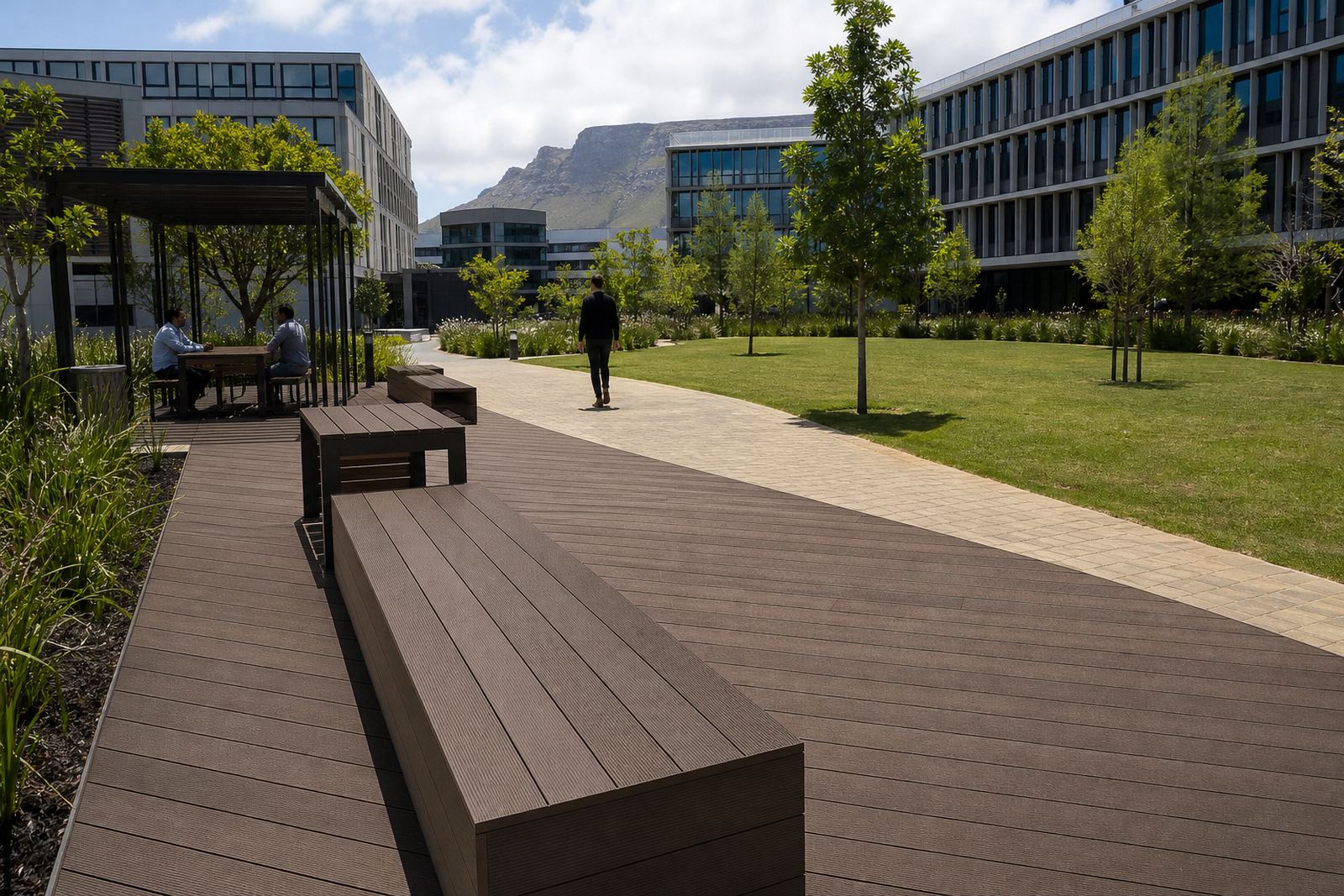
In a security estate, the outside areas do as much work as the homes. Residents want neat pathways, safe seating spots, and clubhouse surrounds that stay tidy through summer heat, winter rain and regular cleaning. Recycled plastic lumber decking and benches suit that setting because they hold up in damp conditions, do not need sanding or sealing, and are simple to wash down after dust, pollen or coastal salt build-up.
For estate managers in Cape Town, Somerset West, George or Durban, the appeal is practical. There is less worry about rot, insect damage, splintering or the constant cycle of repainting. In Johannesburg and Pretoria, where sun exposure is strong and seasonal storms can be hard on outdoor finishes, the same products help keep common areas looking managed with less maintenance. That matters when an estate has multiple entrances, shared parks and body corporate rules to satisfy.
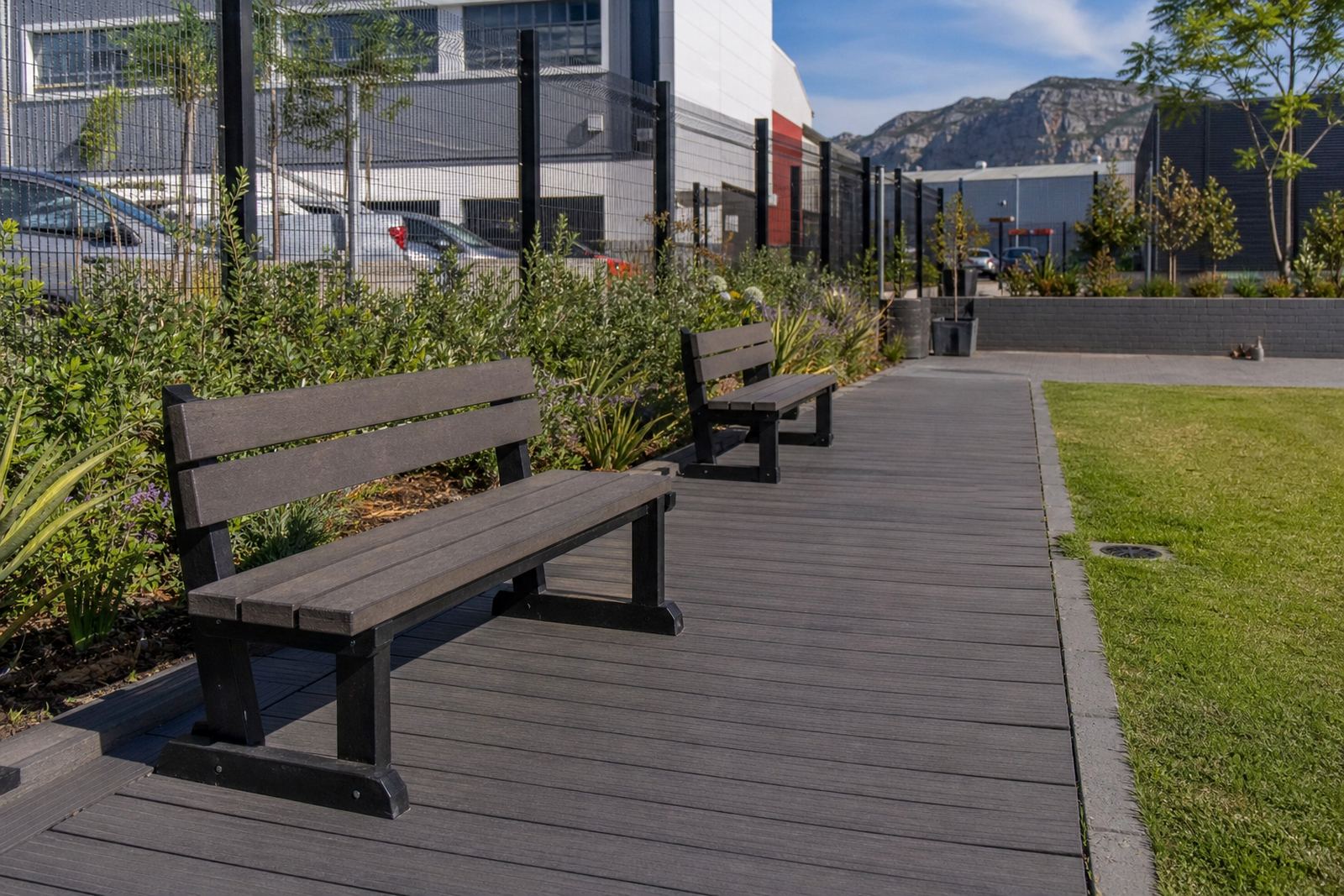
The materials are also useful where a site wants a neat appearance without using timber that needs ongoing treatment. For pathways, benches and viewing points, the look stays consistent, and the cleaning team can work quickly with water and mild detergent. That is good for estates with limited maintenance staff and tight schedules.
Typical estate product set for shared outdoor areas
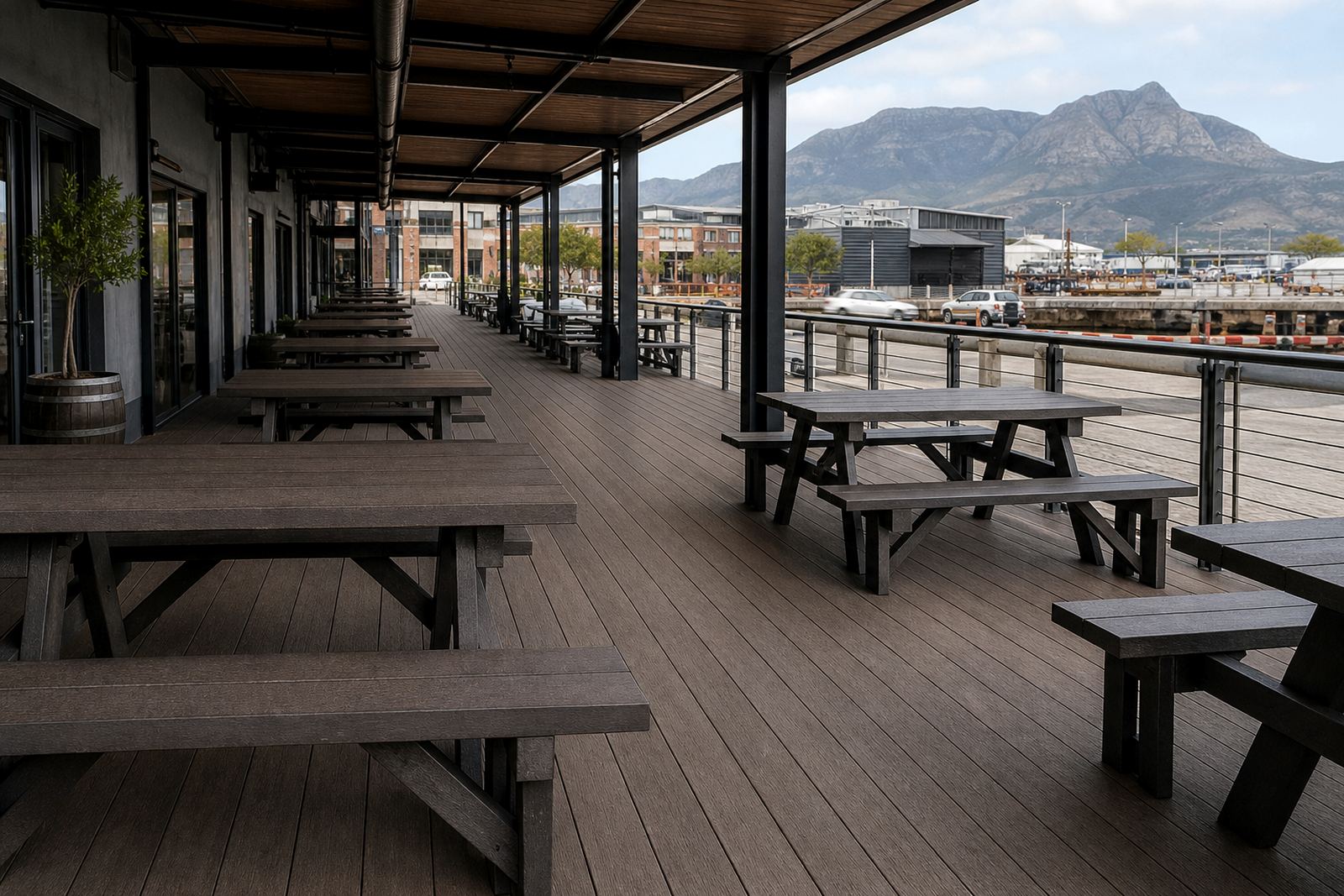
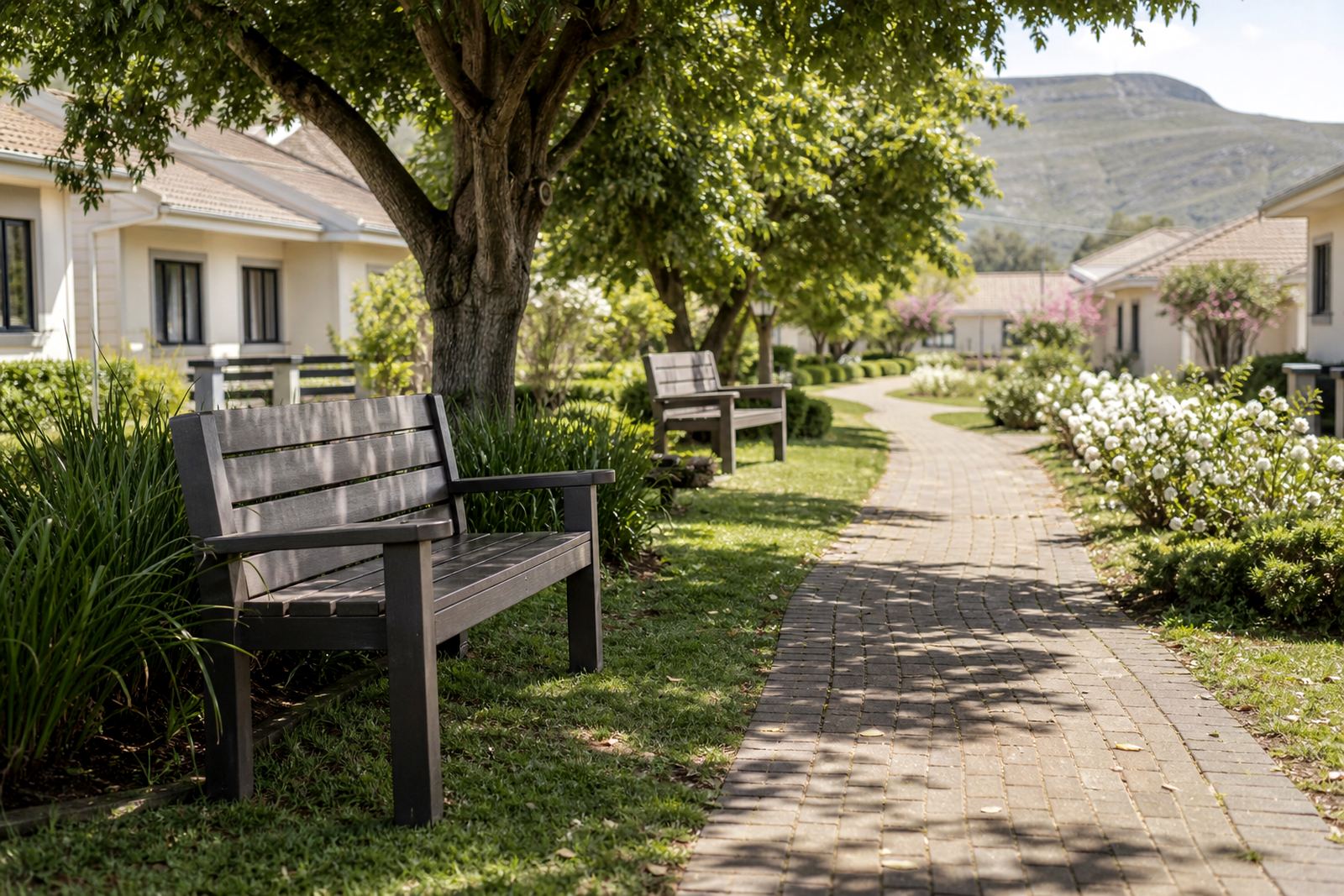
Most security estate projects use a simple mix of deck surfaces and fixed seating. The exact set depends on how people move through the space, where children play, and whether the area is for quiet sitting or heavier community use. A clubhouse forecourt may need a small deck transition from the building to the garden, while a park node may need benches arranged around shade trees or near a play area.
- Decking for clubhouse surrounds, stoops, pool edges and raised walkways
- Benches for communal seating, viewing points and play park rest areas
- Edge finishing to neaten exposed sides and reduce trip points
- Component replacement for worn sections after long service or site damage
- Refurbishment for older estate seating and deck areas that need freshening up
For estates with many residents, consistency is important. Matching board widths, neat spacing and clean joins help the whole site feel orderly. A small mistake in one area often stands out, so it is worth planning the full run of products before any cutting starts.
Layout planning for pathways, parks and clubhouse zones
Good planning starts with how people actually use the estate. A pathway that links parking bays to the clubhouse should allow two people to pass without stepping onto garden beds. A bench should face the best view or the play area, but not block the route for prams, wheelchairs or maintenance carts. If the estate has slopes, drains or low spots, those details need to be marked before material quantities are finalised.
Our site measures and layout planning service is useful here because estate work often involves more than one zone. One area may need a light foot traffic deck, while another needs a stronger support layout for regular use. In coastal places like Paarden Eiland, Strand, Durban North or Ballito, drainage and airflow under the deck are important to help the structure dry out after rain and sea mist. In inland estates, the main concern may be sun exposure and keeping the surface comfortable underfoot.
It also helps to think about nighttime use. Security estates often have motion lights or pathway lighting, so edges, steps and level changes must be visible. Clear transitions reduce missteps and keep residents comfortable after load-shedding when lighting may be limited for a time.
Common mistakes that add cost later
Many estate projects run into trouble when the outdoor area is treated as a simple supply job rather than a site-specific build. One common issue is underestimating the amount of traffic. A quiet corner beside a guardhouse needs a different approach from a main clubhouse terrace used by dozens of residents on weekends. Another is forgetting access for cleaning and repairs, which can make a nice feature awkward to maintain.
- Leaving no drainage path under or beside deck sections
- Placing benches where they block walkways or sightlines for security staff
- Skipping edge finishing on exposed ends and corners
- Choosing a layout that ignores slopes, kerbs or sprinkler heads
- Ordering too little material and paying extra for rushed follow-up work
It is also a mistake to assume all outdoor seating needs the same height or spacing. Estates with older residents may need more comfortable seat heights and easier access points, while family areas may need wider circulation space. Small planning details make the difference between a space people use and one they pass by.
Budget ranges for estate decks and benches
Budgeting for estate outdoor work depends on size, access, finish level and whether the job is new installation or refurbishment. A small bench area near an entrance will cost far less than a full clubhouse deck with multiple levels, but both need proper site measures and delivery coordination. Access in estates can also affect the budget, especially where materials must be moved through controlled entry points or along long internal roads.
For planning purposes, smaller estate seating upgrades may start in the lower Rand thousands, while larger deck and pathway projects can move into the mid to higher tens of thousands, depending on scope. Refurbishment and component replacement usually cost less than a full rebuild, but only if the existing structure is still sound enough to keep. If the support framing is tired or uneven, patching can become a false economy.
It is best to ask for a clear material quotation after measures are taken. That gives the body corporate or managing agent a better basis for comparing options, phasing the work, and approving one area at a time if needed.
Delivery, installation and estate management support
Security estates often need tidy coordination because access is controlled and work must fit around residents, guards and municipal noise limits. Our logistics planning helps arrange delivery to the right point on site, while the installation team works with the estate schedule so disruption stays low. Where estate rules require work to happen during specific hours, that timing needs to be built into the plan from the start.
We also support trade clients who manage multiple sites across Cape Town, Stellenbosch, George, Johannesburg and Durban. That includes practical advice on care, cleaning and future replacement planning, which helps estates keep shared outdoor areas in good condition with less effort. Morne van Zyl and the team in Paarden Eiland handle enquiries through the contact page, and the process is straightforward from first measure to final handover.
For estates, the best result is usually the one that feels simple once installed. The paths stay usable, the seating stays neat, and the place looks cared for without demanding constant attention. That is the kind of finish residents notice, even if they never think about the material underfoot.